

Every year, our production lines ship over 80,000 pergola sets globally, and the wrong freight forwarder has cost our partners dearly.
To choose a reliable freight forwarder for bulk aluminum pergola imports to Europe, evaluate their DDP service capability, cargo-specific handling expertise, EU customs clearance experience, transparent pricing, and proven track record on Asia-to-Europe trade lanes before signing any contract.
Shipping bulk aluminum pergolas across oceans is not the same as moving standard boxed goods DDP service capability 1. The cargo is long, heavy, and surface-sensitive. EU customs rules are strict. And one bad forwarder choice can eat your entire profit margin EU customs clearance experience 2. Below, we break down exactly what to look for — and what to avoid.
How do I find a freight forwarder that offers reliable DDP services for my bulk pergola imports to Europe?
When we coordinate DDP shipments with our European distributors, we see firsthand how the wrong logistics partner turns a smooth delivery into a nightmare of surprise duties and warehouse fees.
Find a DDP-capable freight forwarder by verifying they handle end-to-end logistics — including origin pickup, sea freight, EU customs clearance, duty and VAT payment, and last-mile delivery — under a single contract with transparent landed-cost breakdowns.
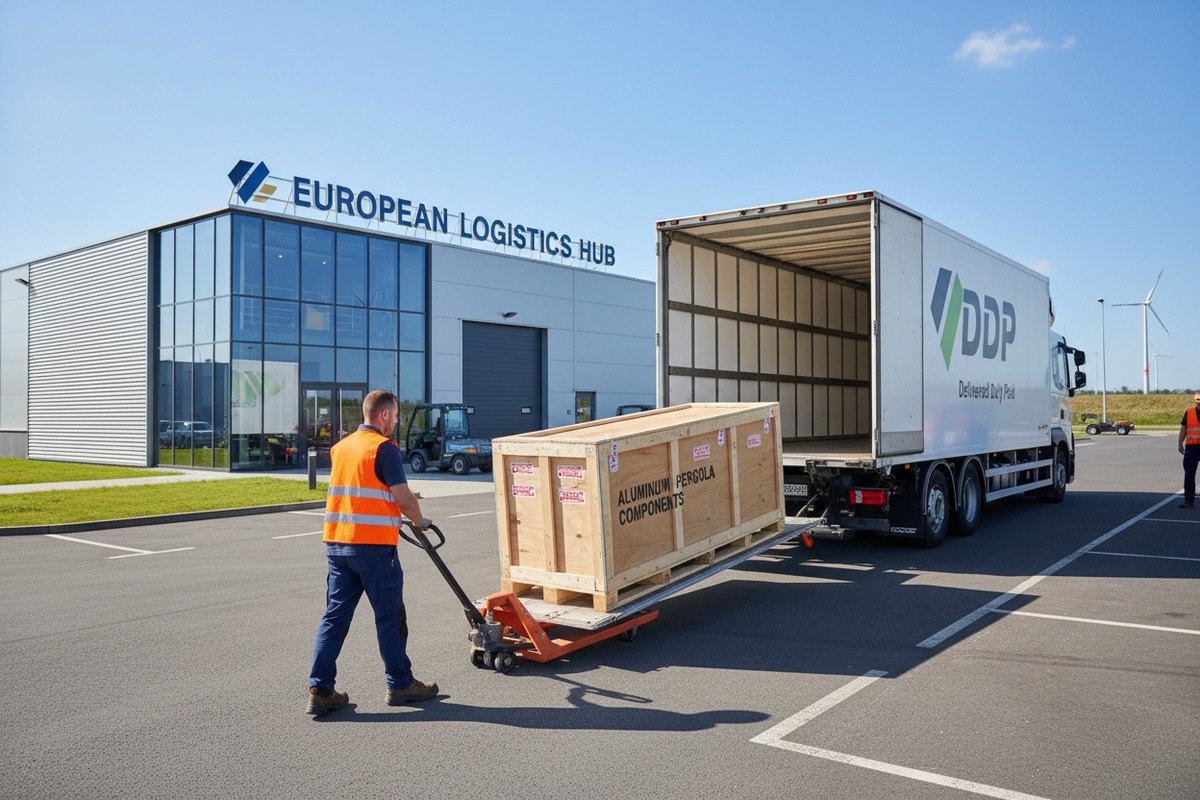
What Does DDP Actually Mean for Pergola Importers?
DDP stands for Delivered Duty Paid. It means your freight forwarder takes responsibility for the entire journey. They pick up from the factory in China, handle export customs, manage sea freight, clear EU import customs, pay all duties and VAT on your behalf, and deliver to your warehouse door. For a purchasing manager in Italy or Germany, this is the gold standard. You get one invoice, one point of contact, and no customs surprises.
But here is the catch. Many forwarders claim to offer DDP but actually subcontract critical legs of the journey to third parties they barely manage. The result? Your 40-foot container of aluminum pergolas sits at Rotterdam for five extra days. Demurrage charges stack up at €200–€500 per day. And nobody answers your emails.
Key Criteria for Evaluating DDP Forwarders
| Criteria | What to Look For | Red Flag |
|---|---|---|
| End-to-end control | Forwarder has own agents or vetted partners at both origin and EU destination | They cannot name their customs broker in your target country |
| Duty & VAT handling | Clear breakdown of HS code 7610 3 duties (typically 3–6% on aluminum) plus local VAT | Vague "duties included" with no line-item estimates |
| Last-mile capability | Delivery to your warehouse with tail-lift or crane truck for heavy pergola pallets | DDP "to port" only — not true DDP |
| Single point of contact | Dedicated account manager with real-time tracking access | You are passed between departments for every question |
| Insurance coverage | All-risk marine cargo insurance included or offered | No mention of insurance in the quote |
Why DDP Matters More for Bulk Pergola Shipments
A single FCL container of our louvered aluminum pergolas can hold 20–30 sets, valued at €30,000–€80,000. The import duties alone on aluminum structures under HS code 7610 run 3–6%. Add 19–22% VAT depending on the EU country, and you are looking at a significant cash outlay at customs. A reliable DDP forwarder pre-calculates all of this. They ensure your goods clear customs without delay. They pay the duties and VAT upfront and bill you transparently. This protects your cash flow and your project timelines.
We always recommend our partners request a sample DDP cost calculation before committing. Ask the forwarder to itemize: ocean freight, origin charges, destination port charges, customs brokerage fees, duties, VAT, inland trucking, and any surcharges. If they cannot produce this within 48 hours, move on.
Also consider the EU's Carbon Border Adjustment Mechanism 4 (CBAM). As of 2026, importers of aluminum products must report embedded emissions. A truly knowledgeable DDP forwarder will flag this requirement and help you prepare the necessary documentation. This is not optional — non-compliance leads to fines.
What measures should my logistics partner take to prevent damage to my fragile aluminum profiles during sea freight?
Our engineers spend weeks perfecting the powder-coated matte charcoal finish on every pergola beam, so watching a container arrive with scratched profiles and bent louvers is genuinely painful — and completely preventable.
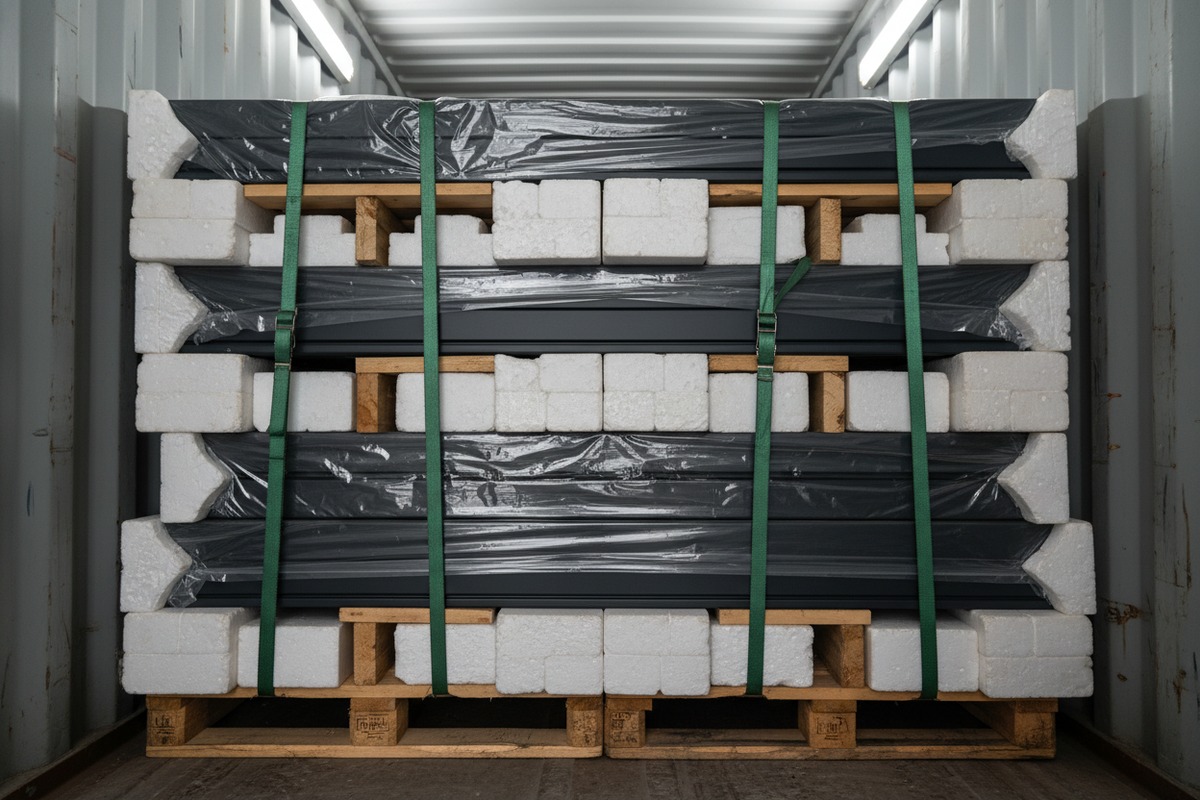
Your logistics partner should ensure custom-fit packaging with foam separators, anti-scratch film on all coated surfaces, proper palletization with steel banding, moisture-absorbing desiccants inside containers, and load-securing plans that prevent shifting during 25–35 day ocean voyages.
Why Aluminum Pergolas Are More Vulnerable Than You Think
Aluminum pergola components are not fragile in the traditional sense. They will not shatter like glass. But they are highly susceptible to surface damage. The powder-coated finish that gives our charcoal grey pergolas their premium, industrial-chic look can be scratched by a single unpadded contact point. Dents in the square-profile corner posts are visible from meters away. And bent louver slats cannot be straightened without cracking the coating.
Sea freight compounds these risks. Containers travel through temperature swings of 20–40°C. Condensation forms inside the container — this is called "container rain." If your aluminum profiles are not protected, moisture causes white oxidation spots on raw aluminum edges and can stain coated surfaces.
The Packaging Protocol We Recommend
Every forwarder you evaluate should confirm these specific measures:
| Protection Layer | Zweck | Material |
|---|---|---|
| PE protective film | Prevents scratches on powder-coated surfaces | Self-adhesive polyethylene wrap |
| Foam separators | Stops profile-to-profile contact | EPE foam sheets, 5mm minimum |
| Corner protectors | Shields edges and corners from impact | Cardboard + foam composite |
| Steel banding on pallets | Secures stacked components to prevent shifting | Galvanized steel straps |
| Desiccant packs | Absorbs moisture inside sealed containers | Calcium chloride sachets, 500g per 5 CBM |
| Container lashing | Prevents pallet movement during rough seas | Ratchet straps or cargo bars |
Load Planning Is Not Optional
A good freight forwarder will create a detailed container loading plan before your goods leave the factory. This plan shows exactly where each pallet sits inside the 20-foot or 40-foot container. Heavy base plates and posts go on the bottom. Lighter louver panels and accessories go on top. No stacking beyond tested limits.
We have seen importers lose 5–10% of a shipment's value to damage simply because the forwarder did not supervise the container loading. Ask your forwarder: Do you provide loading supervision at origin? If they say no, that is a problem. At our facility, we welcome forwarder-appointed inspectors to oversee every container load. This protects everyone.
What About Insurance?
Even with perfect packaging, accidents happen. Port cranes drop containers. Ships encounter storms. Your forwarder should offer all-risk cargo insurance covering the full commercial value of your pergola shipment. Standard carrier liability is limited to approximately $500 per package under the Hague-Visby Rules 6 — nowhere near enough for a container worth €50,000 or more. Insist on seeing the insurance certificate before the vessel sails.
How can I ensure my forwarder has the right experience to handle the complex customs clearance for my large-scale outdoor structures?
Over 25 years of exporting pergolas from our Hainan facility, we have learned that customs clearance expertise is not a nice-to-have — it is the single biggest differentiator between a forwarder who delivers on time and one who costs you thousands in delays.
Ensure your forwarder's customs expertise by confirming they have handled HS code 7610 aluminum structure imports, understand EU REACH compliance, can navigate CBAM reporting requirements, and maintain Authorized Economic Operator (AEO) status or partnerships in your target EU country.
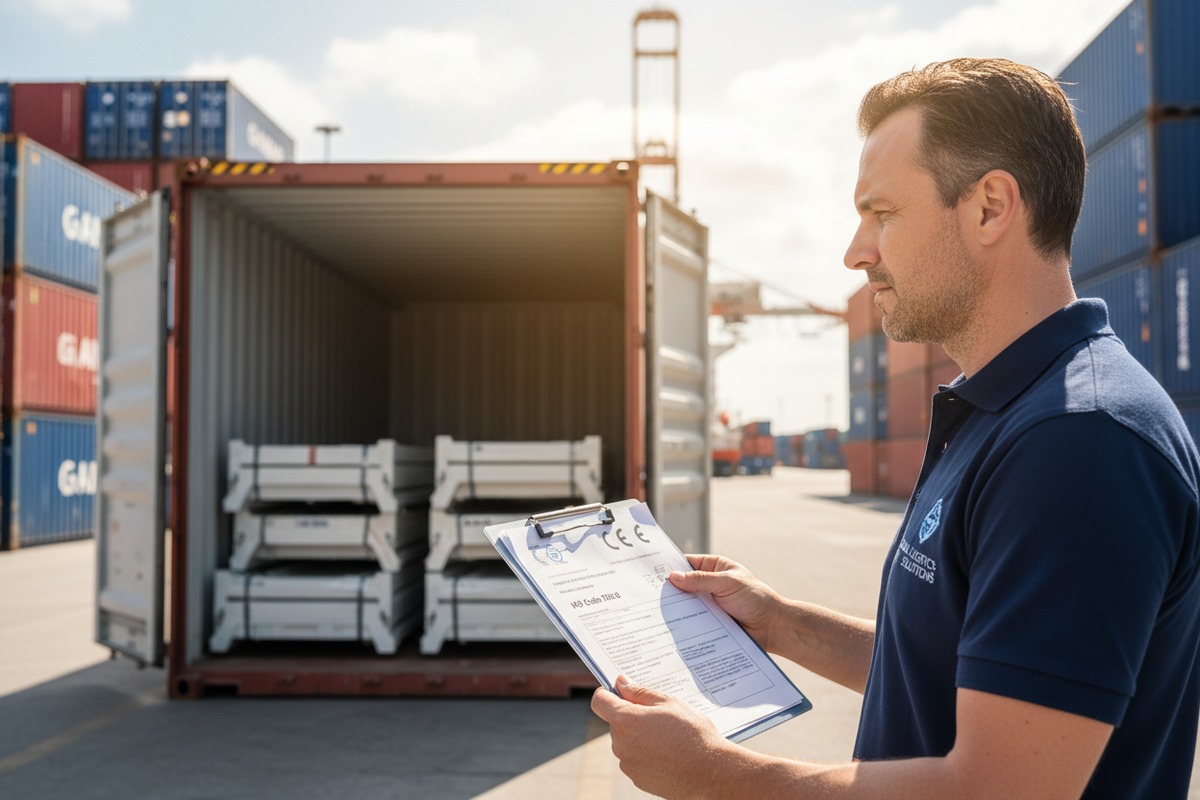
The EU Customs Landscape for Aluminum Pergolas
Aluminum pergolas fall under HS code 7610 — aluminum structures and parts of structures. The standard EU duty rate sits between 3% and 6%, depending on the exact sub-classification and country of origin. On top of that, you pay import VAT (typically 19–22% depending on the member state). Misclassify your goods, and you face either overpayment or — worse — underpayment that triggers audits, fines, and shipment holds.
But duties are just the start. Here is what makes EU customs genuinely complex for pergola imports:
Regulatory Requirements You Cannot Ignore
REACH Compliance: The EU's REACH regulation 7 governs chemicals in products. Aluminum alloys and powder coatings must comply. Your forwarder should ask for or verify your REACH compliance documentation before the shipment arrives.
CE Marking and EN 1090: For load-bearing aluminum structures, the EU expects compliance with PN-EN 1090 8. While this is primarily the manufacturer's responsibility — and we certify our pergolas accordingly — a knowledgeable forwarder will flag this at the quoting stage. If your goods lack the proper documentation, they will be stopped at customs.
CBAM Reporting: Starting from 2026, the EU's Carbon Border Adjustment Mechanism requires importers to report the embedded carbon emissions in aluminum products. Your forwarder should understand this requirement and help you prepare. Failure to report means financial penalties.
Origin Certificates: If your pergolas qualify for preferential tariff rates under any trade agreement, you need a proper certificate of origin. Your forwarder should know which forms apply and ensure they are correctly issued.
How to Test a Forwarder's Customs Knowledge
Ask these five questions before signing any agreement:
- What HS code would you classify a powder-coated aluminum louvered pergola under?
- What is the current EU duty rate for this code from China?
- Are you familiar with CBAM reporting for aluminum imports?
- Do you have AEO-certified customs brokers in my destination country? Authorized Economic Operator (AEO) status 9
- Can you provide references from clients who import similar aluminum structures?
If they hesitate on any of these, keep looking. A 2–5 day customs delay on a bulk shipment can cost €500–€2,000 in demurrage and storage fees alone. Multiply that across four or five shipments per year, and you are looking at €5,000–€10,000 in avoidable costs.
Global Giants vs. Regional Specialists
| Factor | Global Forwarder (e.g., DHL, Kuehne+Nagel) | Regional Specialist (e.g., EU corridor expert) |
|---|---|---|
| Customs network | 90%+ EU port coverage, 200+ agents | Strong in 2–3 specific countries |
| Aluminum-specific knowledge | Varies by local office | Often deeper for niche cargo types |
| Response time | Can be bureaucratic; 48–72 hours | Often under 24 hours |
| Cost | Higher overhead, premium pricing | Competitive on specific lanes |
| Technology | AI-driven tracking, blockchain docs | May lack advanced digital tools |
| Best for | Multi-country EU distribution | Single-market, high-volume lanes |
Neither option is universally better. For a distributor importing into Italy only, a specialist on the Shanghai-Genoa lane might outperform a global giant. For a wholesaler serving five EU markets, the global network makes more sense. Match the forwarder to your actual distribution model.
Post-Brexit UK Considerations
If your supply chain touches the UK — even as a transit point — your forwarder must handle post-Brexit formalities. This means separate customs declarations for UK and EU, potential Rules of Origin documentation, and awareness of the UK's own CBAM-equivalent carbon levy plans. A forwarder experienced in UK-EU lanes with trusted trader program access can save days in transit.
When we help our partners review freight quotes — and we do this regularly because their landed cost directly affects whether our pergolas are competitive in the EU market — we spot the same tricks again and again.
Watch for red flags like vague line items labeled "handling" or "miscellaneous," missing detention and demurrage terms, no insurance mention, unclear fuel surcharge formulas, omitted CBAM or customs brokerage fees, and quotes that are dramatically lower than three or more competing bids.

The Anatomy of a Freight Quote
A legitimate quote for shipping a 40-foot container of aluminum pergolas from China to Europe should have at minimum 12–15 clearly defined line items. If your quote has five lines and a lump sum, something is hidden.
Common Hidden Cost Traps
Fuel Surcharges (BAF/BUC): Reputable forwarders show the Bunker Adjustment Factor 10 as a separate, clearly calculated line. Some forwarders quote low base rates then add 15–20% in fuel surcharges later.
Detention and Demurrage: These are charges for keeping the container or occupying port space beyond the free period. If your quote does not specify the free days (typically 7–14 at destination), you have no protection.
Customs Brokerage: Some forwarders exclude the customs clearance fee from the "freight" quote. Then it appears as a €200–€500 surprise at destination.
Terminal Handling Charges (THC): These apply at both origin and destination ports. A forwarder who quotes "port-to-port" may exclude both.
Peak Season Surcharges: During Q3 and Q4 — exactly when pergola demand peaks in Europe — shipping lines add surcharges. A forwarder quoting in January may not include these.
A Quote Comparison Checklist
| Line Item | Should Be Included? | Watch For |
|---|---|---|
| Ocean freight (base rate) | Yes | Suspiciously low base that hides costs elsewhere |
| BAF / Fuel surcharge | Yes, as separate line | "Subject to change" with no cap |
| Origin THC | Yes | Missing entirely |
| Destination THC | Yes | Rolled into vague "port charges" |
| Customs brokerage | Yes, for DDP | Listed as "optional" or "extra" |
| Import duties + VAT estimate | Yes, for DDP | "To be confirmed" with no estimate |
| Inland trucking | Yes, for door delivery | Per-km rate not specified |
| Cargo insurance | Yes, or quoted separately | No mention at all |
| Detention / demurrage free days | Yes | Not mentioned — default is 0 free days |
| CBAM documentation fee | Increasingly yes | Forwarder unaware of the requirement |
| Documentation fee (B/L, etc.) | Yes | Hidden in "admin charges" |
| Peak season surcharge | If applicable | Not disclosed until invoice |
The "Too Cheap" Quote Problem
Here is a real pattern we see. A European buyer gets five quotes. Four range between €3,500 and €4,200 for a 40-foot FCL from China to Germany. The fifth quote comes in at €2,400. The buyer picks the cheapest. Then at destination, they discover €800 in undisclosed charges, a 5-day customs delay because the forwarder used an inexperienced broker, and €600 in demurrage. Total actual cost: €3,800 — plus the stress and project delay.
The industry data backs this up. Poor forwarder choices cause roughly 20% delay rates on bulk cargo. Customs errors alone can add 5–10% to the shipment value in fines and corrective fees. Meanwhile, reliable partners consistently reduce total landed cost by 10–15% through optimized routing, proper documentation, and avoiding penalties.
How to Protect Yourself
Always get at least three quotes. Compare them line by line using the checklist above. Ask each forwarder to confirm in writing: "Is this quote all-inclusive for DDP delivery to my warehouse? Are there any charges not listed here?" Get this in the contract, not just an email. And build a relationship over time. One-off transactions invite corner-cutting. Long-term partnerships with a forwarder who knows your cargo, your routes, and your compliance needs will save you far more than any discount on a single shipment.
Schlussfolgerung
Choosing the right freight forwarder protects your margins, your timelines, and your reputation. Verify DDP capability, cargo handling expertise, customs knowledge, and pricing transparency before committing — your aluminum pergola business depends on it.
Fußnoten
1. Replaced with an authoritative government source (International Trade Administration) explaining Incoterms 2020, including DDP. ︎
2. Official information on EU import and export customs procedures. ︎
3. Provides official EU tariff information for aluminum structures under HS code 7610. ︎
4. Official source explaining the EU's Carbon Border Adjustment Mechanism. ︎
5. Official source for the Incoterms 2020 rules, defining trade terms. ︎
6. Replaced with a comprehensive and accessible Wikipedia article explaining the Hague-Visby Rules, as the official IMO link was broken. ︎
7. Replaced with an authoritative official EU Commission page providing an overview of the REACH regulation. ︎
8. Replaced with a comprehensive and accessible Wikipedia article explaining the EN 1090 standards. ︎
9. Official explanation of the EU's Authorized Economic Operator program. ︎
10. Explains the Bunker Adjustment Factor, a common shipping surcharge. ︎