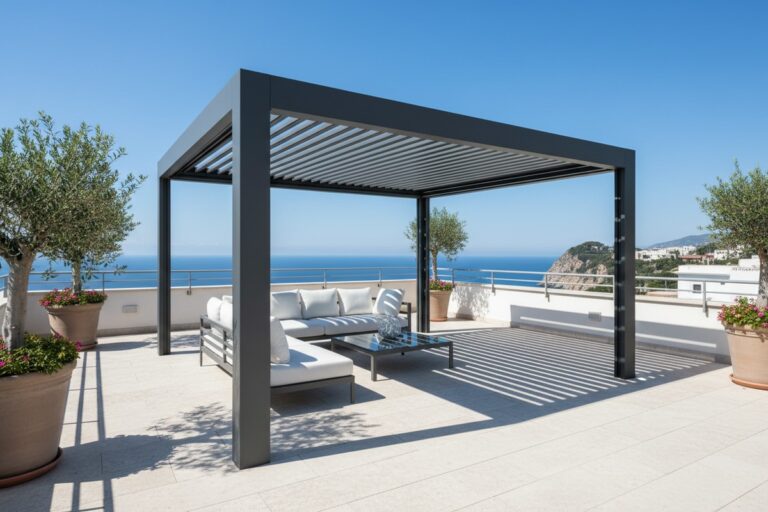

Every year, we see European partners return samples with peeling coatings or faded finishes — and each time, it costs both sides money, trust, and time.
European wholesalers evaluate aluminum pergola powder coating and weather resistance by verifying Qualicoat and AAMA certifications, reviewing salt spray and UV exposure test data, inspecting pre-treatment processes, confirming RAL color consistency, and demanding supply chain traceability for both aluminum alloy and coating materials.
This guide breaks down the exact checks, standards, and red flags that experienced European buyers use when qualifying a pergola supplier AAMA certifications 1. Whether you source from China or elsewhere, these benchmarks protect your brand and your margins.
How can I verify if the powder coating meets Qualicoat standards for my European projects?
When our quality team first started exporting louvered pergolas to Italian distributors, we quickly learned that a generic "powder coated" label meant nothing without third-party certification behind it.
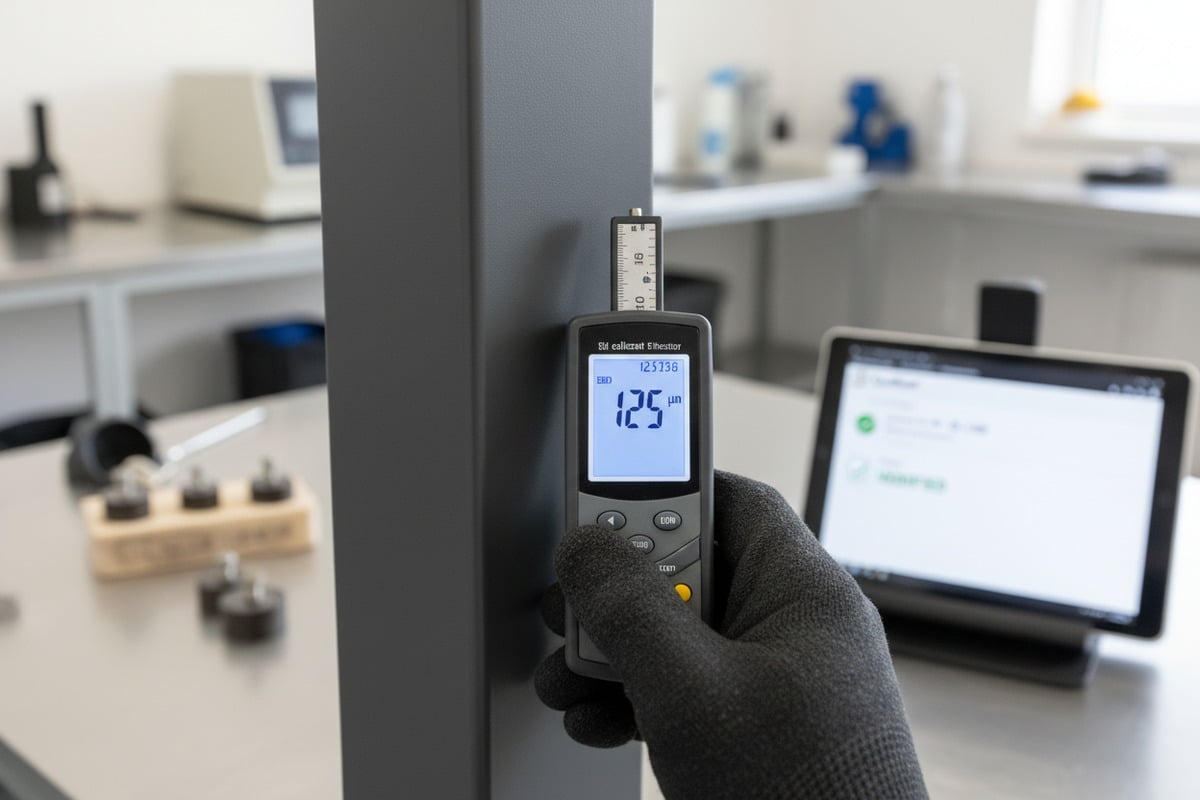
To verify Qualicoat compliance, request the supplier's valid Qualicoat license number, cross-check it on the official Qualicoat directory, and ask for recent batch test reports covering adhesion, coating thickness, gloss retention, and accelerated weathering per BS EN 12206-1.
What Qualicoat Actually Certifies
Qualicoat 2 is not a single test. It is a full quality label system managed by a Zurich-based organization. It covers every step — from the chemical pre-treatment bath to the final curing oven temperature. A licensed coater must pass annual audits. If your supplier says "we follow Qualicoat standards" but cannot show a license number, that is a warning sign.
The certification has several classes. For most European pergola projects, Class 2 is the baseline. It requires higher film thickness and longer weathering test results than Class 1. For coastal markets in Spain, Portugal, southern France, and Greece, the Qualicoat Seaside class adds aggressive salt fog testing to simulate marine atmospheres.
Key Documents to Request
| Document | What It Proves | Red Flag if Missing |
|---|---|---|
| Qualicoat License Certificate | Coater is audited and approved | Supplier may self-certify without oversight |
| Batch Test Report (BS EN 12206-1 3) | Specific lot meets adhesion, thickness, gloss specs | No traceability to your actual order |
| Pre-treatment Process Sheet | Chrome-free or chrome-based conversion details | Risk of poor adhesion and early peeling |
| Curing Log (Oven Temperature & Time) | Correct cross-linking of powder resin | Under-cured coatings crack; over-cured coatings yellow |
How We Handle This at Our Factory
On our production line, we run a multi-stage pre-treatment using a chrome-free zirconium-based process. This aligns with EU REACH regulations 4 while giving us the adhesion performance Qualicoat demands. Each batch is tested with a cross-hatch adhesion test (ISO 2409 5) before shipment. We keep oven temperature logs digitally so our European partners can audit them remotely.
One thing many wholesalers overlook: the aluminum alloy itself matters. We use 6063-T5 extrusions 6 with tight CNC tolerances. A poor extrusion surface — pits, die lines, or oxide inclusions — will cause the powder to fail no matter how good the coating process is.
Qualicoat Class Comparison
| Criteria | Class 1 | Class 2 | Seaside |
|---|---|---|---|
| Minimum Coating Thickness | 60 µm | 60 µm | 60 µm |
| Acetic Acid Salt Spray (ISO 9227 7) | 1,000 hours | 1,000 hours | 1,500 hours |
| Florida Exposure Test | 1 year | 2 years | 2 years |
| Machu Test (Filiform Corrosion) | Required | Required | Enhanced protocol |
| Annual Audit | Yes | Yes | Yes + additional coastal tests |
If your project is within 5 km of the coastline, insist on Seaside class. About 30% of EU pergola sales go to coastal regions, and standard Class 1 coatings can show filiform corrosion within 2-3 years in these zones.
What should I look for in salt spray test results to ensure my pergolas won't corrode?
Our engineers have spent years correlating lab test data with real-world field complaints — and we have learned that not all salt spray reports tell the full story.
Look for salt spray test duration of at least 1,000 hours (Qualicoat) or 4,000 hours (AAMA 2604), scribe creep under 2mm, no blistering at the cut edge, and confirm the test followed ISO 9227 with acetic acid solution — not just neutral salt fog.
Understanding the Numbers
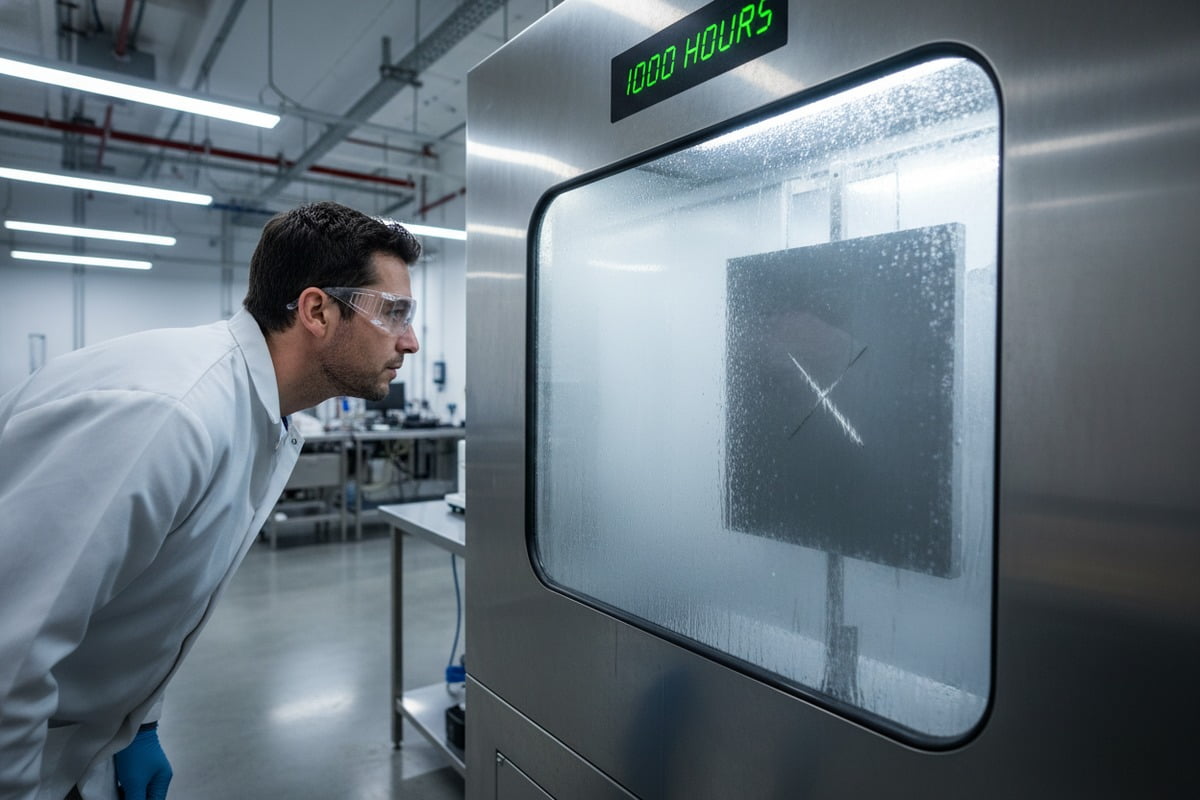
Salt spray testing places coated samples in a sealed chamber filled with a fine mist of salt solution at 35°C. The duration tells you how long the sample survived without visible corrosion. But duration alone is misleading.
What matters more is the scribe creep — the amount of corrosion that spreads from a deliberate scratch on the sample. This simulates real damage from installation or handling. If a report shows 3,000 hours but 5mm of scribe creep, that coating will fail in the field when a technician accidentally nicks the post during assembly.
AAMA vs. Qualicoat Salt Spray Requirements
The American Architectural Manufacturers Association (AAMA) specifications are widely used alongside Qualicoat in the European pergola trade. Here is how they compare:
| Standard | Salt Spray Duration | Humidity Resistance | UV Weathering | Typical Use Case |
|---|---|---|---|---|
| AAMA 2603 | 1,500 hours | 1,500 hours | 5 years Florida | Budget residential |
| AAMA 2604 | 4,000 hours | 2,000 hours | 10 years Florida | Mid-range commercial, pergolas |
| AAMA 2605 | 4,000 hours | 4,000 hours | 10 years Florida | Premium architectural |
| Qualicoat Class 2 | 1,000 hours (acetic acid) | 1,000 hours | 2 years Florida | European standard architectural |
| Qualicoat Seaside | 1,500 hours (acetic acid) | 1,000 hours | 2 years Florida | Coastal installations |
Many of our European partners now ask for AAMA 2604-level performance even if they also require Qualicoat certification. This gives them a warranty claim framework that extends beyond 10 years.
What to Check Beyond Duration
First, confirm the test method. Neutral salt spray (NSS) per ISO 9227 is the most common but least aggressive. Acetic acid salt spray (AASS) is more realistic for coastal conditions. Copper-accelerated acetic acid (CASS) is the harshest. If a report only shows NSS results, ask for AASS data.
Second, look at the photos. A proper test report includes before-and-after images of the scribed panel. You should see clean edges with minimal creep. Bubbling or white oxide trails around the scribe mean the pre-treatment failed, even if the rest of the surface looks fine.
Third, cross-reference the panel tested with your actual order. A supplier can test one premium sample while shipping a different batch. We solve this by pulling random panels from production runs and testing them in our in-house salt spray cabinet. Our European clients receive photos and logs from these random batch tests alongside their shipment documents.
Real-World Correlation
Lab hours do not translate directly to field years. However, a commonly referenced rule of thumb says 1,000 hours of AASS exposure roughly simulates 10-15 years in a moderate European climate. In aggressive coastal zones like the Adriatic or Atlantic coasts, that number drops. This is why Qualicoat Seaside demands 1,500 hours — it builds in a safety margin for harsh marine air combined with UV, rain, and temperature cycling.
How do I prevent my private-label pergolas from fading or peeling after just one season?
We once had a Greek distributor call us six months after delivery — his client's anthracite pergola had turned chalky grey. The root cause was not bad powder. It was a skipped pre-treatment step that no one caught during production.
Prevent fading and peeling by ensuring proper multi-stage chromate-free pre-treatment, using superdurable polyester powder from reputable brands like Tiger Drylac or AkzoNobel Interpon, verifying curing at the correct temperature and time, and demanding cross-hatch adhesion test results on every batch.

Why Coatings Fail in the First Season
Premature failure almost always traces back to one of three causes: bad pre-treatment, wrong powder chemistry, or incorrect curing. The surface might look perfect on day one. But within months, UV breaks down the bonds, moisture creeps under the film, and the coating lifts or chalks.
Pre-treatment is the invisible foundation. It converts the raw aluminum surface into a chemically active layer that bonds to the powder. Skip it, rush it, or use contaminated chemicals, and you get microscopic adhesion failure across the entire panel. This is the number one reason coatings peel.
Superdurable vs. Standard Polyester Powder
Standard polyester powders work fine for interior use or mild climates. For European outdoor pergolas exposed to UV indices above 6, you need superdurable polyester. These formulations use specialized resins that resist UV chain-scission — the molecular process that causes chalking and color shift.
Our production line uses Tiger Drylac Series 68 and AkzoNobel Interpon D2525 for European orders. Both are TGIC-free (Primid system), which is now required under EU REACH regulation for architectural coatings. Both meet AAMA 2604 requirements for 10+ year color retention.
The Curing Window
Powder coating is a thermosetting process. The powder melts, flows, and then cross-links into a hard film at a specific temperature for a specific time. For most superdurable polyesters, this is around 180-200°C for 10-15 minutes at the metal surface — not the oven set point.
Over-curing causes yellowing, especially on lighter colors. Under-curing leaves the film soft and vulnerable to scratching and solvent attack. We monitor metal temperature with contact thermocouples and data loggers on every rack.
There is also a nuance around high-temperature curing. Research from 2009 showed that curing above 204°C can degrade aluminum's mechanical properties, including tensile strength. For structural pergola components that carry wind and snow loads, this matters. Our engineers calibrate curing cycles at 185°C to balance coating hardness with structural integrity.
The Adhesion Test You Must Demand
The cross-hatch test (ISO 2409) is simple but revealing. A grid of cuts is scored into the coating, tape is pressed over it, and then pulled away. The amount of coating removed tells you the adhesion class — from 0 (best, no removal) to 5 (worst, over 65% removed). Anything above Class 1 on a production sample should trigger a hold on the shipment.
We perform this test on at least 3 random pieces per batch and include photos in our quality report. For our private-label partners, these photos go directly into their incoming quality inspection files.
Common Mistakes That Cause First-Season Failure
- Using standard polyester powder instead of superdurable for outdoor use
- Rinsing pre-treatment chemicals with unfiltered water containing chlorides
- Hanging parts too close together in the oven, creating cold spots
- Applying coating under 50 µm thickness, leaving thin spots exposed to UV
- Storing powder in humid conditions, causing clumping and uneven application
Can I trust the RAL color consistency and UV resistance provided by my Chinese supplier?
During a factory audit last year, one of our Polish partners brought a RAL 7016 anthracite sample from a competitor. Under a spectrophotometer, it was Delta E 3.2 off from the official RAL standard — visible to the naked eye as a brownish shift. That kind of inconsistency kills brand trust.
You can trust RAL color consistency from a Chinese supplier only if they use premium powder brands with factory-mixed RAL formulations, measure Delta E with a spectrophotometer on every batch (target ≤1.0), and provide UV resistance data from superdurable powders tested to AAMA 2604 or Qualicoat Class 2 standards.
Why Color Inconsistency Happens
Color variation between batches comes from three sources: powder formulation differences, application thickness variations, and curing temperature inconsistencies. If a supplier buys powder from different mills or uses recycled overspray beyond recommended ratios, each batch will drift.
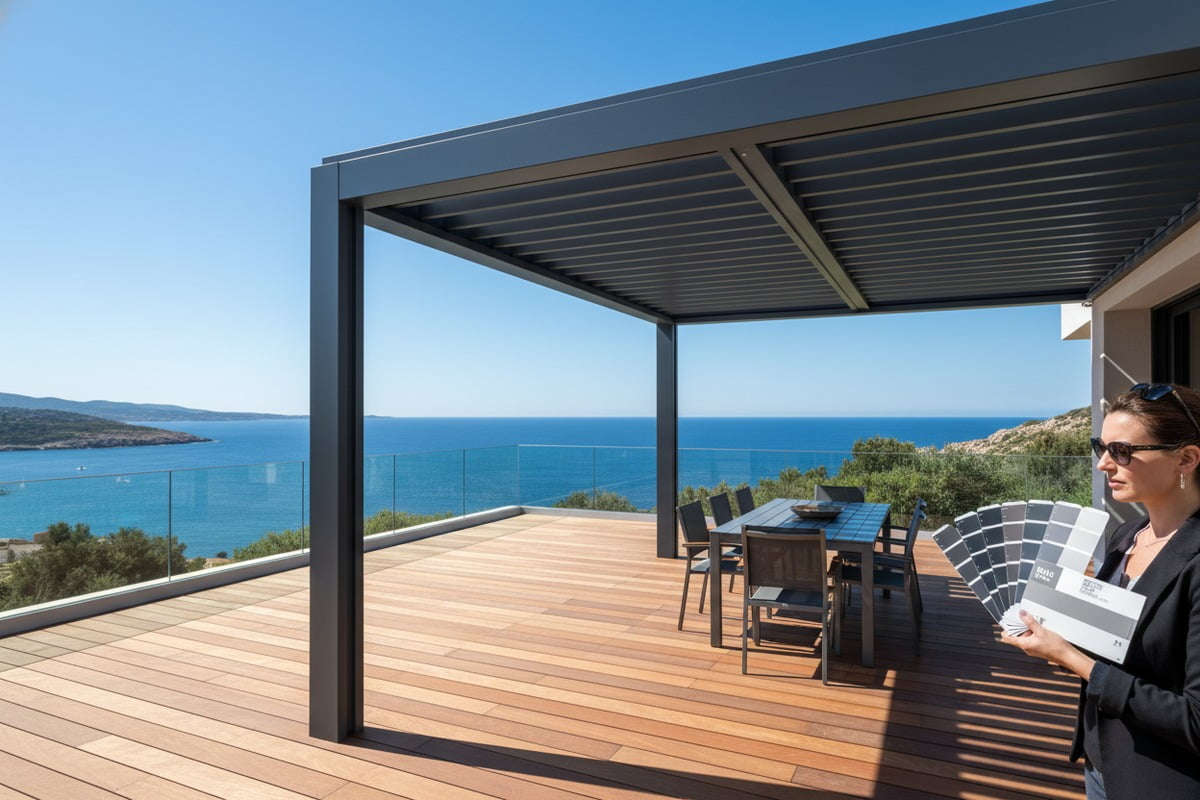
RAL 7016 (anthracite grey) is the single most popular color in the European pergola market. It accounts for roughly 40% of all orders we ship. Because demand is so high, reputable powder manufacturers stock it as a standard shade with no surcharge. However, smaller or unknown powder brands may try to color-match RAL 7016 using generic pigments — and these batches shift under UV exposure much faster than factory-formulated versions.
How to Measure Color Consistency
The industry standard is Delta E (ΔE) 9, measured with a spectrophotometer. Delta E quantifies the total color difference between two samples. Here is a practical scale:
| Delta E Value | Visual Perception | Acceptable for Pergolas? |
|---|---|---|
| 0 - 0.5 | Imperceptible difference | Ideal |
| 0.5 - 1.0 | Noticeable only by trained eye | Acceptable for most projects |
| 1.0 - 2.0 | Visible side by side | Marginal — may cause complaints |
| 2.0 - 3.5 | Clearly noticeable | Unacceptable for adjacent components |
| 3.5+ | Different color | Reject the batch |
We measure every batch against a master RAL panel using a BYK Gardner spectrophotometer. Our target is ΔE ≤ 0.8. For orders where multiple pergola units will be installed side by side — hotel terraces, restaurant patios — we tighten this to ΔE ≤ 0.5 and coat all units in a single production run.
UV Resistance and Long-Term Color Stability
UV resistance is separate from initial color accuracy. A sample may match RAL 7016 perfectly on day one but fade to a dusty grey within two years. Superdurable polyester powder 10s are formulated to retain at least 50% gloss after 10 years of South Florida exposure (AAMA 2604 requirement). Standard polyesters typically lose that much gloss in 3-5 years.
For the European market, the Florida exposure test is the gold standard benchmark. South Florida's intense UV, humidity, and salt air simulate decades of European weathering in a compressed timeframe. Qualicoat requires 1-year Florida exposure for Class 1 and 2-year exposure for Class 2. AAMA 2604 demands 10-year Florida data.
Verifying Your Chinese Supplier's Claims
Here is a practical audit checklist for your next supplier visit or remote evaluation:
- Ask for the powder brand and product code. Verify it directly with the powder manufacturer. Tiger Drylac and AkzoNobel both have online product databases.
- Request spectrophotometer readings from recent production batches. The supplier should own their own instrument — not borrow one for audits.
- Order a pre-production sample in your specified RAL color. Expose it to 500 hours of QUV accelerated weathering (ASTM G154) and compare Delta E before and after.
- Check if the supplier uses virgin powder only for architectural orders, or if they blend in reclaimed overspray. Reclaim ratios above 20-30% cause visible color variation.
- Review their powder storage conditions. Powder stored above 30°C or in high humidity clumps and applies unevenly, causing localized color shifts.
Our production facility maintains a climate-controlled powder storage room at 22°C and 50% relative humidity. We track every kilogram of powder from receiving to application with batch lot numbers linked to each production order. This traceability is what lets us offer our European partners genuine color consistency across repeat orders months or even years apart.
Special Finishes and Their Challenges
Beyond standard smooth RAL colors, European wholesalers increasingly request metallic, textured, and wood-grain finishes for market differentiation. Metallic finishes with aluminum flakes are especially sensitive to application angle and film thickness — a 10 µm difference can make one panel sparkle and the next look flat. Wood-grain finishes use a sublimation transfer process after the base coat, adding another quality control layer. We run dedicated lines for these specialty finishes with separate quality gates.
Schlussfolgerung
European wholesalers who invest time in verifying Qualicoat certifications, salt spray data, curing parameters, and RAL consistency protect their brand reputation and reduce costly field failures across every climate zone.
Fußnoten
- Official standards for architectural aluminum finishes from the Fenestration and Glazing Industry Alliance. ︎
- Official information on Qualicoat certification for architectural aluminum coatings. ︎
- Official standard for organic coatings on aluminum and its alloys for architectural purposes. ︎
- Official European Union regulation on the Registration, Evaluation, Authorisation and Restriction of Chemicals. ︎
- International standard for the cross-cut test method to assess paint coating adhesion. ︎
- Information on the properties and common applications of 6063-T5 aluminum alloy. ︎
- International standard specifying salt spray test methods for corrosion resistance assessment. ︎
- Details on Qualicoat's enhanced certification for coastal and aggressive marine environments. ︎
- Explanation of Delta E as a standardized metric for quantifying color difference and accuracy. ︎
- Details on superdurable polyester powder coatings, their benefits, and applications for exterior durability. ︎