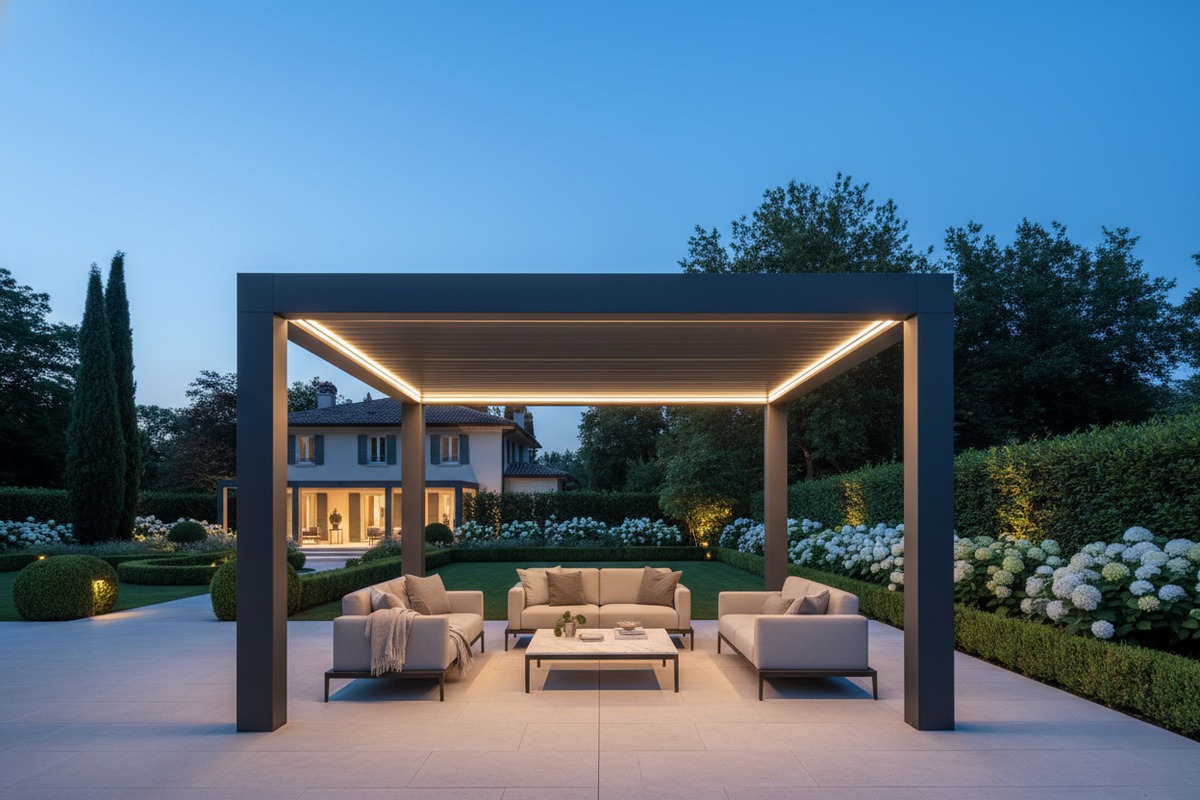
Every season, our production lines ship more aluminum pergola systems to Europe and fewer traditional steel frames leave the factory floor total cost of ownership 1. modern aluminum pergolas 2
Aluminum pergolas are replacing traditional garden structures across Europe because they deliver superior weather resistance, near-zero maintenance, modern architectural aesthetics, and smart technology integration that transforms outdoor spaces into year-round living rooms at a lower total lifetime cost than wood or steel alternatives.
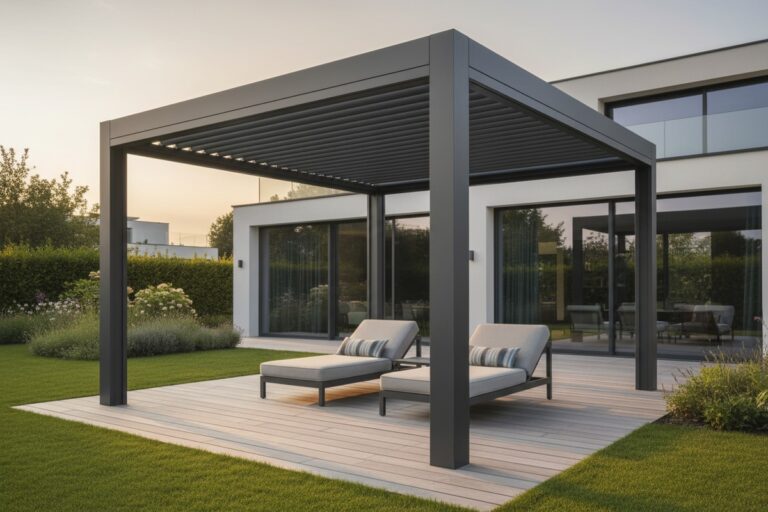
This shift is not just about materials. It is about how Europeans use outdoor space today structural longevity 3. The pergola has evolved from a decorative vine support into a fully functional outdoor room with motorized louvers 4, integrated lighting, and climate control. In this article, we break down the practical reasons behind this transition and explain what it means for contractors, distributors, and design professionals sourcing pergola systems for the European market.
How can I justify the shift from wood to aluminum to my quality-conscious European customers?
When we speak with purchasing managers across Italy, Germany, and France, the same concern comes up repeatedly: their end customers love the look and feel of wood and need convincing that aluminum is a worthy replacement pre-engineered aluminum pergola systems 5.
You can justify the shift by showing customers that modern aluminum pergolas now offer realistic woodgrain finishes, superior structural longevity of 30 to 50 years, zero risk of rot or insect damage, and a dramatically lower total cost of ownership compared to traditional timber structures that require constant upkeep.
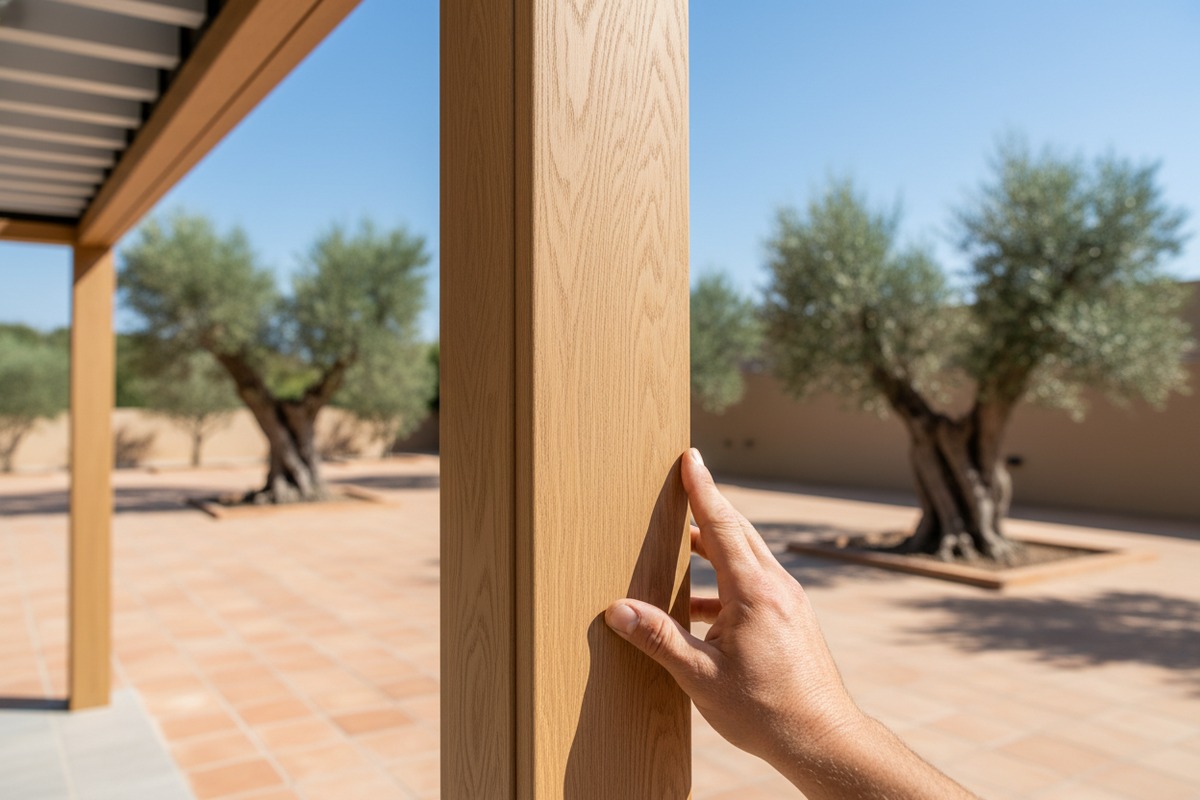
The key to winning over quality-conscious buyers is reframing the conversation from upfront cost to lifetime value. Wood looks beautiful on day one. But in European climates 6 with heavy rain, coastal salt air, freeze-thaw cycles, and intense summer UV, untreated or poorly maintained timber deteriorates fast. Our engineering team has tested powder-coated aluminum profiles through thousands of hours of salt spray and UV exposure. The results consistently show that aluminum retains its finish and structural integrity far longer than even premium hardwoods.
The Emotional Objection: "Wood Feels More Natural"
This is real and valid. Many homeowners in Tuscany, Provence, or the English countryside prefer the warmth of timber. But the finishing technology available today has closed this gap significantly. Advanced powder-coating processes can replicate oak, teak, and walnut grain patterns on aluminum surfaces. powder coating processes 7 From a distance of even one meter, these finishes are nearly indistinguishable from real wood. We offer over 200 RAL color options 8 and multiple woodgrain textures specifically to address this concern.
The Rational Argument: Lifetime Cost Comparison
Here is where aluminum wins decisively. Consider a standard 4m × 3m pergola installed in a northern European climate.
| Cost Factor | Traditional Wood Pergola | Aluminium Pergola |
|---|---|---|
| Initial purchase price | €2,000 – €4,500 | €3,500 – €8,000 |
| Annual maintenance (staining, sealing) | €150 – €300 | €0 – €30 (occasional wash) |
| Major repair or replacement (over 20 years) | €1,500 – €3,000 | €0 – €200 |
| Estimated lifespan | 10 – 20 years | 30 – 50+ years |
| Total 20-year cost | €5,500 – €13,500 | €3,500 – €8,600 |
Over a 20-year period, the aluminum pergola often costs less than the wooden one when you factor in maintenance, repairs, and potential replacement. For quality-conscious European buyers, this is not a compromise. It is an upgrade.
Structural Performance in European Weather
European climates are harsh on outdoor structures. In Scandinavia, freeze-thaw cycles crack and split timber joints. In Mediterranean coastal areas, salt air accelerates corrosion and wood decay. Aluminum is naturally resistant to all of these forces. Our standard profiles are engineered to handle wind loads up to 120 km/h and snow loads up to 75 kg/m², meeting or exceeding EN 1991 Eurocode requirements for most European regions. Wood can match these ratings, but only with heavier, bulkier framing that conflicts with the clean, minimal aesthetic European designers now prefer.
Can I get the custom RAL colors and sizes I need to replace traditional wooden designs?
One of the most common questions our European partners ask during the first call is whether we can match specific RAL colors and produce non-standard dimensions for their local projects.
Yes. Reputable aluminum pergola manufacturers now offer full RAL color customization with over 200 standard options, plus custom color matching, alongside flexible sizing in both width and projection to fit specific architectural requirements, terraces, and commercial spaces across Europe.
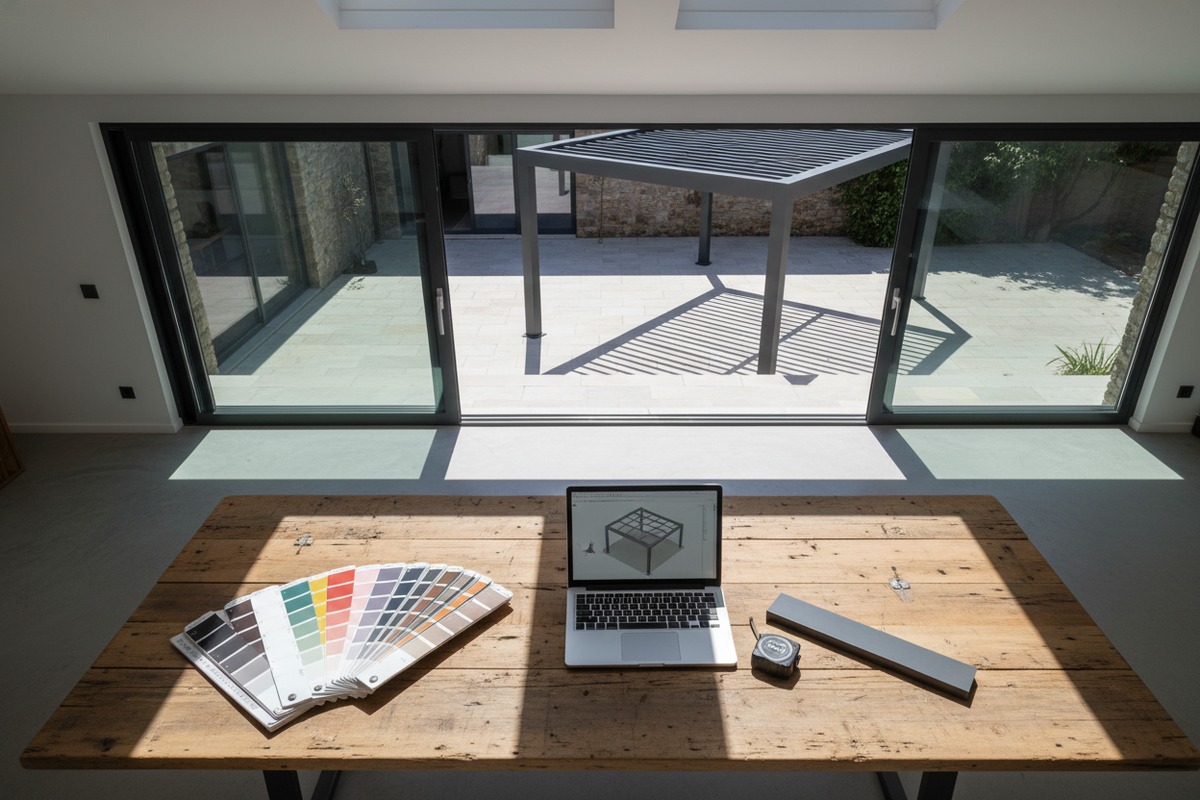
Customization is one of aluminum's greatest advantages over wood and one of the main reasons it is displacing traditional structures in the European market. With wood, achieving a specific color means staining or painting, which fades and needs renewal. With aluminum, the color is baked into the powder-coat finish at the factory. It stays consistent for decades.
RAL Color Range and Matching
Our standard catalog includes popular European architectural colors such as RAL 7016 (Anthracite Grey), RAL 9005 (Jet Black), RAL 9010 (Pure White), and RAL 7035 (Light Grey). But we also handle custom RAL matching for projects that require a specific color to coordinate with building facades, brand identity, or local planning requirements.
| Customization Option | What We Offer | Typical Lead Time |
|---|---|---|
| Standard RAL colors (top 20) | Immediate availability from stock | 7 – 15 days |
| Extended RAL palette (200+) | Made to order with powder-coat matching | 20 – 30 days |
| Custom non-RAL colors | Sample matching with color verification | 25 – 35 days |
| Woodgrain finishes | Oak, teak, walnut, cedar textures | 20 – 30 days |
| Non-standard sizes | Custom width, projection, height | 20 – 30 days |
| Special structural requirements | Enhanced wind/snow load profiles | 25 – 35 days |
Dimensional Flexibility
Traditional wooden pergolas are often built on-site, giving them apparent flexibility in sizing. But this flexibility comes with inconsistency, waste, and higher labor costs. Aluminum pergola systems are precision-manufactured using CNC cutting and extrusion processes 9. We produce standard modules that can be combined or adjusted in 10mm increments. A contractor in Milan who needs a 5.2m × 3.8m system gets exactly that, pre-cut, pre-drilled, and ready to assemble.
Why This Matters for European Markets
European architecture is diverse. A project in Amsterdam might require a narrow, deep pergola to fit a canal-side terrace. A resort in Crete might need a wide, shallow structure for poolside shade. A restaurant in Munich might need a specific height clearance to comply with local building codes. The ability to customize dimensions and colors without massive price premiums or delays is a core reason why aluminum systems are replacing traditional wood builds. Our OEM/ODM model is built around this reality. We work from architectural drawings, produce 3D renderings for client approval, and deliver finished components that match the specification exactly.
How will switching to aluminum pergolas reduce my long-term maintenance and after-sales service burdens?
After years of handling after-sales calls from our European distribution partners, we have learned that the single biggest hidden cost in the pergola business is not the product itself — it is what happens after installation.
Switching to aluminum dramatically reduces long-term maintenance because aluminum does not rot, warp, crack, or require periodic staining or sealing. This eliminates the most common after-sales complaints associated with wooden structures and cuts your warranty service workload by an estimated 60 to 80 percent over a ten-year period.
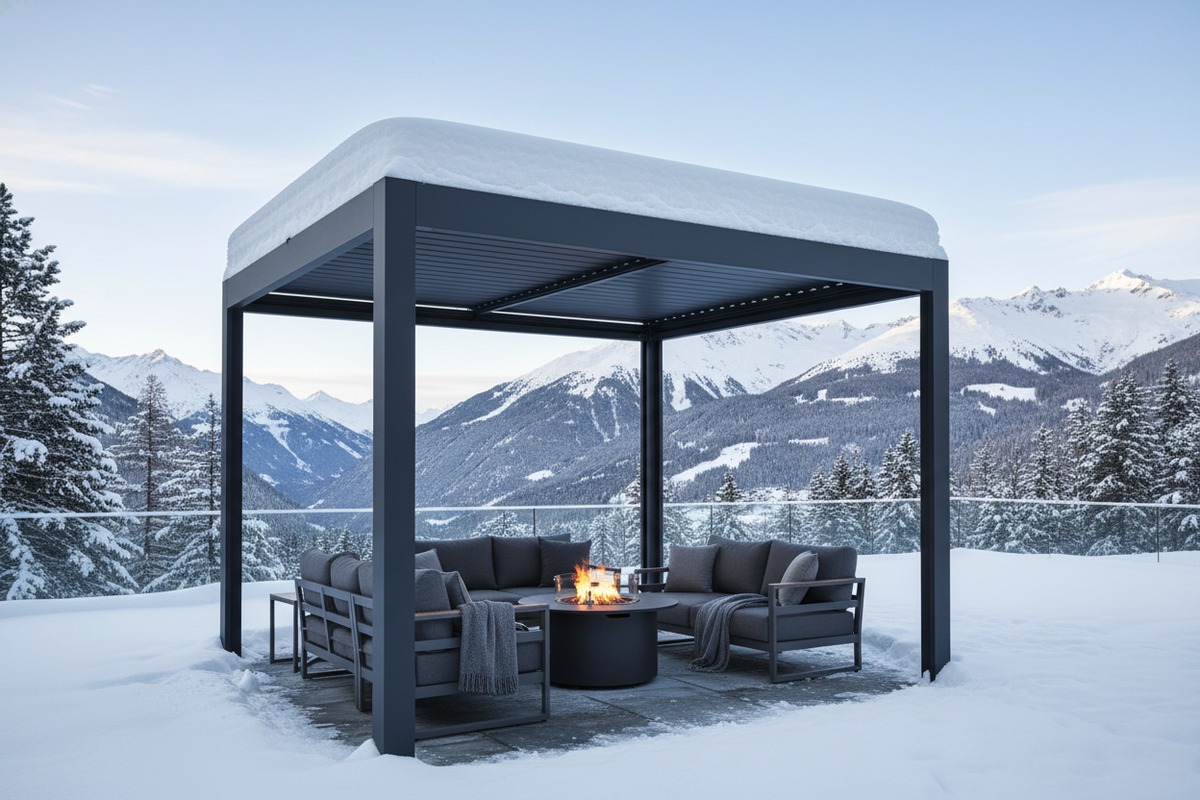
For contractors and distributors, after-sales service is a profit killer. Every callback, every replacement part, every customer complaint about peeling paint or warped beams costs time and money. Wood pergolas are the biggest offenders because they are fundamentally vulnerable to the elements. Even premium treated timber requires attention every one to three years in most European climates.
The Maintenance Cycle of Wood vs. Aluminum
With wood, the maintenance cycle is relentless. Year one looks great. By year two or three, UV exposure starts fading the stain. Moisture works into end grain. Joints loosen as the wood expands and contracts. By year five, most wooden pergolas in northern Europe show visible deterioration unless the homeowner has been diligent about resealing.
Aluminum breaks this cycle entirely. The powder-coated finish is applied at 180–200°C in the factory. It bonds to the aluminum at a molecular level. It does not peel, flake, or fade under normal conditions. Our coatings are tested to meet Qualicoat Class 2 standards 10, which means they maintain color and gloss integrity for a minimum of 15 years even under intense UV exposure.
What After-Sales Service Actually Looks Like
| After-Sales Issue | Wood Pergola (Frequency) | Aluminum Pergola (Frequency) |
|---|---|---|
| Finish fading or peeling | Every 2 – 3 years | Rare (15+ years) |
| Structural warping or cracking | Every 3 – 5 years | Essentially never |
| Insect or rot damage | Ongoing risk | Zero risk |
| Joint loosening | Common with seasonal cycles | Rare with engineered connections |
| Motor or electronic faults | N/A (manual structures) | Occasional (warranty-covered) |
| Customer complaints about appearance | Frequent after year 3 | Very rare |
The only realistic after-sales concern with aluminum pergola systems involves the mechanical and electronic components: motorized louvers, LED drivers, and rain sensors. These are standardized components that can be replaced modularly without disassembling the structure. We supply spare parts kits and detailed troubleshooting guides with every shipment to help our partners resolve these issues quickly.
Reducing Your Service Burden as a Business
If you are a distributor or contractor in Europe, every after-sales visit costs you €100 to €300 in labor and travel, not counting the replacement materials. A portfolio of 100 wooden pergola installations could generate 20 to 40 service calls per year. The same portfolio in aluminum might generate 3 to 8 calls, mostly related to electronic components rather than structural or finish issues. That difference directly affects your profitability and your reputation. Quality-conscious European customers do not just want a beautiful pergola. They want one that still looks beautiful in five, ten, or twenty years without effort.
How can I reduce my installation time and labor costs by switching to aluminum pergolas?
On a recent project shipment to a contractor in the Netherlands, we received feedback that their crew installed a 4m × 4m louvered aluminum pergola in under five hours. The same team estimated that a comparable wooden build would have taken two full days.
Switching to pre-engineered aluminum pergola systems can reduce on-site installation time by 50 to 70 percent compared to traditional wood construction because components arrive pre-cut, pre-drilled, and clearly labeled with modular connections that require only basic tools and a small crew of two to three people.
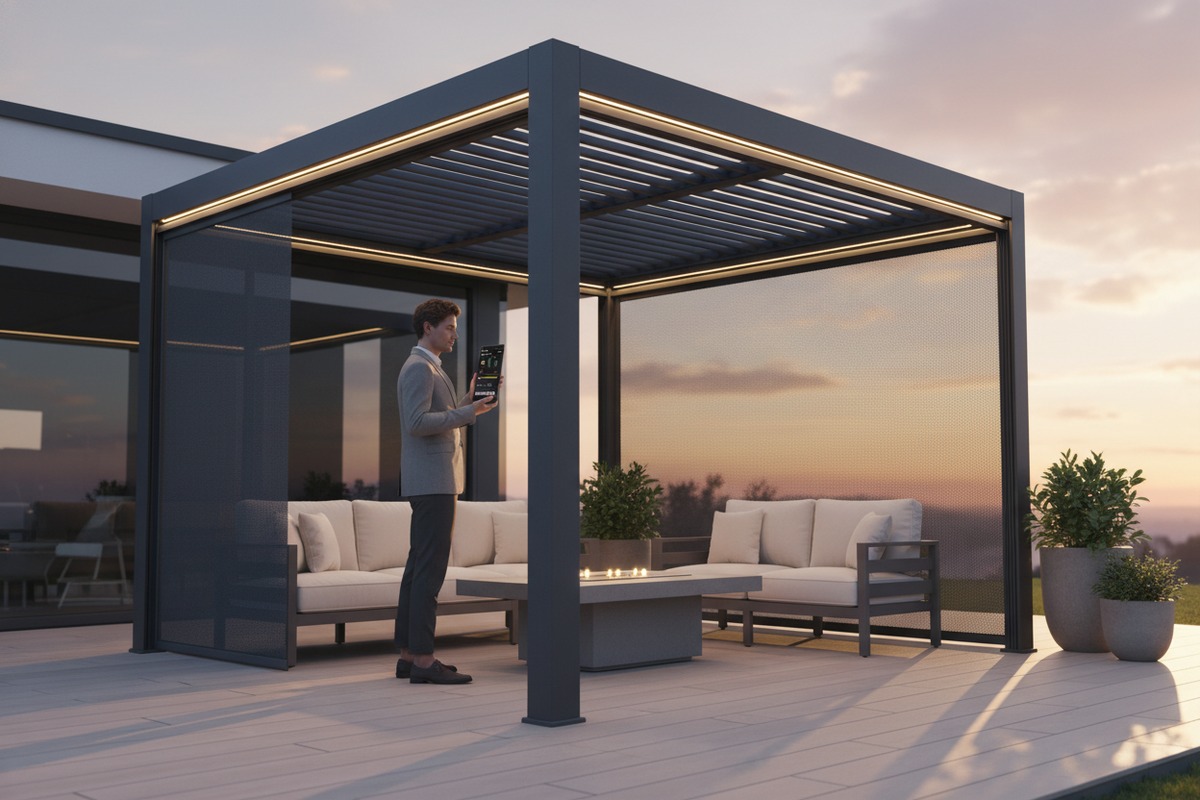
Installation speed matters enormously for European contractors and builders. Labor is expensive across the EU. A two-person crew in Germany or France costs €400 to €800 per day including overhead. Every extra day on site directly eats into project margins. Traditional wooden pergolas typically require on-site measuring, cutting, fitting, drilling, sanding, and finishing. That process introduces variability, waste, and error.
Pre-Engineered vs. Site-Built: A Direct Comparison
Aluminum pergola systems from established manufacturers arrive as flat-packed kits. Every beam, post, bracket, screw, and seal is included and labeled. Assembly follows a numbered sequence. Our kits include multilingual installation manuals with step-by-step 3D diagrams and QR codes linking to video walkthroughs. This approach eliminates the guesswork that slows down traditional builds.
What Drives the Time Savings
Several design features of aluminum systems contribute to faster installation:
- Pre-cut profiles. No on-site sawing or planing. Every piece fits.
- Pre-drilled connection points. Bolt holes are CNC-machined to exact tolerances.
- Modular brackets and connectors. Snap-fit or bolt-on connections replace complex joinery.
- Integrated channels. Wiring for lighting, motors, and sensors runs inside the hollow aluminum profiles, eliminating external conduit work.
- Lightweight material. Aluminum weighs roughly one-third of steel, making it easier to lift and position without heavy equipment.
Real-World Installation Time Comparison
| Pergola Type and Size | Wood (Site-Built) | Aluminum (Pre-Engineered) |
|---|---|---|
| Simple open-roof 3m × 3m | 8 – 12 hours | 3 – 5 hours |
| Louvered roof 4m × 4m | 16 – 24 hours | 5 – 8 hours |
| Large commercial 6m × 4m with screens | 24 – 40 hours | 8 – 14 hours |
| Crew size required | 3 – 4 people | 2 – 3 people |
| Specialized tools needed | Saws, planers, clamps, finishing tools | Basic power drill, level, wrench set |
Reducing Error Rates and Rework
Speed is only part of the story. Accuracy matters just as much. When components are manufactured to CNC precision, the risk of misalignment, gaps, or structural error drops dramatically. With wood, even experienced carpenters encounter warped boards, inconsistent grain, and variations in moisture content that force on-site adjustments. These adjustments cost time and sometimes materials.
We have invested heavily in making our kits error-proof. Every component bag is numbered. Every fastener is sorted by assembly step. Every manual includes a parts checklist and a troubleshooting section for common installation questions. When our partners tell us their crews can install confidently without calling our technical support line, that is the goal achieved.
The Business Impact for Contractors
Faster installation means more projects per month. It means lower labor costs per project. It means fewer callbacks for installation-related issues. For a European contractor running 50 pergola installations per year, switching from wood to pre-engineered aluminum could free up 200 to 400 labor hours annually. At European labor rates, that translates to €10,000 to €30,000 in direct savings or additional revenue capacity. That is a compelling business case.
Schlussfolgerung
Aluminum pergolas are earning their place across Europe not by being perfect, but by solving real problems that wood and steel cannot address as efficiently in modern outdoor living contexts.
Fußnoten
1. Defines Total Cost of Ownership as a financial metric for evaluating asset costs over time. ︎
2. Provides a comprehensive overview of modern aluminum pergolas and their benefits. ︎
3. Explains the long-term durability and lifespan of aluminum structures in outdoor applications. ︎
4. Explains how motorized louvers work in pergolas, their control, and benefits. ︎
5. Defines pre-engineered buildings and their advantages in construction and assembly. ︎
6. Provides an overview of the different climate types found across Europe. ︎
7. Wikipedia provides an authoritative and comprehensive explanation of powder coating processes. ︎
8. Explains the RAL color matching system used for defining standard colors in various industries. ︎
9. Describes how CNC machining and extrusion are used in aluminum manufacturing for precision. ︎
10. Explains the durability and performance requirements of Qualicoat Class 2 for aluminum coatings. ︎