

Every year, we ship thousands of aluminum pergola sets from our Hainan facility to European markets EU REACH Regulations 1. One thing keeps our compliance team awake at night: REACH. A single shipment flagged at Rotterdam or Hamburg can cost an importer €100K or more in fines, and it can destroy a business relationship we spent years building.
To ensure aluminum pergolas from China comply with EU REACH, importers must verify Substances of Very High Concern (SVHCs) stay below 0.1% by weight in all components, demand third-party lab reports from accredited bodies like TÜV or SGS, secure supplier declarations, and maintain full supply chain documentation for at least ten years.
This guide breaks down the exact steps, common pitfalls, and practical tools you need Substances of Very High Concern 2. We'll cover how to authenticate test reports, which chemicals to watch in coatings, how to avoid customs seizures, and what to do when a supplier can't provide proper documentation. Let's dive in.
How can I verify that my Chinese manufacturer's REACH test reports are authentic?
We've seen it happen more than once on our factory floor in Hainan: a buyer receives a test report that looks professional but doesn't hold up under scrutiny lead, cadmium, chromium VI 3. Fake or outdated REACH certificates circulate widely in the aluminum outdoor products industry, and the consequences for importers are severe.
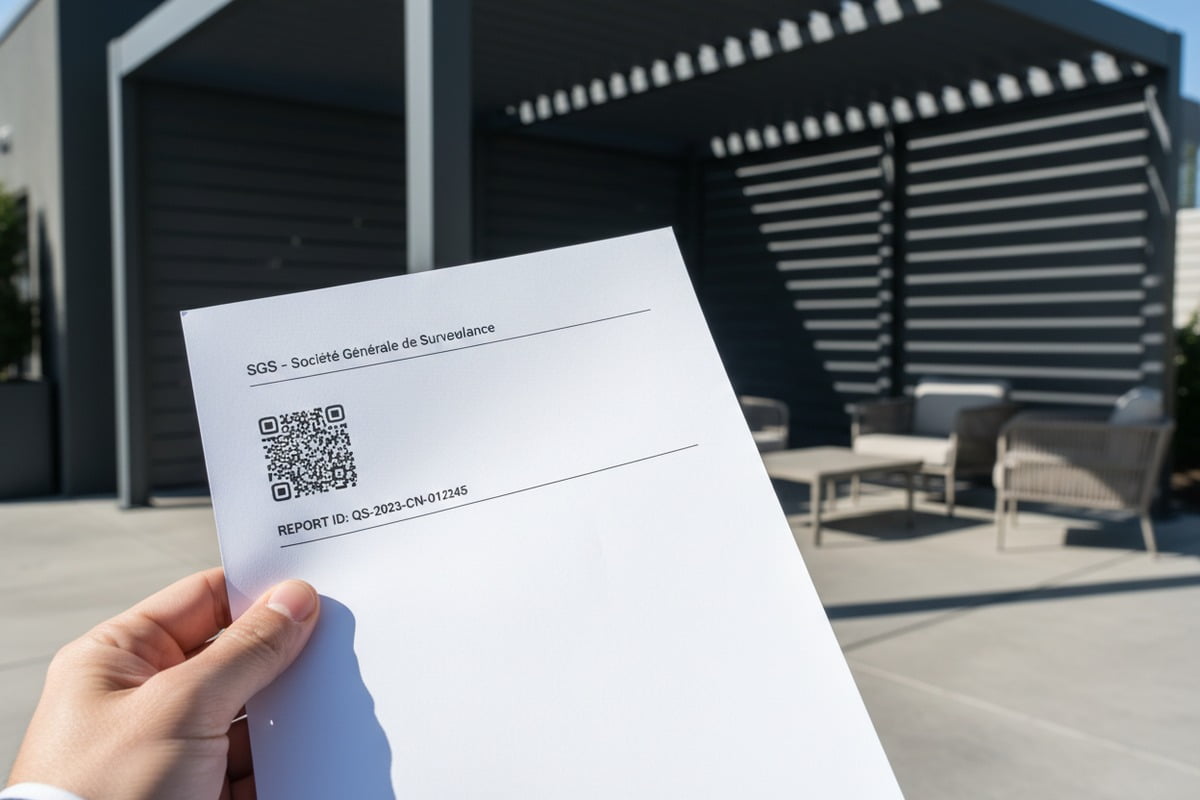
Verify authenticity by cross-checking the report's unique ID number directly with the issuing laboratory (e.g., SGS, TÜV, Intertek), confirming the tested product matches your exact SKU, ensuring the test date is recent, and validating the lab holds ISO 17025 accreditation for the specific tests performed.
Why Fake Reports Exist
The cost of genuine third-party REACH testing adds 5–10% to production costs. Budget manufacturers skip this step and produce self-declared documents or recycle old reports from different products. When our quality team audits partner factories, we find that roughly one in five smaller workshops cannot produce original lab documentation upon request.
Step-by-Step Verification Process
Here is a practical checklist you can follow:
- Request the original report, not a summary or screenshot. It should include the lab's letterhead, a unique report number, the testing standard referenced, and a detailed list of substances tested.
- Contact the lab directly. Every major testing body (SGS, TÜV, Intertek, Bureau Veritas) has online verification portals. Enter the report number. If it doesn't match, walk away.
- Match product details. The report must describe the exact product tested — including alloy grade, coating type, and component breakdown. A generic "aluminum profile" report does not cover your powder-coated louvered pergola with integrated mesh screens.
- Check the test date. REACH's SVHC Candidate List is updated twice a year. A report from 2021 may miss substances added in 2023 or 2024. We recommend reports no older than 12 months.
- Confirm lab accreditation. The lab must hold ISO 17025 accreditation 4 for chemical testing. You can verify this through national accreditation bodies like CNAS (China) or DAkkS (Germany).
Common Red Flags in Test Reports
| Red Flag | What It Means | Action |
|---|---|---|
| No unique report number | Likely fabricated or copied | Reject and request new test |
| Product description is vague | May not cover your specific pergola | Request product-specific testing |
| Test date older than 18 months | May miss recently added SVHCs | Require updated testing |
| Lab not ISO 17025 accredited | Results may not be accepted by EU authorities | Switch to accredited lab |
| Report covers "raw aluminum" only | Ignores coatings, sealants, hardware | Demand full-component testing |
On-Site Audit Tips
When our European partners visit our facility, we walk them through the raw material traceability logs, coating batch records, and archived lab reports. If a manufacturer resists an on-site audit or cannot show you a physical copy of the report filed in their quality department, that is a strong warning sign. Trust but verify — always.
What specific substances in aluminum coatings should I monitor for EU compliance?
When our R&D team formulates coating specifications for a new pergola line, the first thing we check is the latest ECHA Candidate List 5. Coatings are where most REACH violations hide in aluminum outdoor structures. The base metal is rarely the problem. The paint, powder coat, anodizing chemicals, and sealants are.
Monitor for lead, cadmium, chromium VI, certain phthalates (DEHP, DBP, BBP, DIBP), PFAS-based additives, and volatile organic compounds (VOCs) in powder coatings, anodizing treatments, and sealants. These are the most common SVHCs found in aluminum pergola finishes that trigger EU REACH enforcement actions.

The Coating Risk Map
A typical aluminum pergola has multiple layers of chemical treatment. Each layer presents a different risk profile:
| Coating/Treatment Layer | Common SVHCs to Monitor | Typical Location on Pergola |
|---|---|---|
| Chromate conversion coating | Chromium VI compounds | Pre-treatment of all aluminum profiles |
| Powder coating (polyester) | Lead, cadmium, certain pigment additives | Frame, louvers, posts |
| Anodizing solution residues | Nickel salts, sulfuric acid traces | Decorative or protective finishes |
| Sealants and gaskets | Phthalates (DEHP, DBP), PFAS | Joints, screen track channels |
| Hardware plating (screws, bolts) | Cadmium, hexavalent chromium | All fasteners and connectors |
Why Powder Coatings Deserve Extra Attention
Most aluminum pergolas destined for EU markets use powder coating for weather resistance and aesthetics. Our charcoal grey matte finish — the most popular color for European orders — uses polyester-based powder. However, not all powder suppliers are equal. Cheap pigments sometimes contain lead or cadmium above the 0.1% SVHC threshold. We source our powder exclusively from suppliers who provide batch-level REACH compliance certificates.
The PFAS Issue Is Coming Fast
"Forever chemicals" (PFAS) are increasingly under EU regulatory scrutiny. Some high-performance coatings and water-repellent sealants contain PFAS compounds 6. While not all PFAS are currently on the SVHC Candidate List, a broad EU PFAS restriction proposal is advancing through 2025–2026. Forward-thinking importers should ask their Chinese suppliers now: "Do any of your coatings or sealants contain PFAS?" At our production line, we have already transitioned to PFAS-free alternatives for all sealant applications.
Chromium VI: The Hidden Danger
Many aluminum extrusion factories still use chromate conversion coatings as a pre-treatment before powder coating. This process uses hexavalent chromium (Chromium VI), which is an Annex XIV substance 7 under REACH — meaning it requires specific authorization for use in the EU. If your supplier's pre-treatment process uses Chromium VI and residues remain in the finished product above the threshold, you face a serious compliance problem. Always ask: "What pre-treatment process do you use? Is it chrome-free?"
Testing Frequency Recommendations
We recommend importers test coatings at least once per year and whenever they change a supplier, switch colors, or modify the coating specification. Our factory runs internal quality checks on every incoming powder batch, but independent third-party testing gives importers the documentation EU customs officers want to see.
How do I ensure my custom-made pergolas won't be seized by EU customs for chemical violations?
One of our long-term Italian partners once told us about a competitor whose entire container of pergolas was held at the port of Genoa for three weeks. The importer had no REACH documentation ready. The financial and reputational damage was enormous. This happens more often than people think.
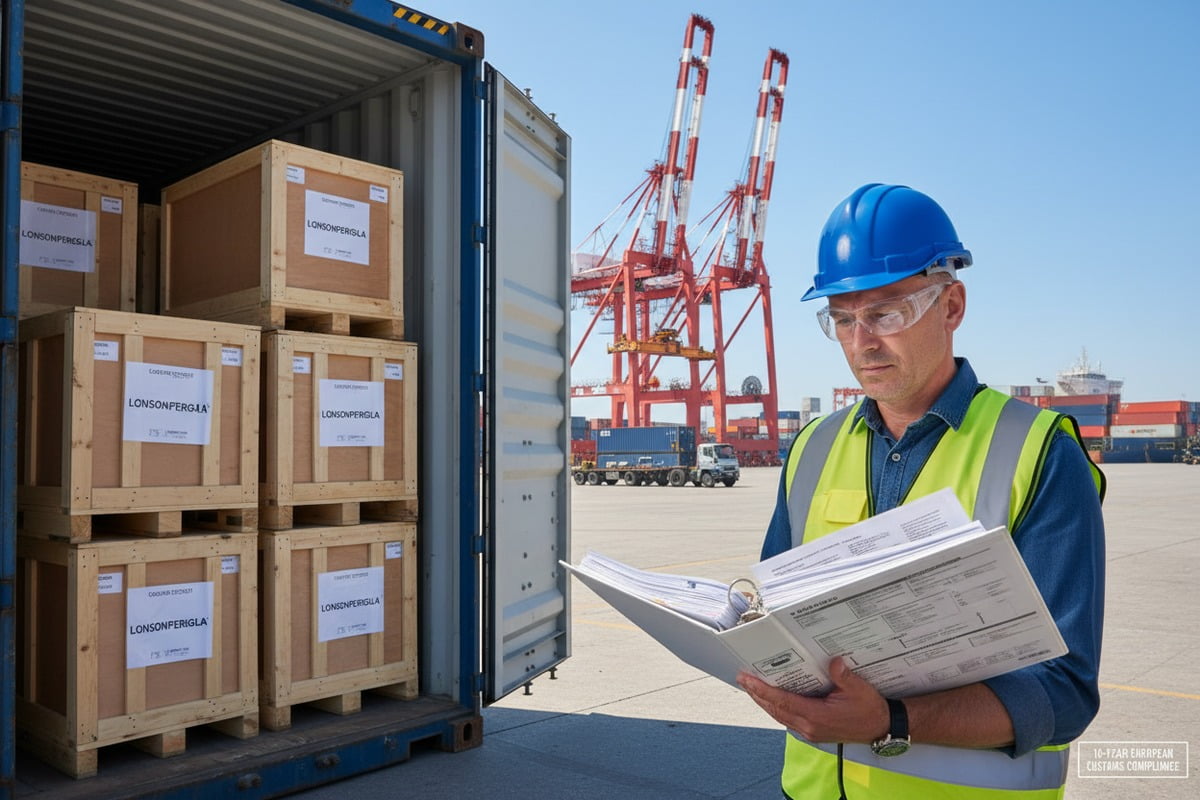
Prevent customs seizures by preparing a complete compliance dossier before shipment — including third-party SVHC test reports, a REACH Declaration of Conformity, Safety Data Sheets for all chemical components, CE marking documentation, and a Bill of Materials listing every material and its chemical composition. Have this dossier ready for inspection at the port of entry.
How EU Customs Enforcement Actually Works
EU member states use the RAPEX rapid alert system 8 to flag non-compliant products. In 2024, over 200 outdoor product categories received RAPEX alerts. Customs officers at major ports (Rotterdam, Hamburg, Antwerp, Genoa) increasingly target shipments from Chinese aluminum product suppliers. They can request documentation at any point during clearance.
If you cannot produce compliance documents on demand, your shipment gets held. Held shipments mean storage fees, delayed projects, and potential forced re-export or destruction of goods.
Your Pre-Shipment Compliance Dossier
Here is exactly what we prepare for every European shipment from our Hainan facility:
| Document | Purpose | Who Provides It |
|---|---|---|
| REACH Declaration of Conformity 9 | Confirms article-level SVHC compliance | Manufacturer (us) |
| Third-party SVHC test report | Independent lab verification of all components | Accredited lab (SGS, TÜV, etc.) |
| Safety Data Sheets (SDS) | Chemical details for coatings, sealants, lubricants | Chemical suppliers via manufacturer |
| Full Bill of Materials (BOM) | Lists every material, alloy grade, coating spec | Fabricante |
| CE Declaration of Conformity | Structural and safety compliance | Manufacturer with notified body |
| Customs tariff classification | Correct HS code to avoid misclassification flags | Importer's customs broker |
Timing Matters
Do not wait until the container is on the water. We recommend finalizing all documentation at least two weeks before shipment. Our logistics team sends a digital compliance package to the importer before the container leaves the port of Haikou. This gives the importer time to review, flag any gaps, and have everything prepared for their customs broker.
The CBAM Factor Starting 2026
From 2026, aluminum imports into the EU also face Carbon Border Adjustment Mechanism 10 (CBAM) reporting. While CBAM is separate from REACH, customs officers will check both. An incomplete CBAM declaration can also trigger inspection of your REACH documentation. Our facility has already begun tracking embedded carbon data per production batch so that our European partners have one less thing to worry about.
Post-Market Surveillance
Clearing customs does not end your obligations. EU market surveillance authorities can inspect products already on the market. If a consumer or competitor files a complaint, authorities may request your REACH documentation years after import. This is why REACH requires importers to retain records for at least ten years. Keep digital and physical copies of everything.
Real Cost of Non-Compliance
A Dubai-based hospitality group saved $28,000 by conducting pre-shipment REACH audits on Chinese pergolas before a large project. Compare that to fines averaging €50K–€1M for REACH breaches on imports in the EU. Prevention is always cheaper than correction.
What steps should I take if my supplier cannot provide a REACH Declaration of Conformity?
We have had prospective buyers come to us after their previous Chinese supplier simply could not produce a REACH Declaration of Conformity. It's more common than you'd expect, especially with smaller factories in Foshan or Guangzhou that focus on domestic sales and treat export compliance as an afterthought.
If your supplier cannot provide a REACH Declaration of Conformity, immediately commission independent third-party testing of the product through an accredited lab, request full material composition disclosures for every component, evaluate alternative suppliers with proven REACH documentation, and consider engaging a REACH compliance consultant to bridge the gap before your next shipment.

Do Not Panic — But Act Fast
The absence of a REACH Declaration does not automatically mean the product is non-compliant. It often means the supplier lacks the knowledge, systems, or willingness to produce proper documentation. Here is a step-by-step action plan.
Step 1: Assess the Situation
Ask your supplier directly: "Why can you not provide this document?" The answer tells you a lot. Common responses include:
- "We've never been asked for it before." — This means they likely sell primarily to non-EU markets or domestic buyers.
- "We can provide a self-declaration." — A self-declaration has some value, but it will not satisfy EU customs without supporting lab data.
- "Our materials are safe." — Vague assurances carry zero legal weight.
Step 2: Commission Independent Testing
Send product samples (including all components — frame profiles, coated surfaces, sealants, screws, mesh screens) to an accredited laboratory. The cost is typically €2,000–€5,000 depending on the number of substances tested and the number of components. This is a fraction of the cost of a seized shipment.
Step 3: Evaluate Whether to Stay or Switch
| Scenario | Risk Level | Recommended Action |
|---|---|---|
| Supplier willing to invest in compliance | Medium | Work together; share testing costs; set timeline |
| Supplier dismissive of REACH requirements | High | Begin sourcing from alternative compliant supplier |
| Product passes independent lab testing | Low | Create your own Declaration of Conformity as importer |
| Product fails independent lab testing | Critical | Stop all orders immediately; do not ship to EU |
Step 4: Create Your Own Documentation
As the EU importer, you are legally responsible — not your Chinese supplier. If the supplier cannot provide documentation but the product passes third-party testing, you can create your own REACH Declaration of Conformity based on the lab results. However, this puts the full liability on you. Many of our European partners prefer working with manufacturers like us who provide complete documentation packages upfront because it shifts a significant portion of the compliance burden to the supplier side.
Step 5: Build Compliance Into Your Supply Agreement
Going forward, include explicit REACH compliance clauses in your purchase contracts. Specify that the supplier must provide updated SVHC test reports, material composition disclosures, and a Declaration of Conformity with every order. Include a penalty clause for non-compliance. This is standard practice among our long-term European partners, and it protects both sides.
The Bigger Picture: Supplier Capability Signals Quality
A supplier who cannot produce REACH documentation often has broader quality control gaps. If they don't track chemical inputs, they probably don't track coating thickness, alloy composition, or structural load testing with precision either. In our experience across 25 years of manufacturing, the factories that invest in compliance infrastructure are the same factories that deliver consistent product quality, hit delivery deadlines, and resolve issues quickly. Compliance capability is a proxy for overall operational maturity.
Conclusion
REACH compliance for aluminum pergolas is not optional — it is the cost of doing business in the EU. Verify test reports, monitor coating chemicals, prepare your customs dossier early, and never accept a supplier who cannot document compliance. Partner with manufacturers who treat regulatory transparency as standard practice, not an inconvenience.
Footnotes
- Provides official information on EU REACH regulations. ↩︎
- Comprehensive explanation of SVHCs and their criteria under REACH. ↩︎
- Provides official information on substances restricted under REACH, including these chemicals. ↩︎
- Explains the requirements and benefits of ISO/IEC 17025 accreditation. ↩︎
- Provides the official and regularly updated list of SVHCs. ↩︎
- Provides official updates and information on the EU PFAS restriction proposal. ↩︎
- Explains the purpose and lists substances included in REACH Annex XIV. ↩︎
- Official EU rapid alert system for dangerous non-food products. ↩︎
- Explains the steps for REACH compliance, including the role of declarations. ↩︎
- Provides official information on the EU's Carbon Border Adjustment Mechanism. ↩︎