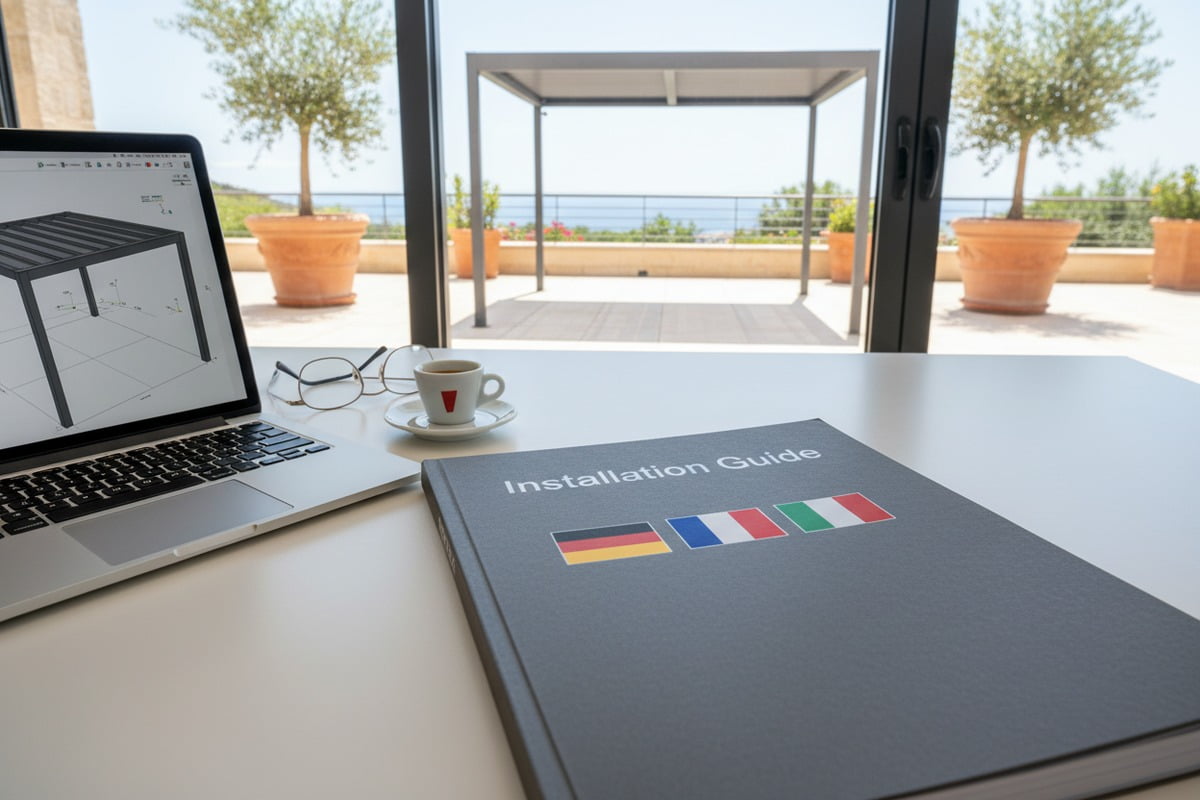
Shipping aluminum pergolas to Europe without proper multilingual manuals has cost importers thousands in project delays, warranty disputes, and even legal penalties.
To request multilingual installation manuals when sourcing aluminum pergolas for Europe, specify your target languages during the RFQ stage, require EU Machinery Directive 2006/42/EC compliance, and confirm digital delivery formats. Include language requirements in your purchase contract to ensure your supplier delivers accurate, CE-compliant documentation before shipment.
This guide walks you through each step of the process — from initial supplier communication to verifying translation quality and securing custom-branded guides EU Machinery Directive 2006/42/EC 1. Whether you distribute to contractors in Germany or sell retail in Italy, getting this right protects your brand, your margins, and your installers on-site.
Why do I need professional multilingual manuals for my European pergola projects?
Over 25 years on our production floor, we have seen perfectly engineered pergolas fail in the field — not because of the product, but because the installer could not read the manual.
Professional multilingual manuals are legally required under EU Machinery Directive 2006/42/EC, which mandates that installation and safety instructions be provided in the official language of every EU member state where the product is sold. Without them, your CE marking is invalid, and you face import bans, fines, and full liability for installation accidents.

Legal Obligations You Cannot Ignore
The EU does not treat installation manuals as optional marketing materials. They are part of your technical documentation package 2. If your pergola arrives in France with only an English manual, French customs or market surveillance authorities can legally block the sale. The Machinery Directive is clear: instructions must accompany the product in the language of the end-user country.
This applies to every component too. If your pergola includes a motorized louvered roof 3 or integrated LED lighting, the motor and electronics manuals must also be translated. A Polish regulation from the Economy Minister (2008) further reinforces that all safety warnings and operating instructions for machinery must be in Polish for products sold in Poland.
The Real Cost of Skipping Translations
When our team first started exporting to Southern Europe, one distributor in Spain tried to save costs by translating manuals in-house using generic translation software. The result? Torque specifications were converted incorrectly, and three pergolas were assembled with under-tightened bolts. Wind damage followed within weeks. The warranty claims alone exceeded €15,000.
What Professional Manuals Must Contain
| Manual Section | Purpose | Typical Page Count |
|---|---|---|
| Safety warnings and pictograms | Prevent injury, meet CE requirements | 3–5 pages |
| Tools and hardware checklist | Ensure nothing is missing before install | 1–2 pages |
| Foundation and surface prep | Avoid structural failures | 2–3 pages |
| Step-by-step assembly (with diagrams) | Guide installers through each phase | 20–30 pages |
| Electrical and motor wiring | Safe connection of motorized louvers, LEDs | 5–8 pages |
| Maintenance and troubleshooting | Extend product life, reduce support calls | 3–5 pages |
A typical professional manual runs 50 or more pages. When we prepare documentation for our European clients at Lonson Pergola, each manual covers stands, profiles, rails, louver mechanisms, and screen accessories — all with numbered diagrams and ISO-standard safety pictograms 4.
Reducing Post-Sale Support Costs
Good manuals cut your support calls dramatically. One of our Italian distribution partners reported a 40% drop in installation-related inquiries after switching from basic English-only PDFs to fully localized Italian and German guides. That is real money saved on customer service and warranty processing.
Multilingual manuals also protect you legally. If an installer is injured and the manual was only in English, you carry the liability. Full stop.
How can I verify if my supplier provides 3D instructional videos alongside the manuals?
When we developed our first 3D installation video series three years ago, the feedback from European contractors was immediate — assembly errors dropped and installation time fell by nearly 30%. 3D instructional video series 6
Ask your supplier directly for sample video links or QR codes embedded in their existing manuals, request a live demo via video call, and check their website or YouTube channel for published installation content. Reputable suppliers now offer step-by-step 3D animations or augmented reality overlays that complement printed PDFs and significantly reduce on-site mistakes.
Why Video Matters More Than Ever
Text and static diagrams have limits. A contractor on a rooftop in Milan cannot easily flip through a 50-page manual while holding an aluminum beam. Short, clear video segments — especially 3D animations that show each bolt, bracket, and connection point from multiple angles — solve this problem.
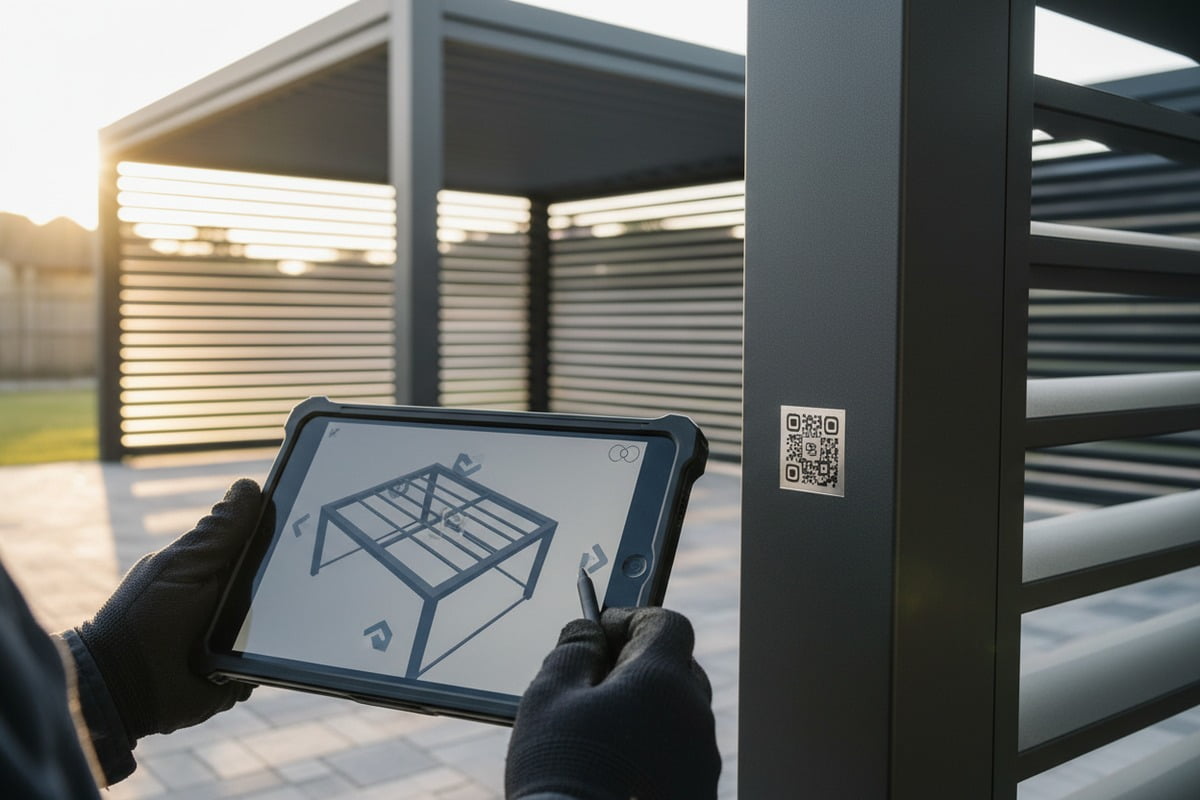
The trend in 2025 is digital-first documentation. Leading pergola manufacturers now deliver manuals as interactive PDFs with embedded QR codes. Each QR code links to a specific assembly step in video format. This hybrid approach means the installer always has the right visual reference at the right moment.
What to Ask Your Supplier
Before placing an order, send your supplier a checklist. Here is what we recommend based on our experience supporting over 5,000 installations across Europe:
| Verification Step | What to Look For | Red Flag |
|---|---|---|
| Request sample video | Clear 3D animation, correct product model shown | Supplier says "videos are coming soon" with no timeline |
| Check video languages | Voiceover or subtitles in your target languages | English-only audio with no subtitle options |
| QR code integration | Codes printed in manual linking to specific steps | Generic QR code linking to a homepage, not the video |
| Video hosting platform | YouTube, Vimeo, or supplier's own secure server | Links that expire or require login |
| Update policy | Videos updated when product design changes | Same video used for multiple product generations |
The Role of Augmented Reality
Some forward-thinking suppliers are experimenting with AR overlays. Using a smartphone camera, the installer points at the pergola frame and sees digital arrows, labels, and animations overlaid on the real structure. augmented reality overlays 7 This technology is still emerging, but it is worth asking about during your sourcing process. Even if your supplier does not offer AR today, their willingness to discuss it signals their commitment to installation support.
Remote Technical Support as a Backup
Video documentation does not replace human support entirely. At our facility, we offer video call assistance during complex installations — especially for wall-mounted pergolas or multi-module configurations where real-time guidance prevents costly errors. If your supplier offers this, confirm the time zones they cover and whether the support is available in your local language.
Our engineering team routinely supports contractors in France, Germany, and the Netherlands via scheduled video calls, walking them through tricky steps like mounting the motorized louver control box or aligning retractable screen tracks.
Can I request custom-branded installation guides for my private-label pergola business?
Running a private-label pergola operation 8 means every customer touchpoint must carry your brand — and the installation manual is often the first thing your client's contractor opens on-site.
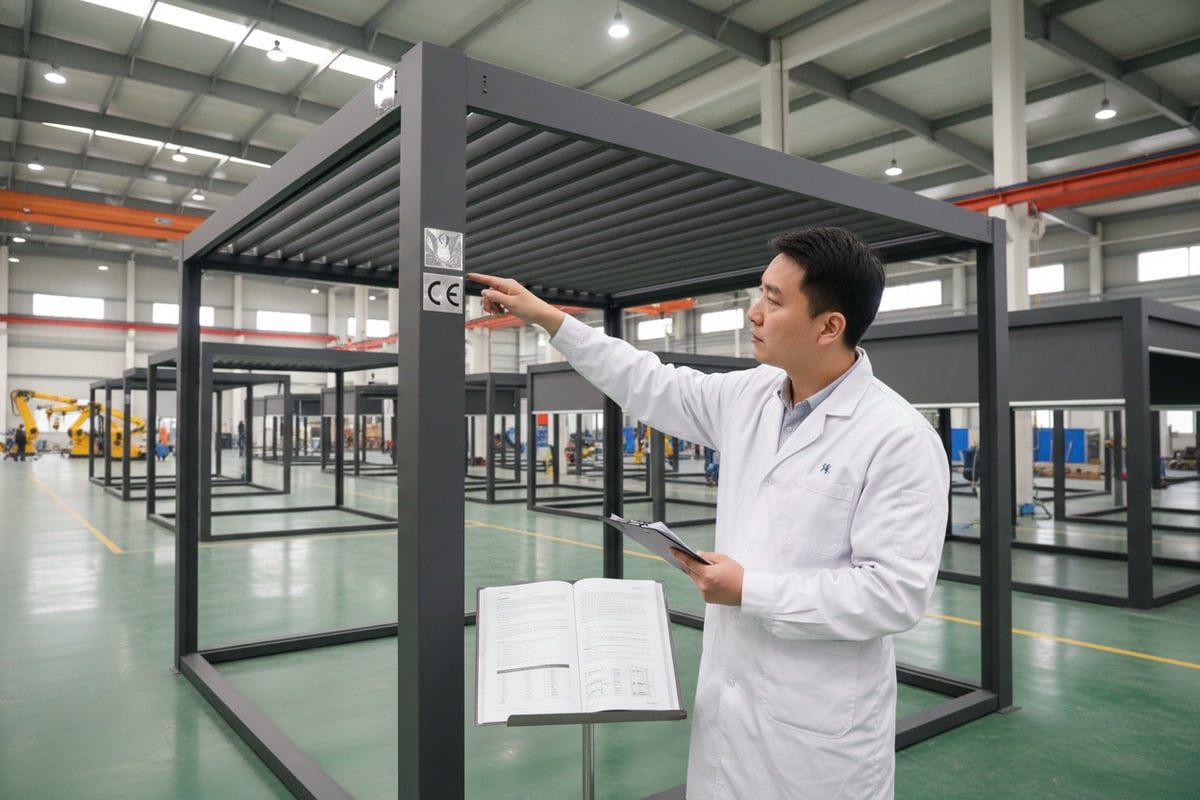
Yes, most established OEM/ODM pergola manufacturers offer custom-branded installation guides as part of their private-label service. You can specify your logo, brand colors, contact details, warranty terms, and even custom QR codes linking to your own support channels. Confirm branding scope and approval workflow in your supply agreement before production begins.
What Custom Branding Covers
When our clients order private-label pergolas, we treat the manual as part of the product, not an afterthought. Custom branding typically includes:
- Cover page: Your logo, brand name, product model name (not ours), and tagline.
- Headers and footers: Your company name and website on every page.
- Contact section: Your local phone number, email, and QR code to your support page.
- Warranty card: Your terms, your conditions, your coverage period.
- Color scheme: Manual design elements match your brand palette.
The Approval Process
At Lonson Pergola, we follow a structured workflow for branded manuals. First, our documentation team creates a draft using your brand assets. Then we send a PDF proof for your review. You mark changes. We revise. Final approval happens before the first container ships. This typically adds 5–7 business days to the documentation timeline, so plan accordingly.
Modular Content for Multiple Markets
If you sell in Italy, Germany, and France under the same private label, you need the same branded manual in three languages — at minimum. A smart approach is modular manual design. The core assembly steps stay the same across all versions. Only the text, safety warnings, and regulatory references change per language. This saves translation costs and ensures visual consistency.
| Branding Element | Standard (No Customization) | Private-Label Custom |
|---|---|---|
| Cover logo | Manufacturer's logo | Your brand logo |
| Product model name | Manufacturer's SKU | Your product name |
| Support contact info | Factory email and phone | Your local support details |
| Warranty terms | Generic factory warranty | Your specific warranty policy |
| QR codes | Link to manufacturer's site | Link to your branded support portal |
| Language versions | English + 1 language | All languages for your markets |
Protecting Your Brand Identity
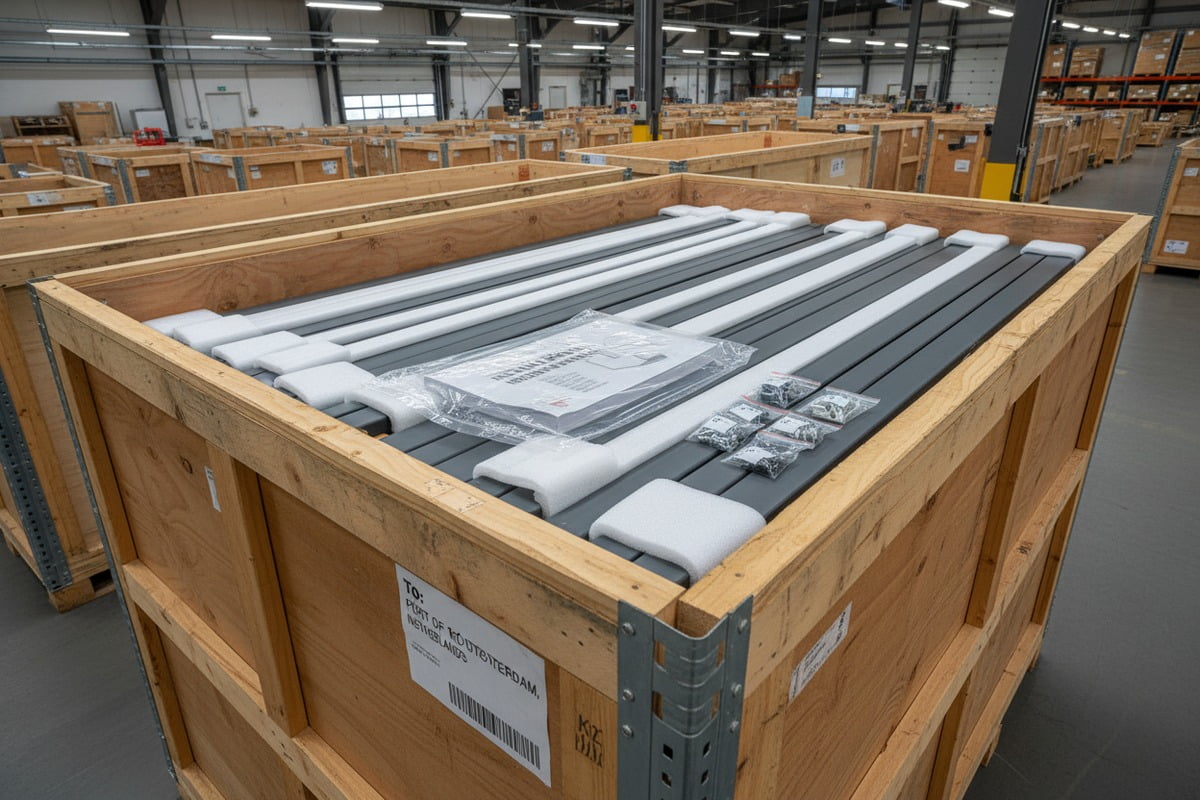
One detail many importers overlook: if your contractor opens a manual and sees a Chinese factory's branding, your positioning as a premium European brand weakens instantly. Every document that leaves the box should feel like it came from your company. This includes the manual, the hardware bags (labeled with your part numbers), and even the packing tape.
We have worked with distributors who initially thought branding the manual was unnecessary. After losing a contract because a competitor offered fully branded documentation, they never skipped this step again. Your manual is a silent salesperson. Make it work for your brand.
How do I ensure the technical translations in my manuals are accurate for my local contractors?
We learned this lesson the hard way. A German contractor once called us because the manual instructed him to use a "6mm hex key" where the actual bolt required a Torx T30. The translation had swapped two tool references. That single error cost a full day of delays on a hotel terrace project.
Ensure translation accuracy by requiring your supplier to use professional technical translators with engineering domain expertise, not generic translation services. Implement a three-step review process: supplier drafts the translation, your local contractor or technical partner reviews it, and both parties approve the final version. Mandate a shared terminology database to maintain consistency across all product manuals.
Why Generic Translation Fails
Technical manuals are not marketing brochures. They contain precise specifications — torque values, load ratings, fastener types, wiring diagrams, and safety classifications. A generic translator might render "louvered roof slat" as a vague term that means nothing to a French roofer. Or worse, translate a wind resistance rating incorrectly, leading an installer to skip critical anchoring steps.
AI translation tools like Google Translate and DeepL have improved dramatically, but they still struggle with specialized construction terminology. They might translate "powder-coated aluminum profile" into something that back-translates as "dust-covered aluminum shape." Close, but dangerously wrong in a technical context.
The Three-Step Verification Process
Here is the process we recommend and use internally:
Step 1 — Professional Technical Translation. The supplier's documentation team works with translators who specialize in construction, engineering, or machinery documentation. These translators understand terms like "cantilever load," "wind class 6," and "slat loading capacity of 116 kg/m²."
Step 2 — Local Technical Review. Your on-the-ground team — whether it is your warehouse manager in Milan, your lead installer in Munich, or a trusted contractor — reads through the translated manual with the actual product in front of them. They flag any confusing phrasing, incorrect tool names, or missing steps.
Step 3 — Joint Approval. Both you and the supplier sign off on the final version. This version gets locked and associated with a specific product SKU. Any future product changes trigger a manual update cycle.
Building a Terminology Database
If you plan to source multiple pergola models over several years, invest in a shared terminology database 9 early. This is a simple spreadsheet or dedicated tool that lists every technical term in English alongside its approved translation in each target language.
| English Term | German (DE) | French (FR) | Italian (IT) | Spanish (ES) |
|---|---|---|---|---|
| Louvered roof slat | Lamellendach-Lamelle | Lame de toit à persiennes | Lamella del tetto orientabile | Lama de techo orientable |
| Powder-coated aluminum | Pulverbeschichtetes Aluminium | Aluminium thermolaqué | Alluminio verniciato a polvere | Aluminio con recubrimiento en polvo |
| Wind resistance class 6 | Windwiderstandsklasse 6 | Résistance au vent classe 6 | Resistenza al vento classe 6 | Resistencia al viento clase 6 |
| Torx T30 screw | Torx T30-Schraube | Vis Torx T30 | Vite Torx T30 | Tornillo Torx T30 |
| Retractable screen | Ausfahrbare Seitenwand | Écran rétractable | Schermo retrattile | Pantalla retráctil |
This database grows with each product launch and ensures that every new manual uses consistent language. It also speeds up translation timelines and cuts costs, because translators are not reinventing terms from scratch each time.
Accessibility and Formatting Standards
Beyond accuracy, your manuals should be accessible. The Web Content Accessibility Guidelines (WCAG) 10 apply to digital documents distributed in the EU. This means sufficient color contrast in diagrams, text alternatives for images, and logical reading order in PDFs. An accessible manual is not just a legal nicety — it ensures that every contractor, including those with visual impairments, can safely install your pergola.
At our documentation center, we now produce all digital manuals in tagged PDF format with bookmarks, alt text on every diagram, and a minimum font size of 10pt for body text. These details matter when your manual is being read on a tablet screen in bright sunlight on a construction site.
Conclusion
Getting multilingual manuals right is not a nice-to-have — it is a legal, commercial, and safety imperative for anyone importing aluminum pergolas into Europe. Start the conversation with your supplier early, lock requirements into your contract, and verify every translation before the first container ships.
Footnotes
1. Official text of the directive mandating multilingual installation and safety instructions. ↩︎
2. Official EU guidance on technical documentation required for machinery under directives. ↩︎
3. Explains what louvers are and their various architectural applications, including roofs. ↩︎
4. Official ISO standard for graphical symbols used on safety signs and labels. ↩︎
5. Official EU information on CE marking requirements and its significance for products. ↩︎
6. Discusses the benefits of 3D animation for technical visualizations in various industries. ↩︎
7. Explores how augmented reality enhances technical documentation with information overlays. ↩︎
8. Replaced HTTP 403 with an authoritative Wikipedia definition of 'private label'. ↩︎
9. Explains terminology management and the role of databases in consistent technical translation. ↩︎
10. Official W3C guidelines for making web content accessible to people with disabilities. ↩︎