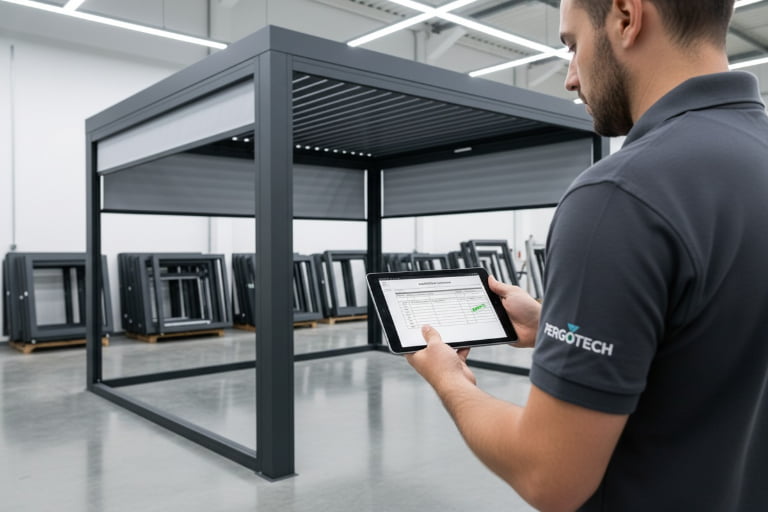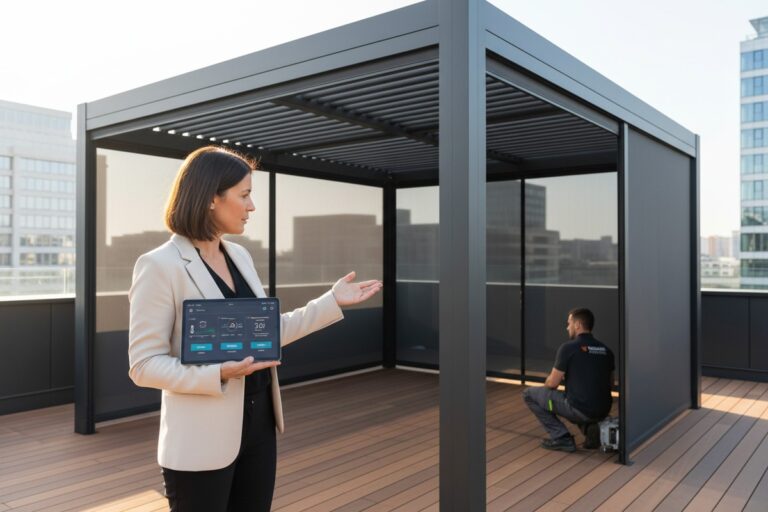
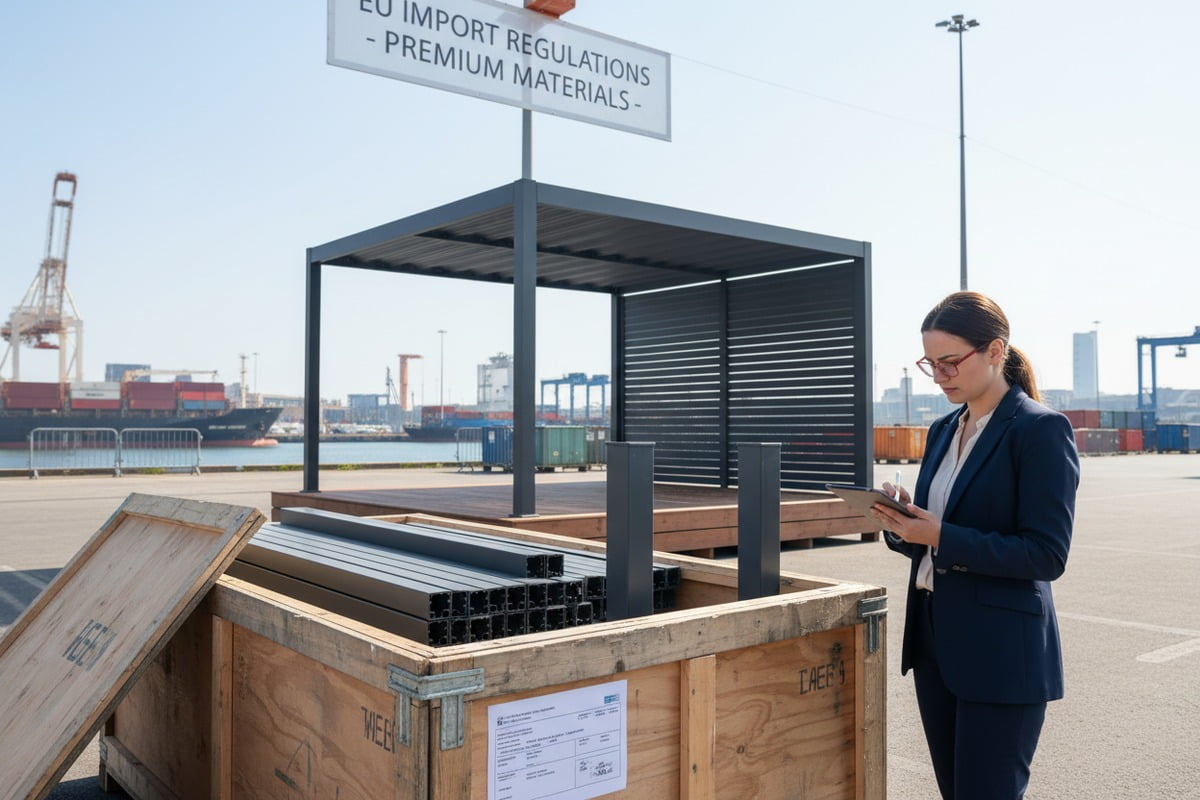
Every year, our production lines ship thousands of aluminum pergolas to Europe — and the question we hear most from buyers is about anti-dumping duties eating into their margins.
There are no specific EU anti-dumping duties on fully assembled aluminum pergolas. However, the aluminum extrusions, profiles, rods, and tubes used to build pergolas face definitive anti-dumping duties of 21.2% to 32.1% on imports from China, imposed since March 2021 and lasting five years.
This distinction between finished pergolas and their raw components is critical total landed cost 1. It shapes how you source, how you classify goods at customs, and ultimately how much you pay. Let's break it all down so you can make smarter purchasing decisions in 2026 and beyond.
How much will EU anti-dumping duties increase my total landed cost for aluminum pergolas?
When we quote DDP prices for our European partners, this is the first calculation we run — and the numbers can be surprising if you haven't factored in anti-dumping duties before.
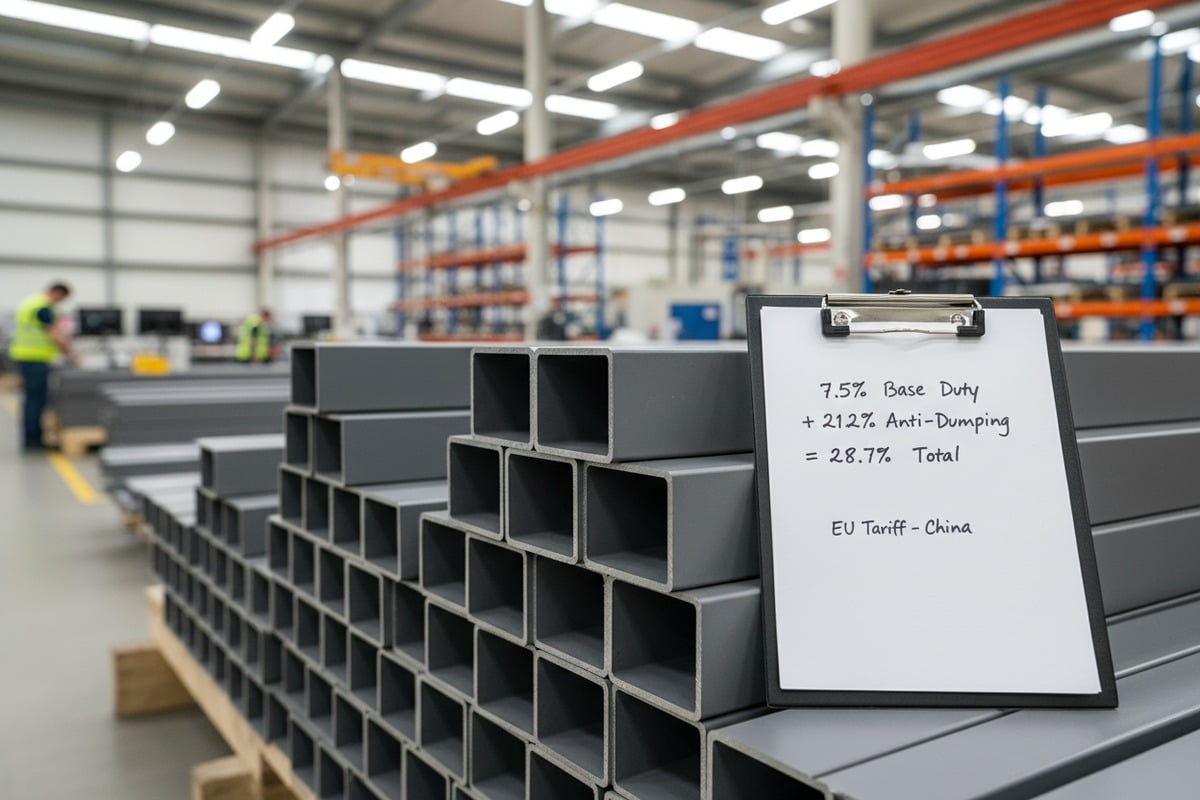
EU anti-dumping duties on Chinese aluminum extrusions add 21.2% to 32.1% on top of the standard 7.5% customs duty. For a typical aluminum pergola shipment, this can increase your total landed cost by approximately 20% to 35%, depending on the product classification and duty rate assigned to your supplier.
Understanding the Layered Duty Structure
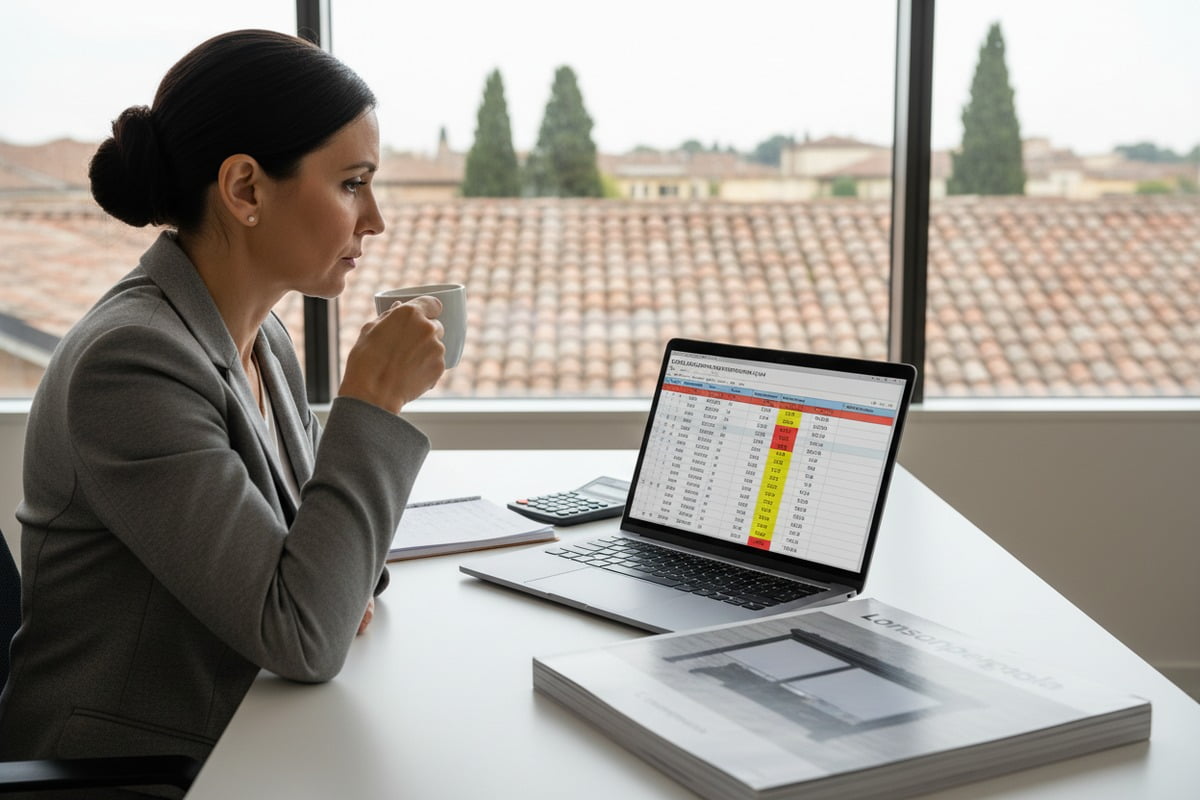
The total import duty you pay on aluminum pergola components from China is not a single flat rate. It stacks up in layers. First, there is the standard EU customs duty 2, which sits at 7.5% for most aluminum extrusions 3 and profiles. On top of that, the anti-dumping duty kicks in at rates between 21.2% and 32.1%. These rates were set in March 2021 following a comprehensive investigation into Chinese aluminum extrusion imports.
Let's put real numbers on this. Say you import a container of aluminum pergola kits with a CIF value of €50,000. Here is what the duty calculation looks like at different anti-dumping rates:
| CIF Value | Standard Duty (7.5%) | Anti-Dumping Duty (Low: 21.2%) | Anti-Dumping Duty (High: 32.1%) | Total Duties (Low) | Total Duties (High) |
|---|---|---|---|---|---|
| €50,000 | €3,750 | €10,600 | €16,050 | €14,350 | €19,800 |
| €100,000 | €7,500 | €21,200 | €32,100 | €28,700 | €39,600 |
| €200,000 | €15,000 | €42,400 | €64,200 | €57,400 | €79,200 |
That means your €50,000 shipment actually costs you between €64,350 and €69,800 before VAT, freight, and handling. The duty burden alone adds 28.7% to 39.6% to your invoice value.
Why the Rate Varies
Not every Chinese exporter pays the same anti-dumping rate. The EU assigns individual duty rates to cooperating companies during its investigation. Companies that fully cooperated with the European Commission 4 received the lower end of the range. Those that did not cooperate, or were not individually examined, got the residual (highest) rate of 32.1%.
From our experience shipping to Italy, Germany, and France, the specific rate your customs authority applies depends on your supplier's identity. Our company cooperated fully during the investigation process, and we provide all necessary documentation so our buyers can claim the correct rate.
The Hidden Costs Beyond Duties
Duties are only part of the story. When anti-dumping measures exist, customs authorities often increase scrutiny. This means potential delays at port, additional documentation requests, and sometimes physical inspections. Each of these adds cost. We have seen clients lose two to three weeks of delivery time because paperwork was incomplete. For a contractor with a project deadline, that delay is far more expensive than the duty itself.
How can I verify if my specific pergola HS code is subject to these additional taxes?
Our engineering and logistics teams deal with HS code classification 6 daily. One wrong digit can mean the difference between paying zero anti-dumping duty and paying 32.1%.
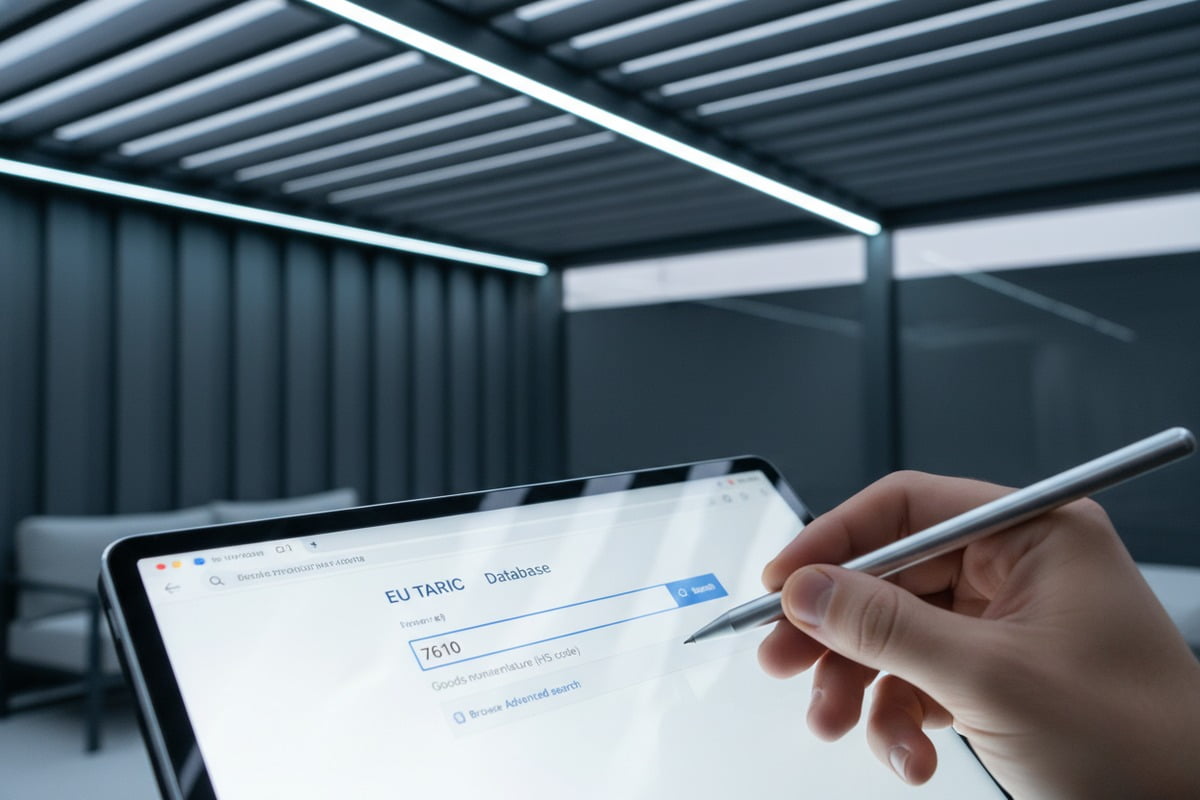
To verify if your pergola's HS code triggers anti-dumping duties, check the EU's TARIC database using your product's specific 10-digit code. Aluminum extrusions typically fall under HS 7604 and 7608, which are subject to anti-dumping duties, while fully assembled structures classified under HS 7610 may not face the same measures.
The HS Code Problem for Pergolas
Aluminum pergolas sit in a grey zone. They are finished products, but they are made from semi-finished aluminum components. How customs classifies your shipment depends on what arrives at the border.
If you import loose aluminum profiles, bars, and tubes that will be assembled on-site, customs will likely classify them under HS codes 7604 (aluminum bars, rods, and profiles) or 7608 (aluminum tubes and pipes). Both of these are squarely within the scope of the EU anti-dumping measures on Chinese aluminum extrusions.
If you import a fully assembled or substantially complete pergola structure, it may be classified under HS 7610 (aluminum structures and parts of structures). This code covers items like doors, windows, frameworks, and similar constructions. The key question is whether HS 7610 falls within the product scope of the anti-dumping regulation.
Key HS Codes and Their Duty Status
| HS Code | Product Description | Standard Duty | Anti-Dumping Duty (China) | Notes |
|---|---|---|---|---|
| 7604.10 | Aluminum bars, rods, profiles (not alloyed) | 7.5% | 21.2%–32.1% | Directly targeted |
| 7604.21 | Aluminum alloy hollow profiles | 7.5% | 21.2%–32.1% | Core pergola component |
| 7604.29 | Other aluminum alloy profiles | 7.5% | 21.2%–32.1% | Includes custom shapes |
| 7608.20 | Aluminum alloy tubes and pipes | 7.5% | 21.2%–32.1% | Used in pergola posts |
| 7610.90 | Other aluminum structures and parts | 6% | Potentially exempt | Depends on classification |
How to Use the TARIC Database
The TARIC database 7 is the EU's official tool for checking all applicable duties and trade measures. Here is a step-by-step process:
- Go to the European Commission's TARIC consultation page.
- Enter your 10-digit commodity code.
- Select "China" as the country of origin.
- Review the results for any anti-dumping duty measures listed.
If your product is classified under 7610.90 and shipped as a substantially complete structure, you may find no anti-dumping measure listed. But be careful. EU customs can reclassify your goods if they determine the shipment is essentially unassembled extrusions presented as a structure to avoid duties. This is called "circumvention 8," and it is a serious offense.
The Circumvention Risk
In March 2026, a German importer was convicted for evading over €610,000 in anti-dumping duties on aluminum foil by misdeclaring the country of origin as Myanmar. The EU's European Public Prosecutor's Office (EPPO) is actively pursuing these cases. The lesson is clear: do not try to game the system. If your pergola shipment is mostly aluminum extrusion profiles with minimal assembly, customs will treat it accordingly.
We always advise our clients to work with a licensed customs broker in their destination country. We also provide a detailed packing list and commercial invoice that clearly describes each component, its HS code, and its country of origin. This transparency protects both sides.
What strategies can I use to protect my profit margins against these import duties?
Over the past five years, we have worked closely with distributors and contractors across Europe to find practical ways to handle these duties without sacrificing product quality or project timelines.
To protect your margins, consider sourcing from manufacturers with individually assigned lower duty rates, negotiating DDP terms that include duty costs upfront, exploring value-added assembly to qualify for different HS classifications, and diversifying your supply chain to include non-Chinese components where feasible.
Strategy 1: Choose Your Supplier Carefully
Not all Chinese aluminum pergola manufacturers carry the same duty rate. Companies that cooperated with the EU investigation received individual rates as low as 21.2%. Others face the residual rate of 32.1%. That 11-percentage-point gap translates to thousands of euros per shipment.
Before signing a contract, ask your supplier for their specific anti-dumping duty rate and the corresponding TARIC additional code. A reputable manufacturer will provide this without hesitation. At our facility, we include this information in every quotation.
Strategy 2: Negotiate DDP Pricing
DDP (Delivered Duty Paid) terms 9 shift the entire logistics and customs burden onto the supplier. This means the price you pay includes all duties, taxes, and shipping. For many of our European clients, especially those in Italy and the Netherlands, DDP pricing eliminates surprises. You know your landed cost before you place the order.
The trade-off is that DDP prices are higher upfront. But they offer certainty, which is invaluable when you are bidding on construction projects with fixed budgets.
Strategy 3: Maximize Value-Added Processing
One legitimate approach is to ensure your pergola shipments include enough value-added work that the product can be classified as a finished structure (HS 7610) rather than raw extrusions (HS 7604). This means:
- Pre-assembled sub-components
- Pre-drilled and pre-cut profiles
- Integrated louver systems, motors, and electronics
- Complete hardware packages with installation guides
Our factory ships pergolas as complete kits with pre-installed motors, wiring harnesses, and powder-coated surfaces. This adds genuine manufacturing value and supports a stronger case for finished-product classification.
Strategy 4: Diversify Your Supply Chain
Some importers have explored splitting their bill of materials. They source aluminum extrusions from non-China origins (such as Turkey, Vietnam, or domestic EU mills) and import only specialized components — motors, louver mechanisms, control systems — from China. This approach can reduce the volume of goods subject to anti-dumping duties.
However, be cautious. The EU has investigated circumvention through countries like Myanmar and Vietnam. If components are simply transshipped through a third country without substantial transformation, they are still considered Chinese origin.
| Strategy | Potential Savings | Complexity | Risk Level |
|---|---|---|---|
| Choose lower-rate supplier | 5%–11% on duties | Low | Low |
| DDP pricing | Cost certainty, not savings | Medium | Low |
| Value-added assembly classification | Up to 32.1% if reclassified | High | Medium |
| Third-country sourcing | Varies | High | Medium-High |
| Domestic EU sourcing for profiles | Eliminates anti-dumping | Very High | Low |
Strategy 5: Plan for Duty Drawback and Temporary Storage
If you re-export finished pergolas outside the EU (for example, to the UK post-Brexit), you may qualify for duty drawback — a refund of duties paid on imported goods that are subsequently exported. Additionally, bonded warehouses allow you to store goods without paying duties until they are released for free circulation.
These are advanced strategies that require working with an experienced customs broker. But for high-volume importers, the savings can be substantial.
Will my Chinese manufacturer provide the necessary documentation to help me manage customs compliance?
When we first started exporting to Europe over two decades ago, documentation was an afterthought. Today, it is arguably the most important part of the transaction.
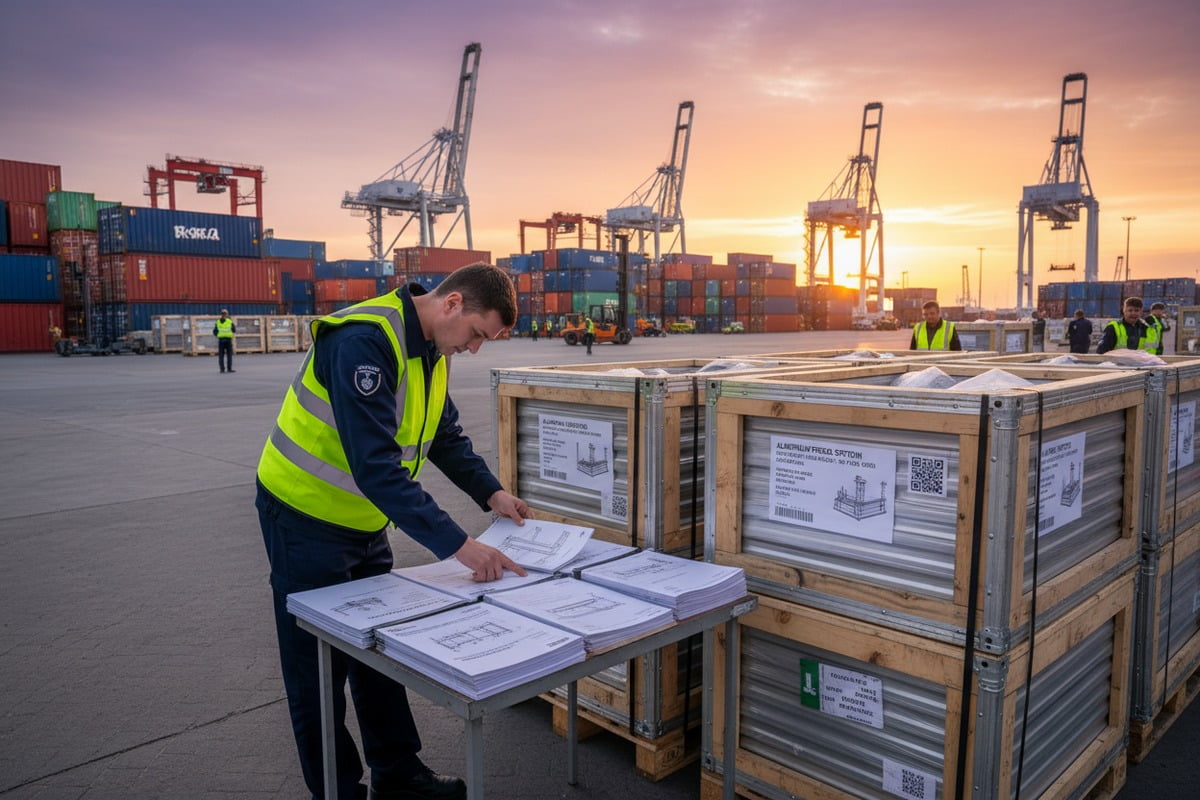
A reliable Chinese manufacturer should provide a certificate of origin, mill test certificates, detailed commercial invoices with HS codes, packing lists matching customs requirements, and their specific TARIC additional code for anti-dumping duty calculations. If a supplier cannot provide these, consider it a serious red flag.
The Essential Document Checklist
Customs compliance starts long before your container arrives at the port. The documentation your manufacturer provides determines how smoothly — or painfully — clearance goes. Here is what you need and why:
Certificate of Origin (CO): This proves where the goods were manufactured. For anti-dumping purposes, this is the most scrutinized document. The CO must be issued by a recognized chamber of commerce in the exporting country. It must accurately state China as the origin. Any attempt to misdeclare origin can result in criminal prosecution, as the 2026 German foil case demonstrated.
Commercial Invoice: This must include a detailed breakdown of goods, unit prices, total values, HS codes for each line item, and the manufacturer's name. For anti-dumping compliance, the invoice should also reference the exporter's TARIC additional code so customs can apply the correct duty rate.
Mill Test Certificates: These prove the aluminum alloy composition and grade. EU anti-dumping measures cover aluminum with up to 99.3% aluminum content. Mill certs confirm your material falls within (or outside) this scope.
Packing List: A detailed packing list ensures customs can verify the contents against the invoice. For pergola shipments with many components — posts, beams, louvers, screws, motors — every item should be listed with quantities and weights.
What Good Documentation Looks Like
At our factory, we generate a compliance package for every EU-bound shipment. This includes:
- Dual-language commercial invoice (Chinese and English) with 10-digit HS codes
- Certificate of Origin 10 issued by the Hainan Chamber of Commerce
- Material test reports from accredited labs
- CE certificates for all electrical components (motors, LED systems, control units)
- Assembly instructions with 3D diagrams and QR codes linking to video guides
This level of detail is not optional. It is what separates a professional supplier from one that will cause you customs headaches, delays, and potential fines.
Red Flags to Watch For
Not every manufacturer will be transparent. Here are warning signs:
- Refusal to disclose their anti-dumping duty rate or TARIC code
- Suggesting origin misdeclaration (e.g., labeling goods as "Made in Vietnam" when manufactured in China)
- Vague product descriptions on invoices (e.g., "aluminum parts" instead of "aluminum alloy hollow profiles, HS 7604.21")
- No mill test certificates or CE documentation for motors
- Unwillingness to provide a formal Certificate of Origin
If you encounter any of these, walk away. The €610,000 evasion case from 2026 shows that EU authorities are cracking down hard, and the importer bears the legal risk.
Building a Compliance Partnership
The best approach is to treat your supplier as a compliance partner, not just a vendor. Share your customs broker's requirements upfront. Ask for sample documentation before placing your first order. Run a test shipment to identify any gaps.
We have found that buyers who invest time in the documentation process upfront save weeks of delays and thousands of euros in the long run. Our logistics team works directly with our clients' customs brokers to pre-clear documentation issues before the container ships. That is what 25 years of export experience teaches you — prevention is always cheaper than correction.
Conclusion
EU anti-dumping duties on aluminum components significantly affect pergola import costs. Smart sourcing, proper HS classification, strong documentation, and a transparent manufacturing partner are your best tools for staying compliant and profitable.
Footnotes
1. Explains the components and importance of calculating total landed cost in international trade. ↩︎
2. Official EU source explaining the Common Customs Tariff and duty rates. ↩︎
3. Wikipedia provides a comprehensive overview of the extrusion process for various materials, including aluminum. ↩︎
4. Official EU page detailing the role of the European Commission in trade defense. ↩︎
5. Official information on EU anti-dumping duties and circumvention measures. ↩︎
6. Official World Customs Organization (WCO) overview of the Harmonized System (HS) codes. ↩︎
7. Official EU portal for the TARIC database, essential for checking duties and trade measures. ↩︎
8. Official EU explanation of circumvention in the context of anti-dumping measures. ↩︎
9. Official International Chamber of Commerce (ICC) source for Incoterms® 2020 rules, including DDP. ↩︎
10. Official ICC guidelines on Certificates of Origin, their importance and issuance. ↩︎