
Every week, our sales team fields calls from dealers who lost thousands on bad supplier deals—wrong samples, surprise freight charges, and missed deadlines that killed entire project seasons.
To negotiate effectively with aluminum pergola suppliers, request sample fees credited to your first bulk order, insist on DDP shipping with itemized cost breakdowns, lock in 30-day lead times with penalty clauses, and leverage volume commitments to secure better OEM pricing without sacrificing material quality.
This guide walks you through each negotiation point step by step Fumigation fees 1. Whether you are a distributor in Europe, a contractor bidding on hotel projects, or a retailer building a private-label catalog, you will find actionable tactics below. Let's break it down.
How can I negotiate a sample fee that gets credited back to my first bulk order?
We have shipped over 3,000 sample units from our Hainan production facility in the past five years, and one pattern is clear: buyers who frame sample costs as a shared investment always get better deals.
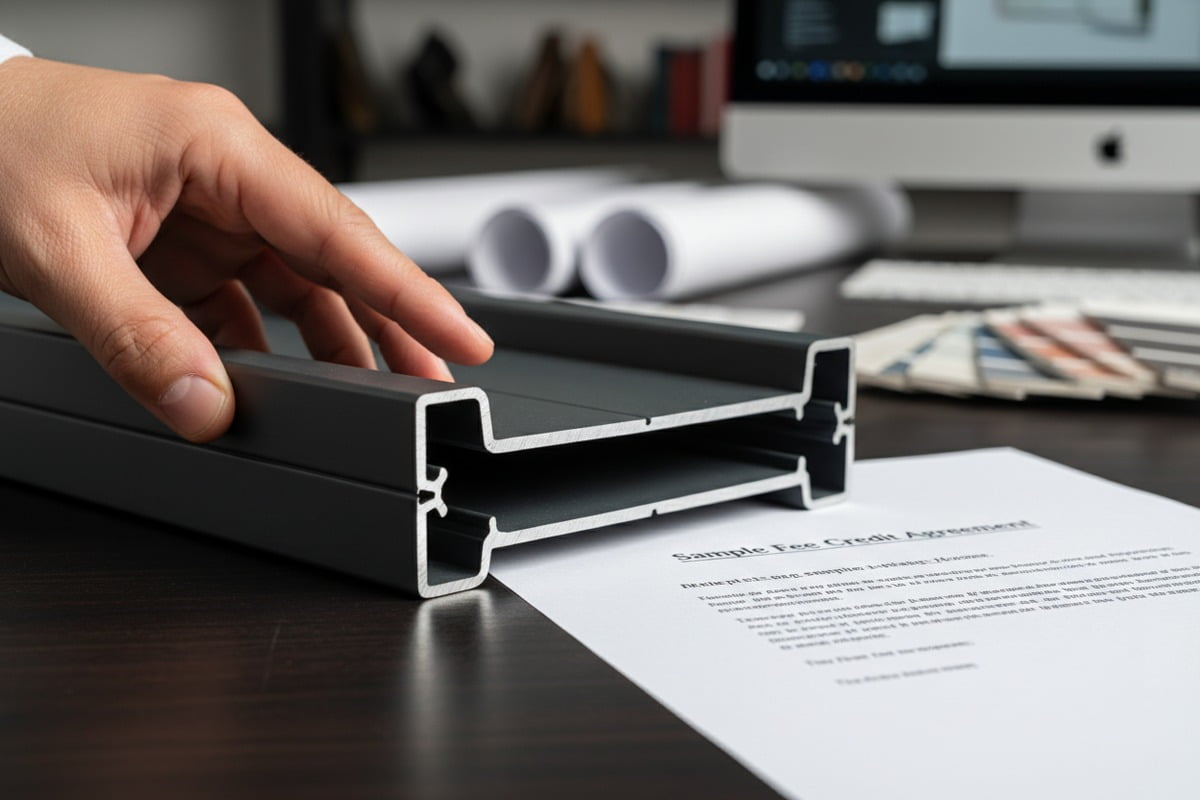
Request a paid sample at the supplier's production cost and negotiate a written agreement that credits the full sample fee against your first bulk order. This approach protects both sides—suppliers cover fabrication expenses, and you recover costs when you commit to volume.
Why suppliers charge for samples
Samples are not free to produce. A single aluminum pergola sample involves CNC cutting 2, welding, powder coating, and packaging. Our production line allocates real machine time and raw materials for each sample. When a supplier offers "free samples," those costs are usually hidden somewhere else—often in inflated unit prices on the bulk order. Understanding this reality puts you in a stronger position.
How to structure the credit agreement
The most effective approach is a tiered credit system. Here is a framework that works well for both parties:
| Sample Type | Typical Cost Range | Credit Terms |
|---|---|---|
| Material swatch or color chip | $0–$50 | Usually free, no credit needed |
| Single component (e.g., louvered roof panel) | $100–$500 | 100% credited on orders above 50 units |
| Full-scale assembled pergola | $800–$3,000 | 50–100% credited on orders above 100 units |
Put this in writing before any money changes hands. A simple email confirmation works, but a formal purchase agreement 3 is better. Specify the credit amount, the minimum order quantity that triggers the credit, and the validity period—typically 6 to 12 months.
Compare samples from multiple suppliers
Get samples from two or three suppliers. This does two things. First, it gives you real quality benchmarks. You can compare wall thickness, powder coat adhesion, weld smoothness, and hardware fit. Second, it creates healthy competition. When a supplier knows you are evaluating alternatives, they are more motivated to offer favorable sample credit terms.
Timing matters
Request samples during off-peak months—typically October through February for outdoor structures. Our factory has more capacity during these months, which means faster sample turnaround and a greater willingness to absorb part of the cost. During peak season, every production slot is valuable, and suppliers are less flexible.
Document everything
When the sample arrives, inspect it against your specification sheet. Note any discrepancies in writing and share them with the supplier. This documentation becomes your quality baseline for the bulk order. If the supplier agreed to credit the sample fee, reference the exact sample specs in your purchase order so there is no ambiguity.
One of the most painful calls we receive is from a buyer whose aluminum profiles arrived bent, scratched, or missing connectors after a 30-day ocean voyage—and they had no idea who was responsible because the shipping terms were vague.
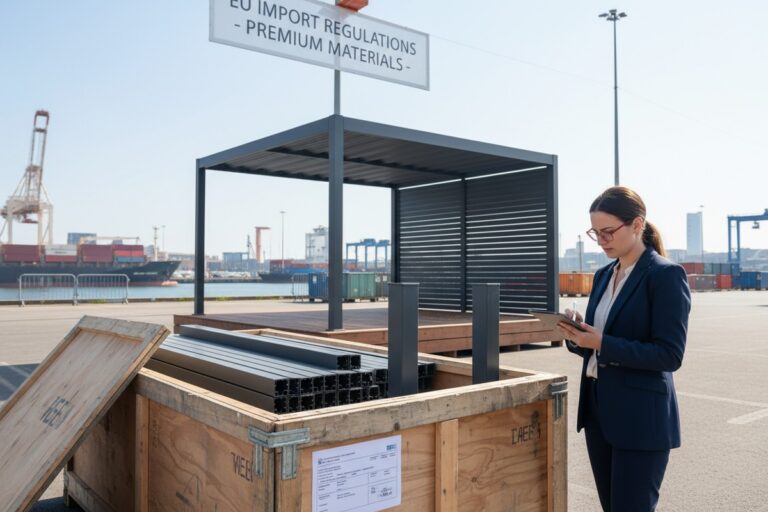
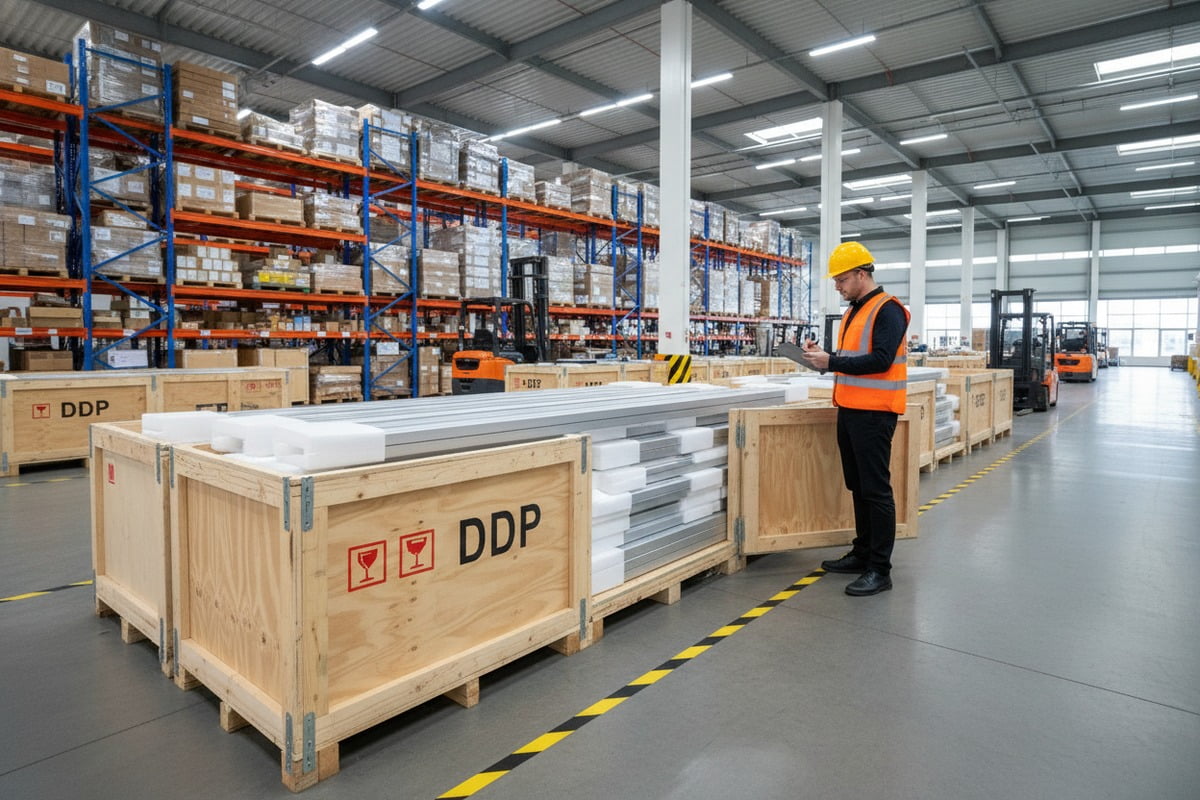
Negotiate DDP (Delivered Duty Paid) shipping with a fully itemized cost breakdown covering freight, insurance, customs duties, and last-mile delivery. Require the supplier to use reinforced packaging with foam-lined crates, and include a damage liability clause specifying who pays for replacements.
Understanding DDP versus other Incoterms
DDP means the supplier handles everything—production, export clearance, ocean freight, import duties, and delivery to your warehouse door. This is the simplest option for buyers because there are no surprises. But it is also the most expensive Incoterm 4 for the supplier, so they build those costs into the quote.
Here is a quick comparison of common Incoterms used in aluminum pergola trade:
| Incoterm | Supplier Responsibility | Buyer Responsibility | Risk for Buyer |
|---|---|---|---|
| EXW (Ex Works) | Product at factory gate only | All shipping, customs, insurance | Very high |
| FOB (Free on Board) | Product loaded onto vessel | Ocean freight, import duties, delivery | Haut |
| CIF (Cost, Insurance, Freight) | Product, freight, and insurance to port | Import duties, port handling, delivery | Moyen |
| DDP (Delivered Duty Paid) | Everything to buyer's warehouse | None (except unloading) | Faible |
For European buyers importing from China, DDP eliminates the complexity of managing freight forwarders, customs brokers 5, and import VAT separately. It also makes cost comparison between suppliers much easier because the quoted price is the landed price.
Even with DDP, hidden costs can appear. Ask your supplier to provide a line-by-line breakdown. Watch for these common additions:
- Fumigation fees for wooden pallets or crates
- Port congestion surcharges during peak shipping seasons
- Residential delivery surcharges if your warehouse is in a residential zone
- Liftgate fees if you do not have a loading dock
Request that all potential surcharges are listed upfront. If the supplier cannot or will not itemize, that is a red flag.
Packaging that protects profiles
Aluminum profiles are lightweight but scratch and dent easily. At our facility, we use PE foam wrapping on every profile, corner protectors on all exposed edges, and wooden crate enclosures for long-distance shipments. Insist on this level of protection in writing. Better yet, request photos of the packed goods before they leave the factory. Many suppliers, including us, routinely provide pre-shipment packing photos as standard practice.
Damage liability clause
Your purchase agreement should specify what happens if goods arrive damaged. A fair clause states that the supplier replaces damaged items at no cost if the buyer provides photographic evidence within 48 hours of delivery. This protects you and motivates the supplier to invest in proper packaging.
Consolidate shipments to reduce cost
If you order pergolas, zip blinds, and replacement parts, consolidate everything into one shipment. Shipping a half-empty container costs nearly the same as a full one. Our logistics team regularly helps buyers optimize container loading to maximize value per cubic meter of shipping space.
How do I ensure my supplier sticks to a 30-day lead time to prevent project delays?
With an annual production capacity of 80,000 sets and 25 years of manufacturing behind us, our team knows exactly how a single missed deadline can cascade into penalty clauses, lost client trust, and canceled contracts for dealers and contractors alike.
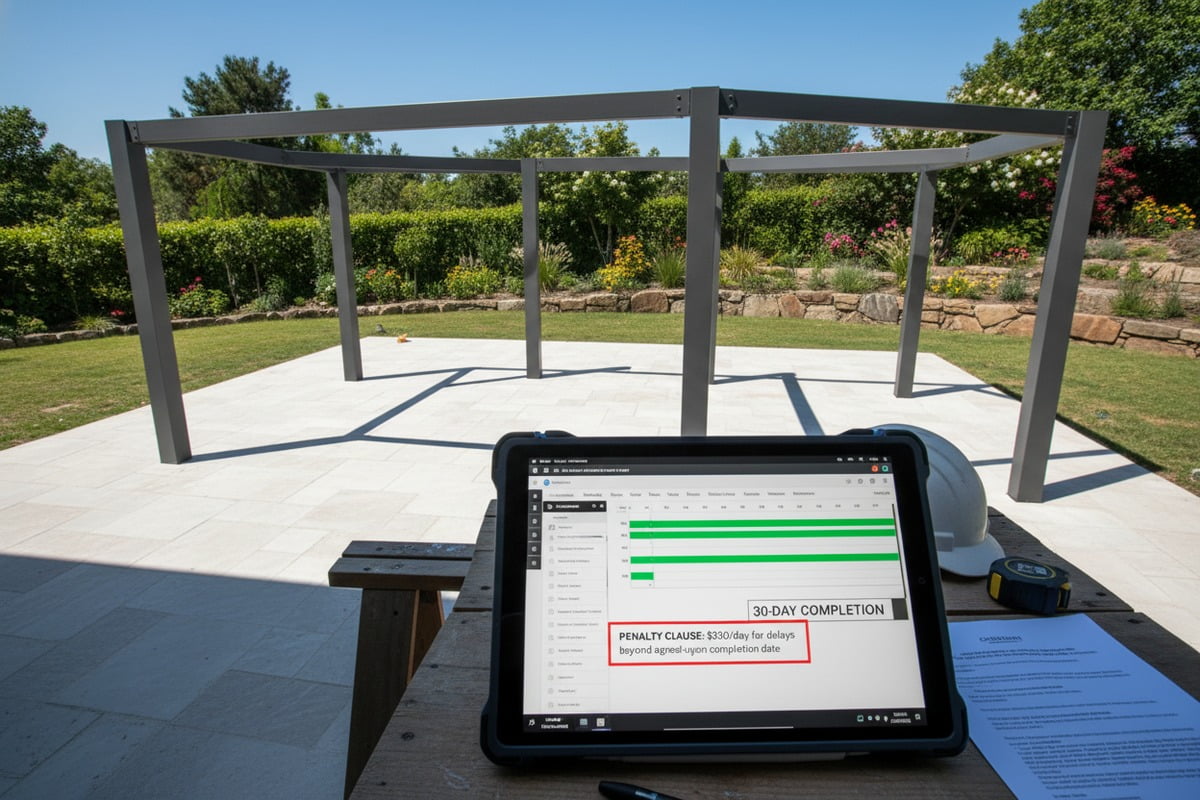
To enforce a 30-day lead time, include a milestone-based production schedule in your contract with specific dates for material procurement, fabrication, quality inspection, and shipment. Add a late delivery penalty clause—typically 1–2% of order value per week of delay—and require weekly photo or video progress updates.
Why lead times slip
Most delays fall into three categories: material shortages, production bottlenecks, and shipping disruptions. Material shortages happen when the supplier does not stock raw aluminum extrusions in the profile you need. Production bottlenecks occur during peak season—March through August for outdoor structures—when every supplier is running at full capacity. Shipping delays are often outside anyone's control, but they can be mitigated with planning.
Build a milestone schedule
Do not accept "30 days" as a vague promise. Break it down into concrete milestones:
| Milestone | Target Day | Deliverable |
|---|---|---|
| Order confirmation and deposit received | Day 0 | Signed PI and payment receipt |
| Raw material procurement complete | Day 5 | Photo of materials in warehouse |
| Fabrication and welding complete | Day 15 | Photos of assembled frames |
| Powder coating and finishing complete | Day 20 | Color verification photos |
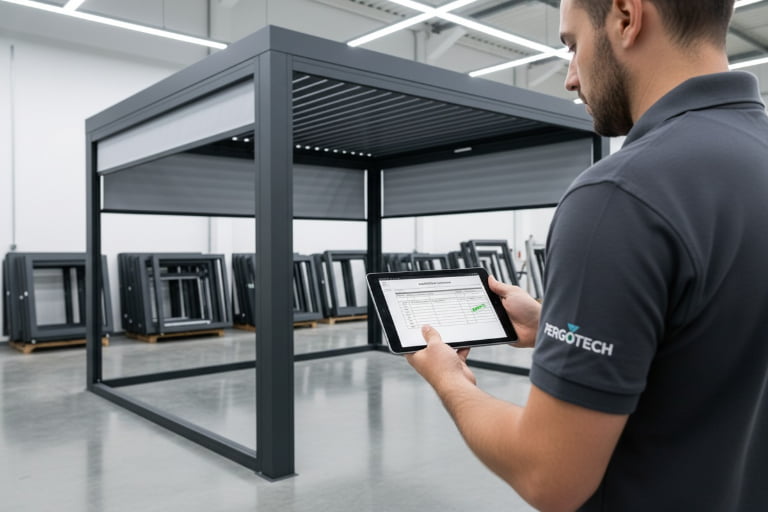
| Quality inspection and packing | Day 25 | QC report and packing photos |
| Shipment departure | Day 30 | Bill of lading or tracking number |
Share this schedule with the supplier before signing the contract. A reliable supplier will agree to it. If a supplier hesitates or pushes back on every milestone, consider that a warning sign.
Penalty and incentive clauses
A late delivery penalty 6 of 1–2% of the order value per week of delay is standard in B2B international trade. But penalties alone are not enough. Pair them with incentives. For example, offer to pay a small early completion bonus or commit to a follow-up order if the supplier delivers on time for three consecutive orders. This carrot-and-stick approach works better than threats alone.
Weekly progress updates
Request photos or short video clips at each milestone. This is not micromanagement—it is standard practice for international procurement. Our team sends progress updates via WhatsApp or email at every stage. If your supplier resists providing updates, they may not have the production discipline to meet your timeline.
Choose modular designs when speed matters
Fully custom pergolas require more time for engineering, tooling, and quality checks. Modular designs—where standard components are combined in different configurations—can cut lead times significantly. If your project allows it, ask the supplier about modular options. These designs still offer customization in size, color, and accessories, but they avoid the delays that come with one-off engineering.
Buffer your project timeline
Even with the best supplier, add a 10–15% time buffer to your project plan. If the supplier commits to 30 days, plan for 35. This protects you from minor delays without triggering project penalties on your end. It is a simple risk management step that experienced contractors never skip.
Can I negotiate better pricing for custom OEM features while maintaining high material standards?
Our engineering department handles over 200 custom OEM requests per year—everything from non-standard RAL colors 7 to integrated LED lighting channels and motorized louvered roofs with rain sensors. The question is never whether customization is possible. It is whether you can get it at the right price.
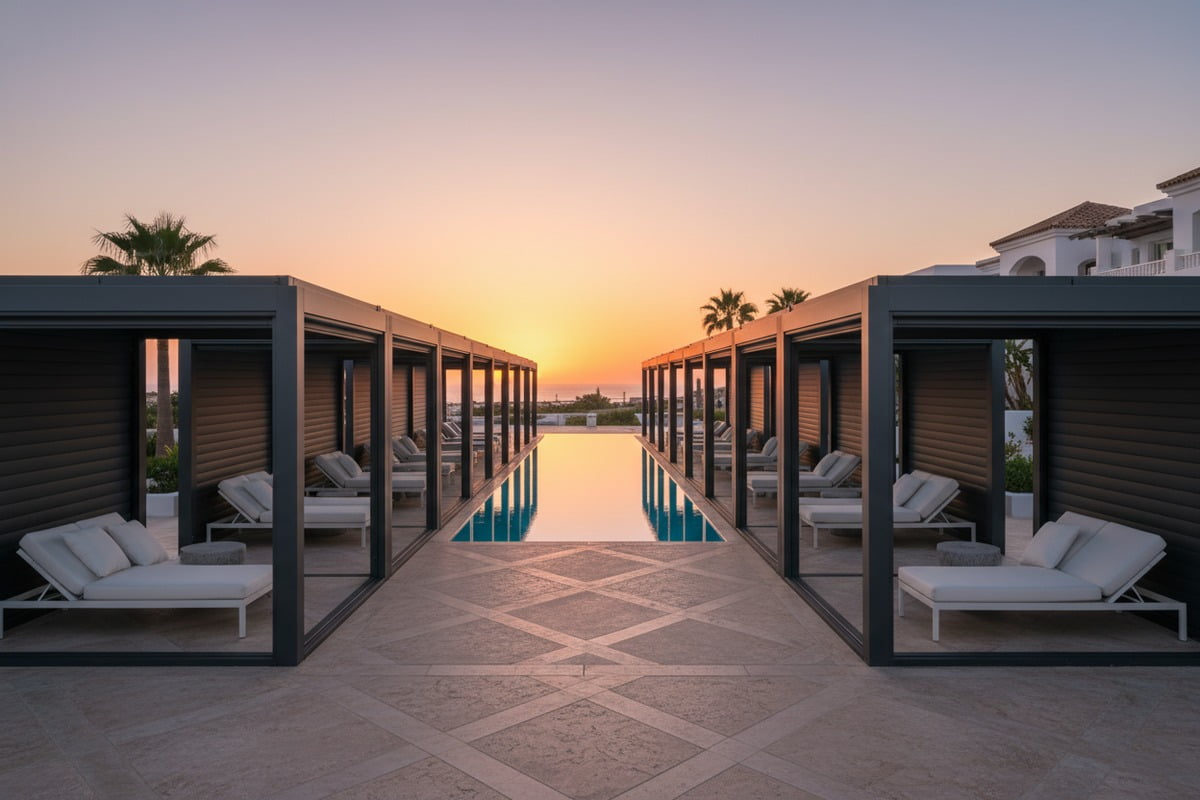
Yes, you can negotiate better OEM pricing by committing to higher volumes, standardizing key dimensions across your product line, and allowing the supplier to use their existing tooling and extrusion dies. This reduces setup costs significantly while preserving the high-grade 6063-T5 aluminum and premium powder coat finishes your market demands.
What drives custom OEM costs up
Customization costs come from three main sources: new tooling, non-standard materials, and additional quality testing. A new extrusion die for a custom profile can cost $1,500–$5,000. Non-standard RAL colors require separate powder coat batches. And if you need CE-certified motors or specific wind load ratings, independent testing adds time and money.
How to reduce OEM costs without cutting quality
The smartest approach is to customize strategically. Keep the core structure standard and customize the visible or functional elements. For example, use the supplier's existing post and beam profiles but request a custom louver shape or a unique gutter integration. This way, you avoid new tooling costs on the most expensive components.
Volume commitments unlock better pricing
This is the single most powerful lever in OEM negotiation. Here is a realistic pricing impact based on our production experience:
| Order Quantity | Estimated Price Reduction vs. Base Quote | Tooling Cost Allocation |
|---|---|---|
| 10–50 units | 0–5% | Full tooling cost borne by buyer |
| 51–200 units | 5–12% | Tooling cost shared 50/50 |
| 201–500 units | 12–20% | Supplier absorbs tooling cost |
| 500+ units | 20–30% | Supplier absorbs tooling + offers annual rebate |
These numbers vary by supplier, but the pattern holds. Larger commitments give the supplier confidence to invest in your custom tooling because they know the production run will pay for it.
Standardize where possible
If you sell pergolas in three sizes—3x3m, 3x4m, and 4x4m—use the same post profile, the same louver blade, and the same gutter system across all three. Only the beam lengths change. This standardization lets the supplier run longer production batches with fewer changeovers, which directly reduces your per-unit cost.
Protect material standards in writing
Never let price negotiations erode material quality. Specify the aluminum alloy grade (6063-T5 8 is the industry standard for structural pergolas), the minimum wall thickness (typically 2.0mm for posts, 1.5mm for louvers), and the powder coat standard (Qualicoat Class 1 or equivalent for European markets). Include these specs in your purchase order. If a supplier offers a dramatically lower price, ask what they changed—because they changed something.
Request a cost breakdown
Ask the supplier to break their quote into material cost, labor, tooling amortization, finishing, packaging, and margin. This transparency lets you see exactly where the money goes. You might discover that a small design tweak—rounding a sharp edge instead of adding a decorative cap, for example—saves $2 per unit across 500 units. Those small savings add up.
Certifications and compliance
For European markets, insist on CE marking 9, and verify that integrated motors carry the required certifications. Cutting corners on compliance creates legal liability that far outweighs any cost savings. Our production line tests every motorized unit before shipment, and we provide full certification documentation as part of the standard delivery package. A good OEM partner will do the same.
Conclusion
Effective negotiation with aluminum pergola suppliers comes down to preparation, transparency, and building real partnerships. Credit your sample costs, lock in DDP terms, enforce milestone-based timelines, and protect material quality—even when pursuing better OEM pricing.
Notes de bas de page
1. Details fumigation charges in shipping, varying by load size, commodity, and treatment type. ︎
2. Wikipedia provides an authoritative and comprehensive explanation of Computer Numerical Control, which encompasses CNC cutting. ︎
3. Cornell Law School's Legal Information Institute offers an authoritative definition of a contract, which is the foundational legal concept behind a purchase agreement. ︎
4. Defines Incoterms as internationally recognized rules for buyer and seller responsibilities in export transactions. ︎
5. Explains the role of customs brokers in facilitating goods movement across international borders. ︎
6. Defines late delivery and penalty clauses, establishing consequences for missed deadlines. ︎
7. RAL.de is the official website for RAL colors, providing authoritative information on the RAL color system. ︎
8. Describes 6063-T5 aluminum as a versatile material with good surface finish and corrosion resistance. ︎
9. Explains CE marking as a mandatory conformity mark for products sold within the European Economic Area. ︎