

In our production line, Nordic projects expose one hard truth: a pergola that looks strong on paper can fail fast when snow, ice, and salt begin to work together structural calculations 1. Nordic market 2
To request a low-temperature aluminum pergola for the Nordic market, ask for project-specific snow and wind calculations, cold-rated motors and electronics, certified coatings and zip blind fabrics, and a detailed RFQ covering loads, site conditions, finishes, drainage, and compliance targets.
The key is not asking for a beautiful model. The key is asking for proof that every part was chosen for cold, moisture, and long winters.
How can I ensure my aluminum pergola structure will withstand the heavy snow loads of a Nordic winter?
When our engineers review Nordic drawings, the biggest risk is simple: a clean roof line can hide an underbuilt frame, and snow does not care about marketing claims.
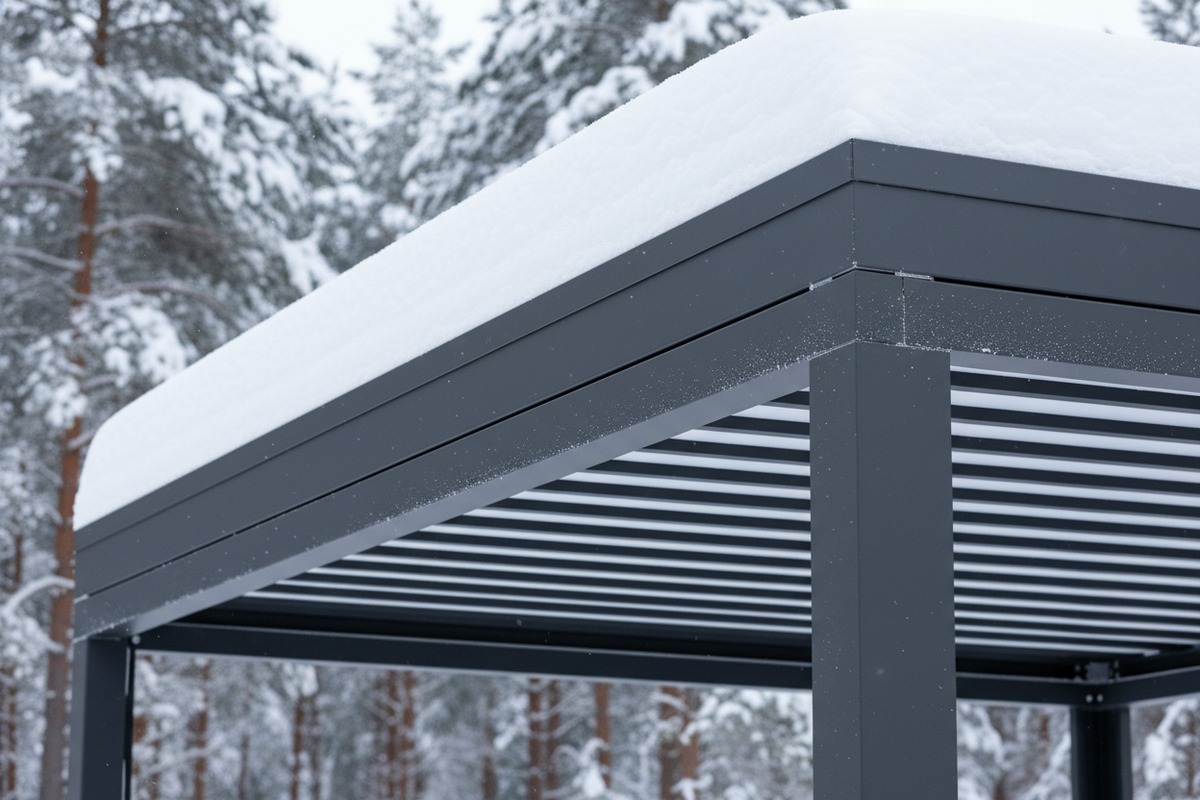
To ensure a pergola survives a Nordic winter, request structural calculations based on your local ground snow load, roof geometry, span, post spacing, and foundation design, then ask for signed engineering data, drainage details, and safe operating limits for closed and open louvers.
Start with the site load, not the brochure
The first question is not "How strong is your pergola?" The first question is "What load was it designed for at my site?" That changes everything. In Nordic work, snow is not a generic number. A pergola in southern Denmark does not face the same demand as one in inland Sweden or coastal Norway. Ground snow load, drifting, wind exposure, and roof shape all affect the final design value.
In our export projects to Europe, we ask buyers to send the project location early. That lets the drawing team work from the right climate data instead of a guess. You should ask your supplier to show the design snow load in clear units, such as kN/m² or psf, and to state whether that value applies to the full roof, local drift zones, or both. For a louvered pergola, ask whether the snow rating changes when louvers are closed, partly open, or locked in a service position.
| Structural input | What to request | Why it matters |
|---|---|---|
| Project location | City, postal code, or design climate zone | Local snow and wind loads vary a lot |
| Snow load basis | Ground snow load and roof design load | The roof value is not always the same as the ground value |
| Roof state | Closed, open, and maintenance position limits | Louvered systems can have different safe conditions |
| Span data | Beam span, post spacing, clear opening | Long spans often drive section size |
| Foundation assumptions | Base plate, anchor type, footing size | A strong frame still fails if the base is weak |
Check the load path from blade to footing
A pergola does not resist snow with the roof alone. The full load path matters. Snow pushes on louvers. Louvers transfer force to side beams. Beams pass force into posts. Posts send it to base plates, anchors, and concrete. A weak point anywhere in that chain can control the whole design.
This is why section drawings are more useful than a glossy catalog. Ask for post size, beam size, wall thickness, alloy grade, and connection details. Many suppliers will mention 6063-T5 aluminum 3, and that is common for architectural extrusions. But alloy grade alone does not prove snow capacity. Section shape, internal reinforcement, and bracket design matter just as much.
| Composant | Evidence to ask for | Red flag |
|---|---|---|
| Louvers | Blade profile drawing and support spacing | Only a general claim like "heavy duty" |
| Beams | Section drawing and span table | No span table for your size |
| Posts | Post section, thickness, and base connection | Large roof on very slim posts |
| Anchors | Anchor model and pull-out assumptions | "Anchors by customer" with no loads given |
| Footings | Recommended footing size or reaction loads | No base reactions provided |
Ask about drainage, ice, and operating rules
Snow load is not just a dry structural question. Meltwater matters too. A Nordic pergola needs a drainage path 4 that keeps water moving away before it freezes at beam ends, outlets, or post bottoms. Hidden gutters are useful, but only if their capacity and outlet path are clear. Ask where water exits, how many outlets are used, and whether ice buildup near outlets has been considered.
You should also ask for a winter operating note. Some systems are designed to stay closed in light snow and cleared above a stated limit. Some require manual snow removal before accumulation becomes deep. Some motorized roofs should not be moved when ice forms around the blades. A good supplier will tell you the limit in plain words.
The safest buying habit is this: do not accept "snow resistant" as a real answer. Ask for numbers, assumptions, and drawings. That is how you separate a pergola that looks Nordic from one that is actually built for Nordic weather.
What specific motor and electronic certifications should I request for reliable operation in my sub-zero climate?
In cold-weather prototypes, we worry less about the remote and more about the hidden weak points: seals, cable glands, control boards, and grease that stiffens overnight.
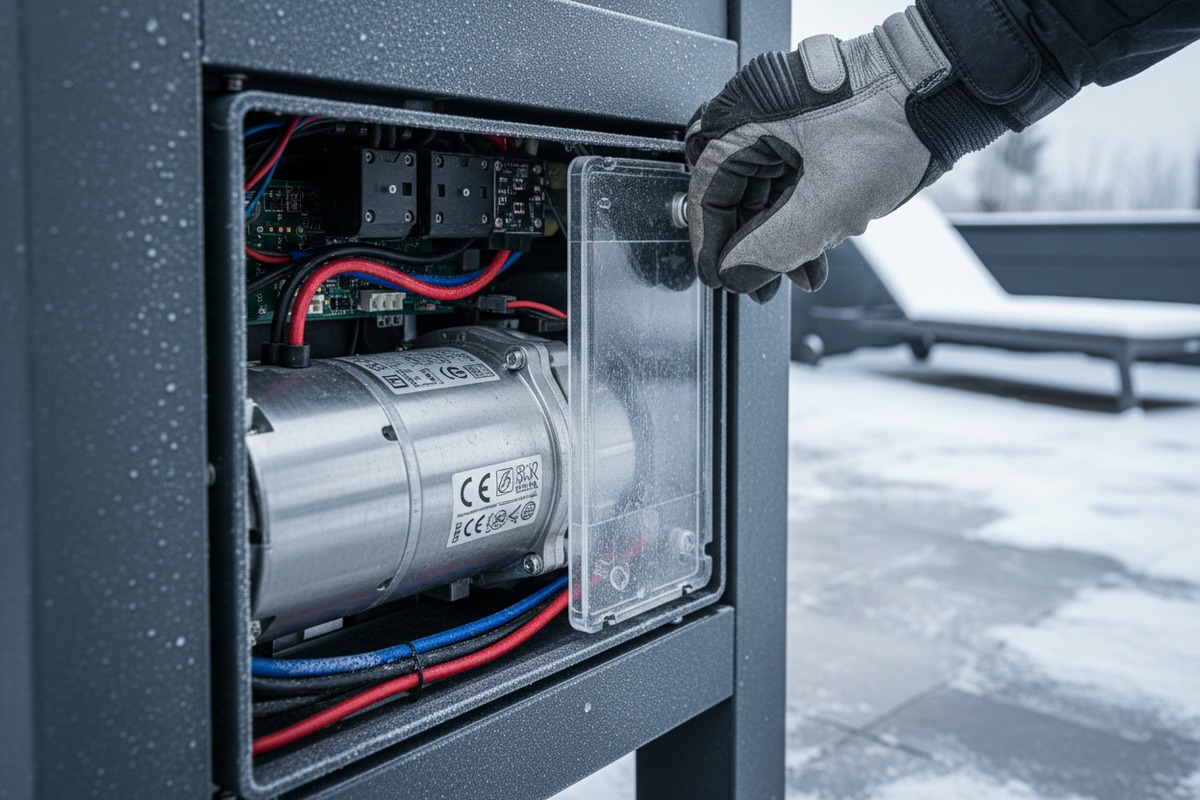
For sub-zero use, request CE or equivalent market compliance, IP-rated housings, cold-start temperature data, motor duty-cycle details, EMC documentation, cable specifications, and confirmation that actuators, controllers, sensors, and power supplies were tested together as one system rather than as isolated parts.
Ask for documents behind the CE mark
For the Scandinavian market, a CE mark 5 on its own is not enough. You should ask for the documents that support it. In our European shipments, buyers who request the Declaration of Conformity 6 early usually avoid the worst delays later. That document should identify the product, the responsible company, and the legal basis for compliance.
For pergola motors and controls, the usual checks include low voltage safety, electromagnetic compatibility, and restriction of hazardous substances. If the system uses a wireless remote, gateway, or smart receiver, radio compliance may also apply. Ask which directives or regulations the supplier used, and ask whether the documents cover the full pergola control package or only one component bought from another vendor.
Focus on low-temperature function, not only legal compliance
A system can be compliant and still perform badly in deep cold. That is why you also need operating data. Ask for the rated operating temperature range, the cold-start temperature, and any limits for icing conditions. A motor that runs fine at room temperature can slow down, stall, or trip protection when grease thickens or seals harden.
The same logic applies to the control box, transformer, receiver, wind sensor, and rain sensor. Condensation inside an enclosure can damage boards long before a motor fails. Ask for enclosure ratings such as IP54, IP65, or the rating actually used on the installed control parts. IP-rated housings 7 Then ask where each enclosure sits. A high rating on the motor means less if the controller is mounted in a wet, cold, poorly protected place.
| Electrical item | What to request | Why it matters in sub-zero use |
|---|---|---|
| Motor or actuator | Declaration of Conformity and operating temperature range | Confirms both compliance and climate limits |
| Control unit | IP rating, wiring diagram, enclosure location | Cold moisture often damages controllers first |
| Remote or gateway | Radio compliance documents if wireless is used | Wireless parts may trigger extra compliance needs |
| Power supply | Voltage input, overload protection, temperature range | Power issues can cause false faults in winter |
| Sensor package | Wind, rain, snow, or temperature sensor specs | Automation is only useful if sensors survive the climate |
Check the full system, the cable set, and the manual override
In real winter use, the full system matters more than the best single part. Ask whether the supplier tested the motor, controller, and sensors together for repeated cycles in low temperatures. Ask how many open-close cycles were run, and at what temperature. Also ask about cable jacket material, UV resistance, and connector sealing. A weak cable or poor gland often causes the service call.
One more point matters in Nordic work: manual override. If power drops during a freeze, can the roof be secured safely? Can the installer reach the mechanism? Is there a clear method in the manual? A good winter system has a safe failure mode, not just a nice remote.
| Verification point | Good answer | Weak answer |
|---|---|---|
| Compliance file | CE support documents and product model match | Only a logo on a brochure |
| Cold-start test | Stated temperature and cycle record | "Works in winter" |
| Enclosure protection | IP rating for motor and controller locations | One IP rating with no installation detail |
| Cable and connectors | Outdoor-rated cable and sealed glands | No cable specification |
| Emergency operation | Manual override or safe lock procedure | No plan for power loss |
The best buyers do not stop at asking for certificates. They ask how the parts behave together on the coldest morning of the year. That is the question that protects your project.
How do I verify that my surface coatings and zip blind fabrics will resist cracking in extreme cold?
At our coating line, winter failures rarely start with dramatic collapse. They start with small cracks, edge chips, stiff fabric, and guides that stop sliding cleanly.
Verify cold resistance by asking for coating pretreatment data, powder type, thickness range, adhesion and impact test results, salt-spray performance, and fabric test reports covering low-temperature flexibility, UV stability, dimensional stability, tensile strength, and flame performance where required.
Coating durability is a full system, not a single layer
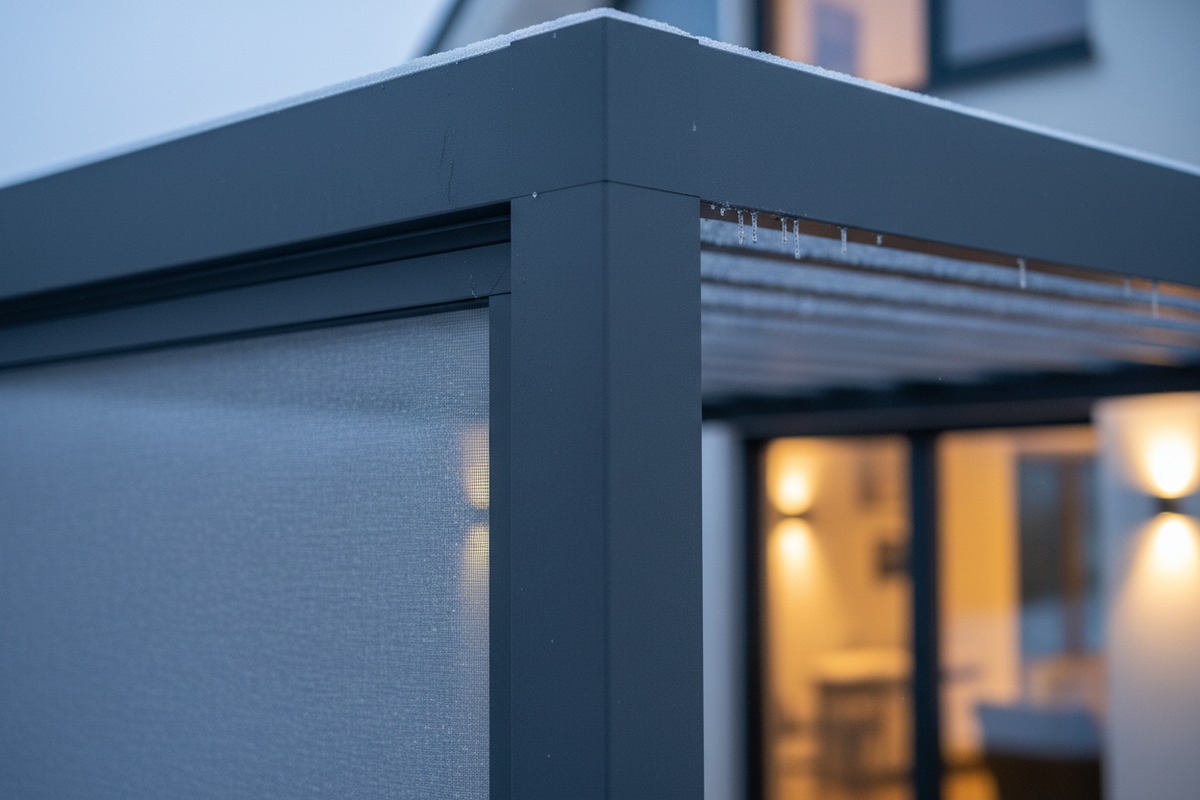
Many buyers focus on color and gloss. In Nordic use, the hidden layers matter more. A good powder-coated finish 8 starts with proper surface preparation. Ask what pretreatment was used before coating. Then ask what powder chemistry was applied. For outdoor architectural work, suppliers often use polyester or super-durable polyester systems. The exact choice affects UV resistance, color retention, and long-term adhesion after freeze-thaw cycles.
Thickness matters too, but it is not the whole story. A thick coating applied over poor pretreatment can still fail. Ask for the target thickness range, not just one number. Then ask for adhesion, impact, and corrosion test results. In coastal Nordic areas, salt and moisture cycling are tough on edges, fastener zones, and drainage outlets. salt-spray performance 9 Those are the places where low-quality finishes often start to break down.
| Coating check | What to ask for | Why it matters |
|---|---|---|
| Pretreatment | Type of chemical conversion or surface prep | Adhesion often starts here |
| Powder type | Exterior-grade polyester or equivalent | Outdoor chemistry affects UV and weather resistance |
| Thickness | Target range and inspection method | Too thin or uneven coating reduces protection |
| Test data | Adhesion, impact, corrosion, weathering | Test reports are stronger than sales claims |
| Cut edges and holes | Touch-up or edge protection method | Failure often begins at vulnerable edges |
Zip blind fabric needs cold flexibility, not only sun resistance
Zip blind fabric is often sold on UV and privacy benefits. In Nordic projects, cold flexibility matters just as much. A fabric can look excellent in summer and become stiff, noisy, or brittle in winter. Ask for the base fabric type, coating system, and low-temperature flexibility 10 data. You want to know whether the fabric can bend and roll without surface cracking when temperatures drop.
Guided fabric systems also depend on side zippers, welds, hems, bottom bars, and guide channels. If one part tightens too much in cold weather, the blind can jam. Ask whether the full blind assembly was cycled in low temperatures, not just whether the fabric roll passed a lab test. Sample swatches help, but a small swatch does not show tracking behavior inside side guides.
Verify with reports, samples, and one realistic mock-up
In our OEM work, the most useful buyers ask for two things at the same time: test reports and actual samples. That is smart. Reports show the claimed performance. Samples show whether the finish and fabric match the visual standard. For Nordic orders, ask for a coated sample panel, a blind fabric swatch, and clear notes on storage and installation temperature.
| Material area | Strong proof | Common weak proof |
|---|---|---|
| Powder-coated aluminum | Test report plus coated sample panel | Only a RAL color card |
| Coastal durability | Corrosion test data and edge treatment details | "Outdoor use" with no numbers |
| Zip blind fabric | Low-temperature flexibility and tensile data | Only UV resistance claim |
| Blind assembly | Cold-cycle testing of fabric in guide rails | Fabric report without system testing |
| Fire performance | Stated class where required by project | No statement on project requirement |
Do not assume every outdoor fabric behaves well below freezing. Do not assume every dark charcoal coating is equal either. In extreme cold, small material differences become service issues very quickly.
When buyers send only size and color, our drawing team has to guess. In Nordic projects, every guess creates cost, delay, or a compliance gap.
A strong Nordic RFQ should state site location, snow and wind loads, dimensions, wall attachment method, footing assumptions, roof type, drainage path, motor and control requirements, enclosure details, finish standards, and the exact documents you expect before approval and shipment.
Give the supplier the climate, geometry, and use case
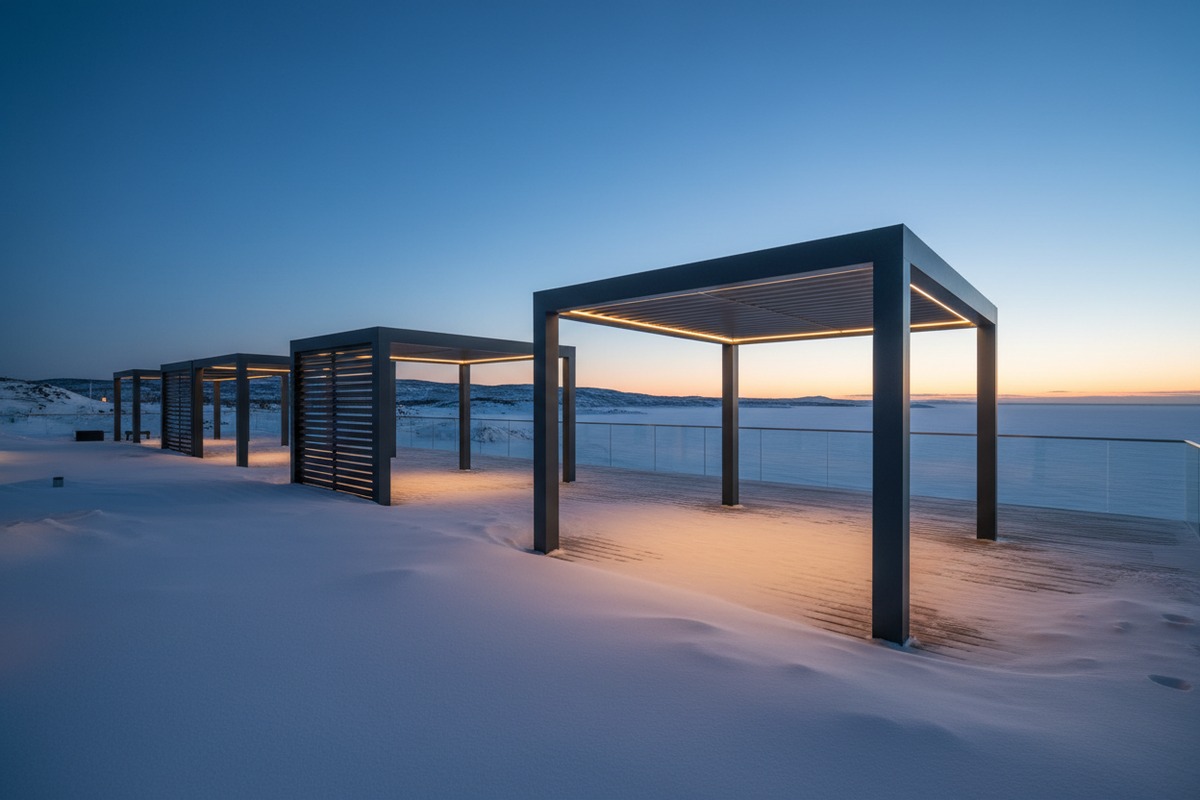
A good RFQ saves time because it removes hidden assumptions. Start with the project location, intended use, and installation type. Is the pergola freestanding or wall mounted? Is it attached to concrete, steel, timber, or an insulated facade? Will the space stay open, or will it use zip blinds, glass panels, or other enclosures? These choices change structure, drainage, motor sizing, and condensation risk.
You should also state the roof style. Is it a fixed roof, a louvered roof, or a retractable top? Then specify the finished dimensions, clear height, and any limits on post positions. Nordic sites often have drainage, snow shedding, or access constraints that affect post layout. If heaters, LED lighting, sensors, or smart control are needed, put them in the RFQ from the start. Late changes usually cost more and create drawing revisions.
| RFQ category | What to include | Why it helps |
|---|---|---|
| Site data | Country, city, exposure, coastal or inland | Climate assumptions become clear |
| Load criteria | Required snow and wind loads | Prevents under-design |
| Geometry | Overall size, clear height, post limits | Reduces redraws |
| Mounting | Freestanding or wall mounted, base condition | Connection design changes early |
| Accessories | Zip blinds, glass, heaters, LEDs, sensors | Avoids missing power or framing details |
Tell the supplier what documents you want before approval
Many sourcing problems begin because the buyer approves too little information. In our project workflow, the safest orders are the ones with a document list built into the RFQ. Ask for a general arrangement drawing, profile sections, load calculations, wiring diagram, drainage layout, hardware list, and finish specification before production approval. For Nordic installations, I would also ask for winter operating notes and maintenance instructions.
This is also the place to ask about packaging and spare parts. Long-distance shipping can damage aluminum profiles or stop a site job if one custom connector is missing. State your packaging requirement clearly. Ask for protected profiles, labeled bundles, hardware packs matched to the drawing revision, and a spare parts percentage for key fasteners and wear items.
| Approval document | Why you need it |
|---|---|
| General arrangement drawing | Confirms dimensions, post positions, and appearance |
| Structural calculation summary | Shows that load assumptions match the site |
| Foundation or reaction data | Helps the local builder size footings correctly |
| Wiring diagram | Prevents installer errors and service confusion |
| Finish and fabric specification | Locks the approved material standard |
| Packing list and spare list | Reduces site delays from missing parts |
Add commercial and service details that protect the project
A technical RFQ should also cover the parts that usually go wrong after engineering. State the target lead time. State the required Incoterm. State whether you need DDP support, pallet labeling, or project-specific packing marks. Ask for installation manuals in the language your team will use. Ask whether 3D installation videos are available. These are not small details. They are often the difference between a smooth installation and a costly delay.
For Scandinavian work, it also helps to ask about future service. Can motors be replaced without removing the full roof? Can zip blind fabric be changed as a field part? Are RAL color approvals tied to one batch, or can they be matched across repeat orders? A custom pergola is not just a one-time product. It is a small system that needs to remain serviceable.
The strongest RFQs are precise but not complicated. They tell the supplier what the pergola must survive, how it must look, how it must be installed, and what proof must arrive before you say yes.
Conclusion
Cold-climate pergola sourcing gets easier when your request is technical, specific, and verifiable. In Nordic work, details win twice: first in approval, then in winter.
Notes de bas de page
1. Explains the principles and methods of structural analysis in engineering. ︎
2. Provides an overview of the Nordic region and its economic cooperation. ︎
3. Details the properties and applications of this specific aluminum alloy. ︎
4. Replaced with a Wikipedia article providing a general and authoritative overview of drainage systems and patterns in geomorphology, relevant to understanding drainage paths. ︎
5. Official European Commission page explaining the CE marking and its significance. ︎
6. Replaced with an authoritative government source (NIST) detailing the EU Declaration of Conformity requirements. ︎
7. Provides a comprehensive explanation of the IP Code (Ingress Protection) standard. ︎
8. Explains the process and benefits of powder coating from an industry association. ︎
9. References the ASTM standard for operating salt spray (fog) apparatus. ︎
10. Describes testing methods for textile flexibility in cold environments. ︎