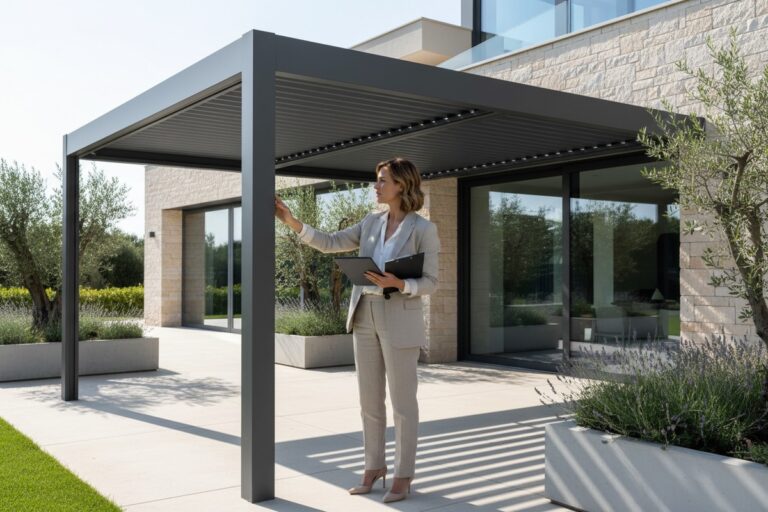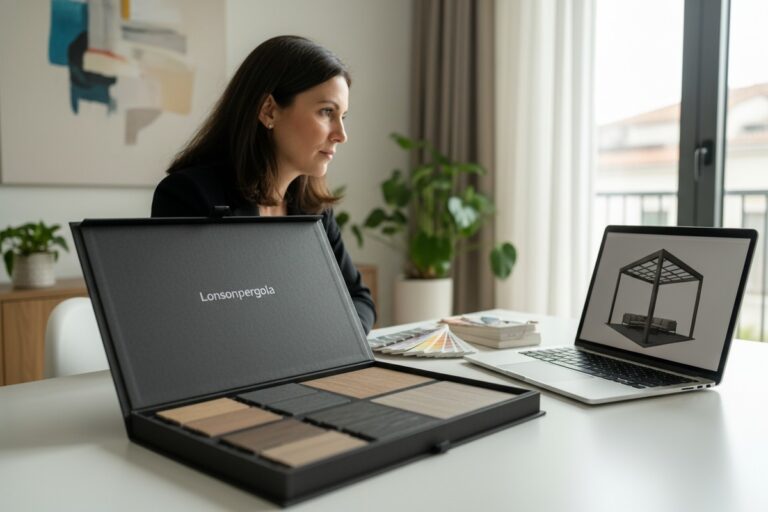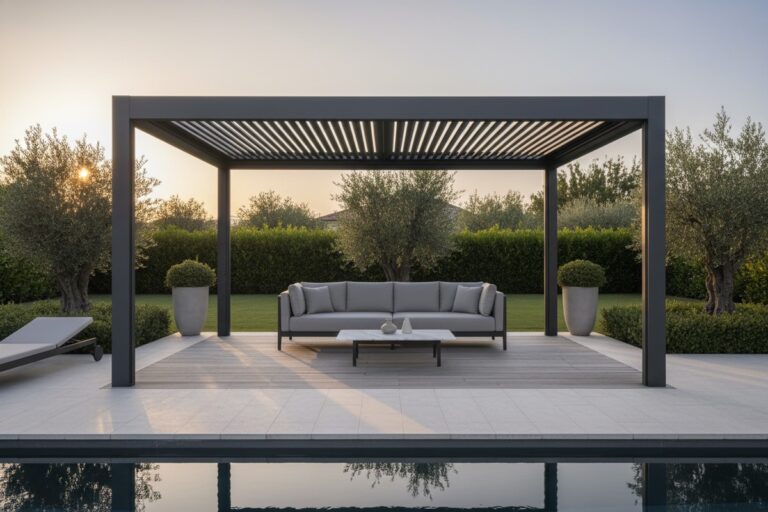

Every week, our support team logs dozens of dealer calls that could have been prevented with better preparation upfront.
Aluminum pergola dealers should prepare for after-sales questions about installation issues, missing hardware, wind and snow load certifications, motorized component malfunctions, warranty claims for fading or structural damage, maintenance guidance, parts availability, and response time expectations.
The difference between a dealer who thrives and one who drowns in complaints often comes down to one thing: how well they anticipated the questions before customers asked them Beaufort scale 1. This article walks through the most common after-sales scenarios we see across our dealer network in Europe, and gives you the answers, data, and frameworks to handle each one with confidence. Let's get into it.
How do I handle customer complaints regarding complex installation or missing hardware?
Missing a single bracket or connector in a shipment can stall an entire job site and cost a dealer their reputation overnight EN 1991-1-4 for wind loads 2.
Dealers should maintain a pre-installation checklist, verify hardware counts before dispatching to job sites, offer clear multilingual assembly guides, and establish a rapid replacement protocol for missing parts—ideally with local buffer stock to avoid international shipping delays.
Why Installation Complaints Are Really Pre-Sale Problems
In our experience shipping over 80,000 pergola sets annually, we have learned that most installation complaints trace back to gaps in communication before the sale. The customer did not receive a proper site survey. The dealer did not confirm anchor types for the specific substrate. Or the installation manual was not matched to the exact configuration ordered. These are preventable issues.
When a customer calls to say the installation is "too complex," what they usually mean is one of three things. The instructions are unclear. The parts do not seem to match the diagrams. Or they assumed the pergola was a simple bolt-together kit when it actually requires electrical work, drainage planning, and precise leveling.
The Missing Hardware Problem
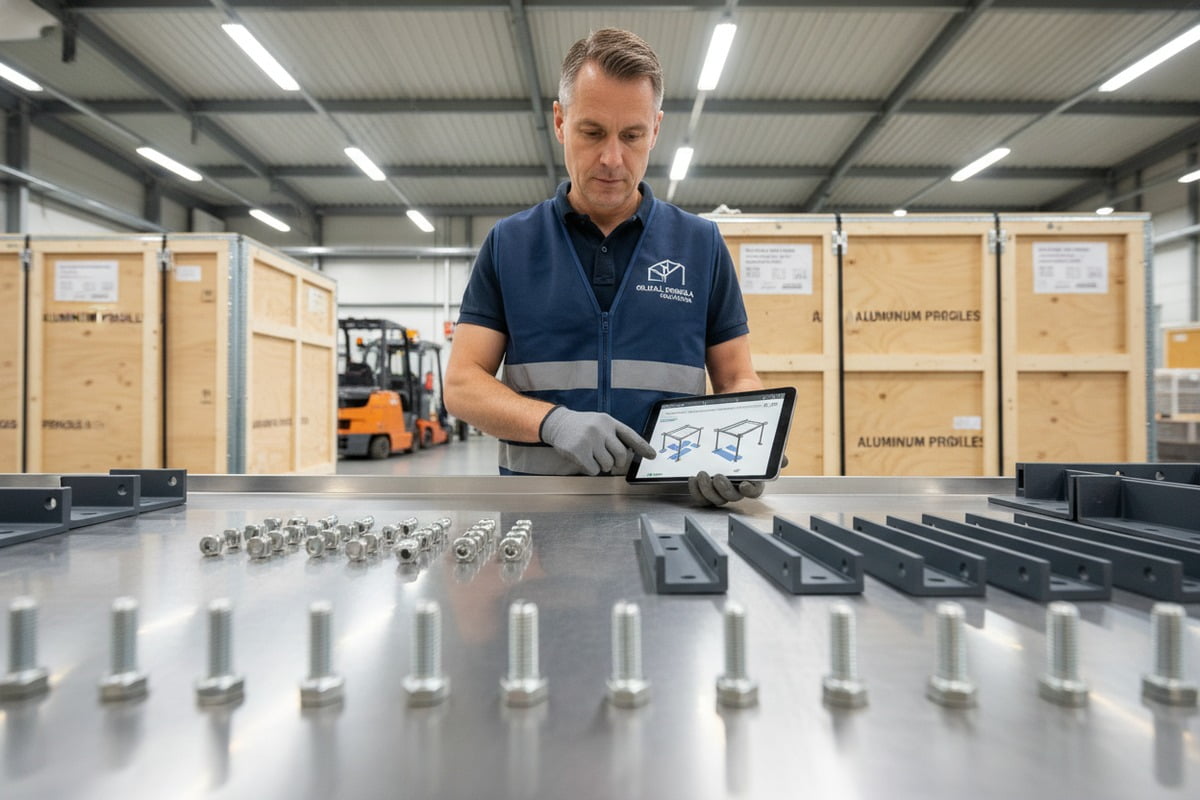
Missing hardware is the single fastest way to lose a customer's trust. On our production lines, we run automated counting and weighing systems for every hardware bag. But errors still happen, especially with custom OEM orders that include non-standard fasteners or color-matched components. Dealers need a plan for this.
Here is what we recommend to every dealer partner:
| Action | Timeline | Who Is Responsible |
|---|---|---|
| Count all hardware bags against the packing list upon receiving the shipment | Within 48 hours of delivery | Dealer warehouse team |
| Report any discrepancy with photos and order number | Same day as discovery | Dealer purchasing contact |
| Ship replacement parts via express courier | Within 24–72 hours of confirmed shortage | Manufacturer or local distributor |
| Keep a buffer stock of common fasteners (M8 bolts, T-nuts, brackets) | Ongoing | Dealer |
Providing Better Assembly Support
Our engineering team now produces 3D animated installation videos for every major pergola model. These are not generic. They show the exact sequence, torque values, and tool requirements. Dealers who share these videos with their installation crews before the job starts see far fewer callbacks.
One more thing. If your customer is a contractor, they expect professional-grade documentation. That means exploded-view diagrams, numbered parts lists, and clear callouts for left-hand versus right-hand components. If your customer is a homeowner attempting a DIY install on a motorized louvered pergola 3, you should strongly recommend professional installation and make that recommendation part of your sales process, not your after-sales apology.
What technical data should I provide when clients ask about wind and snow load certifications?
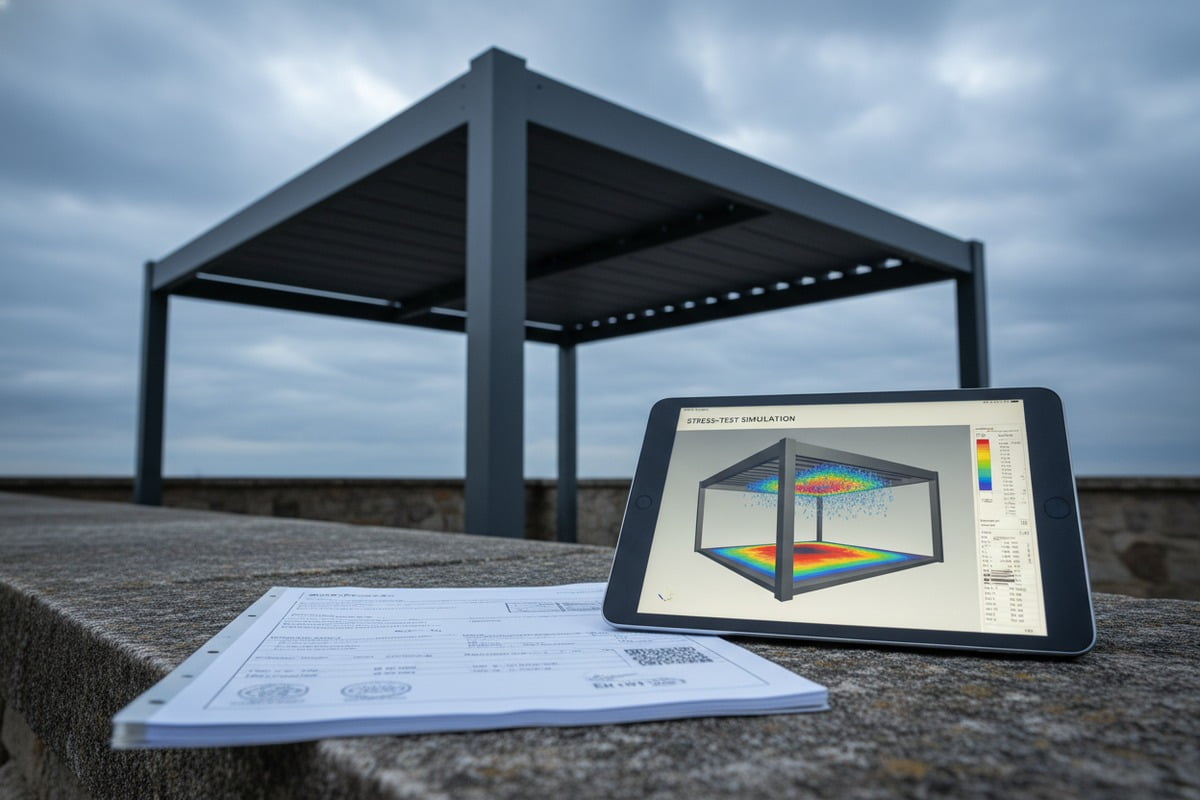
One of the most dangerous mistakes a dealer can make is quoting wind or snow ratings they cannot back up with engineering documentation.
Dealers should provide specific wind load ratings (in km/h or Beaufort scale), snow load capacity (in kN/m² or kg/m²), applicable test standards (such as EN 1991 for Europe), structural calculation reports, and any third-party certification documents from the manufacturer.
Understanding What Clients Actually Need
When a client asks about wind and snow load, they are usually asking for one of two reasons. Either they need to submit documentation for a building permit or HOA approval, or they are comparing your product against a competitor and want proof your structure is safer. Both situations require you to have real numbers, not marketing language.
On our engineering side, we test and calculate load performance based on European standards, primarily EN 1991-1-3 for snow loads 4 and EN 1991-1-4 for wind loads. But we also know that local requirements vary dramatically. A pergola installed in coastal southern Italy faces different wind conditions than one installed in the Austrian Alps. Dealers must understand their local code requirements and request the right documentation from us.
Key Technical Data Points to Have Ready
| Data Point | What It Means | Typical Range for Premium Aluminum Pergolas |
|---|---|---|
| Wind load rating | Maximum wind speed the structure can withstand without damage | 100–150 km/h (Beaufort 10–12) |
| Snow load capacity | Maximum weight of snow per square meter the roof can support | 0.5–1.5 kN/m² (50–150 kg/m²) |
| Aluminum wall thickness | Thickness of the main profile walls, directly affecting strength | 2.0–3.0 mm |
| Post cross-section | Size of support columns | 150×150 mm to 200×200 mm |
| Anchoring method | How the pergola is fixed to the ground or structure | Chemical anchors, base plates, through-bolts |
The Difference Between Marketing Claims and Engineering Reality
Here is where dealers need to be careful. Some suppliers claim "wind resistant" or "built for all weather" without providing any test data. That is marketing, not engineering. A responsible dealer should always ask the manufacturer for the structural calculation report 5 (often called a static calculation) and verify that it matches the specific span, height, and configuration being sold.
We provide static calculations for every custom order when requested. We also supply CE declarations of performance 6 for our standard models. If a dealer's supplier cannot provide these documents, that is a red flag.
Another important detail: wind and snow ratings apply to the pergola as installed according to the manufacturer's specifications. If the installation team uses fewer anchors, thinner concrete, or ignores the specified post spacing, the rated performance is void. This is why installation quality and engineering data are linked. You cannot separate them.
Dealers should also be prepared to explain the difference between "operational" wind load (the wind speed at which louvers should be closed or retracted) and "structural" wind load (the maximum the frame can survive). These are two different numbers, and confusing them can lead to real safety issues.
How can I resolve issues if the motorized louvers or zip blinds malfunction after installation?
A motorized pergola that stops working two weeks after installation is not just a product issue—it is a trust crisis that can cost a dealer multiple future sales.
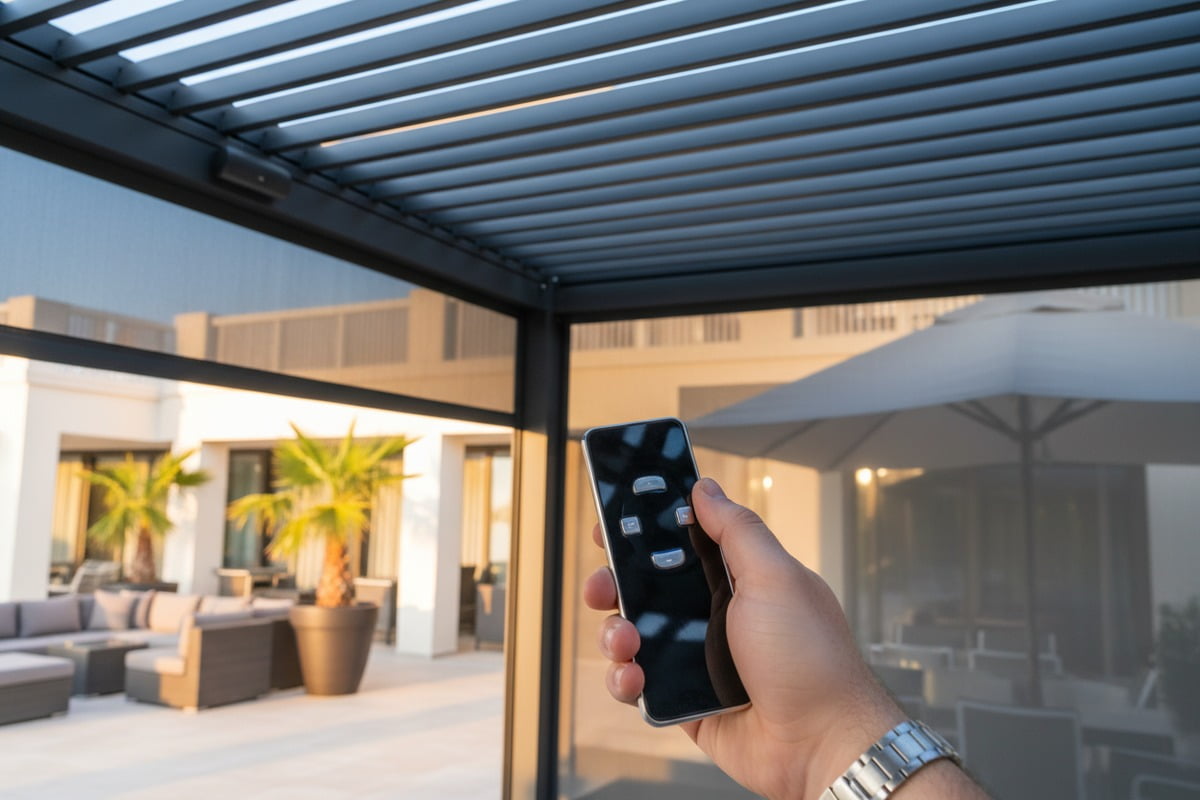
Dealers should establish a structured troubleshooting protocol starting with remote diagnostics (power supply, remote pairing, motor reset), then escalate to on-site inspection if needed, and maintain access to replacement motors, control boards, and zip blind components with clear manufacturer support channels.
Common Motorized System Failures and Their Real Causes
From our production and after-sales data, the top five reasons motorized louvers or zip blinds malfunction after installation are not what most people expect. They are rarely motor failures. Here is the breakdown:
| Reported Symptom | Most Common Root Cause | Typical Fix |
|---|---|---|
| Louvers won't open or close | Power supply not connected or tripped breaker | Check wiring and breaker |
| Remote control unresponsive | Remote not paired after battery replacement | Re-pair remote per manual |
| Motor hums but louvers don't move | Louver blade jammed by debris or misalignment | Clear obstruction and realign |
| Zip blind stops halfway | Side channel misalignment or fabric bunching | Adjust guide rails and tension |
| System works intermittently | Loose wiring connection at junction box | Re-terminate wiring connections |
Notice that four out of five issues are installation-related or environmental, not manufacturing defects. This is why we always tell our dealer partners: invest in installer training, and your after-sales workload drops dramatically.
Building a Remote Diagnostics Process
Not every malfunction requires a site visit. We encourage dealers to build a phone or video-based first-response system. When a customer calls with a motorized issue, the support person should walk through a standard checklist:
- Is the power supply on and is the breaker active?
- Does the manual override work? (Most of our motors include a manual crank or release.)
- Has the remote been re-paired recently?
- Are there any obstructions in the louver track or zip blind channel?
- Is there any visible wiring damage?
If these five checks do not resolve the issue, then schedule an on-site visit. This process alone can resolve 60–70% of calls without rolling a truck.
Replacement Parts and Lead Times
For motorized components, parts availability is critical. Our recommendation is that every dealer stocks at least a small inventory of the most common replacement items: one spare motor per model series, a set of control boards, replacement remotes, and zip blind fabric in the most popular colors. We offer a spare parts kit program for this exact reason.
If a motor does need full replacement, our standard turnaround for shipping a replacement unit to Europe is 5–7 business days via air freight. But if the dealer has local stock, the customer can be back up and running within 24–48 hours. That speed difference is what separates a five-star review from a one-star complaint.
Smart Controls and Firmware
For pergolas with app control, rain sensors, or wind sensors, dealers should also be prepared for connectivity questions. The most common issues are Wi-Fi range limitations, app version mismatches, and sensor calibration drift. We provide firmware update guides and remote support via video call for these situations. The key point for dealers: if you sell smart features, you must support smart features. The after-sales expectation for automated systems is much higher than for a static shade structure.
Surface fading or unexpected structural damage triggers immediate doubt about product quality—and how a dealer handles the claim defines the long-term relationship.
Dealers should follow a documented warranty claim protocol: collect photos and installation records, determine whether the issue falls under structural, finish, or mechanical coverage, submit a formal claim to the manufacturer with supporting evidence, and communicate clear timelines and next steps to the customer throughout the process.
Understanding Tiered Warranty Coverage
One of the first things we explain to new dealer partners is that premium aluminum pergola warranties are not one-size-fits-all. Coverage is typically split into tiers based on the component category. Here is how we structure ours, and it is similar to what you will see from most reputable manufacturers:
| Component Category | Typical Warranty Period | What Is Covered |
|---|---|---|
| Structural frame (aluminum profiles, posts, beams) | 10–20 years | Structural failure, material defects, joint failure |
| Powder coat 7 / surface finish | 5–10 years | Peeling, chalking, excessive fading beyond normal weathering |
| Motors and actuators | 3–5 years | Motor failure, gear mechanism defects |
| Electronic controls, remotes, sensors | 2–3 years | Component failure, firmware defects |
| Zip blind fabric and mechanisms | 2–5 years | Fabric tearing, track mechanism failure |
Dealers must communicate these tiers clearly at the point of sale. If a customer believes they have a "20-year warranty on everything" and then discovers the motor is only covered for 3 years, the resulting frustration is entirely avoidable.
Surface Fading: Normal Weathering vs. Defective Coating
Surface fading claims require careful evaluation. All powder-coated surfaces experience some degree of color change over years of UV exposure 8. This is normal. What is not normal is peeling, flaking, blistering, or dramatic color shift within the first few years.
When we receive a fading claim, we ask for the following:
- High-resolution photos of the affected area
- The date of installation
- The geographic location and orientation (south-facing surfaces get more UV)
- Whether any chemical cleaners were used on the surface
- The original RAL color code 9
Our powder coating process uses Qualicoat-certified materials 10, which are tested for UV resistance, adhesion, and corrosion performance. If the coating fails within the warranted period and the customer followed care instructions, we cover the claim. If the surface was damaged by abrasive cleaners, harsh chemicals, or physical impact, that falls outside warranty.
Structural Damage Claims
Structural damage claims are more serious and require more investigation. Was the damage caused by a weather event that exceeded the rated load? Was the installation done according to our specifications? Were modifications made to the structure after installation?
We require dealers to submit the original order confirmation, installation photos (we recommend dealers photograph every installation at completion), and a description of the event or conditions that led to the damage. Our engineering team then reviews the claim and issues a determination, usually within 5–7 business days.
The Dealer's Role in the Claim Process
Dealers are the front line. The customer calls you, not the factory in China. So your protocol should include these steps:
- Acknowledge the complaint within 24 hours.
- Collect all required documentation (photos, dates, order numbers).
- Submit the claim to the manufacturer with a clear summary.
- Provide the customer with an estimated timeline for resolution.
- Follow up with the customer at each stage until the issue is closed.
This process sounds simple, but many dealers fail at step 4. They go silent while waiting for the manufacturer's response, and the customer assumes nothing is happening. Regular communication, even just a brief update email, prevents escalation.
One more critical point: warranty claims are also a feedback loop. If a dealer sees repeated fading claims in a specific region or repeated structural issues with a specific model, that information should flow back to the manufacturer immediately. At our facility, we use this data to improve coating specifications, refine structural designs, and update installation guidelines. The best dealer-manufacturer relationships are partnerships, not just transactions.
Conclusion
Dealers who prepare clear, honest answers to these after-sales questions before customers ask them will build stronger relationships, reduce costly callbacks, and earn the referrals that drive long-term growth.
Notes de bas de page
1. Provides an official explanation and table for the Beaufort wind force scale. ︎
2. Provides an overview of Eurocode 1, which includes standards for wind actions. ︎
3. Provides general information about pergolas, including various types and features. ︎
4. Provides an overview of Eurocode 1, which includes standards for snow loads. ︎
5. Describes the field of structural engineering, which is relevant to calculation reports. ︎
6. Official EU guidance on CE marking and declarations of performance for products. ︎
7. Provides a comprehensive overview of the powder coating process, properties, and uses. ︎
8. Explains the process of material degradation caused by light, including UV radiation. ︎
9. Official site for RAL colors, a widely recognized standard for color matching. ︎
10. Official website for Qualicoat, detailing quality standards for architectural aluminum coatings. ︎