
Every year, our production floor pushes out tens of thousands of aluminum pergola sets, and we see firsthand how buyers struggle to separate real capability from marketing claims ISO9001 1. The frustration is real—you place a bulk order based on promises, only to find the supplier cannot deliver on time, skips quality checks, or ships damaged goods in flimsy packaging. The cost of choosing wrong is not just money. It is lost projects, angry clients, and a damaged reputation.
To evaluate Chinese aluminum pergola suppliers, verify factory size and annual output data, request certifications like CE and ISO9001, test OEM customization responsiveness with sample orders, confirm material grades and motor compliance, and assess packaging and logistics processes through on-site audits or third-party inspections.
Below, we break down the four critical areas you need to investigate before committing to any supplier OEM customization 2. Each section gives you practical steps, real benchmarks, and warning signs to watch for.
How can I verify if a supplier's annual production capacity truly meets my large-scale project needs?
When our team onboards a new European distributor, the first question is always about volume Motor CE certificate 3. Can we keep up? It is a fair concern, because a supplier that overpromises on capacity will derail your entire seasonal plan. The problem intensifies when peak season hits and multiple buyers compete for the same production slots.
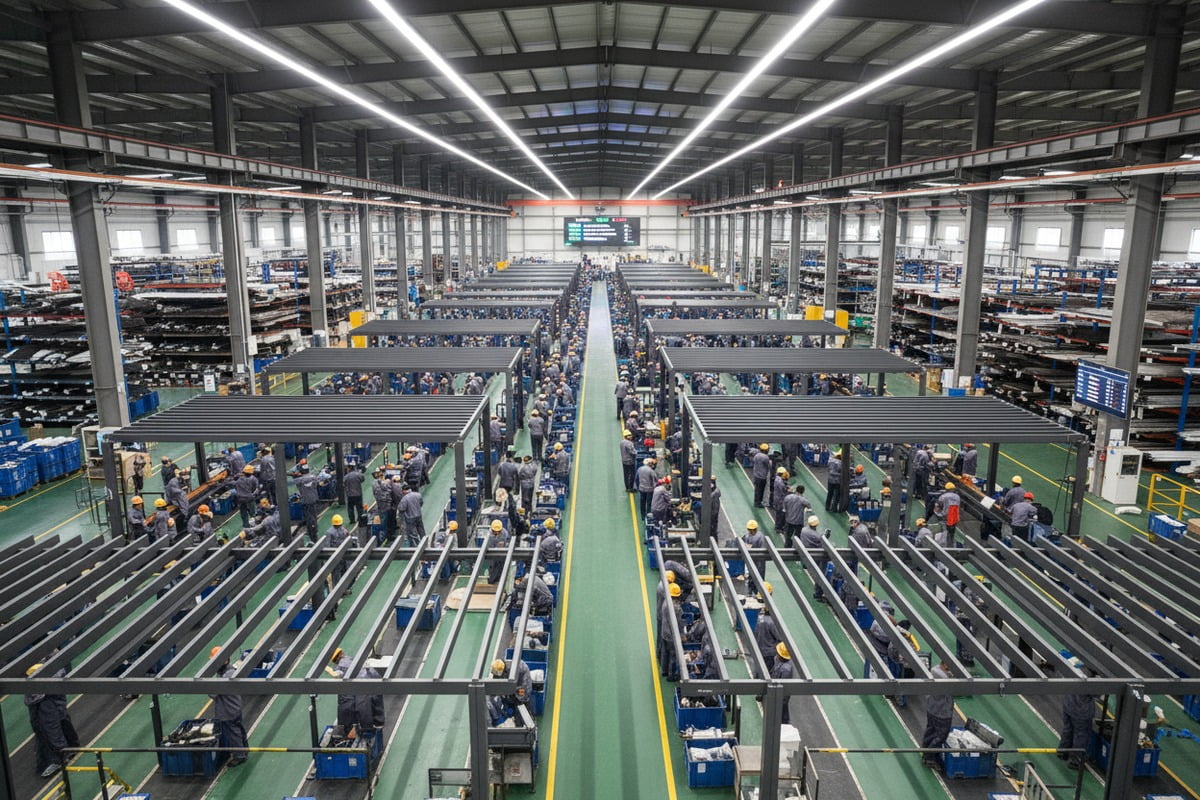
Request documented proof of annual output, factory floor area, production line count, and workforce size. Cross-check these figures through on-site audits, third-party verification, or video tours showing active production lines. A facility producing 80,000+ sets annually with 50,000+ square meters of floor space is well-positioned for large-scale orders.
Why Factory Size Alone Is Not Enough
Many buyers look at factory square footage and assume bigger means better. That is only partly true. A 50,000-square-meter facility means nothing if half the space stores raw materials inefficiently. You need to ask how many dedicated production lines run simultaneously. At our facility, we operate multiple parallel lines—cutting, welding, powder coating, assembly, and packaging—each staffed by trained workers. This parallel workflow is what enables a genuine 80,000-set annual capacity.
Key Metrics to Request
When you contact a supplier, ask for these specific numbers:
| Metric | What It Reveals | Benchmark for Large Orders |
|---|---|---|
| Annual production capacity 4 | Total output potential | 50,000–100,000+ sets/year |
| Factory floor area | Physical scale of operations | 20,000–50,000+ sqm |
| Number of production lines | Ability to run parallel orders | 3+ dedicated lines |
| Workforce size | Labor availability for scaling | 80–200+ employees |
| Equipment age and type | Modernization level | CNC machines, automated coating lines |
How to Cross-Check Claims
Do not rely on a supplier's word alone. Here are three practical verification methods:
- On-site audit. If you can visit, walk the production floor during working hours. Count active stations. Watch the workflow from raw aluminum extrusion to finished packaging.
- Third-party inspection. Hire a firm like SGS or Bureau Veritas to conduct a factory audit. third-party inspection 5 They will verify capacity, equipment, and workforce.
- Video call tour. If travel is not possible, request a live video tour. Ask the guide to show specific areas—do not accept pre-recorded footage only.
Watch for These Red Flags
A supplier that refuses facility visits or live video tours likely has something to hide. Vague answers like "we can handle any order size" without specific numbers should concern you. Also, be cautious if the quoted lead time seems too short for the volume requested. A factory claiming 80,000 sets per year but offering 15-day delivery on 500 units may be subcontracting without telling you.
Scaling with Seasonal Demand
Your business probably has peak seasons. Ask the supplier how they handle demand spikes. Do they hire temporary workers? Do they maintain safety stock of popular profiles? Our approach is to keep standard aluminum profiles and common RAL color components in stock year-round, so when peak orders arrive, we cut weeks off the timeline.
What should I look for to ensure a manufacturer can handle my specific OEM customization and non-standard size requests?
Our engineering team processes dozens of custom requests every month—from unusual span widths for European terrace projects to specific RAL colors that match a hotel brand's identity. The gap between a supplier that says "yes, we customize" and one that actually delivers accurate custom products on time is enormous. Getting this wrong means rework, delays, and lost trust with your end clients.
Look for dedicated design engineers, proven OEM/ODM project history, in-house CAD and 3D rendering capability, flexibility on non-standard dimensions, and a structured sample approval process. Suppliers offering a wide product range—louvered pergolas, zip blinds, motorized systems—demonstrate the manufacturing versatility needed for complex custom work.

The Difference Between OEM and ODM
These terms get mixed up often. OEM means you provide the design and the manufacturer builds it under your brand. ODM means the manufacturer offers existing designs that you rebrand. Both matter, but for truly custom projects, you need a supplier comfortable with OEM—building from your specifications, not just slapping your logo on a catalog product.
| Service Type | What the Supplier Does | Best For |
|---|---|---|
| OEM | Manufactures to your exact design and specs | Unique project requirements, proprietary designs |
| ODM | Offers pre-designed products for your branding | Quick market entry, standard product lines |
| Full Custom | Engineers entirely new structures from scratch | Architectural projects, non-standard installations |
Testing Customization Capability Before Committing
Never place a large custom order without testing first. Here is a practical sequence:
- Send a detailed drawing or spec sheet. Include dimensions, color (RAL number), louver type, motor requirements, and accessories.
- Evaluate the response time. A capable factory returns a technical review and quote within 48–72 hours. If it takes two weeks, their engineering team is likely stretched thin.
- Request a production sample. Pay for it. A quality sample tells you more than any brochure. Check dimensional accuracy, powder coat finish, hardware fit, and motor operation.
- Review their revision process. If the sample needs changes, how fast do they turn around revisions? This reveals their true engineering agility.
Non-Standard Sizes: Where Many Suppliers Fail
Standard pergola sizes are easy. Most factories can handle 3×3m, 4×3m, or 4×4m units without issues. The real test comes with non-standard requests—a 7.2m span for a restaurant terrace, a 2.8m post height for a low-clearance balcony, or an L-shaped configuration wrapping around a building corner. These require structural recalculations, custom extrusion cutting, and sometimes entirely new bracket designs.
At our facility, we handle these requests regularly because we have structural engineers on staff who recalculate load ratings for every non-standard dimension. Ask your supplier if they do this—or if they simply stretch a standard design and hope it holds.
Product Range as a Proxy for Versatility
A supplier offering only one type of pergola likely runs a simple, rigid production setup. But a manufacturer producing aluminum pergolas, steel pergolas, zip blinds, motorized louvered systems, and retractable screens has the tooling, expertise, and material sourcing flexibility to handle diverse custom requirements. When we expanded our product range to include zip blinds alongside our pergola lines, it forced us to invest in more versatile equipment—and that investment pays off for every custom project we take on.
How do I confirm that the supplier's aluminum quality and motor certifications meet my local market standards?
We learned early on that exporting to Europe demands more than a good-looking pergola. One shipment with a non-CE-compliant motor can mean customs rejection, fines, or worse—a product recall after installation. The stakes are high, and the responsibility falls on you as the importer to verify compliance before goods leave the factory.
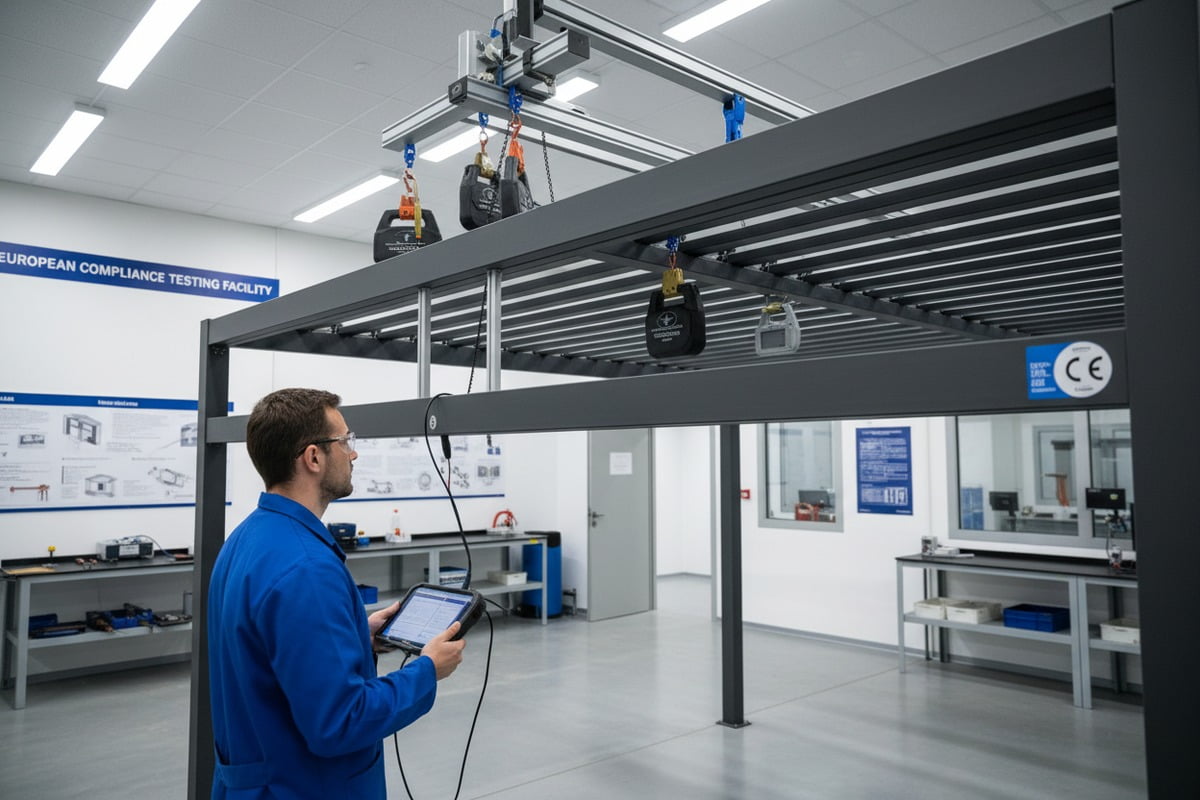
Request copies of CE, ISO9001, UL, or other market-specific certifications and verify their validity directly with the issuing bodies. Demand material test reports showing aluminum grade, wall thickness, and coating specifications. For motors and electronics, confirm that each component carries the certification required by your destination market—not just the pergola structure itself.
Understanding Aluminum Grades and Why They Matter
Not all aluminum is equal. The alloy grade determines strength, corrosion resistance, and longevity. Most quality pergola manufacturers use 6061-T6 or 6063-T5 aluminum alloys 7. The T5 and T6 designations refer to tempering processes that increase hardness and structural integrity.
| Aluminum Alloy | Strength Level | Corrosion Resistance | Common Use in Pergolas |
|---|---|---|---|
| 6063-T5 | Medium | Excellent | Decorative profiles, louvers, trim |
| 6061-T6 | High | Very Good | Structural posts, beams, load-bearing frames |
| 6005-T5 | Medium-High | Very Good | Extruded structural sections |
Ask your supplier to provide a material test certificate (MTC) 8 for every batch. This document shows the alloy composition, tensile strength, and yield strength. If a supplier cannot produce an MTC, question where their aluminum comes from.
Wall Thickness: The Hidden Quality Indicator
This is where corner-cutting happens most often. A pergola post that looks identical on the outside can have 2.0mm or 1.2mm wall thickness. The difference is invisible to the eye but critical for wind and snow load performance. In European markets, building codes may require specific load ratings. A thin-walled profile will not meet them.
Our standard structural posts use a minimum 2.0mm wall thickness, with beams at 1.5mm or above. We specify this in every quotation and can provide cross-section measurements for verification.
Powder Coating Quality
The surface finish protects against UV degradation, corrosion, and scratching. Powder Coating Quality 9 Quality powder coating should be 60–80 microns thick. Ask for coating thickness test reports. Also inquire about the coating brand—well-known brands like AkzoNobel, Tiger, or Jotun indicate a commitment to durability. Inferior coatings fade within 2–3 years, destroying your brand reputation.
Motor and Electronics Certification
For motorized louvered pergolas, the motor is a separate compliance issue. The pergola structure may carry a CE marking, but if the motor does not, you still face regulatory problems in Europe. Ask for:
- Motor CE certificate (for European markets)
- UL/CUL certificate (for North American markets)
- IP rating documentation (IP65 or higher for outdoor use)
- Motor brand and origin (Somfy and Nice are trusted European brands commonly integrated by quality Chinese manufacturers)
How to Independently Verify Certifications
Do not just accept a PDF. Certificates can be fabricated. Take these steps:
- Note the certificate number and issuing body.
- Visit the issuing body's website (e.g., TÜV, SGS, Intertek) and use their online verification tool.
- Contact the certification body directly if online verification is unavailable.
- For ISO certifications, check the IAF CertSearch database.
When we prepare shipments for European distributors, we include full certification dossiers with each order. This is not optional—it is the baseline expectation for serious B2B trade.
What signs indicate that a factory can maintain a 30-day lead time without compromising my packaging safety?
After 25 years in this industry, our logistics team has seen every packaging failure imaginable—scratched louvers from inadequate foam separation, bent posts from loose stacking, and missing hardware bags that halt an installation 8,000 kilometers away. The painful truth is that many suppliers rush packaging to meet deadlines. Speed without care creates more problems than late delivery ever would.
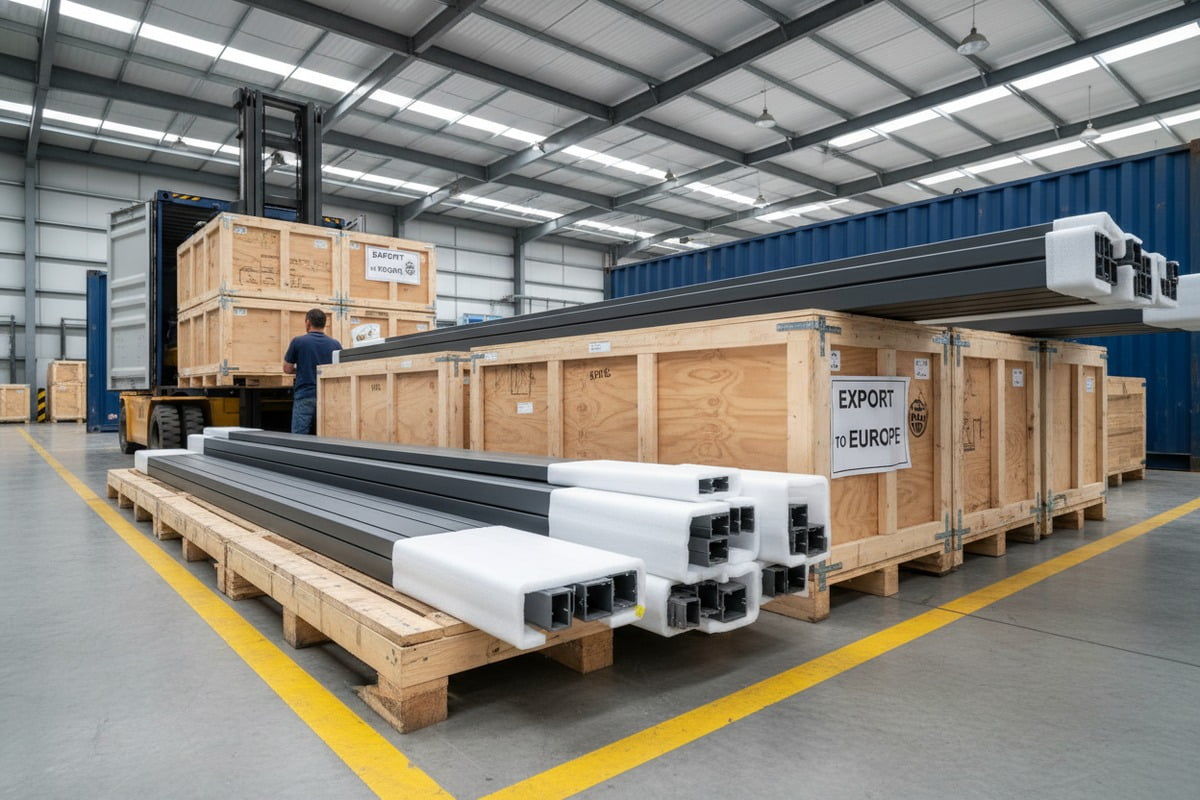
A factory that maintains 30-day lead times safely will show you organized raw material inventory, standardized packaging protocols with protective foam and corner guards, pre-packed hardware kits with itemized checklists, and a dedicated quality control station between assembly and shipping. Consistent lead times come from process discipline, not shortcuts.
What a 30-Day Lead Time Actually Requires
Thirty days sounds straightforward, but it demands tight coordination across multiple departments. Here is how the timeline typically breaks down in a well-run facility:
| Phase | Days | Activities |
|---|---|---|
| Order confirmation and material prep | Days 1–5 | Confirm specs, source aluminum profiles, order motors/hardware |
| Cutting, welding, and fabrication | Days 6–15 | CNC cutting, welding, drilling, structural assembly |
| Surface treatment | Days 16–20 | Powder coating, curing, quality inspection of finish |
| Assembly, QC, and packaging | Days 21–27 | Final assembly check, hardware kitting, protective packaging |
| Loading and shipping | Days 28–30 | Container loading, documentation, customs clearance |
If any phase slips, the supplier either delays your shipment or compresses the packaging and QC phase. That compression is where damage happens.
Packaging Red Flags to Watch For
Ask the supplier to show you their packaging specifications—or better yet, request photos or video of how a finished pergola set looks inside its shipping carton or crate. Warning signs include:
- No foam separators between aluminum profiles. Profiles rub against each other during transit, causing scratches and dents.
- No corner protectors on posts and beams. Corners are the most vulnerable point during handling.
- Hardware loose in the box. Screws, bolts, and connectors should be in labeled bags, grouped by assembly step.
- No pallet or crating for sea freight. Cardboard boxes alone will not survive 30+ days of ocean shipping with container stacking pressure.
The Hardware Kit Problem
This is one of the most underestimated issues in pergola importing. Missing a single non-standard bracket or connector can stop an installation dead. The cost of air-freighting a replacement part internationally is absurd relative to the part's value—but the real cost is the project delay and your client's frustration.
We solve this by creating pre-sorted hardware kits with itemized checklists. Each kit is photographed before sealing. The checklist goes inside the box and a copy is sent to the buyer digitally. If a piece is missing during installation, the buyer can reference the photo and checklist to quickly identify the issue, and we can ship replacements immediately via express courier.
How Process Discipline Enables Speed
A 30-day lead time does not come from rushing. It comes from preparation. Factories that maintain large stocks of standard aluminum profiles, popular RAL powder coats, and commonly used motors can skip weeks of procurement time. Our warehouse keeps standard profiles and top-selling colors in stock at all times. When an order comes in, fabrication starts within days—not weeks.
Also look for production planning systems. A factory using ERP (Enterprise Resource Planning) software can schedule orders across production lines efficiently, avoiding bottlenecks. Enterprise Resource Planning (ERP) software 10 Ask your supplier if they use any production management system. If the answer is "we manage with spreadsheets," expect inconsistency.
Installation Manual Quality as a Proxy
A supplier that invests in clear, multilingual installation manuals with 3D diagrams is a supplier that thinks about the end user—and by extension, thinks carefully about every step of the process, including packaging. Poor manuals often correlate with poor packaging and poor quality control. It reflects the overall operational maturity of the factory.
When we design our installation guides, we include step-by-step 3D renderings, tool lists, and QR codes linking to video tutorials. This investment reduces installation errors, which in turn reduces after-sales complaints and builds buyer loyalty.
Conclusion
Choosing the right Chinese aluminum pergola supplier comes down to verifiable facts—not promises. Check capacity with audits, test customization with samples, verify certifications independently, and inspect packaging protocols firsthand. These steps protect your projects, your clients, and your reputation.
Footnotes
- Explains the international standard for quality management systems. ↩︎
- Clarifies the concept of Original Equipment Manufacturer (OEM) services in manufacturing. ↩︎
- Found a relevant article explaining CE certification requirements and compliance for electric motors. ↩︎
- Defines and explains how to calculate production capacity in manufacturing. ↩︎
- Explains the role and benefits of independent third-party inspections in quality control. ↩︎
- Describes the purpose and process of conducting factory audits. ↩︎
- Provides information on common aluminum alloys and their properties. ↩︎
- Explains the importance and content of material test certificates for quality assurance. ↩︎
- Details the process and quality aspects of powder coating for metal products. ↩︎
- Describes the function and benefits of ERP systems in manufacturing operations. ↩︎