
On our production floor, one leaked drawing can erase months of design work 1 and hand your edge to the next buyer.
Secure ownership by stating in writing that your pergola drawings, revisions, tooling rights, and private-label features belong to you, while binding the factory to confidentiality, limited use, controlled access, and clear remedies if designs are copied, shared, or sold to others.
The contract matters, but so do your file controls, supplier checks, and the way information moves from quote to shipment.
How do I legally secure ownership of my custom aluminum pergola designs in the manufacturing contract?
When our engineering team prices a custom pergola, vague ownership terms are where avoidable disputes usually begin.
To secure ownership, your manufacturing agreement should say that all buyer-supplied designs, approved revisions, prototypes, molds, and branding elements are your property, that the supplier receives only a limited production license, and that no reuse, disclosure, or transfer is allowed without written consent.

Many buyers assume that once they pay a development fee, the design is automatically theirs manufacturing agreement 2. In real projects, that assumption can fail fast. We have seen buyers approve a custom louver profile, a hidden drainage detail, or a branded side screen, then discover later that the contract never said who owned the final design package. Payment alone does not fix that gap. Clear language does.
Define the ownership bundle
A strong contract does not just say "the design belongs to the buyer." It should list what that means. In our OEM work, the owned package usually includes buyer sketches, CAD files, 3D models, shop drawings, finish schedules, dimensions, packaging artwork, prototypes, molds, tooling, and all approved revisions. If you leave out improvements or derivative works, the supplier may argue that only the original sketch is yours while the refined production version is theirs.
You should also separate buyer IP 3 from supplier background IP. A factory may already own standard profile systems, motor interfaces, drainage methods, or fastening concepts used across many pergolas. That pre-existing know-how can stay with the supplier. Your contract should still say that the way those elements are combined for your private project cannot be reused without permission.
| Contract area | What the clause should say | Why it matters |
|---|---|---|
| Buyer IP | Buyer owns all supplied and project-specific design materials | Stops later arguments over who paid versus who created |
| Supplier background IP 4 | Supplier keeps pre-existing technology and standard know-how | Makes the deal fair and easier to negotiate |
| Improvements | All project-specific revisions and derivatives belong to buyer or are assigned to buyer | Prevents ownership gaps after engineering changes |
| Tooling and molds | State who pays, who owns, where they are stored, and when they are released | Avoids factory lock-in after sampling |
| License scope | Supplier gets a limited, non-transferable license only to make buyer's products | Blocks reuse for other customers |
Use assignment language, not vague promises
Simple phrases like "we respect your design" are not enough. Better wording says the supplier "assigns" or "hereby transfers" project-specific rights to the buyer. In cross-border sourcing, that matters. Some legal systems do not treat "work for hire" the same way buyers expect. A written assignment 5 is stronger.
Cover the end of the relationship too
Termination language is just as important as onboarding language. Your agreement should say what happens to prototypes, jigs, molds, samples, drawings, and digital files if the project stops. We usually advise buyers to require return, destruction, or certified deletion, plus the right to inspect or request proof. Add governing law, dispute venue, and injunctive relief 6 language so you do not waste months arguing about where a claim can even be filed.
A good ownership clause is not hostile. It simply removes ambiguity before production starts.
How can I prevent my supplier from selling my private-label pergola features to other wholesalers?
In our export projects, the real risk starts after sampling, when a private-label detail quietly becomes someone else's sales feature.
Prevent resale by banning reverse use, copycat production, and disclosure in the supply agreement, while defining your private-label features, assigning penalties for unauthorized sales, restricting subcontracting, and requiring written approval before any sample, photo, or design element is shown to another buyer.
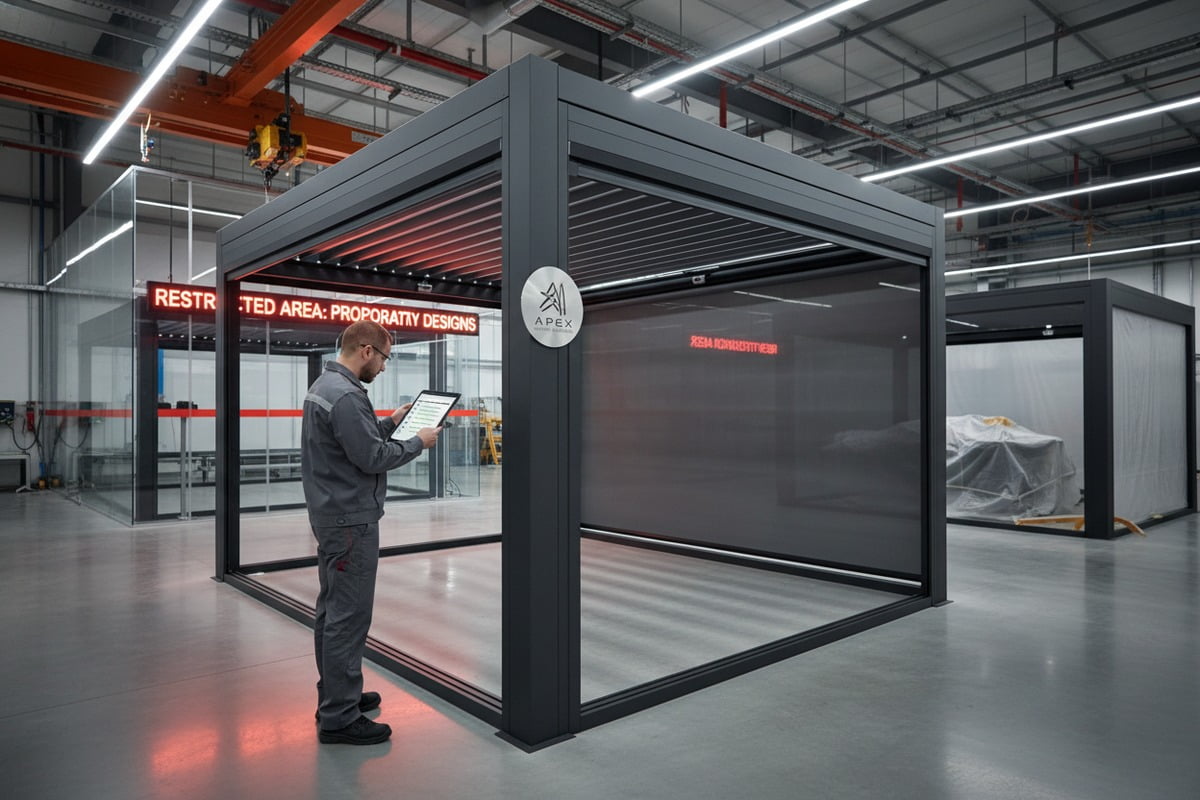
A supplier cannot protect what the contract never defines. That is the first problem. Many buyers say, "Do not sell my design to others," but they do not describe what part is actually exclusive. Is it the full pergola structure, the blade shape, the post cover, the wood-grain finish combination, the lighting layout, or the branded accessory kit? In our experience, the more exact the feature list, the easier the rule is to enforce.
Define the private-label feature set
You do not always need total product exclusivity. Sometimes only a few visible or commercial details matter. A wholesaler may care most about a unique side gutter cap, a custom RAL finish pack, special packaging art, or a hidden motor housing that gives the line a cleaner look. Put those into a schedule and attach drawings or photos. Then say the supplier may not manufacture, market, sample, display, or sell those features to any third party.
| Exclusivity model | What it means | Best fit |
|---|---|---|
| Full exclusivity | Supplier cannot sell the full design to anyone else | Signature hospitality or flagship commercial projects |
| Feature exclusivity | Only named details are protected | Private-label wholesale lines |
| Territory exclusivity | Supplier cannot sell the protected design in a named market | Regional distributors |
| Time-limited exclusivity | Protection lasts for a set term, then can be renegotiated | Buyers balancing cost and control |
Control photos, samples, and marketing use
A leak does not always start with production. It often starts with a sample photo in a sales chat, a factory showroom corner, or a brochure draft. Your contract should ban portfolio use, trade show display, catalog use, online listing, and sample circulation without written approval. If the supplier wants case-study rights later, you can negotiate anonymized use after launch.
Close the subcontractor gap
This point matters more than many buyers expect. If the main factory outsources powder coating, motor integration, packaging, or laser cutting, your protected design may travel through several hands. The supply agreement should require the same confidentiality 7 and non-use terms for every subcontractor. It should also make the main supplier responsible for any breach in that chain.
| Risk point | Common leak path | Contract fix |
|---|---|---|
| Showroom display | New design shown to other buyers | Ban display without written consent |
| Sample circulation | Prototype reused as sales sample | Require sample tracking and return |
| Subcontracting | Shared drawings move to outside vendors | Flow-down NDA and non-use obligations |
| Sales team reuse | Private-label features copied into quotations | Restrict internal use to named project staff |
You also need remedies with some bite. That can mean liquidated damages 8 where lawful, immediate injunctive relief, order cancellation rights, and the right to audit suspect activity. A polite NDA is not enough if the supplier can profit by ignoring it.
What steps should I take to protect my proprietary CAD drawings during the OEM development phase?
When we share CAD packages 9 too early, one forwarded file can undo months of development and pricing work.
Protect proprietary CAD drawings by releasing files in stages, marking them confidential, limiting editable formats, tracking access, and stating that drawings may be used only for your project, by named staff, for a fixed period, with return or deletion required on demand.
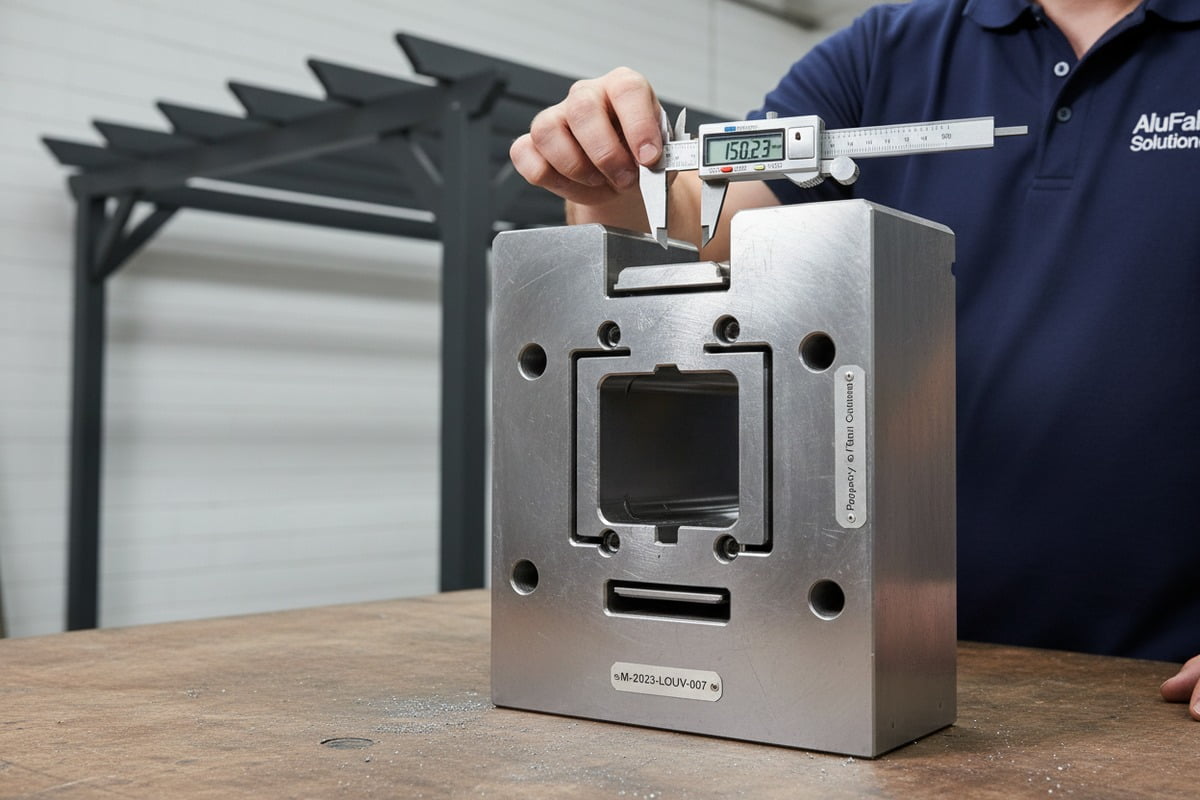
The OEM development phase is where good projects often become risky projects. Early on, the supplier needs enough information to quote, test structure, and check manufacturability. But that does not mean they need your full editable CAD package on day one. We usually tell buyers to match file access to project stage. Share only what is needed for the next decision.
Release information in stages
At RFQ stage, many projects can start with dimensions, renderings, load targets, and a simplified PDF. When the supplier passes technical review and the NDA is signed, you can release more detail. Editable source files should come later, often only after the development agreement, deposit, and named-contact list are in place. This staged approach lowers risk without slowing serious suppliers.
| Project stage | Typical file type | Risk level |
|---|---|---|
| Initial quotation | PDF layouts, basic dimensions, renders | Lower |
| Technical review | Controlled drawings, partial 3D views | Medio |
| Prototype engineering | Limited editable files for named engineers | Higher |
| Mass production | Final approved package with revision control | Highest |
Limit editable formats
Not every partner needs your native source files. In many pergola projects, a watermarked PDF, neutral 3D export, or locked STEP view is enough for review. If you must share editable CAD, use password controls, version naming, and a file register. We also recommend sending files through a controlled platform rather than casual chat tools. A simple digital asset management system 10, or even a permission-based cloud folder with logs, is far better than scattered email attachments.
Build traceability into every file
Every drawing should show a confidentiality label, revision number, issue date, project code, and recipient. That sounds basic, but it matters when problems appear later. Watermarks and unique identifiers can help show origin if a copied design turns up elsewhere. The goal is not to make theft impossible. The goal is to make misuse easier to detect and easier to prove.
| Control method | What it does | Practical value |
|---|---|---|
| Watermarking | Marks files as confidential and project-specific | Deters casual sharing |
| Revision log | Tracks who received which version | Reduces confusion and supports evidence |
| Named access list | Limits viewing to approved staff | Narrows internal exposure |
| Deletion certificate | Confirms file removal after project end | Helps at termination |
Your agreement should say that drawings are for evaluation and production of your project only. It should also say what happens if the project is paused, moved, or cancelled. We like to see return, deletion, and no-retention language, plus the right to request written confirmation. If the factory uses outside engineers, their access should be separately approved.
Good CAD protection is not just an IT issue. It is a commercial discipline.
How do I verify that my manufacturer has strict internal protocols for my design confidentiality?
Before our factory accepts protected projects, buyers usually worry less about promises and more about internal discipline.
Verify confidentiality controls by auditing who can open your files, how designs are stored, whether subcontractors are bound, how samples are labeled, and what happens when staff leave, while requiring written procedures, access logs, and breach reporting terms in the manufacturing contract.
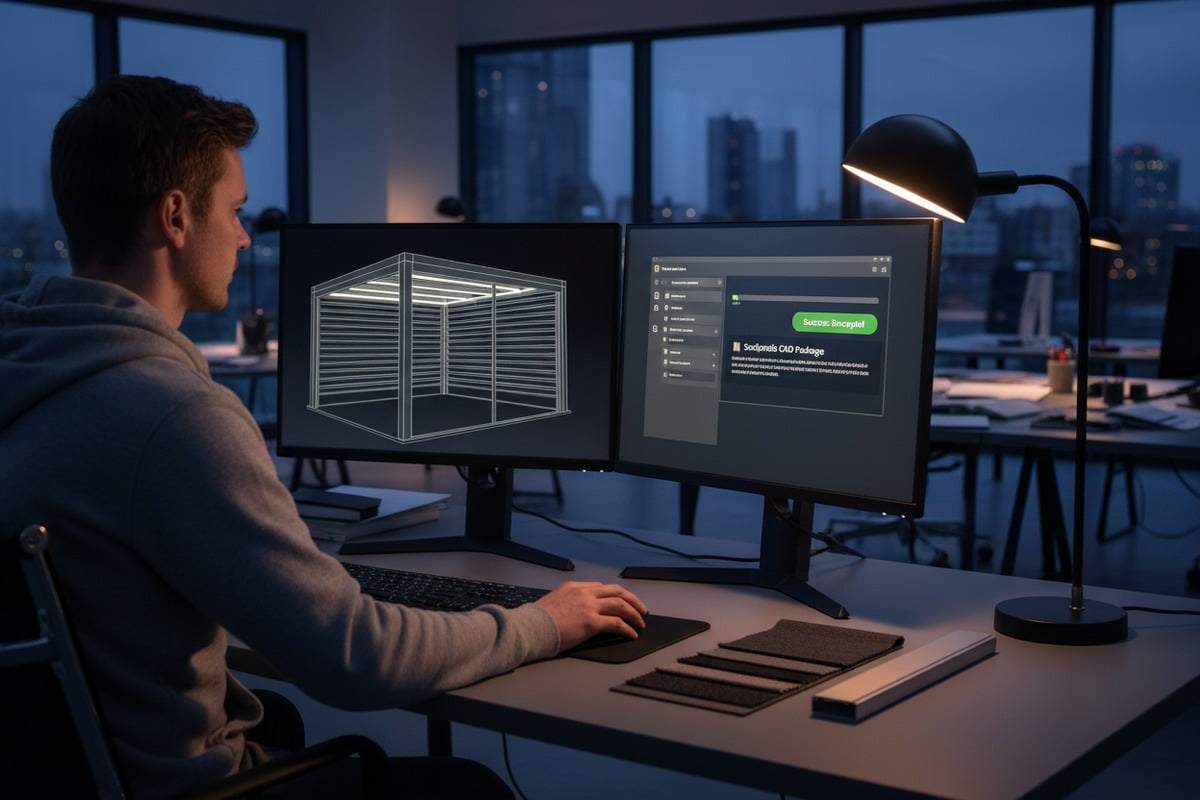
A signed NDA tells you what the supplier agrees to do. It does not prove they can actually do it. That is the difference between paperwork and process. Buyers should ask how the factory handles confidential files in daily work. In our factory, serious buyers usually ask who can access drawings, whether USB copying is blocked, how printed shop drawings are controlled, and how departing employees lose access. Those are the right questions.
Ask for process evidence, not verbal comfort
A supplier with real controls should be able to show written procedures. That may include role-based permissions, naming rules for protected projects, secure storage for samples, subcontractor approval steps, and incident reporting. You do not need military secrecy. You need repeatable discipline.
| Control point | Good evidence | Red flag |
|---|---|---|
| File access | Named-user permissions and access logs | "Anyone in engineering can open it" |
| Printed drawings | Numbered printouts and collection rules | Loose prints on workshop tables |
| Subcontractors | Signed flow-down agreements | "Our coating partner is informal" |
| Staff exit | Immediate account removal and device return | No offboarding checklist |
| Sample handling | Tagged samples with project codes | Unlabeled parts in open racks |
Audit the workflow from office to workshop
Do not stop at the sales manager's promise. Ask how the drawing moves from quotation to engineering, then to production, then to packaging. Each handoff is a leak point. A controlled factory should know who approves the release, where the current revision sits, and how old versions are blocked. We also think buyers should ask whether phones are restricted in sensitive areas and whether photos require approval.
Test subcontractor discipline
Many confidentiality failures happen outside the main plant. Powder coating houses, packaging vendors, automation integrators, and fabric suppliers may all see pieces of your project. The manufacturer should show how outside vendors are selected, what terms they sign, and whether your files are trimmed to only the necessary scope. If every outside partner gets the full package, the protocol is weak even if the main factory looks organized.
| Verification question | Strong answer | Weak answer |
|---|---|---|
| Who can access my CAD files? | Named engineers only, with logs | Everyone on the design team |
| How are old versions blocked? | Controlled revision release | We remind people verbally |
| What happens after staff resignation? | Same-day access removal | We change passwords later |
| Can subcontractors see full files? | Only what they need, under contract | Usually yes, for convenience |
The best sign of strong confidentiality is consistency. A good supplier can explain the system the same way in sales, engineering, and production. If each department tells a different story, the control is probably not real.
Conclusione
Strong IP protection is not one clause. It is a system: ownership, access control, staged disclosure, and proof that your supplier can keep your design private.
Note a piè di pagina
1. Explains the protection of industrial designs and creative work. ︎
2. Replaced with an authoritative legal resource providing a definition of manufacturing agreements. ︎
3. Explains the fundamentals of intellectual property rights. ︎
4. Replaced with a legal dictionary providing definitions of 'supplier background IP' from various contracts, which is highly relevant and authoritative. ︎
5. Details the process and implications of assigning intellectual property rights. ︎
6. Explains injunctive relief as a legal remedy. ︎
7. Defines non-disclosure agreements for protecting confidential information. ︎
8. Defines liquidated damages in contract law. ︎
9. Replaced with a Wikipedia page defining computer-aided design, which includes information about CAD software packages and is an authoritative general reference. ︎
10. Replaced with an authoritative technology definition from Microsoft, explaining what a digital asset management system is. ︎