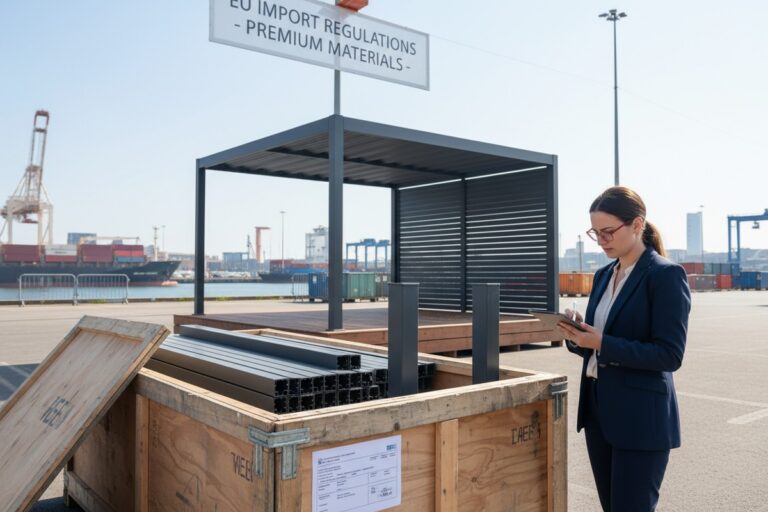

Every year, our production lines ship over 20,000 pergola sets to European distributors facing wildly different weather conditions Low Voltage Directive (LVD) 2014/35/EU 1. The problem? A configuration that thrives on the sunny Amalfi Coast can buckle under a Belgian snowstorm. Choosing the wrong setup means warranty claims, unhappy clients, and lost contracts. Distributors who ignore regional climate data risk stocking products that simply don't perform where it matters most.
Distributors should choose aluminum pergola configurations by matching wall thickness, louver type, motorization, and fabric specs to the specific European climate zone—Mediterranean, oceanic, or continental—while ensuring CE compliance, robust drainage, and customizable RAL color options to satisfy local building codes and design preferences.
This guide breaks down the four most critical configuration decisions European distributors face. We cover structural strength, fabric selection, customization, and certification. Each section includes practical data from our 25 years of manufacturing experience. Let's dig in.
How do I choose the right aluminum wall thickness to ensure my pergolas withstand heavy European snow loads?
One lesson we learned early on our factory floor: not all aluminum profiles are created equal. A distributor in Bavaria once returned an entire shipment because the posts buckled after just one heavy snowfall. The root cause was wall thickness that looked fine on paper but failed under real-world loads.
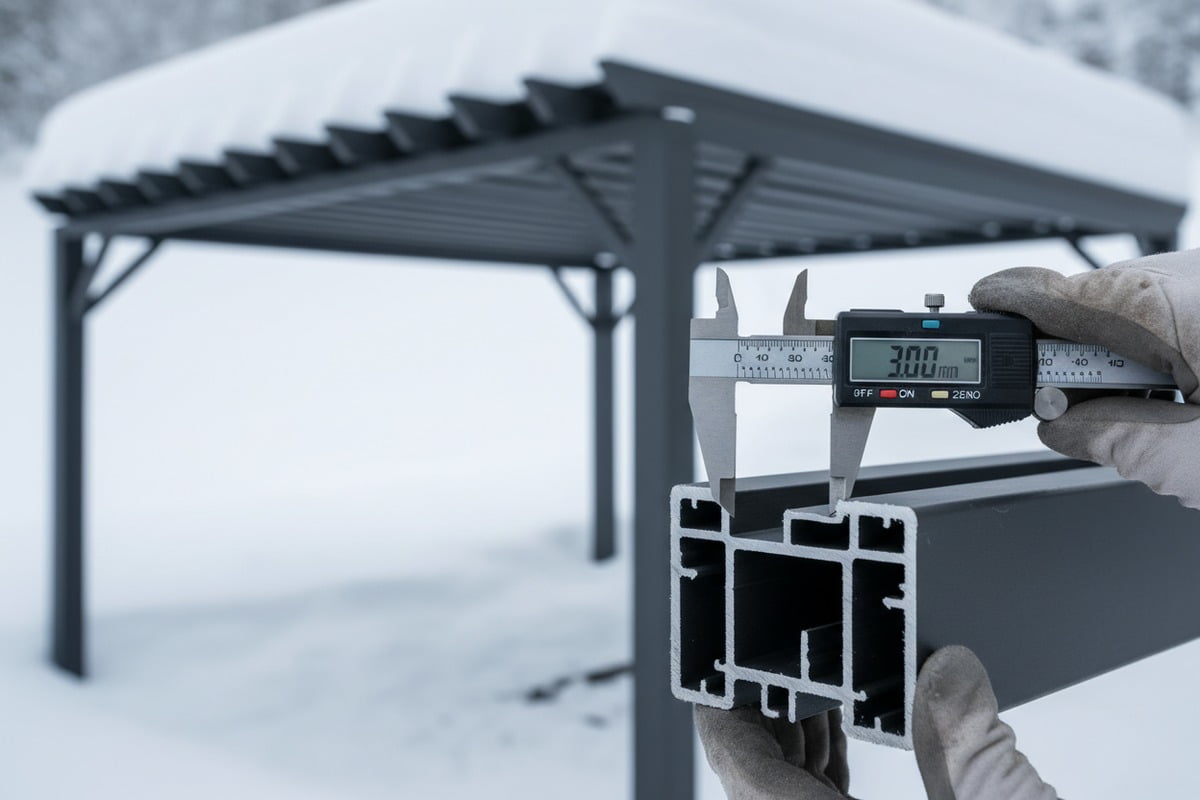
Choose aluminum wall thickness of at least 2.0 mm for standard European conditions, and 2.5–3.0 mm for regions with heavy snow loads exceeding 100 kg/m². Thicker profiles with reinforced internal ribs ensure structural integrity, prevent deformation, and meet EN 1991-1-3 snow load standards across continental and alpine climates.
Why Wall Thickness Matters More Than You Think
Wall thickness directly affects a pergola's load-bearing capacity. Thin-walled profiles—common in budget imports from overseas—often max out at 60 mph wind resistance and modest snow loads. In Northern and Central Europe, snow accumulation on a flat louvered roof can easily reach 150 kg/m² during a harsh winter. If the main beams and posts are too thin, the structure flexes, joints loosen, and collapse risk increases.
Our engineering team tests every profile against EN 1991-1-3 2 (Eurocode for snow loads) and EN 1991-1-4 (wind actions). We have found that moving from a 1.5 mm wall to a 2.5 mm wall can increase bending resistance by over 40%. That's the difference between a pergola that stands firm in Munich and one that doesn't.
Comparing Wall Thickness Options
| Wall Thickness | Typical Use Case | Snow Load Rating | Wind Resistance | Recommended Climate Zone |
|---|---|---|---|---|
| 1.4–1.6 mm | Budget models, light residential | Up to 50 kg/m² | ~60 mph | Mediterranean (mild winters) |
| 2.0–2.2 mm | Standard European residential | Up to 100 kg/m² | ~75 mph | Oceanic (UK, Belgium, Netherlands) |
| 2.5–3.0 mm | Heavy-duty commercial/alpine | Up to 200 kg/m² | ~90+ mph | Continental & Alpine (Germany, Austria, Scandinavia) |
Internal Reinforcement Ribs
Wall thickness alone is not the full picture. Internal rib design inside the extruded aluminum profile adds critical stiffness without adding excessive weight. When we design profiles for our European distributors, we include multi-chamber cross-sections. These chambers act like tiny I-beams inside the post or beam. A 2.0 mm wall with three internal ribs outperforms a 2.5 mm wall with no ribs in bending tests.
Practical Advice for Distributors
Ask your supplier for the moment of inertia value of each profile, not just the wall thickness number. Request third-party test reports. If your region sees heavy snow, insist on profiles tested to at least 120 kg/m². If your supplier cannot provide EN-tested data, that's a red flag. We provide full structural calculation sheets with every order because we know European building inspectors demand them.
Also, consider post cross-section size. A 150 mm × 150 mm post with 2.5 mm walls handles alpine snow far better than a 100 mm × 100 mm post with the same wall thickness. The combination of post size, wall thickness, and rib count determines true performance.
Which motorized zip blind fabrics should I select to guarantee high UV resistance for my Mediterranean clients?
When we first started supplying zip blinds to Italian and Spanish distributors, the most common complaint wasn't about motors or frames. It was about fabric fading. After just one summer of intense Mediterranean sun, cheap fabrics turned chalky and brittle. That single issue cost distributors more in warranty replacements than any structural defect ever did.
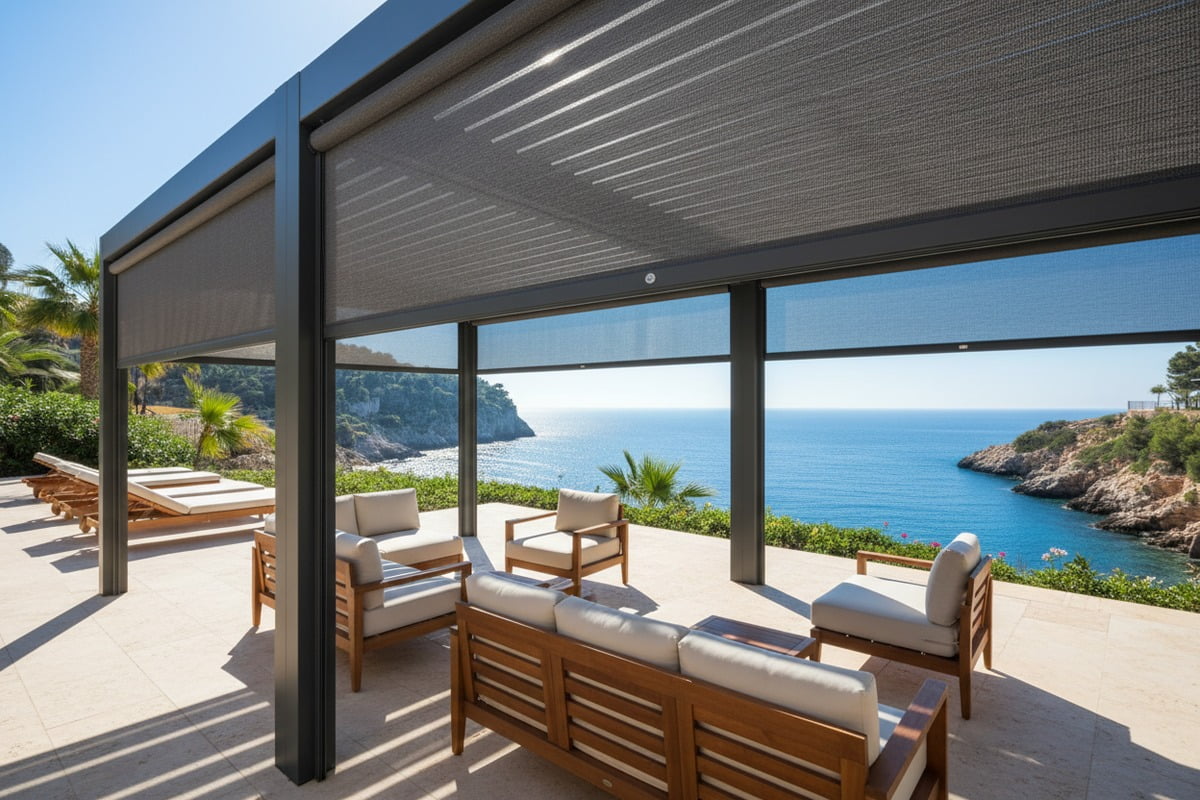
Select zip blind fabrics made from solution-dyed acrylic or high-tenacity polyester with a UV resistance rating of at least UPF 50+ and certified to EN 13561. For Mediterranean climates, prioritize fabrics with 95%+ UV block, flame retardancy to EN 13501-1, and colorfastness rated 7–8 on the Blue Wool Scale to prevent fading.
Understanding UV Degradation in Fabrics
The Mediterranean belt—Spain, southern France, Italy, Greece—receives 2,500+ hours of direct sunlight per year. Standard dip-dyed polyester fabrics break down under this intensity within 2–3 seasons. The UV radiation weakens polymer chains, causing the material to lose tensile strength and color. Solution-dyed fabrics 3, where pigment is added during fiber extrusion, resist this because the color is locked inside the fiber, not just on the surface.
Key Fabric Specifications for Mediterranean Markets
| Fabric Property | Minimum Spec for Mediterranean | Premium Spec | Warum es wichtig ist |
|---|---|---|---|
| UV Block Rate | 90% | 95–99% | Protects users and prevents fabric degradation |
| Colorfastness (Blue Wool Scale 4) | 6 | 7–8 | Prevents visible fading within 3+ years |
| Flame Retardancy | EN 13501-1 Class B | Class A | Mandatory for commercial installations in many EU countries |
| Tensile Strength | 250 N/5cm | 400+ N/5cm | Resists tearing under motorized tension and wind gusts |
| Openness Factor | 3–5% | 1–3% | Lower openness = more UV block and privacy |
| Weight | 300 g/m² | 400–500 g/m² | Heavier fabrics handle wind better and last longer |
Solution-Dyed Acrylic vs. High-Tenacity Polyester
Both work well, but each has strengths. Solution-dyed acrylic (like Sunbrella-type fabrics) offers superior colorfastness and a softer hand feel. It is the gold standard for residential projects. High-tenacity polyester, often with PVC coating, provides better dimensional stability and is easier to clean. It suits commercial projects like hotels and restaurants where heavy use and frequent cleaning are expected.
Our zip blind lines support both fabric types. We recommend distributors stock acrylic for residential and coated polyester for hospitality. This dual approach covers 90% of Mediterranean project demands.
Motor and Fabric Integration
The fabric choice also affects motor selection. Heavier fabrics need stronger motors—typically 20–30 Nm torque for residential zip blinds and 40+ Nm for large commercial units. If the motor is undersized for a heavy fabric, it stalls, overheats, and fails prematurely. We match every motor to the exact fabric weight and blind dimensions during the OEM configuration stage. This prevents the costly mismatch problems we've seen when distributors source motors and fabrics separately.
Avoiding Common Mistakes
Never accept fabric samples that haven't been tested under accelerated UV aging (EN ISO 105-B04). A fabric that looks great in the showroom can disintegrate in Sardinian sun. Also, ensure the fabric edges are heat-sealed, not just cut. Raw edges fray inside the zip track and cause jamming—one of the biggest field complaints we hear from installers.
How can I customize RAL colors and dimensions to meet the specific design requirements of my local projects?
Our team in Hainan processes over 300 custom color requests per quarter from European distributors. The most frustrating scenario we've witnessed? A distributor ordered "anthracite grey" without specifying a RAL code. The delivered color didn't match the client's window frames. The entire batch had to be recoated at enormous cost. Precision in customization starts with clear communication.
Distributors can customize RAL colors by specifying exact RAL Classic or RAL Design codes during the order phase, ensuring powder-coated finishes match local architectural standards. Dimensions are customizable up to 7 m in length and 4.5 m in width per module, with modular coupling options for larger spans, all confirmed through detailed technical drawings before production begins.
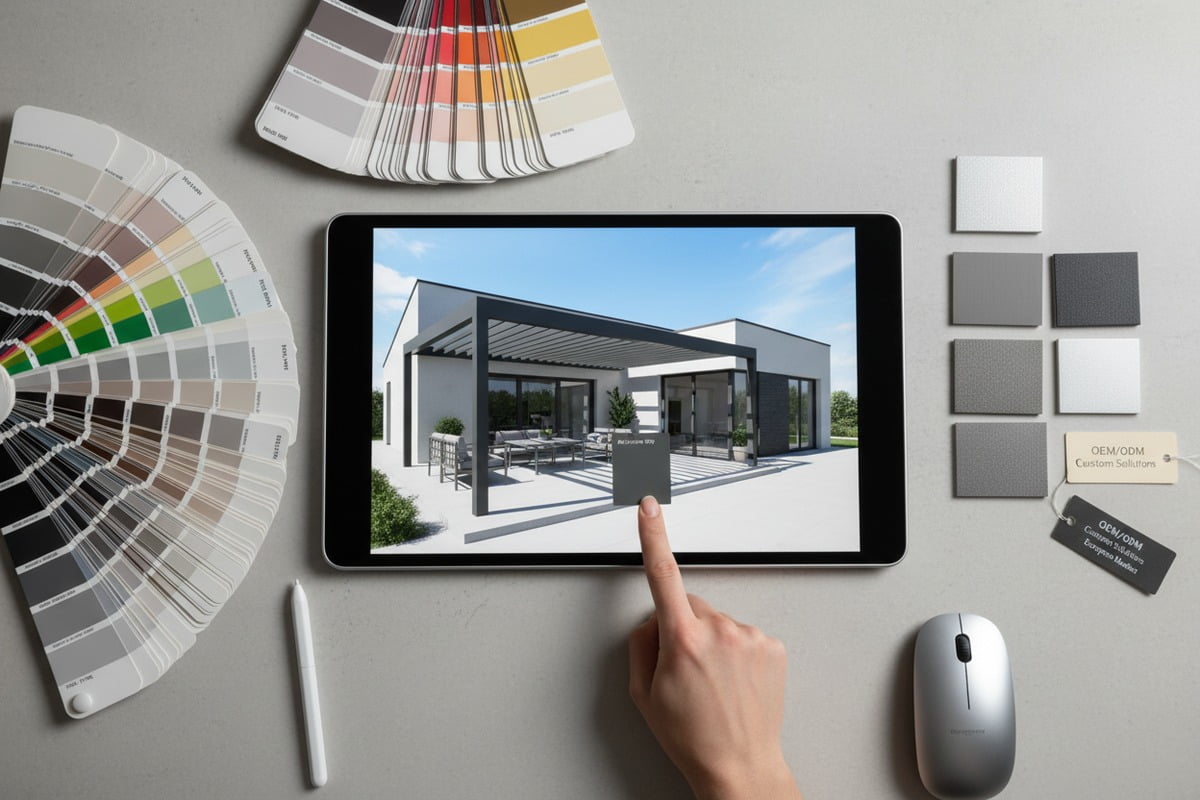
The RAL Color System Explained
RAL Classic 5 has 215 standardized colors. European architects and building regulators reference these codes constantly. The most popular pergola colors across Europe are RAL 7016 (Anthracite Grey), RAL 9005 (Jet Black), RAL 9016 (Traffic White), and RAL 7035 (Light Grey). But local trends vary. Scandinavian projects often request muted tones like RAL 7038 (Agate Grey), while Mediterranean projects lean toward warmer tones like RAL 1015 (Light Ivory) or RAL 8019 (Grey Brown).
Our powder coating line can match any RAL Classic code. We apply electrostatic powder coating with a minimum 60-micron thickness, then cure at 200°C. This process meets Qualicoat Class 2 standards 6, which guarantee at least 1,000 hours of salt spray resistance—essential for coastal European installations.
Dimension Customization: What's Realistic?
| Parameter | Standard Range | Maximum Custom | Notes |
|---|---|---|---|
| Width (single span) | 3.0–4.0 m | 4.5 m | Beyond 4.5 m requires center beam support |
| Length (single module) | 3.0–5.0 m | 7.0 m | Longer spans need reinforced beams |
| Height (post) | 2.5–3.0 m | 3.5 m | Taller posts may need diagonal bracing |
| Modular coupling | 2 modules | 4+ modules | Creates spans up to 6 m × 14 m without extra center posts |
| Louver blade width | 150 mm | 250 mm | Wider blades = fewer blades, different rain drainage behavior |
The Drawing Approval Process
Every custom order at our facility follows a strict drawing approval workflow. After the distributor submits project dimensions and color requirements, our design team produces a 3D technical drawing within 48 hours. This drawing shows exact dimensions, post placement, drainage direction, motor location, and color coding. The distributor reviews and approves before any material is cut. This step eliminates the costly errors that plague orders placed without visual confirmation.
Handling Non-Standard Requests
Some European projects require features beyond standard catalogs. We've produced pergolas with asymmetric roof pitches for hillside villas, extra-tall posts for commercial terraces, and custom gutter routing for integration with existing building drainage. The key for distributors is to provide accurate site measurements and, ideally, photos or architectural plans. The more information we receive upfront, the faster and more accurate the customization.
Color Matching Tips for Distributors
Always request a physical powder-coated sample chip before confirming a large order. Screen colors are unreliable due to monitor calibration differences. We ship sample chips within 5 business days. For projects requiring exact matches to existing structures, send us a physical color sample—we can spectrophotometer-match it to the nearest RAL code or create a custom blend.
What CE certifications and technical standards must my pergola motors meet to be legally sold in my region?
During a compliance audit last year, one of our German distributors discovered that a competitor's pergola motors lacked proper CE documentation. The local authority halted all installations mid-project. The distributor faced penalties and lost the contract. We've seen this scenario play out repeatedly. Certification is not optional in Europe—it is a legal gate.
Pergola motors sold in Europe must carry CE marking and comply with the Machinery Directive 2006/42/EC, the Low Voltage Directive 2014/35/EU, and the EMC Directive 2014/30/EU. Motors for automated louver and zip blind systems should also meet EN 13659 for external blinds and EN 60335-2-97 for motor-driven shutters, ensuring legal market access and end-user safety.
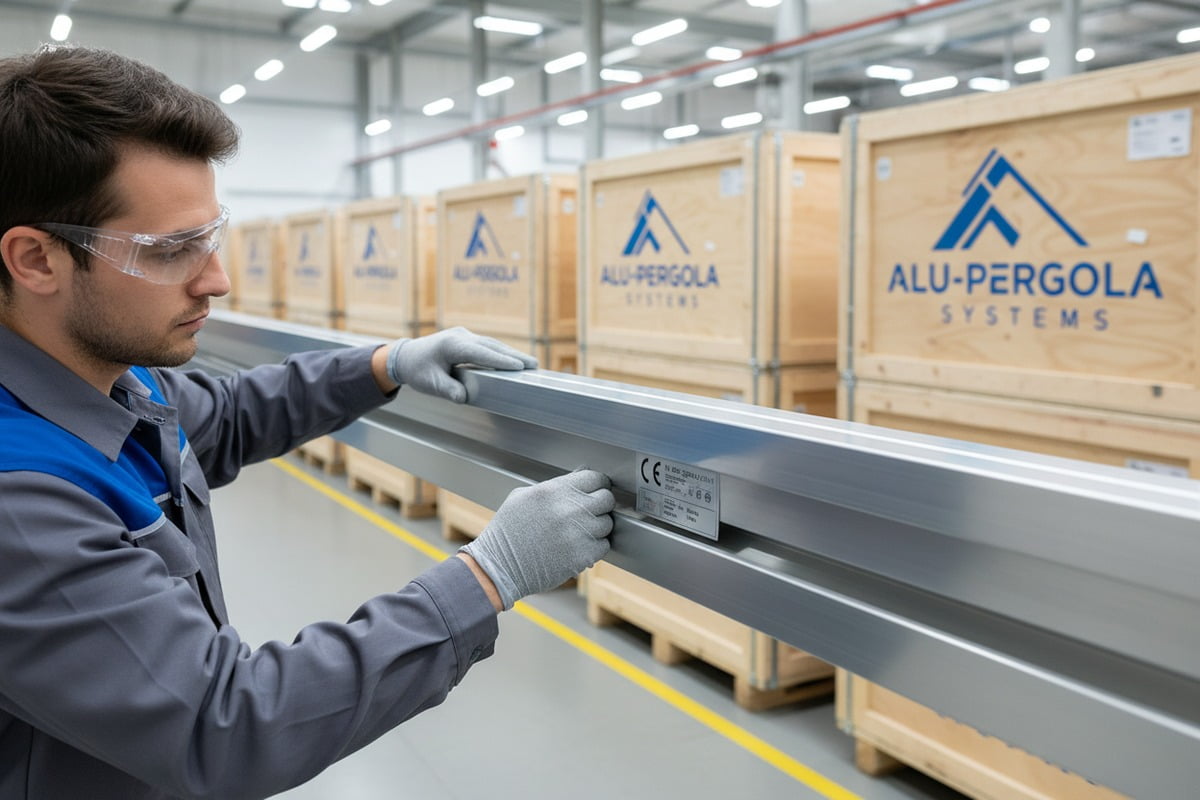
Breaking Down the CE Marking Requirements
CE-Kennzeichnung 7 is not a quality mark—it is a legal declaration that a product meets all applicable EU safety, health, and environmental directives. For pergola motors, three directives are non-negotiable:
- Machinery Directive 2006/42/EC – Covers mechanical safety of the motorized system, including pinch points, overload protection, and emergency stop functions.
- Low Voltage Directive (LVD) 2014/35/EU – Ensures electrical safety for motors operating between 50–1000V AC. All wiring, insulation, and grounding must meet this standard.
- EMC Directive 2014/30/EU – Guarantees the motor's electronic controls don't interfere with other devices (like home WiFi or medical equipment) and aren't susceptible to external electromagnetic interference.
Relevant EN Standards for Pergola Components
| Standard | Applies To | Was wird abgedeckt? |
|---|---|---|
| EN 13659 | External shutters and blinds | Wind resistance classes, mechanical endurance, operating force |
| EN 60335-2-97 | Motor-driven shutters/blinds | Electrical safety, thermal protection, fault conditions |
| EN 13561 | External awnings and blinds | Wind resistance, water tightness, UV resistance of fabric |
| EN 1991-1-3 | Structural design | Snow load calculations for the pergola frame |
| EN 1991-1-4 8 | Structural design | Wind action calculations for the pergola frame |
| EN 13501-1 | Fire classification | Flame behavior of fabrics and materials |
What Happens Without Proper Certification?
If a pergola motor without valid CE documentation causes injury or property damage, the distributor and installer carry legal liability. Insurance claims get denied. Building inspectors can order removal of non-compliant installations. In some EU countries, importing non-CE products for commercial sale can trigger fines or criminal proceedings.
How We Handle Certification
Every motor we integrate into our pergola and zip blind systems comes with a full CE declaration of conformity and supporting test reports from accredited EU-recognized laboratories. We use Somfy and compatible motor brands that already hold all required certifications for the European market. For distributors who request alternative motor brands, we verify certification status before integration and flag any compliance gaps.
Rain and Wind Sensors
Automated sensors that trigger louver closure or blind retraction also fall under CE requirements. The sensor itself must comply with the EMC Directive, and the integrated system (motor + sensor + controller) must be evaluated as a complete assembly. Our systems ship pre-configured and pre-tested as complete assemblies, so the distributor doesn't need to handle separate compliance documentation for each component.
Practical Steps for Distributors
Before placing any order, request the CE Declaration of Conformity, the associated test report numbers, and the name of the notified body (if applicable). Keep these documents on file—building inspectors and insurance auditors will ask for them. If your supplier hesitates or provides vague documentation, source elsewhere. The legal and financial risks are simply too high.
Schlussfolgerung
Choosing the right aluminum pergola configuration for Europe comes down to four pillars: structural strength for local snow and wind loads, UV-resistant fabrics for sun-heavy regions, precise RAL and dimensional customization, and full CE compliance for every motorized component. Get these right, and your projects perform reliably across every European climate zone 10. Our team at Lonson Pergola is ready to help distributors configure with confidence.
Fußnoten
1. Details the scope and safety objectives of the EU Low Voltage Directive. ︎
2. Provides guidance on snow load determination for structural design. ︎
3. Explains the process and benefits of solution dyeing for fabrics. ︎
4. Replaced with a Wikipedia article explaining the Blue Wool Scale, a standardized method for measuring color fastness, providing an authoritative overview. ︎
5. Describes the RAL Classic color collection and its use in Europe. ︎
6. Replaced with the official QUALICOAT website, which is the authoritative source for information on Qualicoat standards, including Class 2 for aluminum coatings. ︎
7. Official EU explanation of CE marking requirements for products. ︎
8. Outlines guidance for determining wind actions on structures. ︎
9. Provides the official text and scope of the EU Machinery Directive. ︎
10. Replaced with a Wikipedia article providing a comprehensive overview of European climate zones, including Mediterranean, oceanic, and continental, which aligns with the article's context. ︎