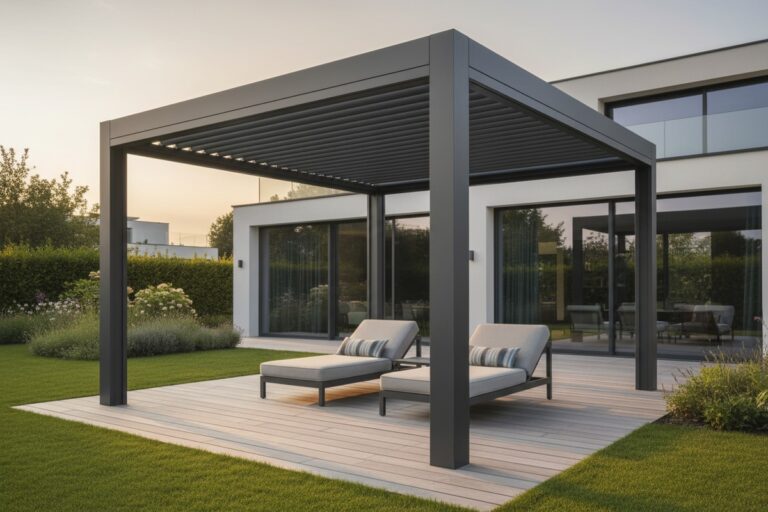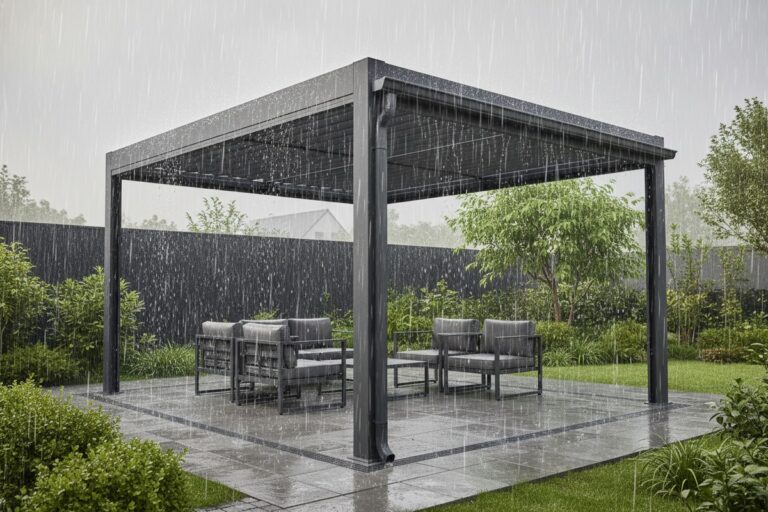
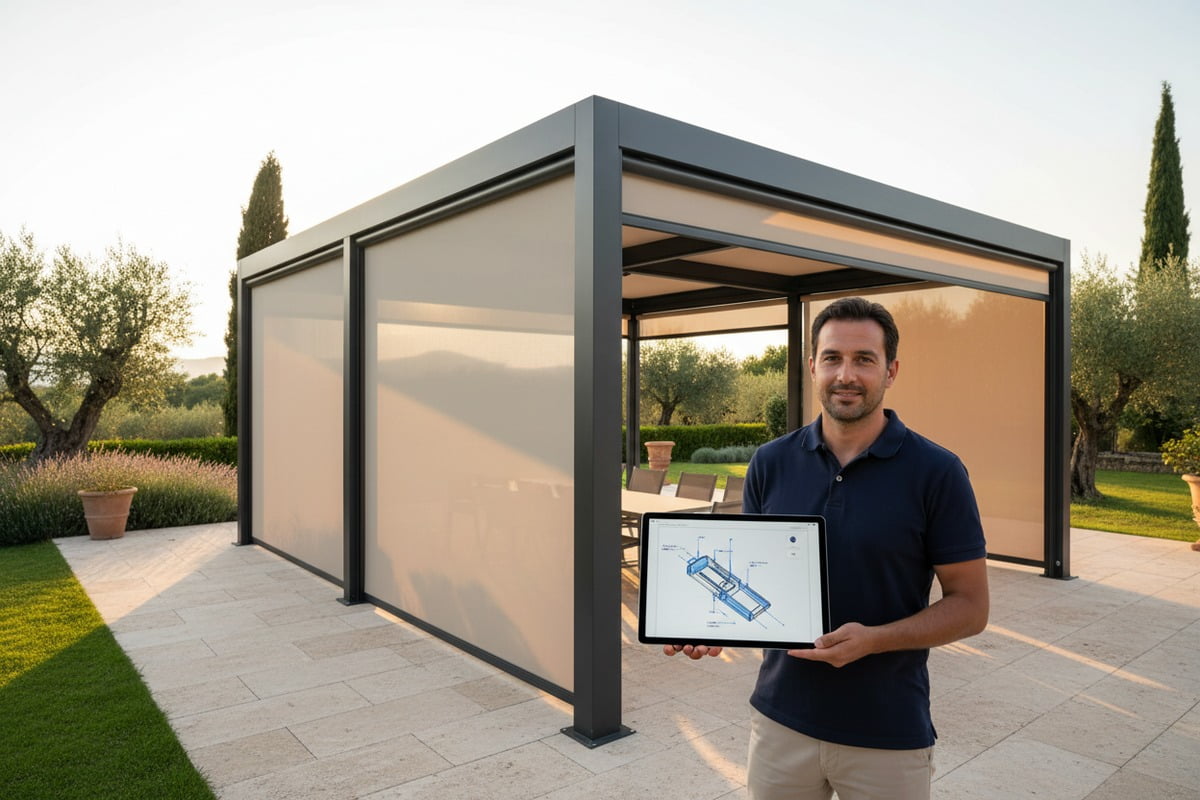
We build pergolas and zip blinds 1 every week, and the biggest frustration starts when a beautiful frame meets shades that bind, rattle, or leave gaps.
To ensure compatibility, match exact frame measurements, mounting geometry, track clearances, motor voltage, control protocol, and wind-load ratings before ordering. The best results come from custom side systems designed around your pergola's aluminum profiles, drainage paths, and automation setup.
The details are not hard, but skipping one dimension or one motor setting can create expensive rework control protocol 2. Start with fit, then controls, then wind performance, then track design.
How do I measure my pergola frame to ensure the motorized shades fit perfectly?
In our drawing room, most fit problems start with one missing dimension, and that small mistake often turns a clean install into site drilling, shims, and delays wind-load ratings 3.
Measure opening width in three places, clear drop from cassette to floor, post-to-post squareness, beam depth, mounting surface thickness, and any handle, louver, or drainage obstruction. Order to the smallest critical dimension, then keep tolerance for brackets, fasteners, and fabric travel.
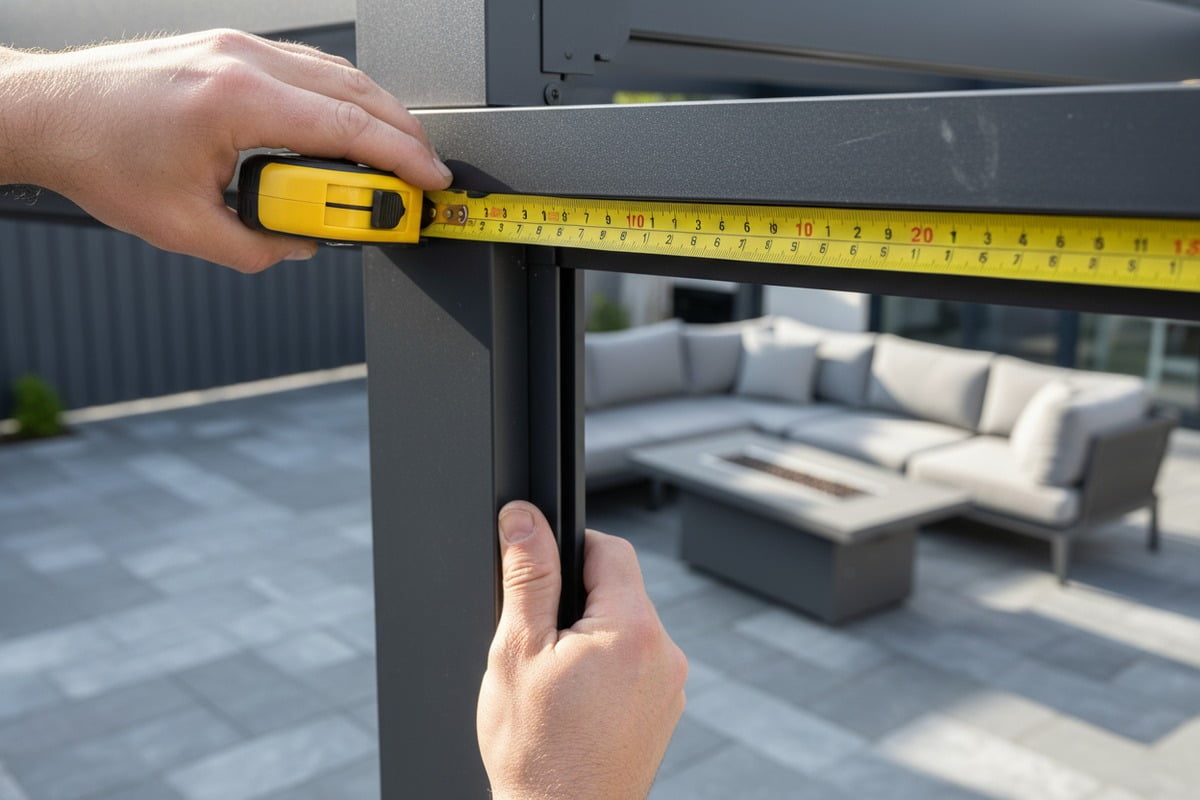
A pergola shade should be measured from the real installed frame, not from the brochure size aluminum profiles 4. A nominal 4 m pergola is often not a true 4000 mm clear opening after posts, gutters, trims, and powder-coat build are considered. When our team reviews retrofit projects, we ask for site photos with a tape measure visible inside the frame post-to-post squareness 5. That simple step catches more errors than long email threads.
Measure the opening, not the outer frame
Start with clear width. Measure the top, middle, and bottom of the opening where the blind or curtain will actually run ingress protection 6. Then measure the clear drop on the left, center, and right. Many aluminum pergolas look square from a distance but have slight movement from slab slope, post settlement, or installation tolerance. That matters because a zip blind needs a straight path.
| What to measure | How to check it | Why it matters |
|---|---|---|
| Clear opening width | Measure top, middle, bottom | Reveals taper and gives the safe order size |
| Clear drop | Measure left, center, right | Shows floor slope or beam sag |
| Diagonals | Corner to corner both ways | Confirms squareness |
| Beam/profile depth | Front to back of fixing surface | Confirms cassette and bracket fit |
| Mounting surface thickness | Check wall thickness or insert area | Prevents weak fixing points |
Check every obstruction early
Next, record anything that can hit the system during travel. Common issues include louver blades, gutter outlets, LED strips, speaker housings, handles, and corner brackets. On some modern charcoal powder-coated pergolas, the drainage channel sits exactly where a standard side guide wants to land. That is why one clean site photo from each corner is so useful.
Leave room for hardware and service
A shade is not only fabric width. It includes guide rails, headbox or cassette, end caps, motor side clearance, and fixing screws. I prefer supplier drawings over rules of thumb because every system has its own allowance. Some tracks need extra room for brush inserts or zip retention. Others need a little space at the motor head for service.
| Common site condition | Risk during installation | Better approach |
|---|---|---|
| Unequal width top to bottom | Fabric rubs or guides twist | Order to the smallest true opening and shim correctly |
| Beam not level | Blind stops unevenly | Recheck drop and adjust bracket packers |
| Hidden drainage outlet | Track blocks water path | Shift guide position or use custom spacer |
| Thin fixing wall | Screws loosen over time | Add backing plate or reinforced insert |
One more point matters. Measure from the finished surface that will remain after installation. If cladding, trim caps, or lighting channels will be added later, include them now. I have seen a perfect drawing become useless because a decorative cover reduced the side clearance by a few millimeters.
Can I sync my side curtain motors with the existing pergola remote or smart control system?
When we pair motors for export projects, the common failure is not power. It is a control mismatch that leaves a new shade unable to talk to the pergola.
You can sync side curtain motors only when radio protocol, voltage, receiver type, and limit-setting logic match your pergola controls. If they do not, add a bridge, dry-contact relay, or separate hub instead of forcing incompatible remotes together.
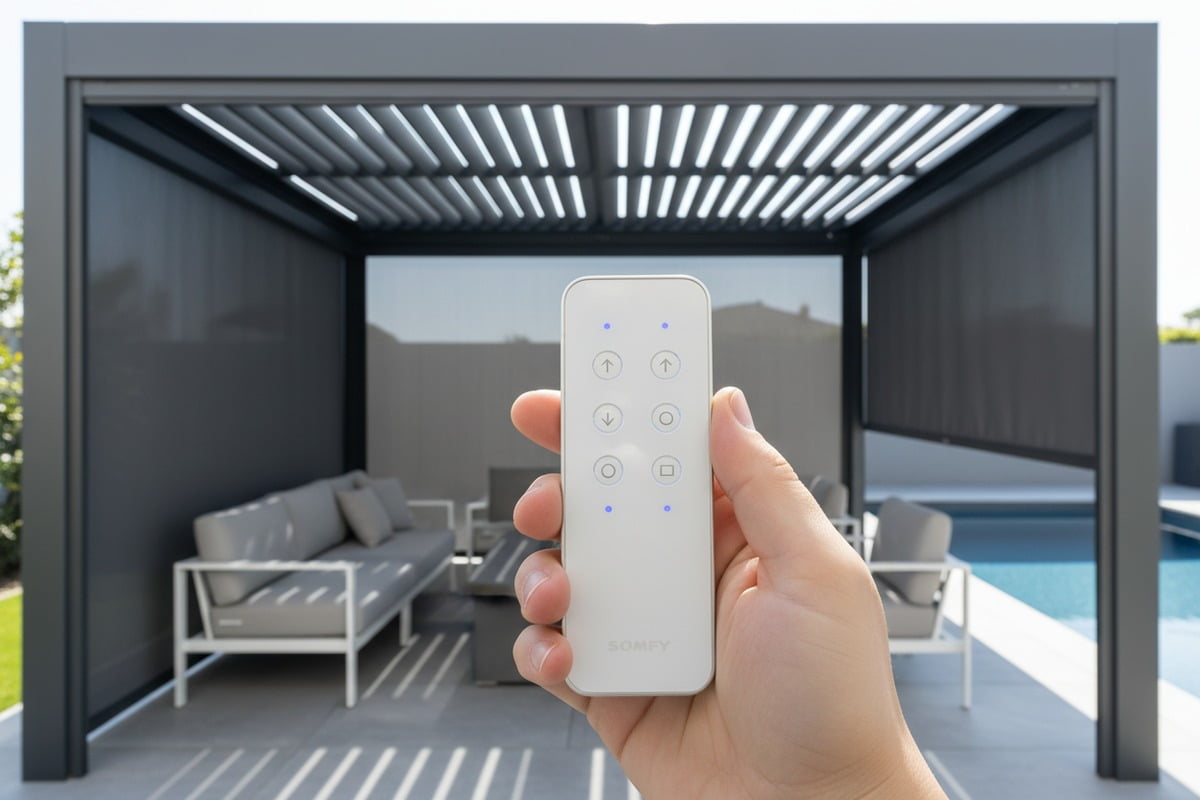
This question sounds simple, but "same remote" can mean different things. Some pergola remotes only send commands to louvers and LED lights. Some side blinds use built-in radio motors. Others use external receivers. A few systems can share one handset but still need separate channels and different programming steps. That is why I always start with the control architecture, not the brand logo on the handset.
Find out what your current control system actually uses
First, identify the motor voltage and control method already inside the pergola. Is it 230V AC, 120V AC, or 24V DC? Does the remote use a proprietary radio protocol, a standard ecosystem, or a dry-contact controller? Does the pergola already connect to Alexa, Google Home, HomeKit, or SmartThings through a hub, or is that only true for the roof motor? Buyers often assume the whole pergola is one smart platform when it is really a mix of separate devices.
| Control checkpoint | What to confirm | Why it matters |
|---|---|---|
| Power supply | 120V, 230V, or 24V | Wrong voltage can damage motors or receivers |
| Radio protocol | Proprietary, RTS-style, io-style, Zigbee, Wi-Fi, Tuya-type | Different protocols do not pair directly |
| Receiver location | Built into motor or external box | Changes wiring and programming options |
| Channel capacity | Number of zones on remote/app | Needed for independent side control |
Use bridges when direct pairing is not possible
If the radio language does not match, do not force it. The clean fix is often a bridge. That may be a smart hub, a relay module, or a dry-contact gateway tied into the pergola controller. On European projects, we also check certification and after-sales support early. A cheap motor that works in the sample room but lacks proper documents or stable firmware can create a bigger headache later than buying the correct control path from the start.
Keep service and override in mind
A shared app feels elegant, but practical service matters more. Ask these questions: Can each side screen run independently? Is there a local switch or manual override? Can wind or rain sensors trigger automatic movement? What happens if the internet goes down? A strong setup has both convenience and fallback control.
| Integration route | Best use case | Main drawback |
|---|---|---|
| Same motor ecosystem | New pergola plus new side screens from one family | Less flexible for future mixed-brand upgrades |
| Smart hub or bridge | Retrofit projects with good existing hardware | Extra setup and possible app complexity |
| Dry-contact relay 7 | Professional control panels and BMS links | Needs cleaner electrical planning |
| Separate remote | Fast and low cost retrofit | Less seamless daily use |
The best answer is often not "one remote at any cost." It is "one control experience with reliable backup." That difference saves time on site and reduces future complaints.
What fabric and motor specs do I need to ensure my zip blinds handle high wind loads?
On windy-site projects, we see the same pattern: a strong frame gets paired with weak fabric or an undersized motor, and the blind starts to flap, jam, or unzip.
For high wind areas, use a true zip system, strong side retention, low-stretch fabric, a heavier bottom bar, and a motor with enough torque and thermal protection. Always rate the blind as a complete system, not fabric alone.
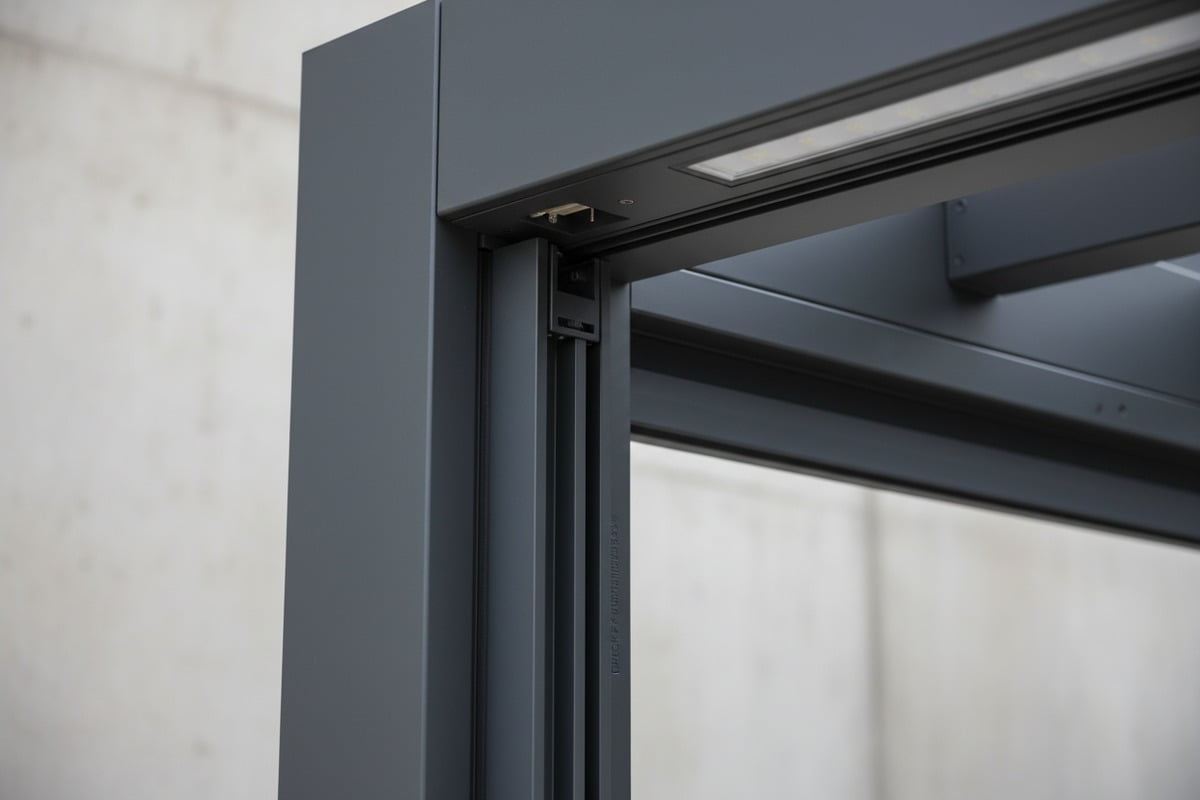
Wind performance is where marketing language can mislead buyers. A seller may say the fabric is "wind resistant," but that does not tell you how the full blind behaves at your width, height, fixing condition, or exposure. A zip blind handles wind through the combination of fabric, side zip retention, bottom bar weight, guide rail design, spring or tension control, and motor power. Remove one strong piece and the whole system becomes weaker.
Choose fabric for both strength and use
Mesh fabrics 8 are popular because they cut glare, reduce heat, and still allow airflow. That is useful for outdoor rooms and hotel terraces. But mesh is not one single product. Openness, yarn strength, coating, seam quality, and stretch behavior all matter. Lower openness can block more sun, yet it can also increase pressure under strong wind. Solid PVC can give more privacy, but it may trap heat and make the space feel heavier.
| Spec area | What to look for | Why it matters in wind |
|---|---|---|
| Fabric type | Outdoor technical mesh or reinforced screen fabric | Better tear control and lower stretch |
| Openness factor | Chosen for balance of airflow and shading | Affects pressure and comfort |
| Edge retention | True zip side retention | Helps keep fabric inside guides |
| Bottom bar | Heavier and rigid | Stabilizes the curtain during movement |
| Weather rating | Outdoor use, UV resistant, suitable temperature range | Improves long-term reliability |
The motor must suit the real load
Motor sizing should follow the full curtain weight, track friction, width, drop, and wind class target. A motor that lifts the fabric in calm weather may still be too small for daily use in a breezy coastal setting. I would also check duty cycle, thermal protection 9, braking behavior, and ingress protection. Outdoor motors with good sealing and stable operation across low and high temperatures tend to age better.
Judge the system, not one isolated number
Wind claims should always be read with dimensions attached. A blind rated well at 3 m wide may behave very differently at 5 m or 6 m. Fixing points matter too. A strong guide rail fastened to weak aluminum skin is not a strong system. On custom projects, we review post thickness, insert reinforcement, and screw pull-out values before we approve wide spans.
| High-wind question | Good sign | Warning sign |
|---|---|---|
| Is it a true zip blind? | Side retention is continuous and tested | Fabric only slides in loose side channels |
| Is the bottom bar substantial? | Rigid profile with stable end retention | Light bar that bounces in gusts |
| Is the motor sized for the span? | Load matched to full curtain dimensions | Motor selected only by price |
| Is there storm logic? | Wind sensor or manual retraction plan | Blind left down in all conditions |
One practical rule still stands. Retractable systems are safer than fixed fabric when storms are expected. Even a strong blind lasts longer when users retract it during severe weather instead of asking it to fight every gust year-round.
How do I customize the track system so my side curtains integrate seamlessly with my specific aluminum profiles?
In our workshop, seamless retrofits depend on millimeter-level track design, because a good curtain can still look wrong when brackets fight the pergola profile.
Customize tracks by matching channel depth, fixing points, drainage paths, corner details, and service access to your pergola profiles. A clean integration usually needs custom brackets, spacers, and end caps rather than off-the-shelf rails cut down on site.
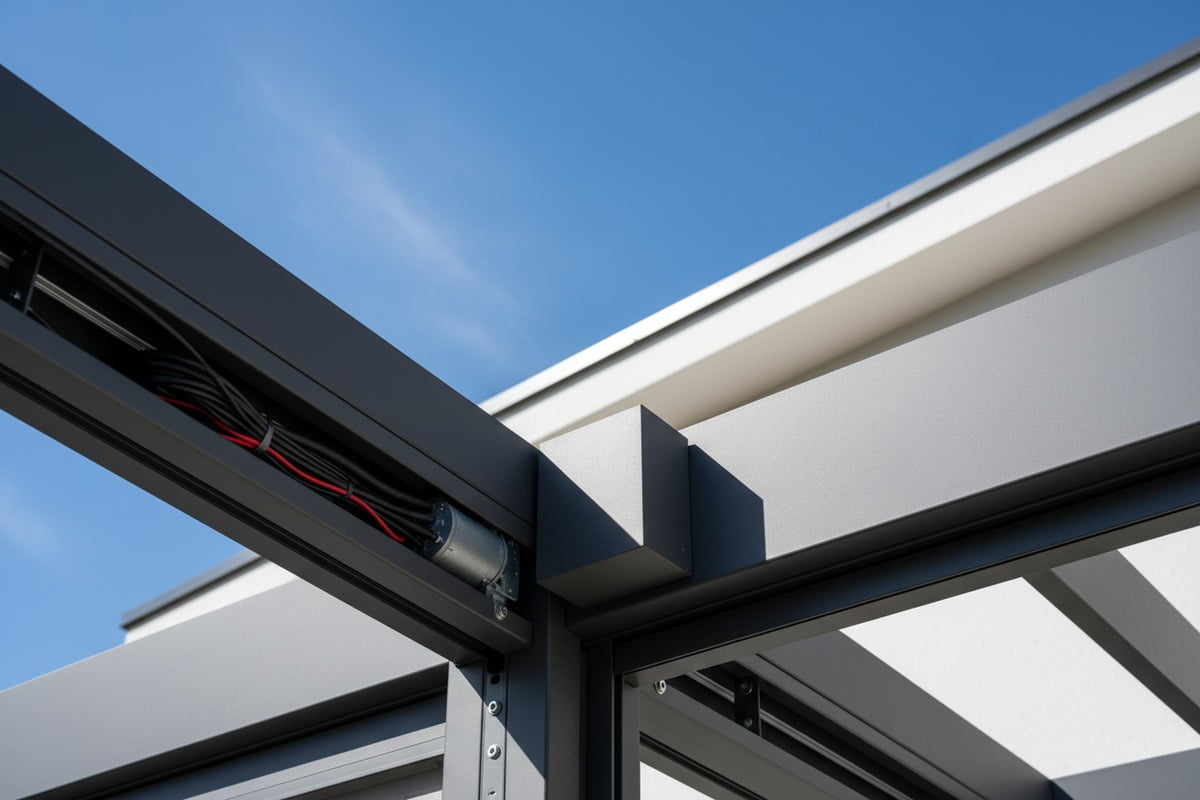
This is where add-on systems either look premium or obviously retrofitted. A seamless side curtain should follow the pergola's vertical lines, sit square to the beam, clear the gutter, and leave access for maintenance. On minimalist aluminum pergolas, even a small bracket offset is easy to spot. That is why we start with profile drawings or section photos before we touch the track design.
Map the real aluminum profile first
Not all pergola posts and beams accept the same fixing method. Some have internal ribs. Some have decorative covers. Some use accessory grooves or inserts. Others have thin walls that need reinforcement plates. A generic rail may physically attach, but it can distort the sight line, interfere with drainage, or place too much torque on one face of the post.
| Profile detail to review | Design response | Why it helps |
|---|---|---|
| Post face width | Match guide width or use spacer pack | Keeps rail centered and clean |
| Internal rib or insert position | Choose screw length and fixing location carefully | Avoids weak anchoring or profile damage |
| Gutter outlet location | Offset track or redesign bracket | Protects drainage performance |
| Corner cap geometry | Use shaped end cap or return plate | Improves fit and appearance |
Use custom brackets instead of forcing flat hardware
A lot of bad installs come from trying to mount a flat bracket onto a shaped profile. The result is twisting, over-tightened screws, and tracks that are no longer parallel. We often use laser-cut brackets, spacer blocks, or adapter plates to create a true mounting plane. That gives a better seal and reduces long-term movement.
Think about water, dirt, and future service
Track integration is not only about looks. Water must still drain from the pergola. Debris should not collect in a dead pocket beside the guide. The motor head should remain reachable. A side screen that looks flush on day one but cannot be serviced without dismantling the beam is not a smart design.
| Integration goal | Better solution | Common mistake |
|---|---|---|
| Flush visual line | Custom side spacer and matched guide depth | Overhanging guide with random packers |
| Clean drainage | Keep gutter outlet clear and separate water path | Blocking outlet with rail or end cap |
| Easy servicing | Leave access at motor side and removable covers | Hiding all fasteners behind permanent trims |
| Strong fixing | Use reinforced points or backing plates | Screwing only into thin decorative skin |
There is also a design choice between integrated and add-on looks. A retrofit can still look refined, but it usually needs more than standard stock rails. When the track, bracket, and end cap are designed around the pergola profile, the curtain feels like part of the original system instead of an afterthought.
Schlussfolgerung
Compatibility comes from disciplined measuring, matched controls, wind-ready components, and profile-specific tracks. Get those four right, and your pergola will feel like one complete outdoor room.
Fußnoten
1. Explains the design and benefits of zip screens for outdoor comfort. ︎
2. Explains various communication languages used by smart home devices. ︎
3. Defines how structures are rated for resistance against high winds. ︎
4. Describes the manufacturing process and uses of aluminum extrusion profiles. ︎
5. Explains the importance of squareness and methods for checking it in construction. ︎
6. Defines the international standard for protection against dust and liquids. ︎
7. Explains the function of dry contacts as switches without their own power source. ︎
8. Describes the characteristics and common applications of mesh materials. ︎
9. Details systems designed to prevent electric motors from overheating. ︎
10. Discusses the fabrication and materials used for custom metal brackets. ︎