

We have seen one bent profile or one missing motor bracket stall a full pergola project and turn a price advantage into a costly delay.
To handle returns and quality claims on aluminum pergolas from China, prevent disputes before shipment, inspect every delivery on arrival, document defects fast, and lock clear terms for quality, packaging, warranty, and replacement responsibility before you place the order.
The real protection starts before production, not after the container arrives material certificates 1. That is where most expensive disputes are won or lost.
How can I verify the product quality before my aluminum pergolas leave the factory in China?
At our factory, the biggest problems start long before loading day, when buyers approve drawings too quickly or skip an independent final inspection. product quality 2
Verify quality with approved drawings, material certificates, sample confirmation, in-process checks, and a third-party pre-shipment inspection that covers dimensions, finish, hardware count, motor function, trial assembly, and the final packing list against your purchase order.
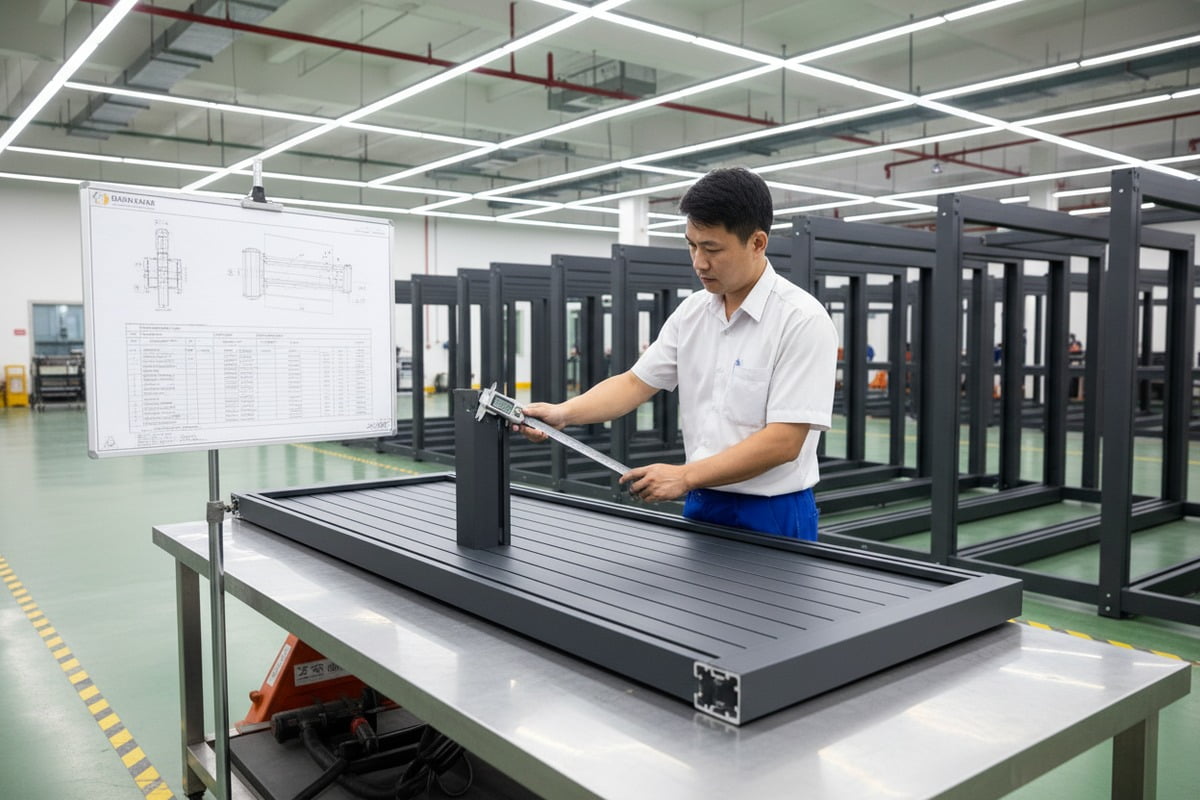
The safest way to verify pergola quality is to treat it like a chain. If one link is weak, the final inspection will not save you. I have seen buyers focus only on the last day in the factory. That is too late. If the wall thickness is wrong, if the louver pitch changed, or if the charcoal gray powder coat does not match the approved sample, the container may already be full when the problem appears.
Start with a locked specification file
Before production starts, I would lock one full spec pack. That file should include signed shop drawings, profile dimensions, aluminum grade, wall thickness, surface treatment, color code, motor brand, control options, fastener type, and complete hardware quantity. For Europe, it should also state the required compliance marks and test documents for motors and electronics. For custom projects, I strongly prefer a 3D model or virtual assembly review. It catches fit problems early, especially on non-standard sizes.
| Checkpoint | What to verify | Best proof |
|---|---|---|
| Drawing approval | Size, post spacing, louver direction, drainage path, mounting details | Signed final drawings |
| Material control | Aluminum grade, wall thickness, coating spec, fastener material | Mill certs, supplier COA, sample panel |
| Functional check | Motor movement, remote pairing, rain sensor, LED or zip blind interface | Test videos, inspection report |
| Packing review | Part labels, hardware count, edge protection, carton marks | Packing list, packing photos, loading video |
Inspect in stages, not once
A good buying process has three checks. First, pre-production approval. Second, in-process inspection when key frames and louvers are already made. Third, final pre-shipment inspection. That middle step matters more than many buyers think. It tells you whether the supplier is following the approved drawing or drifting from it.
In our own production flow, we pay special attention to cutting accuracy, welding appearance where used, drilling position, drainage hole alignment, and powder coating 3 consistency. For motorized pergolas, I also care about cable routing and water protection around connectors. A clean-looking unit can still fail on site if these points are sloppy.
What the final inspection should actually cover
A real pre-shipment inspection should do more than count cartons. It should measure critical dimensions, verify finish quality under light, test moving parts, confirm accessory counts, and check labels against the packing list. For project orders, trial assembly of one full set or one corner section is worth the cost. It reduces the risk of field mismatch. If the order is large, hire a third-party inspector such as SGS, TUV, or a local inspection firm that you choose, not the supplier.
Do not accept only factory photos. Ask for time-stamped videos, carton marks, and close-ups of part numbers. Also check the Bill of Materials 4 against what will be installed on site. One missing custom bracket can stop a contractor even when the full frame arrives on time.
The goal is simple: do not let the first real inspection happen at the jobsite.
What steps should I follow to file a claim if I find damaged profiles or missing components upon arrival?
We see claims go bad when the first email is late and missing proof, while the site team keeps opening damaged cartons and mixing parts.
File the claim the same day: stop installation, separate damaged parts, compare the packing list, photograph every issue, note carrier damage on delivery records, and send one clear claim file that asks for replacement parts, credit, or refund within the contract timeline.

When a shipment arrives with bent profiles, crushed corners, scratched louvers, or missing fittings, the first hours matter. I would not rush into installation. I would freeze the scene. That sounds simple, but many buyers skip it. They open every carton, move loose items around, and then try to explain the damage later. At that point, it gets harder to prove what happened, when it happened, and whether the loss came from freight, poor packing, or site handling.
Freeze the scene and preserve evidence
Start by taking wide photos of the container, pallet, crate, and carton condition before unloading everything. Then take close photos of labels, carton numbers, and damaged points. Use video while opening suspicious packages. If a profile is deformed, place a tape measure in the frame so the extent is visible. If components are missing, lay out the received hardware and compare it with the packing list and assembly manual.
If the outer packing is damaged, note that on the delivery receipt or carrier record immediately. This step matters for freight claims 6. If your team signs a clean receipt and reports damage much later, the carrier may reject responsibility.
Build one claim file, not ten random messages
I usually recommend one structured claim package. It should include the purchase order number, container number, product model, affected carton numbers, description of each issue, quantity affected, photos, videos, and the remedy requested. Keep it clean and factual. Angry language does not help. A supplier can work faster when the evidence is organized.
| Claim step | Time target | Why it matters |
|---|---|---|
| Record visible damage at delivery | Same day | Protects freight claim rights |
| Photo and video evidence | Same day | Preserves proof before parts move |
| Packing list reconciliation | Within 24 hours | Confirms missing items clearly |
| Formal supplier notice | Within 24-72 hours | Keeps claim inside contract or platform deadline |
| Dispute filing on platform if needed | Before platform cutoff | Preserves payment leverage |
Ask for the right remedy
Large pergola frames are rarely worth shipping back to China. Return freight is expensive, slow, and often impractical. In real projects, the remedy is usually one of four things: replacement parts by air, replacement parts in the next shipment, credit against balance payment, or local repair compensation. The best choice depends on urgency. A hotel opening next month may need express replacement. A distributor with spare stock may prefer credit.
If you bought through Alibaba Trade Assurance or a similar secured service, file the dispute within the platform window and upload the same evidence set. These systems can help, but they move slowly if the file is weak. If the order value is high, a local sourcing agent or independent inspector can also help separate manufacturing fault from freight damage.
Fast claims are not just about money. They keep the jobsite moving.
How do I ensure my supplier takes responsibility for shipping damage caused by inadequate packaging?
In our shipments, most avoidable freight disputes come from weak corner protection, loose bundles, and vague contracts that mention delivery but not packaging duty.
Make the supplier responsible before shipment by writing packaging standards into the contract, approving packing methods, requiring packing photos and loading videos, and stating that damage caused by inadequate internal protection or labeling is the supplier's cost, even when ocean freight is booked separately.
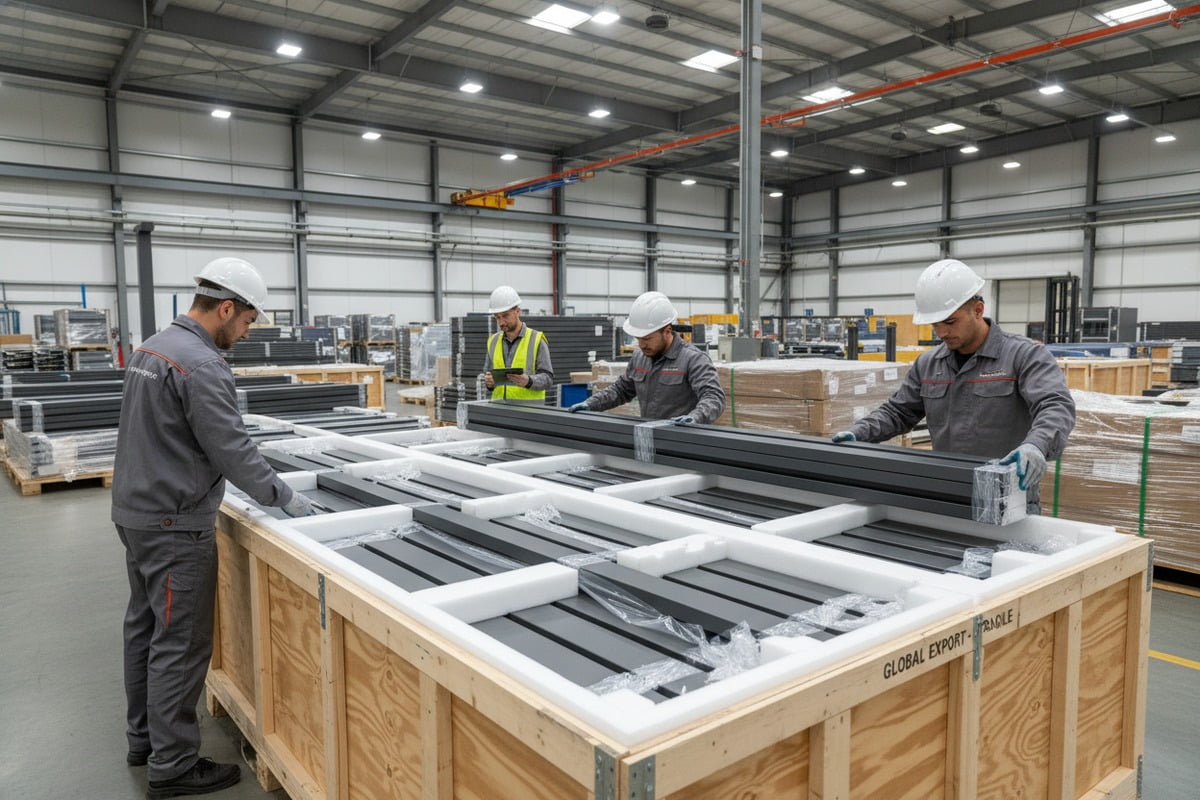
This is one of the most misunderstood parts of importing pergolas. Many buyers think the Incoterm 7 alone decides everything. It does not. FOB, CIF, EXW, or DDP tells you who arranges transport and certain cost points. It does not automatically excuse bad packaging. If the supplier used weak foam, no corner guards, poor bundling, or cartons with no internal restraint, that is a packaging failure. It should be treated separately from normal carrier risk.
Put packing standards into the order, not into hope
For Aluminium-Pergolen 8, the packing method should be written in the contract or approved packing specification. I like to see details such as foam thickness, corner protectors, film type, hardware bag labeling, desiccant use where needed, carton strength, steel pallet or plywood crate rules, and clear part numbering. For long profiles, internal movement control is critical. If the bundle can slide, it can rub through the finish during sea transit.
For high-end projects, ask for a packing sample or at least a photo approval before mass packing starts. This is especially important for dark matte finishes, because scratches show immediately on site.
| Packaging control | What to define in writing | Why it protects you |
|---|---|---|
| Profile protection | Foam sleeves, end caps, corner guards, film | Prevents dents and finish scratches |
| Hardware control | Sealed labeled bags, carton ID, spare count | Reduces missing parts claims |
| Outer packing | Carton grade, pallet or crate type, strapping method | Improves stacking and handling strength |
| Loading control | Container layout, bracing, moisture control | Reduces shift and transit damage |
Separate freight risk from packaging fault
A supplier may say, "The carrier caused it." Sometimes that is true. But you still need to ask one hard question: would proper packaging have prevented the damage or reduced it? If the answer is yes, the supplier still shares responsibility. That is why the contract should say that damage caused by inadequate packaging, weak internal protection, wrong labeling, or incorrect loading remains the supplier's responsibility.
This clause is useful even when you book freight yourself. The ocean carrier is not responsible for the supplier's poor packing decisions.
Collect proof before the container leaves
The best leverage comes from pre-shipment evidence. Ask for full packing photos, close-ups of protected corners, labels on every carton, pallet condition, and loading videos inside the container. I also like container seal photos and one photo showing how long profiles are blocked against movement.
| Evidence item | Who should provide it | How it helps in a dispute |
|---|---|---|
| Packing photos by carton and bundle | Supplier | Shows whether agreed protection was used |
| Loading video | Supplier or inspector | Reveals empty gaps, weak bracing, bad stacking |
| Final inspection report | Third party | Confirms condition before handover |
| Delivery damage record | Buyer or carrier | Shows what arrived in poor condition |
Insurance still matters, but insurance is not a substitute for packaging discipline. Good claims are easier when the contract, evidence, and packing method all point in the same direction.
What kind of after-sales support and warranty terms should I expect from a high-end pergola manufacturer?
We lose future orders when support is slow, because one stuck louver motor or one missing bracket can stop an installer for days.
A high-end pergola supplier should offer written structural and coating warranties, spare-part support, fast technical replies, clear exclusions, and replacement procedures for motors, electronics, and non-standard components, with response times, stock commitments, and installation documents stated before order confirmation.
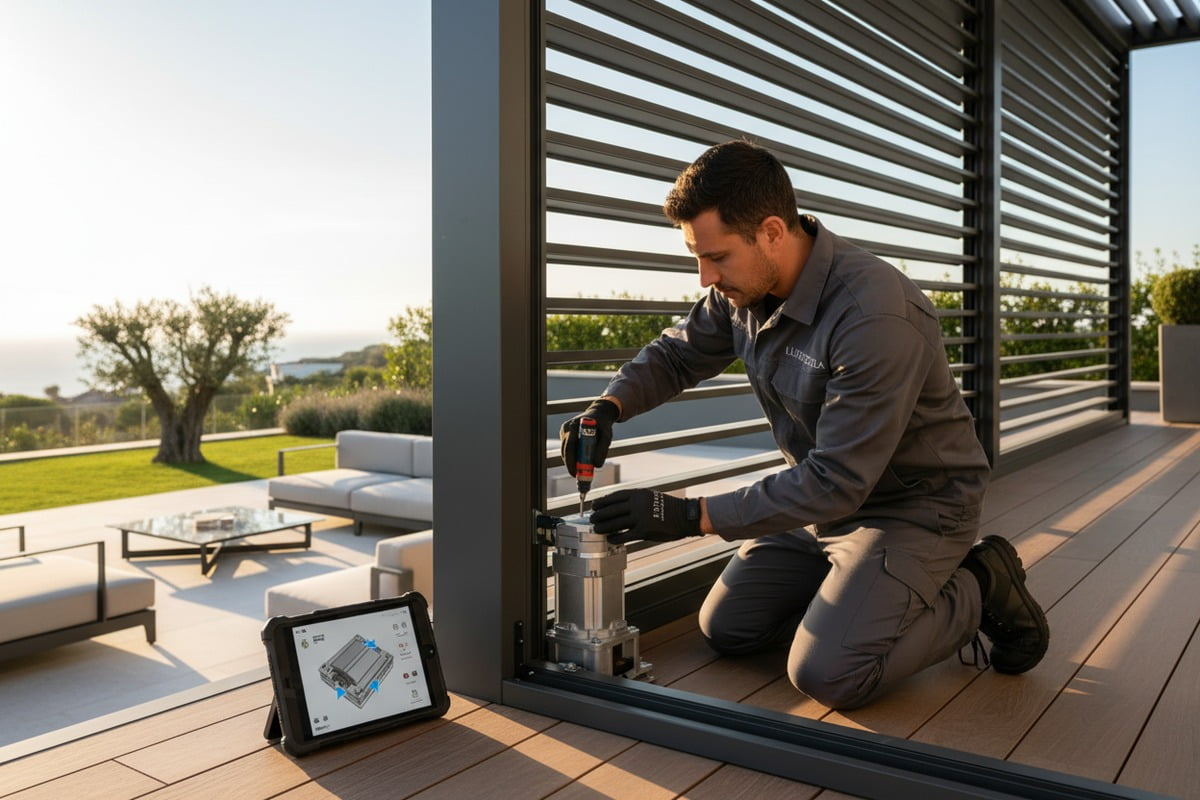
A strong warranty is not just a number of years on a brochure. It is a working system. I have seen buyers choose a supplier because the price was low and the catalog said "long warranty," but no one defined what that meant. When the motor failed, the supplier asked for videos, then more videos, then weeks passed. That is not real after-sales support 9.
Warranty should match the real risk
For a mid-to-high-end aluminum pergola, I would expect separate warranty terms for different parts. The structure, coating, motor, electronics, and accessories do not fail in the same way or on the same timeline. A five-year structural warranty 10 is common in better programs. Motors and control systems often carry shorter terms, often two to three years, depending on brand and market. Coating warranties vary by environment, especially in coastal projects.
| Warranty area | Reasonable expectation | What to ask before ordering |
|---|---|---|
| Main aluminum structure | Around 5 years | What defects are covered: deformation, cracking, coating adhesion |
| Motor and controls | Around 2-3 years | Which brand, who diagnoses faults, replacement lead time |
| Powder coating | Around 2-5 years | Salt-air exclusions, color fade limits, maintenance rules |
| Spare parts support | Ongoing stock plan | How long standard parts remain available |
Support must be practical, not just polite
Practical support means the supplier can answer fast and send the right part fast. I would ask for a stated technical response time, a spare-parts list, exploded drawings, wiring diagrams, and installation videos. For export projects, multilingual manuals matter. So do carton labels that match the drawings. Many field complaints are not true product defects. They are installation errors caused by weak instructions.
For custom pergolas, I also want written policy on replacement lead time for non-standard posts, louvers, side screens, and custom RAL colors. Standard stock can move quickly. Custom pieces cannot. That should be clear from the start.
Watch the exclusions and the remedy process
Good warranty terms also explain what is not covered. Common exclusions include improper foundation work, misuse, third-party modifications, damage from abnormal weather beyond rated loads, lack of maintenance, or incorrect installation. Those exclusions are normal. What matters is whether the supplier also explains the claim path. Who receives the claim? What proof is needed? Will they send parts by air for urgent jobs? Will they credit local labor for approved repairs?
A serious supplier should also keep parts traceability. That means part numbers, production records, and motor batch data can be pulled when an issue appears later. Without that, every warranty case becomes slow and messy.
High-end support is not only about fixing problems. It is about reducing site downtime, protecting your brand, and making repeat orders easy.
Schlussfolgerung
The cheapest pergola becomes expensive when claims are vague. Strong specs, fast evidence, packaging rules, and real after-sales support protect your margin and your reputation.
Fußnoten
1. Defines material certificates and their importance in verifying material properties. ︎
2. Explains the fundamental principles of quality control in manufacturing. ︎
3. Explains the process and advantages of powder coating for metal surfaces. ︎
4. Provides a comprehensive definition and purpose of a Bill of Materials. ︎
5. Describes the role and benefits of independent pre-shipment quality checks. ︎
6. Outlines the essential steps and documentation for filing freight claims. ︎
7. Defines Incoterms and their role in international trade agreements. ︎
8. Highlights the advantages and durability of aluminum pergolas. ︎
9. Highlights the significance of comprehensive after-sales service for customer satisfaction. ︎
10. Explains what a structural warranty covers and its importance. ︎