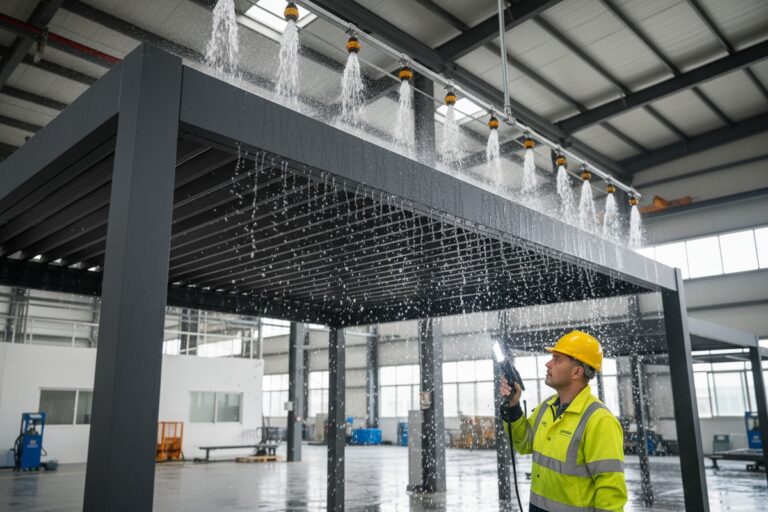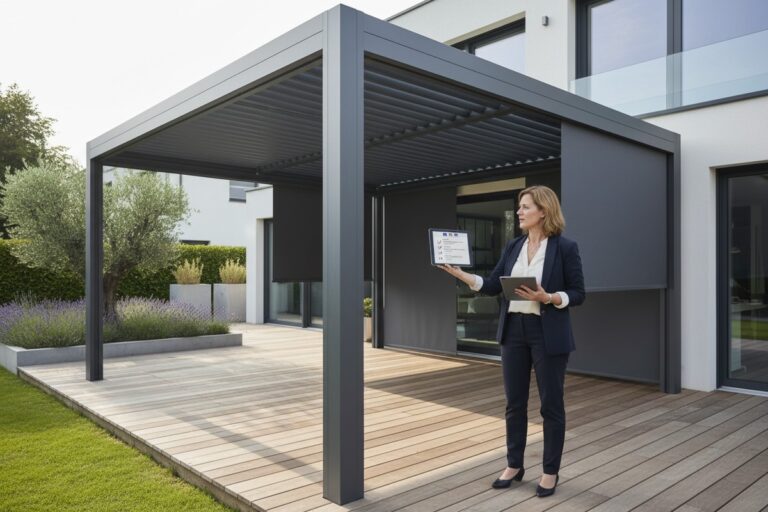

Every week, our sales team in Hainan fields calls from buyers who just discovered their "factory" supplier was actually a middleman VAT invoices 1. The frustration is real. You negotiate pricing, wait months for delivery, and then learn someone else made your pergolas — with zero quality oversight from the company you trusted.
To tell if a Chinese aluminum pergola supplier is a factory or trading company, check their business license for manufacturing keywords like "制造" or "生产," request live video tours of production lines, verify their registered address in an industrial zone, and test their technical depth on aluminum extrusion and powder coating processes.
This guide breaks down every verification method we know — from license checks to factory audit tricks CAD technical drawings 2. Whether you source from Foshan or anywhere in Guangdong, these steps will save you money and headaches. Let's dig in.
How can I verify if my aluminum pergola supplier actually owns their production facility?
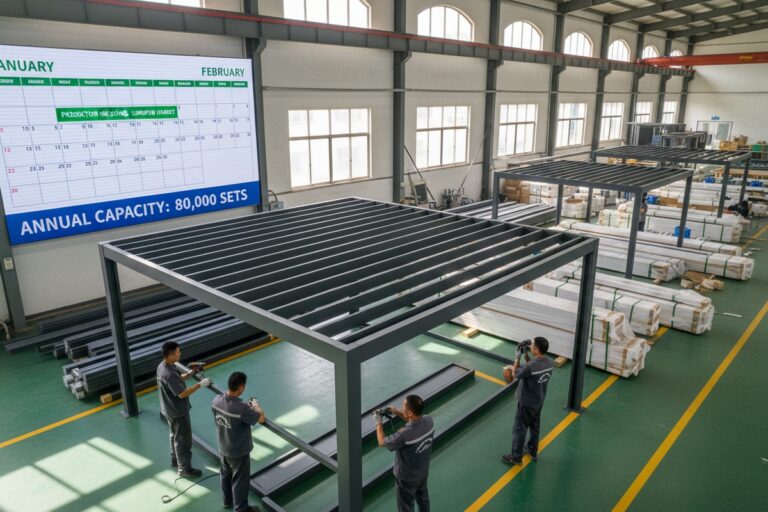
When we welcome buyers to tour our 80,000-set annual production facility, most are surprised by how different a real factory floor looks compared to what they imagined from Alibaba photos. The gap between expectation and reality is often massive.
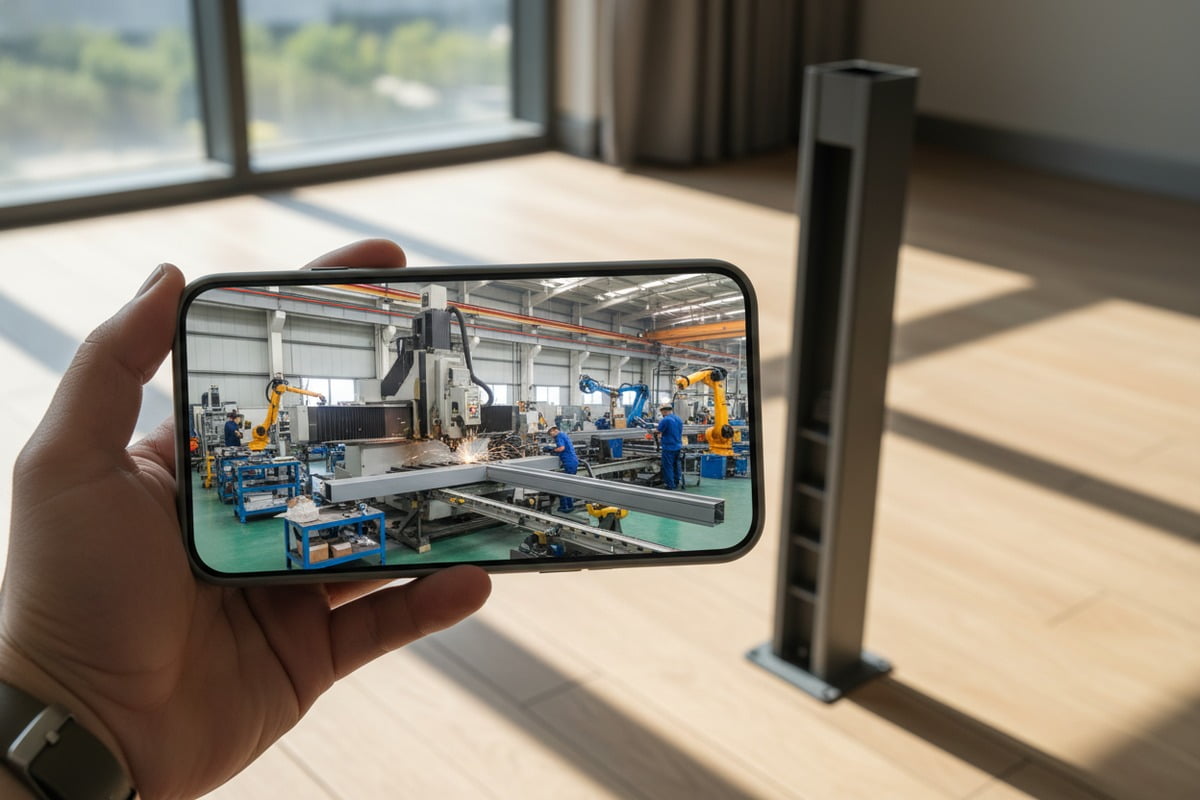
You can verify factory ownership by requesting the supplier's business license, checking the "Business Scope" field for manufacturing terms like "加工" or "制造," cross-referencing the registered address on gsxt.gov.cn, and demanding live video tours showing actual aluminum extrusion, welding, and powder coating equipment in operation.
Start With the Business License
Every legitimate Chinese company holds a business license with a Unified Social Credit Code 3. This is your first line of defense. Ask your supplier to send a scanned copy. Then go to gsxt.gov.cn (China's National Enterprise Credit Information Publicity System) and enter the company name or credit code. The system will show the registered business scope, legal representative, registered capital, and address.
What you're looking for is simple. A real factory will have words like 制造 (manufacture), 生产 (production), or 加工 (processing) in the business scope. A trading company will only show 销售 (sales) or 贸易 (trade). This distinction is legally mandated in China. Companies cannot list manufacturing activities unless they hold the proper industrial permits.
Verify the Registered Address
Copy the registered address and paste it into Baidu Maps or Google Maps. A factory address should sit inside an industrial park or development zone. If the address points to a high-rise office building or a residential area, that's a strong signal you're dealing with a trader.
Demand a Live Video Tour
Photos can be borrowed or staged. Instead, request a live video call — not a pre-recorded video. Ask the guide to walk through the raw material warehouse, the extrusion line, the welding stations, and the powder coating 4 booth. A real aluminum pergola factory will show you:
- Aluminum billets and extrusion dies
- CNC cutting machines
- Welding jigs specific to pergola frame profiles
- Powder coating ovens with hanging racks
- Assembly area with finished pergola units
If the supplier hesitates, makes excuses, or only shows a showroom with sample products, treat that as a red flag.
Cross-Check With Export Records
You can also verify a supplier's export history through Chinese customs data platforms or third-party tools. Factories that export regularly will have a consistent record under their own company name. Trading companies often ship under different factory names each time.
| Verification Method | What It Reveals | Cost |
|---|---|---|
| Business license check (gsxt.gov.cn 5) | Business scope, address, legal rep | Free |
| Baidu/Google Maps address check | Industrial zone vs. office building | Free |
| Live video call tour | Real equipment and production capacity | Free |
| Third-party factory audit (e.g., Sunchine) | Full facility assessment and worker count | ~$300 |
| Customs export records | Shipping history under company name | $50–$200 |
The Hybrid Model Problem
Be aware that 40–50% of Chinese aluminum pergola "factories" also have trading arms. They may manufacture some products in-house but source others from subcontractors. Always ask specifically: "Do you produce pergola aluminum frames, weld them, and powder coat them in this facility?" Pin them down on each step of the process.
Am I getting true factory-direct pricing or am I paying a middleman's markup?
Our production team runs cost models every quarter, and we know exactly what a 3x3m louvered aluminum pergola costs to manufacture — from the 6063-T5 billet price down to the powder coating per square meter. When buyers share quotes from other "factories," we can often spot the markup instantly.
True factory-direct pricing for a standard 3x3m aluminum pergola typically falls between $200–$400 FOB, depending on specifications. If your quoted price exceeds this range significantly without added features, you are likely paying a trading company's 20–50% markup on top of the actual manufacturing cost.
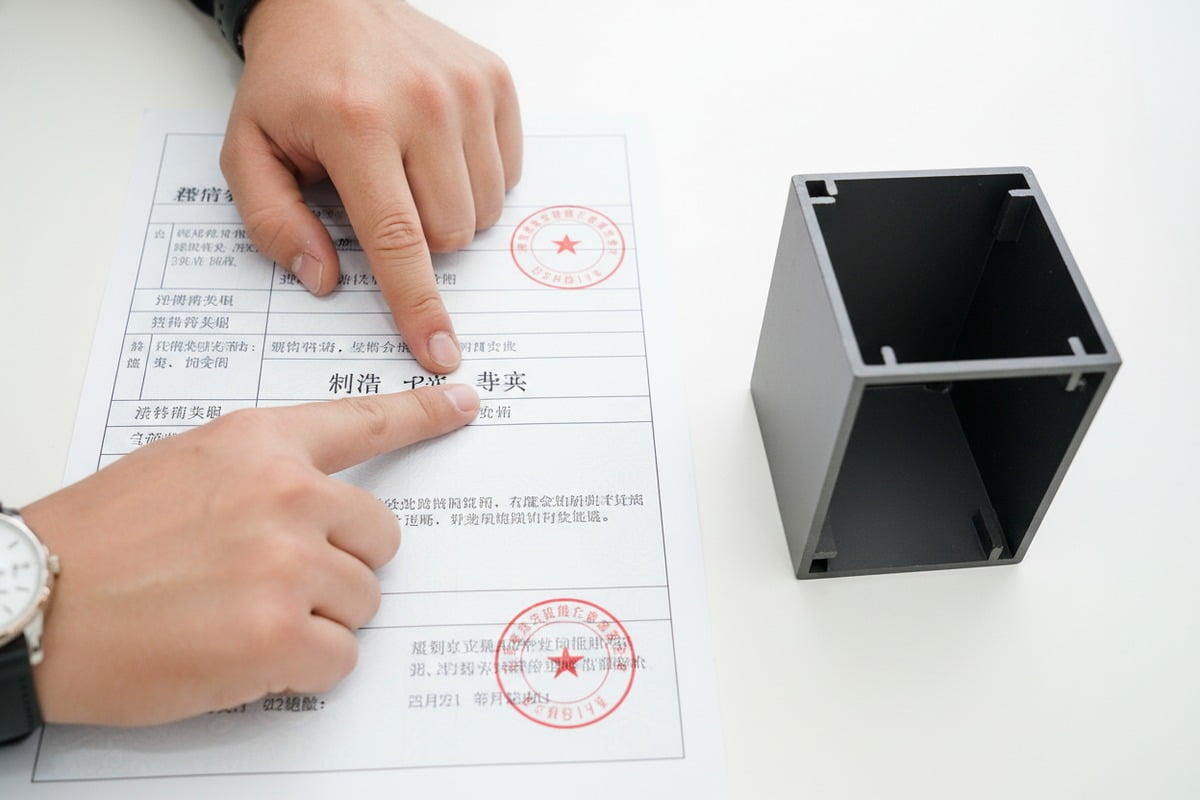
Understanding the Price Gap
The price difference between buying from a factory and buying through a trader is not trivial. Based on current market data, traders add a 20–50% markup to cover their own profit margin, office costs, and sales commissions. On a $300 pergola, that's $60–$150 per unit going to someone who never touched the aluminum.
For a container of 100 pergolas, you could be overpaying by $6,000 to $15,000. Over a year of regular orders, this adds up fast.
How to Benchmark Pricing
Get quotes from at least three suppliers. Then compare them against raw material costs. Aluminum ingot prices are publicly available on the Shanghai Futures Exchange 6 (SHFE). A factory's quote should correlate logically with:
- Current aluminum ingot price
- Extrusion and machining costs
- Powder coating costs
- Hardware and accessories
- Packaging and inland freight to port
If a supplier cannot break down their pricing into these components, they probably don't control the manufacturing.
| Cost Component | Factory Estimate (3x3m Pergola) | Trader Estimate |
|---|---|---|
| Aluminum extrusion 7 | $80–$120 | Hidden in total |
| Welding & assembly | $30–$50 | Hidden in total |
| Powder coating | $20–$40 | Hidden in total |
| Hardware & motors | $40–$80 | Hidden in total |
| Packaging | $15–$25 | Hidden in total |
| Profit margin | 10–15% | 30–50% |
| Total FOB | $200–$400 | $300–$600 |
The MOQ Test
Another way to gauge if you're dealing with a factory is the Minimum Order Quantity 8 test. Factories have production line setups, mold changes, and batch processing that make small orders inefficient. They typically require 50–200 units per order for aluminum pergolas. Trading companies, on the other hand, are happy to accept 10–50 units because they simply relay your order to whichever factory has capacity.
If a supplier eagerly accepts an order of 15 mixed-spec pergolas with no pushback, proceed with caution. That flexibility often signals a middleman.
Ask for a VAT Invoice
In China, manufacturers can issue special VAT invoices (增值税专用发票) that include production-related tax categories. Trading companies issue general commercial invoices. Requesting the type of VAT invoice your supplier can provide is a quick litmus test. It won't appear on any Alibaba listing, but it's a powerful verification tool once you're in negotiation.
Can my supplier provide the technical drawings and customization support I need for my project?
Our engineering team handles over 200 custom pergola designs per year, from non-standard RAL colors to structural reinforcements for high snow-load regions in Scandinavia. The depth of technical conversation you can have with a supplier tells you everything about who you're really dealing with.
A true factory can provide detailed CAD technical drawings, structural load calculations, custom aluminum profile designs, and specific material certifications like mill test certificates. Trading companies typically relay generic catalog specs and struggle with real-time engineering discussions about wall thickness, alloy grades, or wind resistance.
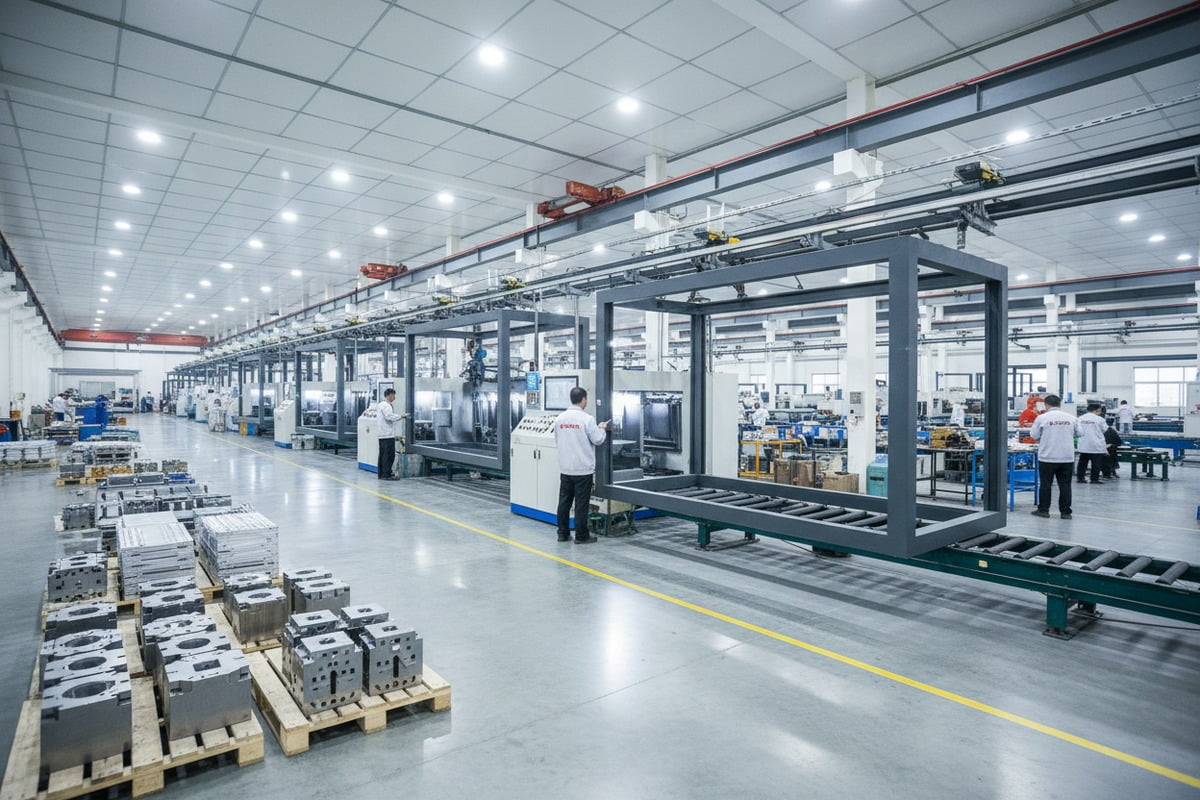
Why Technical Depth Matters
Aluminum pergolas are structural products. They must withstand wind loads, snow loads, and years of UV exposure. A purchasing manager sourcing for European projects needs suppliers who understand EN 1090 fabrication standards 9, CE marking requirements, and local building codes. This knowledge lives inside factories — not trading offices.
When you ask a factory engineer about switching from 6063-T5 to 6061-T6 aluminum for a wind-prone coastal installation, they can explain the trade-offs in extrudability, strength, and cost within minutes. A trader's sales rep will say "let me check with the factory" and come back hours or days later with a vague answer.
Key Technical Questions to Ask
Use these questions as a screening tool during your first few conversations:
- What aluminum alloy grade do you use for pergola main beams?
- What is the wall thickness of your standard corner posts?
- Can you provide a mill test certificate 10 (MTC) for the aluminum?
- What powder coating brand and thickness do you apply?
- Can you modify the louver blade pitch angle for my project?
- Do you have a structural engineer who can calculate snow/wind loads?
A factory answers these confidently and specifically. A trader gives generic or delayed responses.
Customization Turnaround Time
Factories with in-house design teams can turn around custom drawings in 2–5 business days. They use SolidWorks, AutoCAD, or similar tools and can share 3D renders, exploded assembly views, and installation drawings. Traders depend on the factory's schedule, so expect 1–3 weeks for the same deliverable — and higher error rates because your specifications pass through an extra layer of communication.
| Capability | Factory | Trading Company |
|---|---|---|
| CAD drawing turnaround | 2–5 days | 1–3 weeks |
| Custom RAL color matching | Direct from powder coating line | Relayed to subcontractor |
| Structural load calculation | In-house engineer | Outsourced or unavailable |
| Material certification (MTC) | Issued directly | Requested from third party |
| Prototype production | 7–14 days | 21–30 days |
| Design revision cycles | Real-time adjustments | Multiple relay delays |
The Installation Manual Test
Ask for a sample installation manual or assembly guide. Factories that export regularly — like our team at Lonson Pergola — invest in professional multilingual manuals with 3D exploded diagrams, hardware lists, and step-by-step instructions. These take significant effort to develop. Traders rarely have proprietary installation guides. They either provide the factory's generic document (sometimes with the factory's branding still visible) or nothing at all.
If the manual includes another company's name, logo, or contact information, you've just confirmed your "supplier" is reselling someone else's product.
Powder Coating and Surface Finish Expertise
A genuine aluminum pergola factory will have its own powder coating line or a dedicated long-term partnership with a coating facility. Ask about the coating brand (Akzo Nobel, Tiger, Jotun are top-tier), coating thickness (typically 60–80 microns for outdoor use), and test certifications (salt spray test hours, UV resistance rating). Factories investing in quality will quote these figures without hesitation.
In 2026, sustainability-conscious buyers also ask about low-VOC coatings and recyclable aluminum sourcing. Factories leading in this area can provide certifications. Traders usually cannot.
What red flags should I look for in a business license to distinguish a manufacturer from a trader?
When we onboard new distributors in Europe, we proactively share our full business license, factory registration certificates, and production permits upfront. We've learned that transparency builds trust faster than any sales pitch. But not every supplier does this — and the ones who resist sharing documents often have something to hide.
Red flags on a Chinese business license include a business scope listing only "sales" or "trade" without "manufacturing" or "production," a registered address in a commercial office building, unusually low registered capital, a very recent establishment date paired with claims of decades of experience, and a product scope covering more than ten unrelated categories.
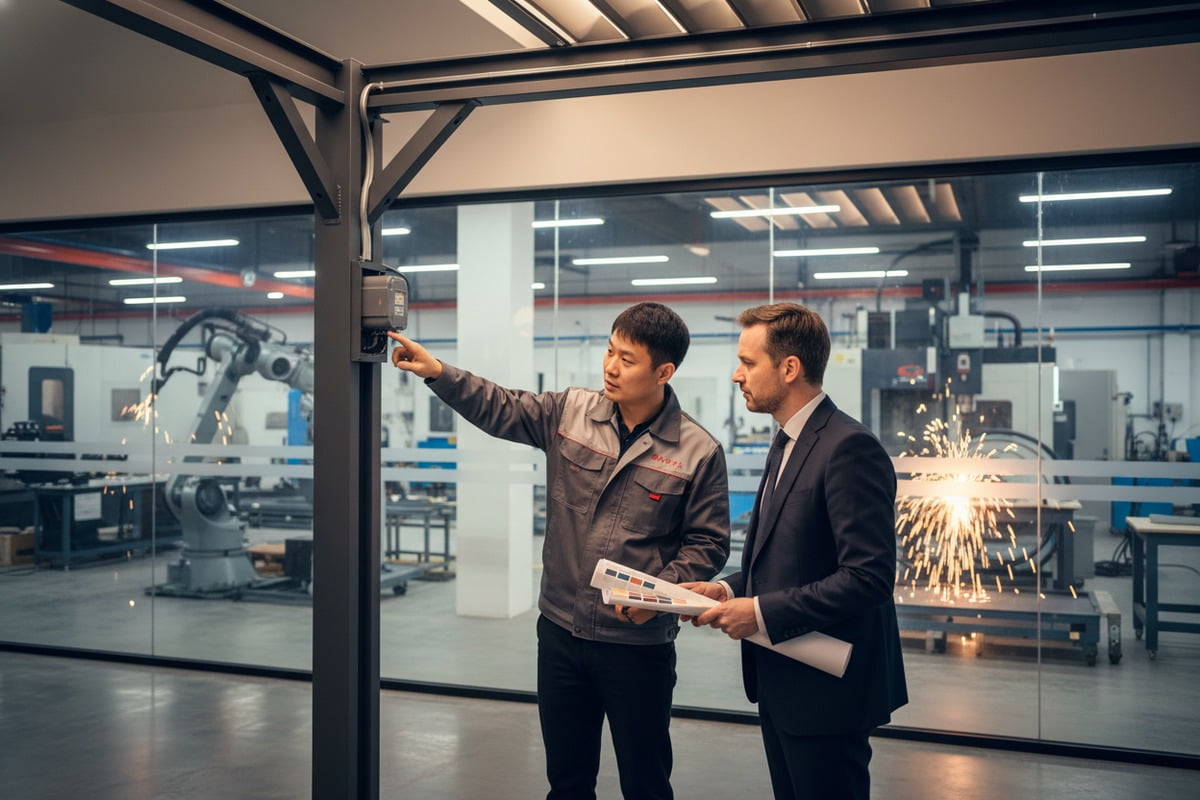
Decoding the Business Scope Field
The 经营范围 (Business Scope) section is the most important field on any Chinese business license. Here's what to look for:
- Manufacturing indicators: 制造 (manufacture), 生产 (production), 加工 (processing), 组装 (assembly)
- Trading indicators: 销售 (sales), 贸易 (trade), 批发 (wholesale), 零售 (retail), 进出口 (import/export)
A company listing only trading keywords is legally prohibited from manufacturing. If they claim to be a factory but their license says otherwise, that's not a gray area — it's a misrepresentation.
The Product Range Red Flag
One of the most reliable trader signals is product diversity. A genuine aluminum pergola factory focuses on aluminum structures — pergolas, gazebos, carports, louver systems, maybe zip blinds and related accessories. If the supplier's catalog includes aluminum pergolas alongside furniture, LED lights, artificial grass, BBQ grills, and outdoor heaters, you are almost certainly dealing with a trading company.
Data from sourcing industry research shows that suppliers listing 10+ unrelated product categories are traders 90% of the time. Factories specialize. Traders aggregate.
Registered Capital and Establishment Date
While not definitive on their own, these data points add context:
- Low registered capital (under ¥1 million / ~$140,000) combined with claims of large-scale production is suspicious. Setting up an aluminum extrusion and fabrication facility requires significant capital investment.
- Recent establishment date (e.g., 2023–2025) paired with marketing claims of "20 years of experience" suggests either a newly formed trading entity or a reorganized company. Ask for the backstory and verify it.
Name Mismatch Between License and Communications
Check whether the company name on the business license matches the name on the website, Alibaba store, email domain, and bank account. Trading companies sometimes use a factory's name in marketing materials but operate under a different legal entity. If your proforma invoice comes from "Guangzhou XYZ Trading Co., Ltd." but the Alibaba store says "Foshan ABC Aluminum Manufacturing," you're dealing with two different companies.
Verification Checklist
Use this quick reference when reviewing any supplier's business license:
| Red Flag | What It Means | Risk Level |
|---|---|---|
| Business scope: only 销售/贸易 | Legally a trading company | High |
| Address: office tower or residential | No production facility at this location | High |
| 10+ unrelated product categories | Trader aggregating from multiple factories | High |
| Registered capital under ¥1M | Unlikely to own production equipment | Medium |
| Company name doesn't match invoice | Possible intermediary or shell entity | High |
| Establishment date < 3 years + "20yr experience" claim | Misleading marketing | Medium |
| Refuses to share business license | Hiding trader status | Very High |
Use Government Databases Directly
Don't rely on your supplier's self-reported documents alone. Go to gsxt.gov.cn yourself and search. You can also check iecms.mofcom.gov.cn for import/export registration. In 2026, AI-powered translation tools make it easy to navigate these Chinese-language platforms. Some buyers use WeChat mini-programs that offer real-time factory camera access — though availability varies.
For high-value projects, consider hiring a third-party inspection firm to conduct an on-site audit. Companies like Sunchine, QIMA, or V-Trust offer factory verification services starting around $300. They'll confirm the factory address, count workers, photograph equipment, and verify the license on your behalf.
Schlussfolgerung
Separating real aluminum pergola factories from trading companies takes effort — but it protects your margins, your quality standards, and your project timelines. Use license checks, live tours, pricing benchmarks, and technical depth tests before you commit.
Fußnoten
- Explains the types and importance of tax documents in China. ︎
- Replaced HTTP 403 with a Wikipedia page explaining technical drawings, which are fundamental to CAD. ︎
- Explains the purpose and importance of this unique identifier in China. ︎
- Explains a common surface finishing technique for metals, enhancing durability. ︎
- Replaced HTTP 404 with an article explaining China's National Enterprise Credit Information Publicity System (gsxt.gov.cn) from CJO Global. ︎
- Replaced HTTP 404 with a Wikipedia page about the Shanghai Futures Exchange, as the official English site appears to be inaccessible. ︎
- Describes the manufacturing process for shaping aluminum profiles. ︎
- Defines a key concept in manufacturing and supply chain management. ︎
- European standard for structural steel and aluminum fabrication and conformity assessment. ︎
- Document verifying material properties and compliance with industry standards. ︎