
Every year, our sales team handles hundreds of pergola orders—and payment disputes remain the number one reason deals fall apart.
When sourcing aluminum pergolas from China, T/T payments expose buyers to non-refundable deposit losses and wire fraud, while L/C transactions risk costly document discrepancies and bank rejection delays. Both methods carry unique dangers that require proactive safeguards like third-party inspections and verified banking channels.
Below, I break down each risk scenario and share practical steps we recommend to our partners across Europe and beyond.
How can I protect my initial deposit when using T/T for a bulk aluminum pergola order?
We ship over 80,000 pergola sets annually, and deposit protection is the concern we hear most from first-time buyers third-party inspections 1.
To protect your T/T deposit, negotiate a split payment structure (20% deposit, 40-50% after third-party inspection, 30-40% upon delivery), verify the supplier's corporate bank account matches their business license, and include penalty clauses in your purchase contract for delayed or non-conforming shipments.

Why 30/70 Splits Still Leave You Exposed
The standard 30% deposit / 70% pre-shipment split is widely used Business Email Compromise 2. But here's the problem: once you pay that remaining 70% before the container leaves port, you lose all leverage. If the powder coating is only 40μm instead of the required 60μm, or if aluminum wall thickness is thinner than agreed, you discover this only after goods arrive thousands of miles away L/C document discrepancies 3.
A Safer Payment Structure
| Payment Stage | Percentage | Trigger Event | Your Leverage |
|---|---|---|---|
| Deposit | 20% | Order confirmation | Low—funds committed |
| Mid-production | 40-50% | Pass third-party inspection (SGS, Bureau Veritas) | High—reject before paying |
| Final payment | 30-40% | Goods received or B/L issued | Medium—goods in transit |
This structure forces accountability at every stage. In our experience working with European distributors, this model reduces disputes by roughly 70%.
Verify the Bank Account
Wire fraud 4 is real. Hackers intercept emails and swap bank details. Always confirm account information through a separate communication channel—call your supplier's finance team directly using a phone number from their official website, not from the email thread.
Contract Clauses That Actually Work
Include these in your purchase agreement:
- Penalty of 1-2% per week for late delivery
- Right to cancel and receive full deposit refund if inspection fails twice
- Specification sheet as a binding annex (alloy grade, coating thickness, RAL color code)
| Risk Factor | Without Protection | With Protection |
|---|---|---|
| Supplier vanishes | Lose 100% deposit | Lose max 20%, legal recourse via contract |
| Quality failure | No recourse pre-shipment | Reject at inspection stage |
| Wire fraud | Funds unrecoverable | Verified account prevents misdirection |
Don't Use T/T for Samples
For sample orders under $1,000, PayPal or trade assurance platforms offer buyer protection that T/T simply cannot match.
Our finance department processes L/C orders regularly for clients placing orders above $30,000—and even small paperwork errors can freeze payments for weeks.
The hidden risks of L/C document discrepancies include payment rejection over minor mismatches like incorrect product descriptions, weight variances, or shipping date errors. Banks examine documents literally—not intent—so a single typo on a packing list referencing "aluminium pergola" instead of "aluminum pergola" can trigger non-payment.

How Banks Read Documents
Banks don't inspect goods. They inspect paper. If your L/C states "6063-T5 aluminum alloy louvered pergola, RAL 7016" and the commercial invoice says "6063-T5 aluminium louvered pergola, RAL7016" (missing space), that's technically a discrepancy. The issuing bank can refuse payment.
Common Discrepancy Types in Pergola Orders
| Discrepancy Type | Example | Consequence |
|---|---|---|
| Product description mismatch | "Pergola" vs. "Gazebo" on B/L | Payment refused |
| Late shipment date | L/C deadline passed by 1 day | Documents rejected |
| Insurance coverage shortfall | CIF requires 110% coverage; policy shows 100% | Non-compliant |
| Incorrect Incoterm reference 5 | FOB Xiamen vs. FOB Haikou | Discrepancy flagged |
| Missing certificate | No powder-coating test report attached | Incomplete presentation |
The Real Cost
L/C amendments cost $50-$200 each. If your supplier needs three amendments across a single order, that's added cost plus 2-3 weeks of delay. For seasonal products like outdoor pergolas—where spring delivery windows are tight—this can mean missing an entire selling season.
How to Minimize Discrepancy Risk
- Draft the L/C together with your supplier before submitting to your bank.
- Use broad product descriptions where possible ("aluminum outdoor structure" rather than hyper-specific terms).
- Build in a 5-7 day shipment buffer beyond your actual deadline.
- Require your supplier to submit draft documents for your review before presenting to the bank.
When Chinese Banks Push Back
Some buyers report that supplier-side banks in China occasionally reject documents or delay processing. This is more common with smaller regional banks. We recommend requiring suppliers to use well-known banks (Bank of China, ICBC) as the advising bank.
How do I verify my supplier's bank details to avoid wire transfer fraud during the procurement process?
In the past two years alone, three of our prospective clients told us they nearly wired deposits to fraudulent accounts after hackers compromised email threads.
To verify supplier bank details, cross-check the beneficiary name against their business license, call the supplier's finance department using a phone number from their official website (not email), request a bank confirmation letter, and never change payment details based solely on an email instruction.

How Business Email Compromise (BEC) Works
Hackers monitor email conversations between buyers and suppliers—sometimes for months. At the payment stage, they send a convincing email from a near-identical address (e.g., maxliu@lonsonpergola.com vs. maxliu@lonsonpergoia.com) with "updated" bank details. The money goes to a mule account and disappears within hours.
Your Verification Checklist
- Match company name: The bank beneficiary must exactly match the company name on the supplier's business license and export license.
- Phone verification: Call your supplier contact on a known phone number to verbally confirm account details before every transfer.
- Bank confirmation letter: Request a stamped letter from the supplier's bank confirming account ownership.
- Never accept changes via email alone: If you receive "updated bank details," treat it as a red flag until verified through an independent channel.
- Use your bank's verification service: Many international banks offer beneficiary validation for cross-border wires.
Red Flags to Watch For
- Bank account is in a personal name rather than a company name
- Account is at a bank in a different country than the supplier
- Supplier suddenly requests payment to a "subsidiary" or "partner" account
- Email domain has subtle spelling changes
- Urgency language: "Please pay immediately, our old account is frozen"
What Happens If You Send to the Wrong Account
Once a T/T wire clears—usually within 24-48 hours—recovery chances drop below 10%. Your bank can attempt a recall, but the receiving bank has no obligation to comply. This is why prevention is everything.
For orders above $20,000, we always encourage our clients to do a small test transfer ($100) first and confirm receipt before sending the full deposit.
Can I link my final payment to a third-party quality inspection to minimize my financial risk?
On our production floor, we welcome pre-shipment inspections because they build trust—and trust converts one-time buyers into long-term partners.
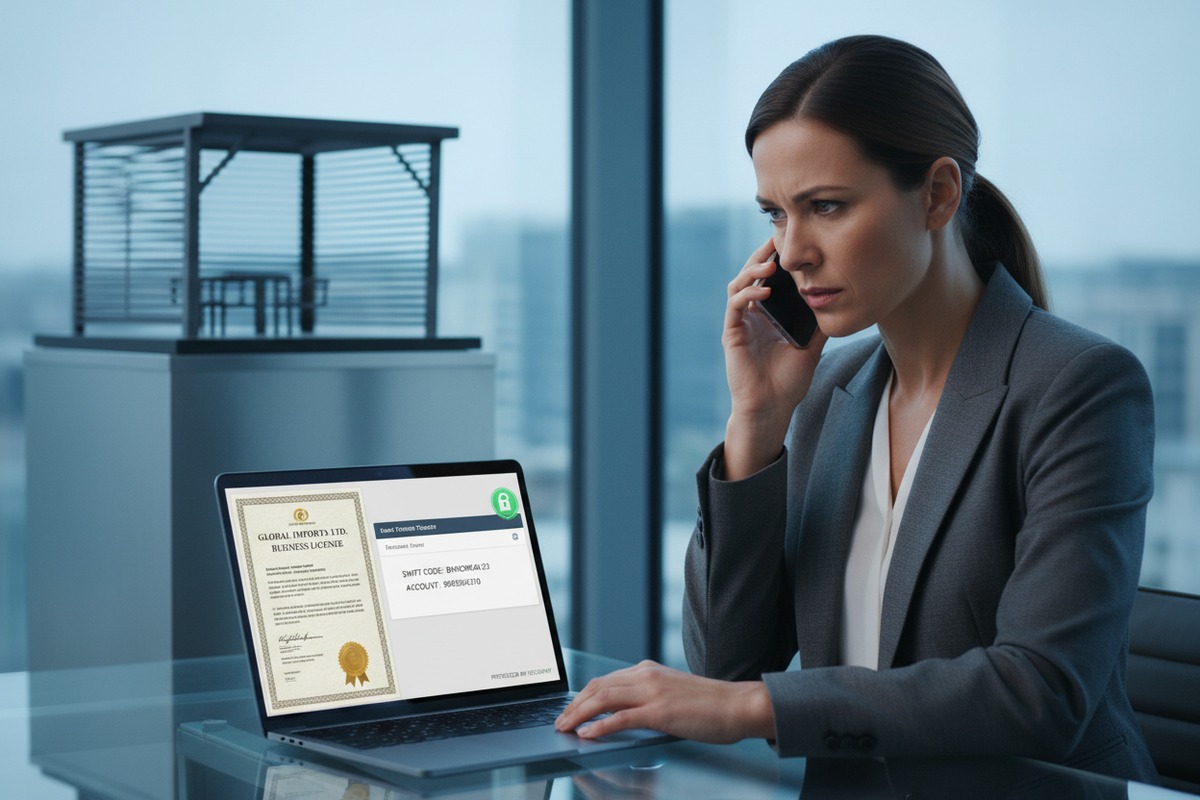
Yes, you can and should link final payment to a third-party inspection. Structure your contract so that 30-50% of the total payment is released only after an independent inspector (SGS, Bureau Veritas, or TÜV) confirms the aluminum pergolas meet agreed specifications for wall thickness, powder-coating depth, structural integrity, and packaging standards.
What Inspectors Check on Aluminum Pergolas
A proper pre-shipment inspection for pergolas covers more than a quick visual check. Here's what a thorough report includes:
| Inspection Point | Standard/Requirement | Test Method |
|---|---|---|
| Aluminum wall thickness | Per drawing (typically 1.5-3.0mm) | Digital caliper measurement |
| Powder coating thickness | ≥60μm | Coating thickness gauge |
| Color consistency | RAL code match (e.g., RAL 7016) | Visual + spectrophotometer |
| Structural load simulation | Wind/snow rating per spec | Manual load test or documentation review |
| Component completeness | All screws, brackets, motors present | Count against BOM |
| Packaging integrity | EPE foam, corner protectors, carton strength | Drop test / visual |
| Motor certification | CE, UL, or market-specific cert | Document verification |
How to Structure the Payment-Inspection Link
Write this into your purchase contract:
- "Buyer shall arrange third-party inspection within 5 business days of seller's readiness notification."
- "Payment of the final tranche (X%) is conditional upon inspection pass with a defect rate below 2.5% (AQL 2.5, Level II 7)."
- "If inspection fails, seller has 7 days to rectify. A second failed inspection entitles buyer to cancel the order and receive a refund of all payments made."
Cost of Inspection vs. Cost of Failure
A standard pre-shipment inspection costs $250-$400 per man-day. A single container of aluminum pergolas might be worth $30,000-$80,000. The inspection cost is less than 1% of the order value—but it can save you from receiving 40 sets of pergolas with undersized profiles that fail in the first windstorm.
Supplier Resistance—And How to Handle It
Some suppliers resist inspections because it adds pressure. In our view, any factory that refuses third-party access is a red flag. Legitimate manufacturers—ourselves included—see inspections as a quality validation, not a threat. If a supplier pushes back, offer to bear the inspection cost yourself. If they still refuse, find another supplier.
Combining Inspection with Payment Milestones
The ideal flow:
- Sign contract → Pay 20% deposit via T/T
- Production completes → Supplier notifies buyer
- Third-party inspection → Inspector issues report
- Pass → Pay 50% → Supplier ships
- Receive B/L → Pay final 30%
This gives you two checkpoints before full commitment.
Schlussfolgerung
Payment risk is manageable when you combine smart contract structures, verified banking practices, and independent inspections—protecting both your capital and your project timeline.
Fußnoten
1. Explains definition, process, and benefits of independent quality checks. ︎
2. Official government explanation of BEC, its mechanisms, and prevention. ︎
3. Details common L/C discrepancies, their consequences, and methods for avoidance. ︎
4. Provides a legal definition and overview of wire fraud as a federal crime. ︎
5. Official source for Incoterms rules, defining responsibilities in international trade. ︎
6. Provides an overview of the international rules governing letters of credit. ︎
7. Explains AQL, its application in quality control, and sampling standards. ︎