

Every week, our sales team fields dozens of quote requests from buyers across Europe and North America, and the same confusion comes up again and again: "Should I go with your FOB price or ask for CIF?" It sounds like a simple choice, but picking the wrong shipping term can quietly eat into your margins, delay your project, or leave you unprotected when a container of aluminum profiles 1 arrives dented at the port.
To compare FOB and CIF quotes accurately, add estimated freight and insurance costs to the FOB price so both quotes reflect the same scope. Then factor in destination charges, customs duties, and inland transport to calculate your true landed cost before making a decision.
In this guide, I will walk you through the real differences between FOB and CIF 2, show you where hidden costs hide, and give you the tools to calculate your total landed cost with confidence. Let's break it down step by step.
When we prepare FOB quotes at our facility, the price covers materials, production, quality inspection, inland transport to the Chinese port, and export customs clearance. But many buyers assume that number is close to their final cost. It is not, and that gap causes budget headaches.
A standard FOB quote excludes ocean freight, cargo insurance, destination port charges, customs duties, import taxes, and inland delivery. These excluded costs typically add 15–30% on top of the FOB price for bulky aluminum pergola shipments, so you must estimate them before comparing quotes.
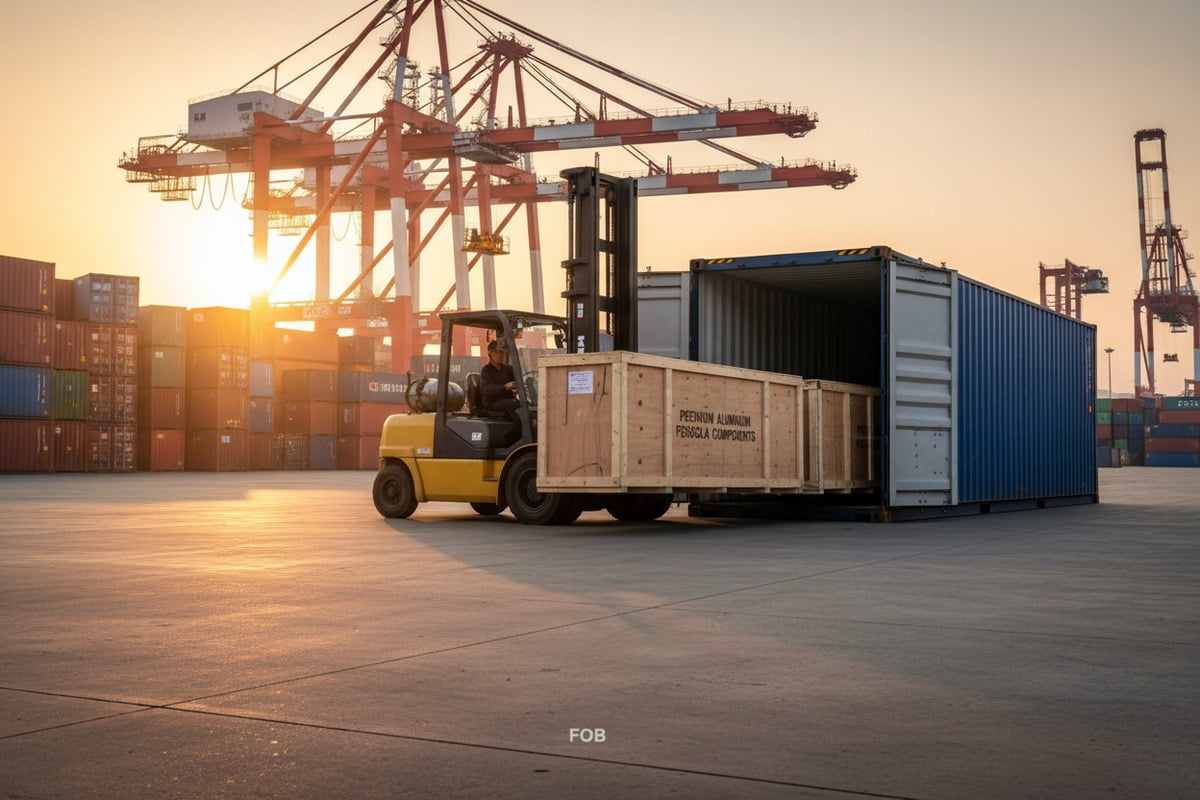
What FOB Actually Covers
FOB, or Free On Board, means the seller's responsibility ends once the goods are loaded onto the vessel at the origin port. In our case, that is usually Haikou, Shenzhen, or Ningbo. We handle everything up to that point: raw material sourcing, powder coating, assembly testing, packing into containers, trucking to port, and clearing Chinese customs. Once the container crosses the ship's rail, it is your responsibility.
The Costs You Need to Add
Here is a practical breakdown of the costs sitting outside a typical FOB pergola quote:
| Cost Item | Who Pays (FOB) | Estimated Range |
|---|---|---|
| Ocean freight 3 (20ft container, China to EU) | Buyer | $1,800–$4,500 |
| Marine cargo insurance 4 | Buyer | $150–$400 |
| Destination port terminal handling | Buyer | $200–$600 |
| Customs clearance at destination | Buyer | $100–$300 |
| Import duties (aluminum structures, EU) | Buyer | 3–6% of CIF value |
| VAT / import tax | Buyer | Varies by country |
| Inland trucking to warehouse | Buyer | $200–$1,000+ |
The Sneaky Ones
Some costs catch even experienced buyers off guard. Demurrage fees hit you when a container sits at port too long because paperwork is delayed. Container detention fees apply when you hold the container beyond the free period after unloading. And if your pergola order includes motorized louvered roofs with electronic components, some ports charge additional inspection fees for electrical compliance verification.
Another overlooked cost is packing optimization. Aluminum pergola posts and beams are long and bulky. A poorly packed container wastes space and forces you to ship more containers than necessary. At our production line, we design nested packing layouts that maximize container utilization, but if you are comparing FOB quotes from multiple suppliers, ask each one how many sets fit per 20ft or 40ft container. The difference can be dramatic.
How to Normalize FOB for Fair Comparison
The simplest method is to request freight and insurance estimates from a freight forwarder and add them to each FOB quote. For example, if Supplier A quotes FOB $4,800 and Supplier B quotes FOB $5,200, but Supplier A's packing fits only 8 sets per container while Supplier B fits 12, the per-unit freight cost flips the comparison entirely.
Always ask your supplier for the cargo dimensions and gross weight per set. Then send those numbers to at least two freight forwarders for spot quotes. This gives you an apples-to-apples comparison.
Which shipping term offers me better protection against damage to aluminum profiles during sea freight?
Our quality control team has seen what happens when a 40ft container of louvered pergola panels crosses the ocean without proper protection. Scratched powder coatings, bent profiles, and dented corner posts turn a profitable order into a costly dispute. So the question of which Incoterm protects you better is not theoretical. It is about real money.
CIF includes seller-arranged insurance, but it is often minimal coverage at 110% of invoice value. FOB lets you choose your own comprehensive policy. For high-value aluminum pergolas vulnerable to transit damage, FOB with buyer-selected all-risk insurance generally provides stronger and more transparent protection.
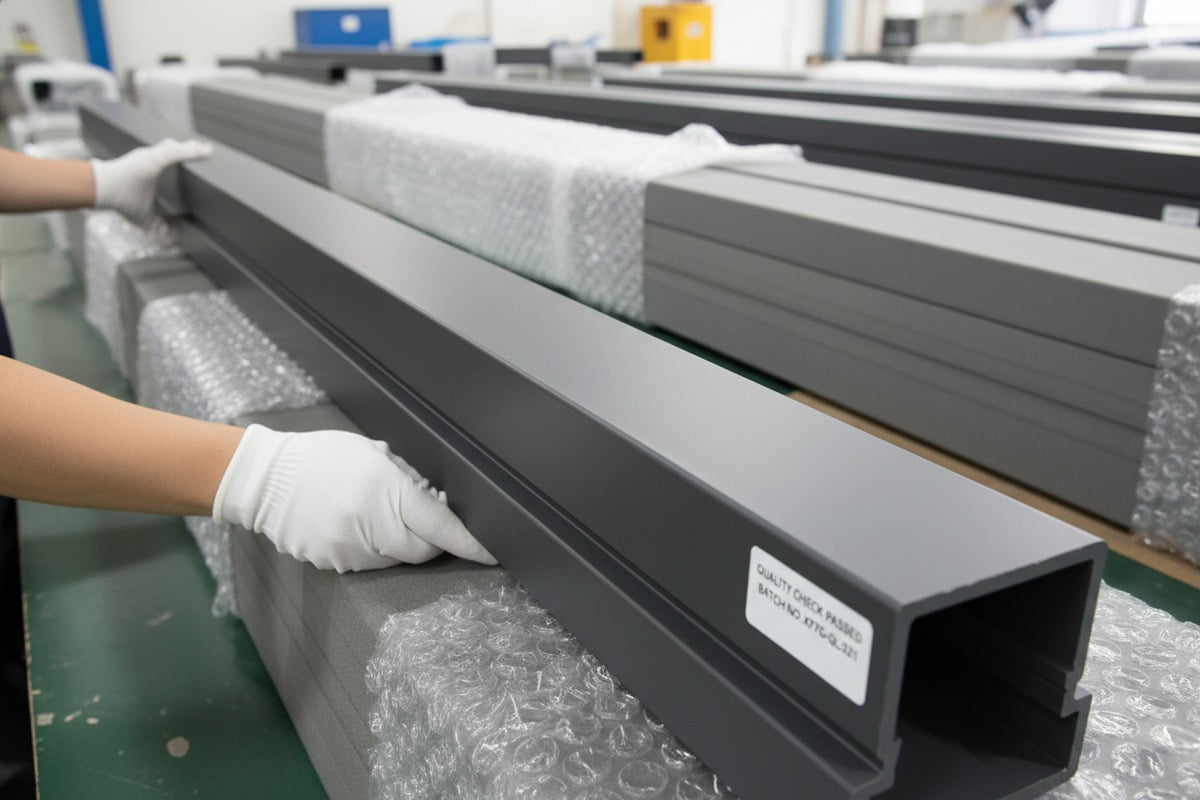
How Risk Transfers Under Each Term
Here is the critical point many buyers miss: under both FOB and CIF, the risk of loss or damage transfers to the buyer at the same moment — when goods are loaded onto the vessel at the origin port. The difference is only about who arranges and pays for insurance, not about who bears the risk.
| Aspect | FOB | CIF |
|---|---|---|
| Risk transfer point | Origin port (loading) | Origin port (loading) |
| Who arranges insurance | Buyer | Seller |
| Insurance coverage level | Buyer's choice | Minimum (110% invoice value) |
| Claim process | Buyer deals directly with insurer | Buyer must claim via seller's policy |
| Policy transparency | Full visibility | Often opaque |
Why CIF Insurance Often Falls Short
Under Incoterms 2020, CIF only requires the seller to provide Institute Cargo Clauses (C) 6, which is the most basic level of coverage. It covers major casualties like sinking or fire, but it may not cover individual package damage, denting during handling, or moisture corrosion — all common risks for aluminum pergolas on a 30-day sea voyage.
When we ship CIF, we do our best to arrange adequate coverage. But honestly, many suppliers across the industry pick the cheapest policy to keep their CIF quote competitive. If a container arrives with water-stained profiles or crushed packaging, the buyer discovers too late that the policy does not cover that specific type of damage.
The FOB Advantage for Damage Claims
When you buy FOB and arrange your own all-risk marine insurance 7, you control the policy terms. You can specify coverage for scratching, denting, corrosion, and even theft. You deal directly with the insurer in your own country and language. Claims are faster because there is no middleman.
For aluminum pergolas specifically, I recommend insisting on all-risk coverage with a clause for surface damage. Powder-coated aluminum looks flawless in the factory, but one rough loading operation or a shifted pallet mid-ocean can leave visible marks that make products unsellable to your end customers. Hotels and resort buyers, in particular, will reject anything with cosmetic defects.
Practical Tips for Either Term
Regardless of FOB or CIF, reinforce your protection with these steps:
- Request photos of container loading from your supplier (we provide these as standard practice).
- Insist on foam separators between aluminum profiles and corner protectors on every post.
- Specify that motorized components like louvered roof actuators are packed in separate, shock-absorbing boxes.
- Include a pre-shipment inspection clause in your purchase contract.
Can I save more money by managing the logistics myself versus choosing a CIF agreement?
Over the past 25 years, we have shipped tens of thousands of pergola sets to Europe and beyond. We have watched buyers try both approaches. Some save significantly by managing their own logistics under FOB. Others lose money and time by underestimating the complexity. The answer depends on your experience and order volume.
Experienced importers ordering full containers can save 10–25% on shipping costs by choosing FOB and negotiating directly with freight forwarders. However, new buyers or those ordering small volumes often find CIF simpler and safer despite the seller's markup on freight and insurance.
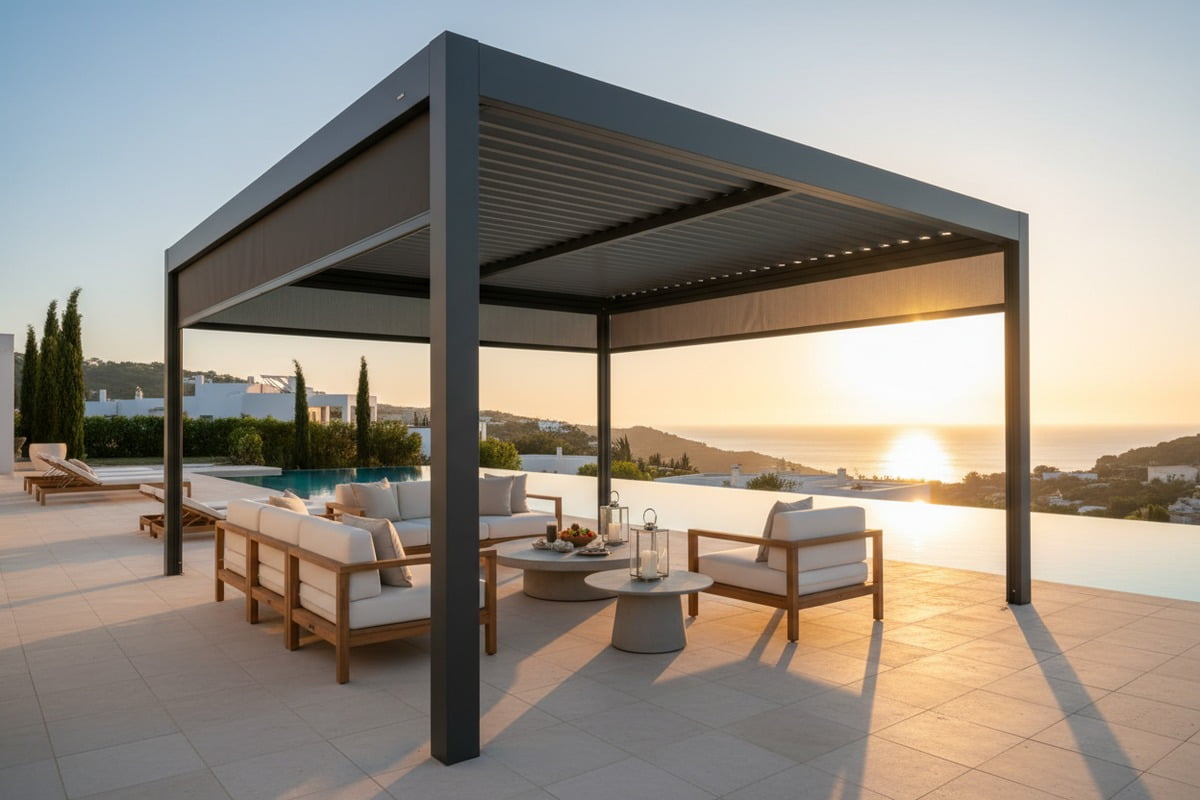
When FOB Saves You Money
If you import pergolas regularly — say, quarterly orders of 40ft containers — you build relationships with freight forwarders. They give you competitive rates because you represent steady volume. You can choose carriers with the best routes and transit times. You can consolidate shipments from multiple suppliers into one container. All of this drives your per-unit logistics cost well below what most suppliers would charge in a CIF quote.
Here is a real-world comparison based on a typical order of louvered aluminum pergolas shipped from Ningbo, China to Rotterdam, Netherlands:
| Cost Component | FOB + Buyer-Managed Logistics | CIF (Seller-Managed) |
|---|---|---|
| Product cost (12 sets) | $58,000 | $58,000 |
| Ocean freight (40ft HQ) | $2,800 (buyer-negotiated) | $3,600 (embedded in CIF) |
| Marine insurance | $280 (all-risk, buyer-selected) | $450 (included in CIF) |
| Total to destination port | $61,080 | $62,050 |
| Estimated savings | $970 | — |
That $970 savings per container adds up across a year of regular imports. For a buyer shipping 10 containers annually, that is nearly $10,000 back in your pocket.
When CIF Makes More Sense
If you are placing your first trial order — maybe two or three pergola sets for a showroom or a pilot project — the logistics complexity of FOB is not worth the savings. You would need to find a reliable freight forwarder, understand Chinese port procedures, coordinate vessel bookings, and manage insurance paperwork. A CIF quote bundles all of this into one price and one point of contact.
We often recommend CIF to new European buyers who are testing our products before committing to larger volumes. It removes friction from the process and lets you focus on evaluating product quality rather than wrestling with shipping logistics.
The Hybrid Approach
Some savvy buyers start with CIF for their first one or two orders. They use that period to learn the shipping routes, understand the transit times, and identify good freight forwarders at the destination port. Then they switch to FOB for all subsequent orders. This phased approach minimizes risk while building toward long-term savings.
Another option gaining traction is "FOB with freight prepaid and charged back." Under this arrangement, the seller books the freight (using their volume discounts), but the actual freight cost is passed through to the buyer at cost, without markup. This can combine the convenience of seller-managed shipping with the transparency of FOB pricing. Ask your supplier if they offer this option.
Volume Thresholds That Matter
As a rule of thumb, if your annual import volume exceeds three full container loads (FCL), the effort of managing FOB logistics pays off. Below that threshold, the savings are marginal and the learning curve is steep. LCL (less than container load) shipments almost always make more sense under CIF because consolidation fees and handling charges erode any FOB advantage.
How do I calculate the total landed cost to ensure my project stays within budget?
When our clients tell us their budget, we always ask: "Is that your product budget or your landed budget?" The difference between the two is where projects go off the rails. A pergola that looks affordable on a supplier's price sheet can blow past your budget once every cost between the factory and your job site is accounted for.
To calculate total landed cost, start with the FOB or CIF price, then add ocean freight (if FOB), insurance (if FOB), destination port charges, customs duties, import VAT, customs broker fees, and inland delivery. Sum all items to get the true per-unit cost at your warehouse or project site.
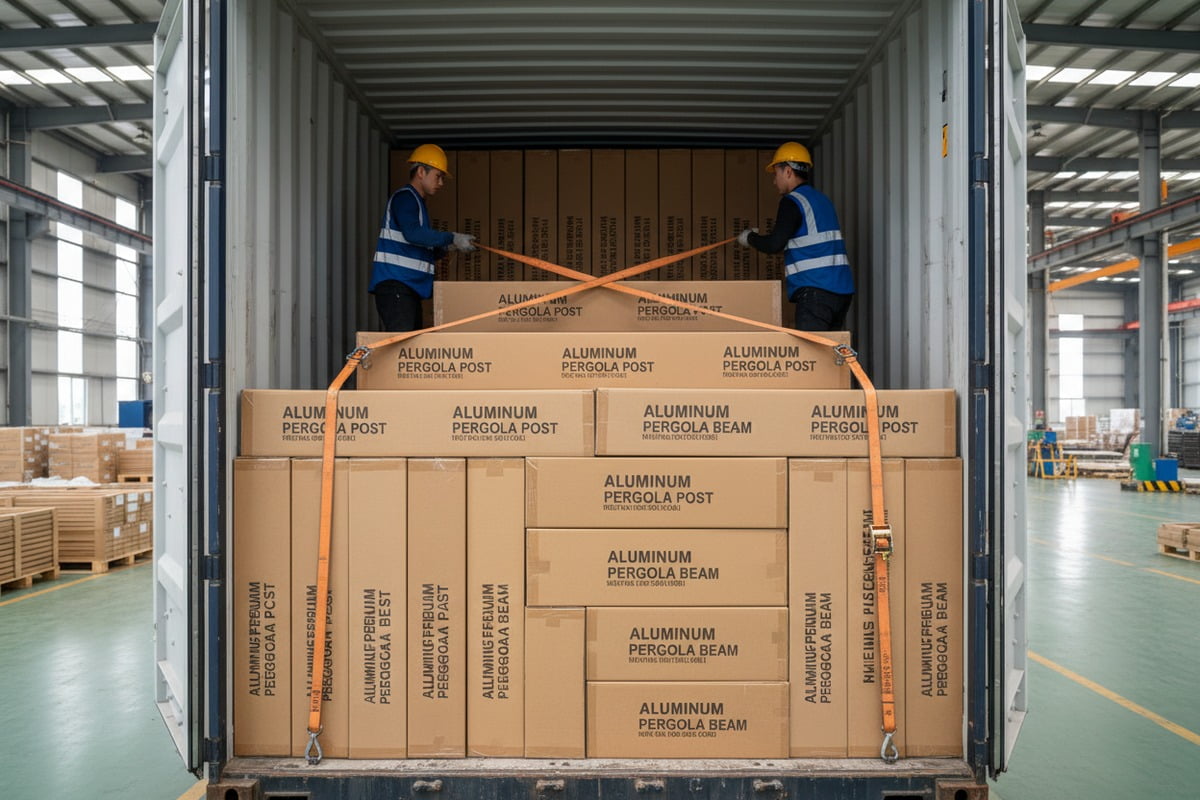
The Landed Cost Formula
The formula is straightforward. The challenge is not the math — it is finding accurate numbers for each line item. Here is the step-by-step approach:
Landed Cost = Product Price + Freight + Insurance + Port Charges + Customs Duties + Import VAT + Broker Fees + Inland Delivery
Let me walk you through each component using a concrete example. Say you are an Italian distributor ordering 15 sets of our motorized louvered aluminum pergolas on FOB terms from Ningbo.
Step-by-Step Calculation Example
Product cost (FOB Ningbo): 15 sets × $4,200 = $63,000
Ocean freight (40ft HQ to Genoa): $3,200
Marine cargo insurance (all-risk, 110% of FOB + freight): ($63,000 + $3,200) × 110% × 0.35% = $255
CIF value for customs purposes: $63,000 + $3,200 + $255 = $66,455
EU customs duty (aluminum structures, ~6%): $66,455 × 6% = $3,987
Italian import VAT (22%): ($66,455 + $3,987) × 22% = $15,497
Destination port terminal handling: $450
Customs broker fee: $180
Inland trucking (Genoa to Milan warehouse): $650
Total landed cost: $63,000 + $3,200 + $255 + $3,987 + $15,497 + $450 + $180 + $650 = $87,219
Per-unit landed cost: $87,219 ÷ 15 = $5,815
Compare that to the FOB price of $4,200 per set. The landed cost is 38% higher. If you budgeted based on the FOB number alone, you would face a significant shortfall.
Tips for Accurate Estimates
Getting precise numbers requires a few upfront efforts:
- Freight quotes: Request spot rates from two or three forwarders. Rates fluctuate weekly, especially during peak season (August–October) and around Chinese New Year.
- HS code: Confirm the correct Harmonized System code 8 for your pergola type. Aluminum structures typically fall under HS 7610 or 7616, but motorized versions with electronics may classify differently, affecting duty rates.
- Insurance: Get a quote from your own insurer. Do not assume the seller's embedded CIF insurance is adequate or competitively priced.
- VAT recovery: In many EU countries, import VAT is recoverable for registered businesses. Factor this into your net landed cost if applicable.
- Currency fluctuations: If you pay in USD but sell in EUR, build a buffer of 2–3% for exchange rate movement between order placement and payment.
Common Mistakes That Blow Budgets
First, ignoring demurrage and detention 9. If your customs clearance is delayed by even a few days, port fees stack up fast — $100 to $300 per day in major European ports. Second, underestimating inland delivery costs for bulky goods. A standard truck might not fit 4-meter aluminum beams; you may need a flatbed, which costs more. Third, forgetting anti-dumping duties. While aluminum pergolas are not currently subject to anti-dumping tariffs in most markets, regulations change. Check with your customs broker before every major order.
At our end, we help by providing detailed packing lists, accurate cargo dimensions, and HS code recommendations. We have seen too many good projects stall because the buyer did not budget beyond the quote price. A 10-minute landed cost calculation can save you thousands.
Schlussfolgerung
Choosing between FOB and CIF is not about which term is universally better. It is about matching the right term to your experience, volume, and risk tolerance. Normalize every quote to a landed cost, verify insurance coverage, and let the numbers guide your decision.
Fußnoten
- Discusses quality standards and applications for aluminum profiles in various industries. ︎
- Explains the differences and similarities between FOB and CIF Incoterms. ︎
- Provides a comprehensive overview of ocean freight in the global supply chain. ︎
- Details the essential protections and types of marine cargo insurance. ︎
- Official source for the Incoterms® 2020 rules from the International Chamber of Commerce. ︎
- Replaced HTTP unknown with a working summary of Institute Cargo Clauses (C) from the original domain. ︎
- Defines and explains the comprehensive coverage of all-risk marine insurance. ︎
- Replaced HTTP unknown with an authoritative explanation of Harmonized System (HS) Codes from a government source. ︎
- Clarifies the definitions and differences between demurrage and detention charges. ︎
- Official government information on customs duties, their purpose, and calculation. ︎