

Every year, we see EU importers struggle with rejected shipments because their documentation packages were incomplete or outdated.
To issue a valid EU Declaration of Conformity for China-sourced aluminum pergolas, you need a complete Technical File including test reports from accredited labs, risk assessments, material certifications, CE marking documentation, user manuals in local languages, and compliance records for all applicable EU directives such as CPR, LVD, EMC, and RoHS.
This guide breaks down every document you need, who is responsible for what, and how to avoid costly customs delays. Let's walk through the process step by step.
Which technical test reports do I need from my Chinese supplier to issue a valid DoC?
When we prepare export documentation for our EU partners, we often find that many importers underestimate the depth of testing required for aluminum pergolas.
You need structural load test reports, corrosion resistance results, fire reaction data, powder coating adhesion tests, and material composition certificates — all from ISO 17025-accredited laboratories — to build a valid Technical File that supports your EU Declaration of Conformity.

Getting the right test reports starts with understanding which EU standards apply to your specific pergola model. Aluminum pergolas fall primarily under the Construction Products Regulation (CPR) 1, which means structural performance is the top concern. But the list goes much further than that.
Structural and Mechanical Test Reports
The most critical report is the structural load test. This proves your pergola can handle wind loads, snow loads, and dead loads as specified in EN 1991 (Eurocode 1) 2 for actions on structures. Our engineering team runs FEA (Finite Element Analysis) simulations before physical testing to catch weak points early. You should also request reports aligned with EN 1090-3, which covers execution of aluminum structures.
Material and Surface Treatment Reports
Your supplier must provide mill certificates for the aluminum alloy used — typically EN AW-6063 T5 or T6. These certificates confirm tensile strength, yield strength, and chemical composition. For the powder coating, request test results per Qualicoat or GSB standards, covering adhesion, salt spray resistance (minimum 1,000 hours), and UV stability.
Full Checklist of Required Test Reports
| Test Report | Applicable Standard | Purpose |
|---|---|---|
| Structural load testing | EN 1991 / EN 1090-3 | Verify wind, snow, and dead load resistance |
| Aluminum alloy mill certificate | EN 573, EN 755 | Confirm alloy grade and mechanical properties |
| Powder coating adhesion & corrosion | Qualicoat / ASTM B117 | Ensure coating durability and salt spray resistance |
| Fire reaction classification | EN 13501-1 | Classify fire behavior of materials |
| Dimensional tolerance report | EN 12020 | Verify profile dimensions meet design specs |
| Weld quality inspection (if applicable) | EN ISO 3834 | Confirm welding quality for structural joints |
Why Lab Accreditation Matters
A test report is only valid if it comes from a lab accredited under ISO/IEC 17025. Many Chinese testing facilities hold this accreditation, but you must verify the scope of their accreditation covers the specific tests you need. We work with TÜV and SGS-accredited labs in China, and we always share the full lab accreditation certificate with our clients. If a report comes from a non-accredited lab, EU market surveillance authorities can reject it outright.
One common mistake is accepting a supplier's internal QC report as a substitute for a third-party test report. Internal QC is useful for production consistency, but it holds zero legal weight in a DoC.
How can I verify that the motors and electronics in my pergola comply with EU safety standards?
Our motorized louvered pergolas ship with integrated motors, rain sensors, and remote controls — and every single one of these components needs its own compliance trail.
To verify motor and electronics compliance, request CE certificates covering the Low Voltage Directive (LVD 2014/35/EU), EMC Directive (2014/30/EU), and RoHS Directive (2011/65/EU), plus the Radio Equipment Directive (RED 2014/53/EU) if wireless controls are included. Always cross-check certificate numbers with the issuing notified body.
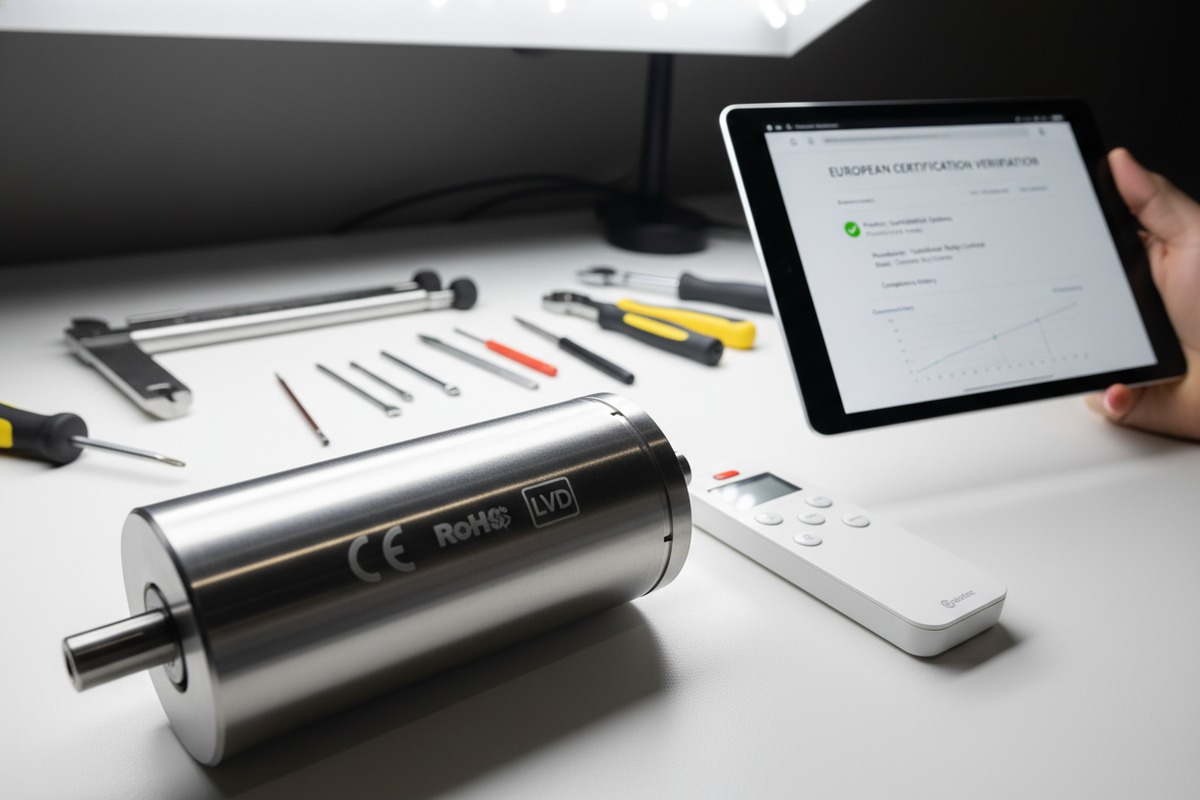
Motorized pergolas are not just construction products. The moment you add a motor, a sensor, or a wireless remote, your pergola becomes a product that must comply with multiple EU directives simultaneously. This is where many importers get caught off guard.
Key Directives for Motorized Pergola Components
The Low Voltage Directive (LVD) 4 applies to all electrical equipment operating between 50V and 1000V AC. Most pergola motors run on 230V AC, so LVD is always relevant. The EMC Directive 5 ensures your motor and electronics do not emit excessive electromagnetic interference and can function properly near other devices. RoHS restricts hazardous substances like lead, mercury, and cadmium in electrical components. RoHS Directive 6
If your pergola includes a wireless remote control, Wi-Fi connectivity, or Zigbee-enabled sensors, the Radio Equipment Directive (RED) also applies. This requires specific RF testing and documentation.
How to Cross-Check Certificates
Never take a CE certificate at face value. Here is a simple verification process:
- Ask the motor supplier for the full test report, not just the certificate.
- Note the notified body number on the certificate (a four-digit code).
- Search the NANDO database 7 (New Approach Notified and Designated Organisations) on the European Commission website to confirm the notified body is legitimate and authorized for the relevant directive.
- Verify the test report reference number matches the certificate.
Directive-by-Directive Documentation Requirements
| EU Directive | Scope | Key Documents Required |
|---|---|---|
| LVD (2014/35/EU) | Electrical safety of motors and wiring | Test report per EN 60335-1, CE certificate, wiring diagrams |
| EMC (2014/30/EU) | Electromagnetic compatibility | EMC test report per EN 55014, technical construction file |
| RoHS (2011/65/EU) | Hazardous substance restrictions | Material declarations, XRF test results for restricted substances |
| RED (2014/53/EU) | Wireless remote controls, sensors | RF test report, technical documentation, EU-type examination cert |
| Machinery Directive (2006/42/EC) 8 | Motorized operation as a whole | Risk assessment, operating instructions, safety component certs |
The Machinery Directive Consideration
If your pergola has moving parts — adjustable louvers driven by a motor — it may fall under the Machinery Directive (2006/42/EC). This requires a specific risk assessment covering all mechanical hazards, including pinch points, crushing risks, and emergency stop functionality. At our production facility, we integrate limit switches and overload protection into every motorized unit. These safety features must be documented in the Technical File 9.
A practical tip: ask your Chinese supplier whether the motor supplier is Somfy, Nice, or another well-known European brand. These brands typically provide complete CE documentation packages that simplify your compliance process significantly. If the motor is from a lesser-known Chinese brand, budget extra time and cost for independent verification.
What are my legal responsibilities as an importer when signing the Declaration of Conformity?
We have worked with hundreds of EU importers over 25 years, and the question of legal responsibility comes up in almost every first meeting.
As the EU importer, you are legally responsible for ensuring the product complies with all applicable directives, maintaining the Technical File for 10 years, affixing a correct CE mark, providing user instructions in local languages, and cooperating with market surveillance authorities. Non-compliance can result in fines exceeding €100,000 per violation.
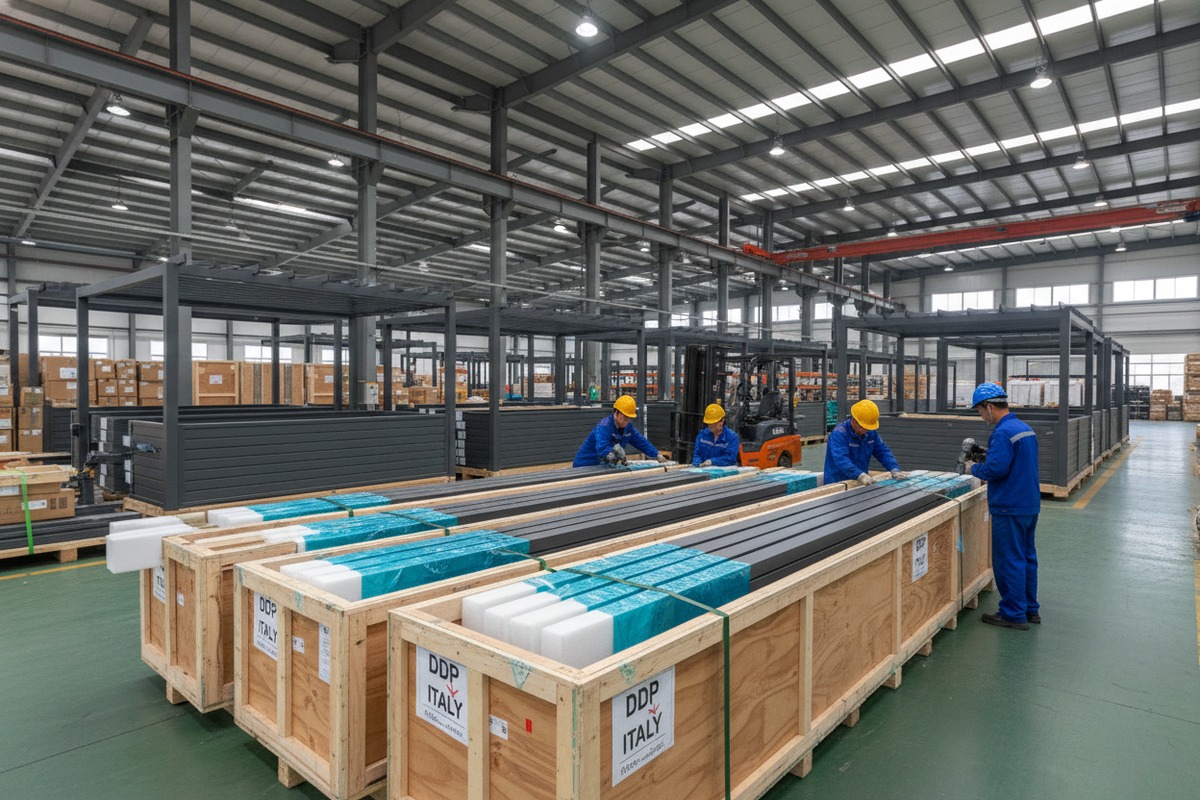
Signing the Declaration of Conformity is not a formality. It is a legally binding act that places full responsibility on you as the entity placing the product on the EU market. If the Chinese manufacturer is not established in the EU, you — the importer — become the de facto responsible person under EU product safety law.
What "Responsible Person" Means Under EU Law
Under Regulation (EU) 2019/1020 10, every product sold in the EU must have an economic operator established within the EU who takes responsibility for compliance. For most China-sourced pergolas, this is the importer. Your name, address, and contact information must appear on the product or its packaging. You are the first point of contact for market surveillance authorities.
Your Obligations in Detail
Your duties go beyond simply signing a piece of paper. You must verify that the manufacturer has carried out the proper conformity assessment. You must ensure the Technical File is complete and available for inspection. You must confirm that the product bears the CE marking and is accompanied by required documents, including user manuals and installation guides in the languages of the member states where you sell.
If at any point you suspect the product does not comply, you must take immediate corrective action. This could mean halting sales, issuing a recall, or notifying the relevant national authority.
Post-Market Surveillance Obligations
The new General Product Safety Regulation (GPSR 2023/988), which took effect in December 2024, strengthens post-market surveillance requirements. You need a documented system for handling complaints, tracking defects, and reporting serious incidents to authorities within specific timeframes. For our part, we provide our EU partners with detailed technical support packages — including failure mode analysis documents — so they can set up these systems efficiently.
Financial Risks of Non-Compliance
The consequences of getting this wrong are severe. Fines vary by member state, but they can range from €10,000 to well over €100,000 per product type per violation. Beyond fines, a non-compliant shipment can be destroyed at the importer's expense, and repeat offenders may face import bans. The reputational damage to your brand is often the most costly consequence of all.
The cost of doing compliance right — engaging a notified body, running proper tests, building a solid Technical File — typically runs between €3,000 and €8,000 per product family. Compare that to a single recall or customs seizure, which can easily cost €50,000 or more. The math is clear.
Will my shipment be held at customs if my pergola's technical file is missing specific documents?
One of our Italian distribution partners once had a full container of motorized pergolas held at the port of Genoa for six weeks — all because of a missing EMC test report for the motor controller.
Yes, EU customs authorities can and do hold shipments when the Technical File is incomplete. Missing CE certificates, absent test reports, incorrect DoC formatting, or lack of user manuals in local languages are the most common triggers. Detained goods may be destroyed at the importer's expense if compliance cannot be proven within a set deadline.
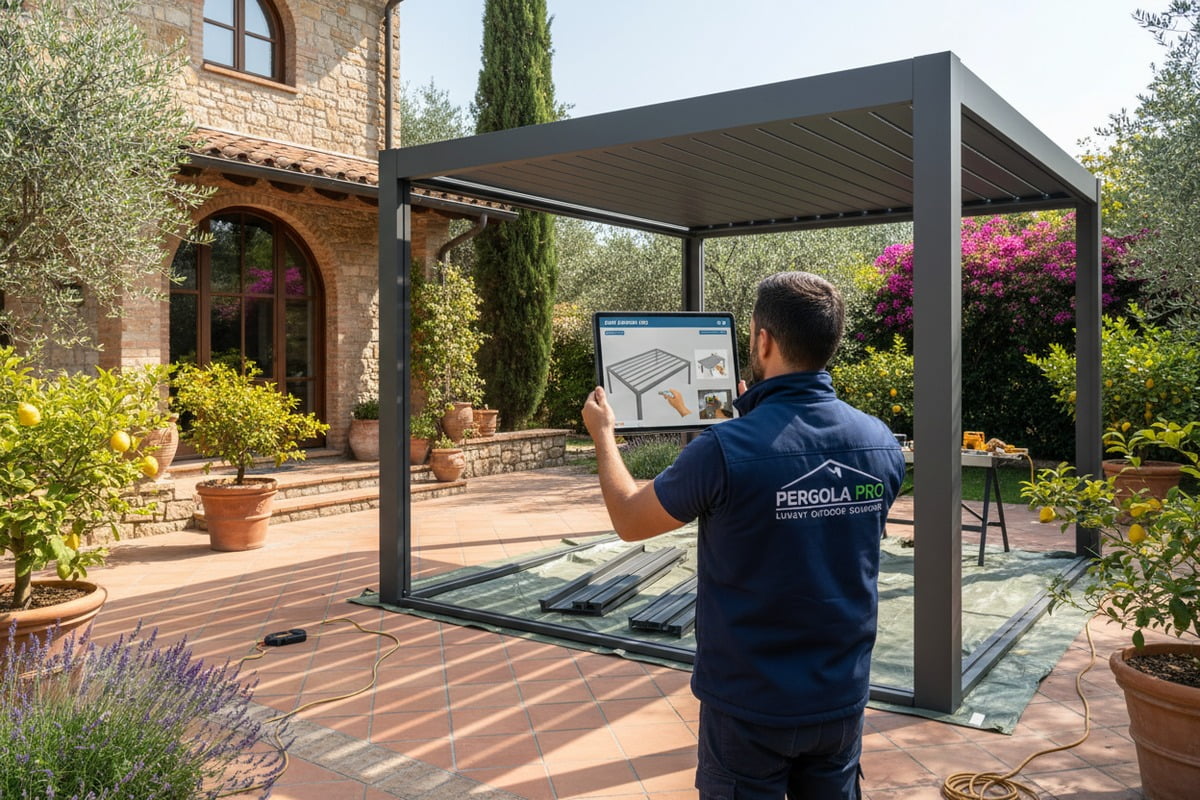
Customs enforcement of product compliance has intensified dramatically across the EU in recent years. Under Regulation (EU) 2019/1020, customs authorities act as the first line of defense against non-compliant products entering the single market. They have the power to suspend release, request documentation, conduct inspections, and ultimately order destruction of goods.
How Customs Checks Work in Practice
When your shipment arrives at an EU port, customs may perform a random or targeted check. Targeted checks are more likely for products from countries flagged for high non-compliance rates — and China-sourced construction products fall squarely in this category. RAPEX (the EU Rapid Alert System) data indicates that approximately 40% of flagged non-compliant products originate from China.
During a check, customs officers typically request:
- The Declaration of Conformity or Declaration of Performance
- CE marking verification on the product
- Test reports and certificates referenced in the DoC
- User manuals and installation instructions in the local language
If any of these are missing, your goods will be suspended at the border.
Most Common Document Gaps That Trigger Holds
| Missing Document | Likelihood of Customs Hold | Typical Resolution Time |
|---|---|---|
| Declaration of Conformity (DoC) | Very High | 2–4 weeks if document can be produced |
| CE test reports for motors/electronics | Very High | 4–8 weeks (may require retesting) |
| User manual in local EU language | High | 1–2 weeks for translation and resubmission |
| Material safety data sheets (REACH) | Medium-High | 2–3 weeks |
| Structural load test report | Medium | 3–6 weeks (if retesting needed in EU lab) |
| Digital Product Passport (future CPR-2024) | Increasing | TBD as enforcement ramps up |
What Happens After a Hold
Once your shipment is flagged, you typically have 21 days to provide the missing documentation. If you cannot produce compliant documents within this period, customs can extend the hold, impose fines, or order destruction. Destruction costs — including storage fees — fall entirely on the importer. We have seen storage fees alone reach €200 per day per container at major European ports.
How to Prevent Customs Issues
Prevention is straightforward but requires discipline. Before your shipment leaves China, compile a customs-ready documentation package. At our facility, we provide our OEM partners with a pre-shipment compliance folder that includes copies of all test reports, CE certificates for motors and electronics, material certificates, a draft DoC template, and multilingual installation manuals. This folder travels digitally with the shipment so the importer can present it immediately upon customs request.
Another practical step: work with a customs broker experienced in construction products. They can pre-clear documentation and flag gaps before your container reaches the port. The cost of a specialized broker is a fraction of the cost of a six-week customs hold.
Preparing for CPR-2024 and the Digital Product Passport
The new Construction Products Regulation (EU) 2024/3110 introduces the Digital Product Passport (DPP), which will require digital access to compliance data — likely via QR codes on the product. While full enforcement awaits harmonized standard updates (expected around 2026), forward-thinking importers should start requesting digital-ready documentation from their Chinese suppliers now. We are already piloting QR-coded compliance labels on our pergola frames for select European clients.
Conclusion
Getting your EU Declaration of Conformity right protects your business, your customers, and your reputation. Start by demanding complete, accredited documentation from your Chinese supplier — and never treat compliance as an afterthought. If you need a supplier who delivers CE-ready Technical Files alongside every pergola shipment, reach out to our team at lonsonpergola.com.
Footnotes
1. Official European Commission page for the Construction Products Regulation. ↩︎
2. Describes the European standard (Eurocode 1) for actions on structures in design. ↩︎
3. Defines the international standard for the competence of testing and calibration laboratories. ↩︎
4. Provides official information on the EU Low Voltage Directive (2014/35/EU). ↩︎
5. Provides official information on the EU Electromagnetic Compatibility Directive (2014/30/EU). ↩︎
6. Official European Commission page for the RoHS Directive. ↩︎
7. Describes the European Commission's database for finding notified and designated bodies. ↩︎
8. Provides official information on the EU Machinery Directive (2006/42/EC). ↩︎
9. Explains the essential documents and information required for a product's Technical File. ↩︎
10. Provides the official text of the EU regulation on market surveillance and product compliance. ↩︎