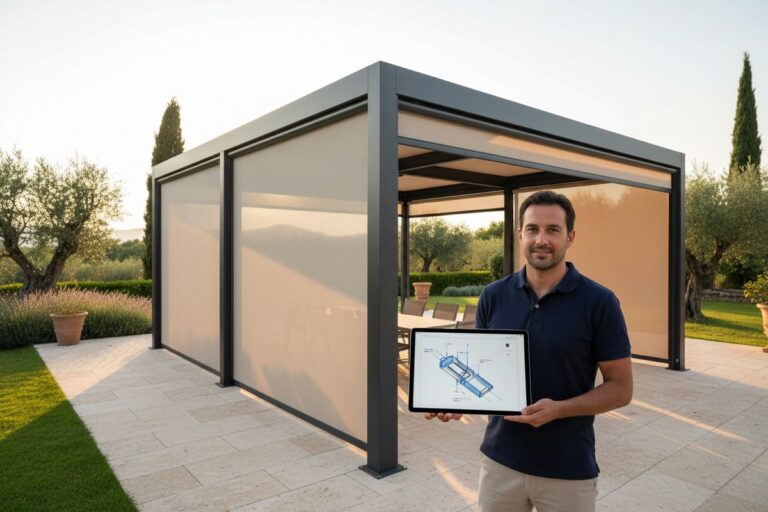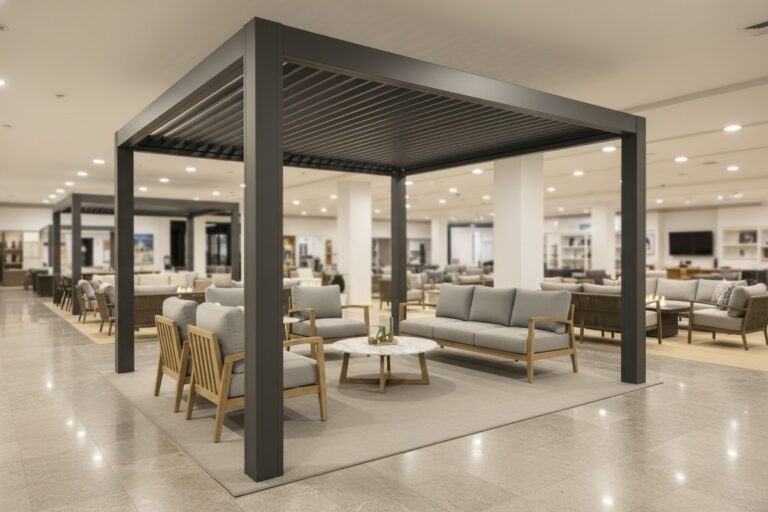
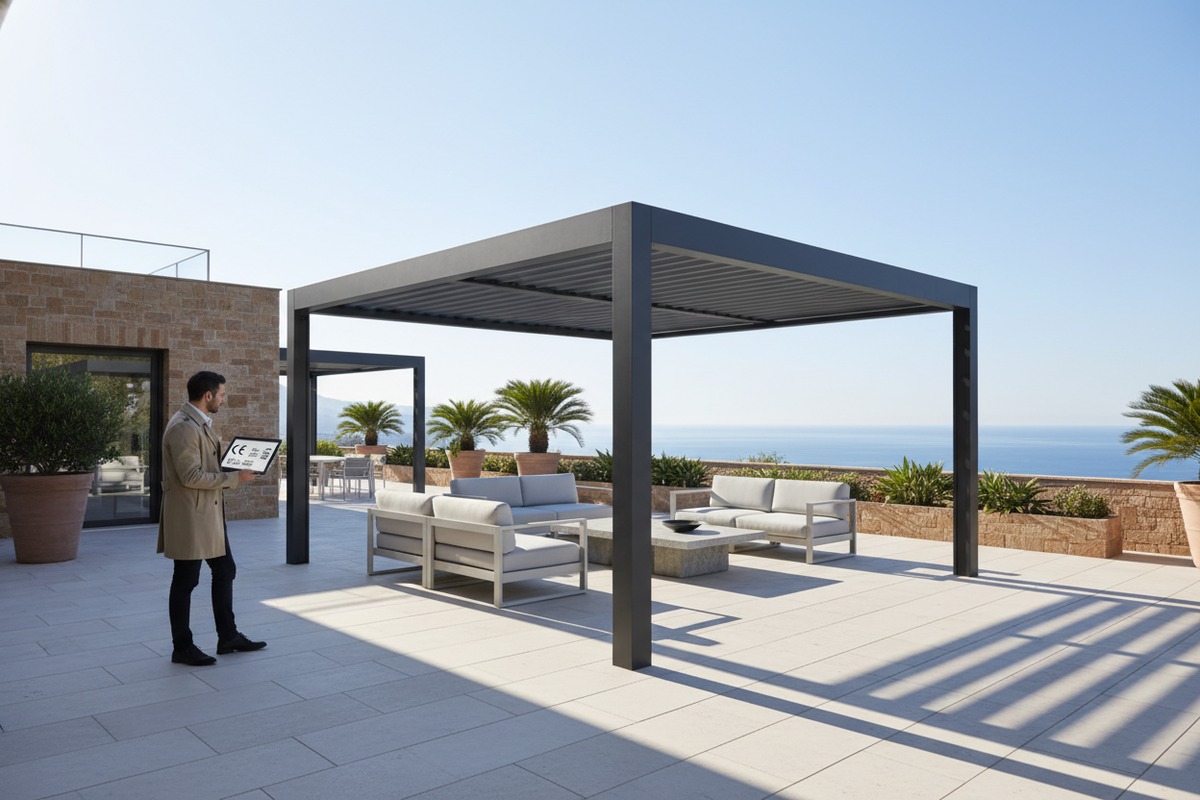
Every year, we ship thousands of aluminum pergolas from our production lines to European distributors EN 1090 structural certification 1. The question we hear most often is simple but critical: what certifications do I actually need?
Aluminum pergolas imported from China into Europe require CE marking under the Construction Products Regulation, EN 1090 structural certification, Qualicoat-compliant powder coating, and additional electrical safety certifications such as the Low Voltage Directive and EMC Directive for any motorized or electronic components.
The certification landscape can feel overwhelming Electromagnetic Compatibility Directive 2. Different countries add their own rules on top of EU-wide requirements. This guide breaks down every certification step by step, so you know exactly what to ask for and what to verify before your next shipment clears customs.
How do I verify that my imported aluminum pergola meets mandatory EU CE marking requirements?
We have seen containers held at European ports because a single document was missing from the technical file. CE marking 3 is not optional. It is a legal gate you must pass.
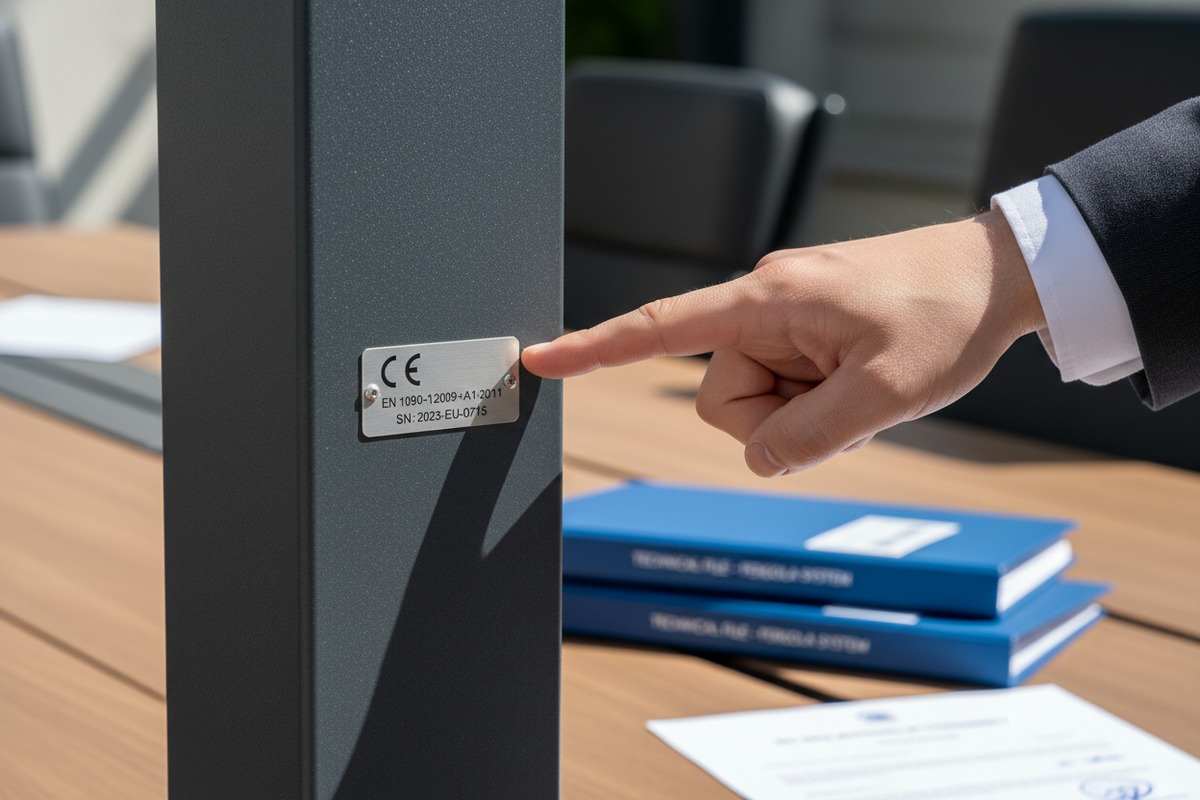
To verify CE compliance, request the manufacturer's EU Declaration of Conformity, the full technical file referencing applicable EN standards, and confirm the CE mark is physically affixed to the product. For structural aluminum, EN 1090 certification from a Notified Body is essential, not just a self-declaration.
What CE marking actually means
CE stands for "Conformité Européenne." It tells customs authorities and end users that the product meets EU health, safety, and environmental standards. For aluminum pergolas, the primary regulation is the Construction Products Regulation 4 (CPR). This means the pergola is treated as a construction product, not just outdoor furniture.
Many buyers assume the manufacturer handles everything. That is wrong. Under EU law, the importer is the responsible party. If a pergola fails inspection or causes injury, the importer faces fines and legal action. Not the Chinese factory.
The technical file checklist
A proper technical file should include the following items:
| Document | Purpose | Who Provides It |
|---|---|---|
| EU Declaration of Conformity | Legal statement of compliance | Manufacturer (signed) |
| EN 1090 Certificate | Structural execution standard | Notified Body 5 |
| Material test reports (6063-T5/T6 alloy) | Proves alloy grade and mechanical properties | Independent lab (SGS, TUV) |
| Structural calculation report | Wind, snow, and dead load analysis | Certified engineer |
| CE mark label on product | Physical proof for customs | Fabricante |
| User installation manual | Required by CPR | Fabricante |
When we prepare shipments at our facility, we compile this entire file before production even starts. Our engineering team runs the structural calculations using Eurocode 9 6, then a Notified Body reviews them. This process adds time, but it prevents delays at the port that cost far more.
Self-declaration vs. Notified Body involvement
Here is where many importers get caught. Some product categories allow manufacturers to self-declare CE compliance. Aluminum structural products under EN 1090, however, require a Notified Body. A Notified Body is an independent organization approved by an EU member state to assess conformity.
If your supplier only shows you an ISO 9001 certificate 7 and a self-printed CE label, that is a red flag. ISO 9001 covers quality management systems. It does not replace EN 1090 certification. We always recommend asking for the Notified Body's certificate number and verifying it on the EU NANDO database.
Country-specific additions
Germany may require additional DIN standards compliance. The United Kingdom, post-Brexit, now uses the UKCA marking system. If you sell in both the EU and UK, you may need both marks. France and Italy follow CE but may impose local building permit rules that reference specific load ratings.
What specific structural load-bearing certifications should I ask for to ensure safety in my local climate?
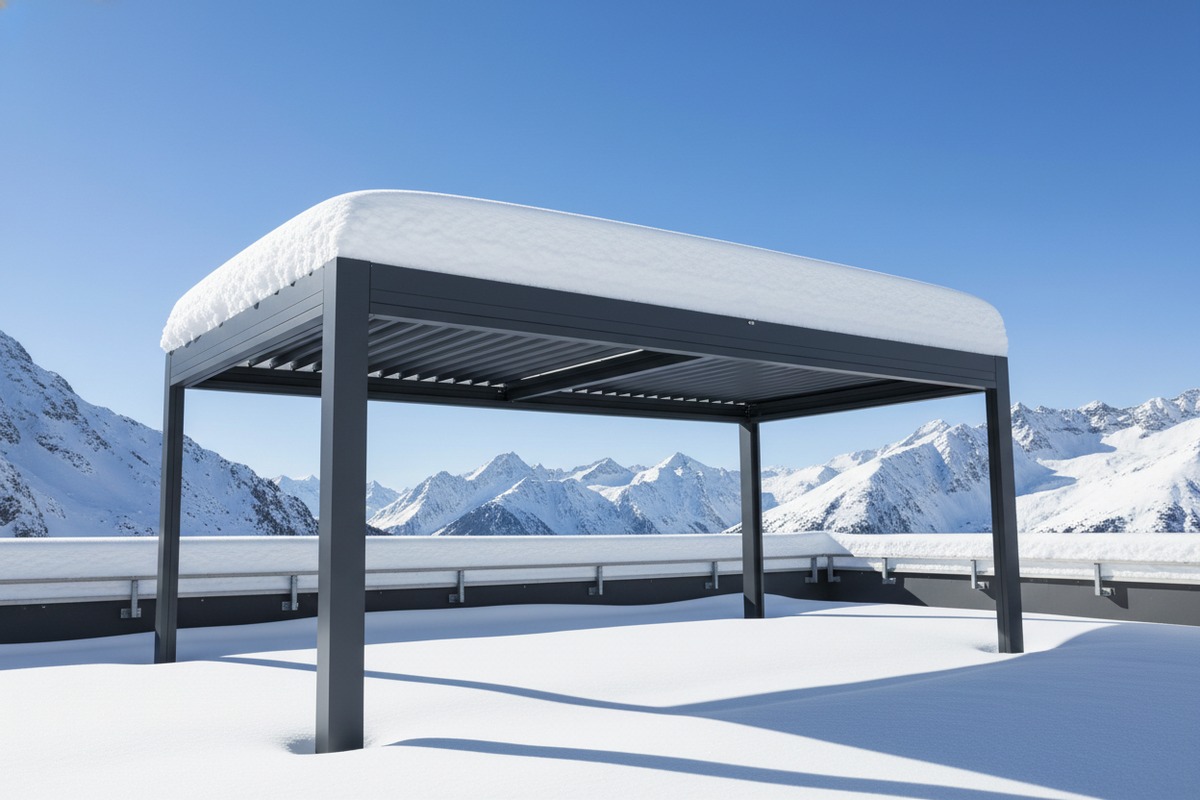
Our engineers spend weeks customizing structural profiles for different European regions. A pergola destined for coastal Spain faces very different forces than one installed in the Austrian Alps.
Ask for EN 1090 execution class certification and Eurocode 9 structural design reports that specify wind load resistance, snow load capacity (up to 180 kg/m² or higher for alpine regions), and rainfall drainage intensity of 0.04–0.05 l/s/m². These values must match your specific installation location's climate zone.
Understanding EN 1090 and Eurocode 9
EN 1090 governs the execution of aluminum and steel structures. It sets rules for fabrication, welding, and assembly. Eurocode 9 is the design standard specifically for aluminum structures. Together, they ensure your pergola will not collapse under snow, buckle in high wind, or deform under its own weight over time.
When we design a pergola for northern Europe, we calculate snow loads based on the customer's exact postal code. This is not an exaggeration. Snow load requirements vary from 40 kg/m² in mild coastal areas to over 180 kg/m² in mountain zones.
Key structural parameters
| Parameter | Typical Range | Standard Reference |
|---|---|---|
| Snow load capacity | 40–180+ kg/m² | Eurocode 1 (EN 1991-1-3) |
| Wind resistance | Up to 130 km/h (Class 6+) | Eurocode 1 (EN 1991-1-4) |
| Rainfall drainage | 0.04–0.05 l/s/m² | Manufacturer spec / local code |
| Aluminum alloy grade | 6063-T5 or 6063-T6 | EN 755 / EN 573 |
| Wall thickness (main post) | 2.0–3.0 mm | Project-specific calculation |
| Execution class | EXC2 (typical for pergolas) | EN 1090-3 |
Why wall thickness matters
One of the most common cost-cutting tricks in our industry is reducing aluminum wall thickness. A post that should be 2.5 mm might be shaved to 1.8 mm. On paper, it looks the same. Under a heavy snow load, it fails. Our production line uses a minimum 2.0 mm wall for standard models and 2.5 mm or above for high-load configurations. We stamp the alloy grade and thickness directly on the profile for traceability.
How to verify load ratings
Do not trust marketing brochures alone. Ask your supplier for a structural calculation report signed by a certified engineer. This report should reference specific Eurocode load combinations. If your supplier cannot produce this document, they likely have not done the engineering work.
We also recommend requesting a sample section of the main beam. Measure it with calipers. Compare it to the specification sheet. This simple step has saved several of our European partners from receiving substandard product.
Climate zone mapping
Work with your local building authority to determine your exact wind zone and snow zone. Then share those numbers with your supplier. A responsible manufacturer will adjust the profile design, connection details, and anchor specifications accordingly. If the supplier says "one size fits all," consider that a warning sign.
How can I be sure the powder coating on my pergola follows Qualicoat standards for long-term durability?
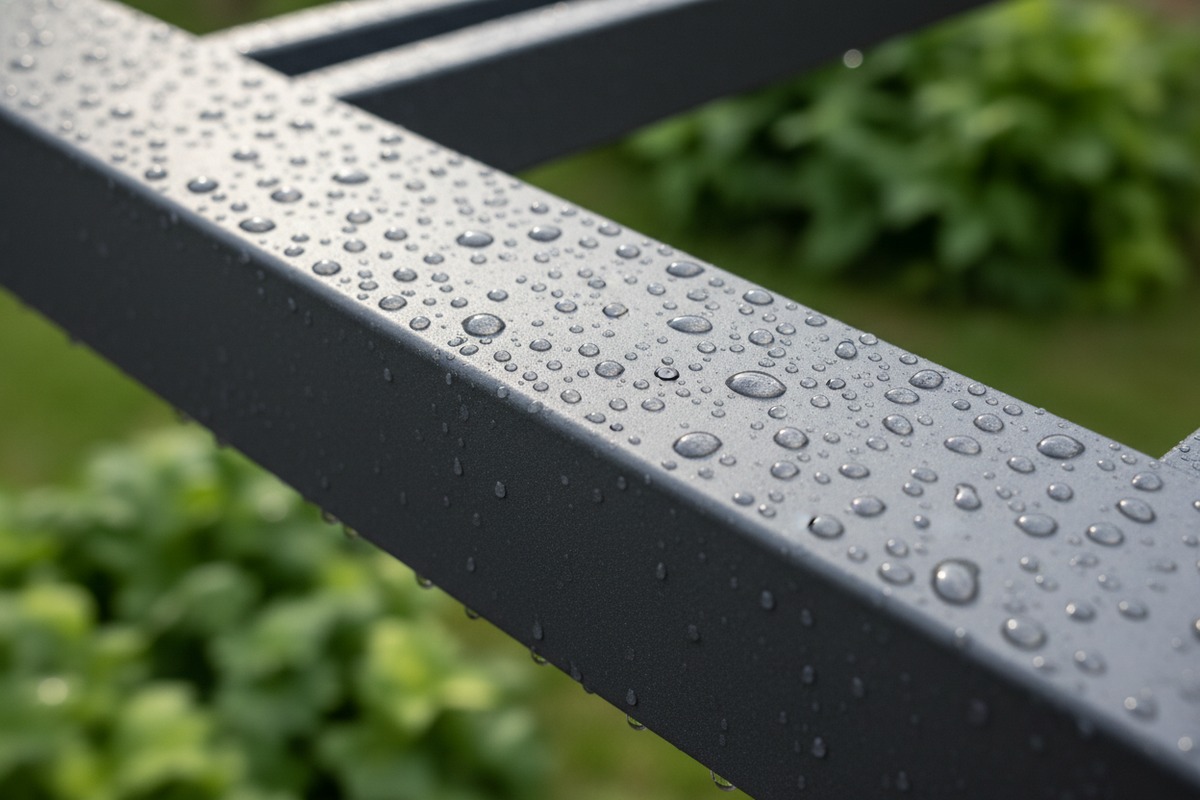
We rejected three coating suppliers before finding one that consistently passes 1,000-hour salt spray tests. The finish on a pergola is not cosmetic. It is the first line of defense against corrosion.
Verify Qualicoat compliance by requesting the coating supplier's valid Qualicoat license number, independent salt spray test results (minimum 1,000 hours for Class 1), and confirmation that the pre-treatment process includes chromium-free conversion coating. The coating thickness should be 60–120 microns, measured and documented per ISO 2360.
What Qualicoat certification covers
Qualicoat is a quality label managed by a European organization that sets standards for powder-coated and liquid-painted aluminum. It covers the entire coating process: pre-treatment, application, curing, and final inspection. Manufacturers who hold a Qualicoat license must submit to regular audits and random sample testing.
There are multiple classes within the Qualicoat system. Class 1 is the standard level, requiring a minimum 60-micron coating thickness and 1,000 hours of salt spray resistance. Class 2 is the premium level, requiring higher film thickness and 2,000 hours of salt spray resistance. Class 3, the newest addition, targets extreme environments like seaside or industrial zones.
Qualicoat classes compared
| Specification | Class 1 | Class 2 | Class 3 |
|---|---|---|---|
| Minimum coating thickness | 60 μm | 60 μm | 60 μm |
| Salt spray test (hours) | 1,000 | 2,000 | 3,000+ |
| Accelerated weathering (Florida test) | 1 year | 3 years | 5+ years |
| Gloss retention | ≥ 50% | ≥ 50% | ≥ 50% |
| Typical use case | Standard exterior | Marine / industrial | Extreme exposure |
| Pre-treatment | Multi-stage chromium-free | Multi-stage chromium-free | Enhanced multi-stage |
The coating itself is only half the story. Before powder is applied, the aluminum must go through a pre-treatment process. This removes oils, oxides, and contaminants. It also creates a conversion layer that helps the powder bond to the metal. Older processes used hexavalent chromium, which is now restricted under REACH regulations 8. Modern Qualicoat-compliant processes use chromium-free alternatives.
At our coating line, we run a six-stage pre-treatment process. Each tank is monitored for chemical concentration and temperature. We log these parameters digitally. When a European distributor asks for proof, we can send them the actual production records for their specific batch.
How to test in the field
If you receive a shipment and want a quick quality check, use a coating thickness gauge. These handheld devices cost around €200 and give instant readings. If any profile reads below 60 microns, flag it immediately. Also check for orange peel texture, runs, or bare spots near corners and edges. These are signs of poor application technique.
For color consistency, compare profiles from different bundles under the same lighting. RAL color codes should match within Delta E ≤ 1.0. Anything higher and you will see visible variation on the installed structure. Our quality control team checks every batch with a spectrophotometer before packing.
The REACH connection
Under the EU's REACH regulation, certain chemicals used in coatings are restricted. This includes certain heavy metals, VOCs, and chromium compounds. If your supplier uses a non-Qualicoat coating process, you must still verify REACH compliance independently. Qualicoat handles this automatically through its audit system, which is one more reason to insist on it.
Which safety certifications are required for the motors and electronic components in my motorized zip blinds?
We once had a client in Germany whose entire container was held because the motor inside the zip blinds lacked a proper CE declaration referencing the Low Voltage Directive 10. The pergola frames passed. The motors did not.
Motorized zip blinds sold in Europe require CE marking under the Low Voltage Directive (2014/35/EU) for electrical safety, the Electromagnetic Compatibility Directive (2014/30/EU) to prevent interference, and compliance with the Machinery Directive (2006/42/EC) if the system includes automated moving parts. IP ratings (minimum IP44 for outdoor use) and RoHS compliance are also essential.
The three core directives
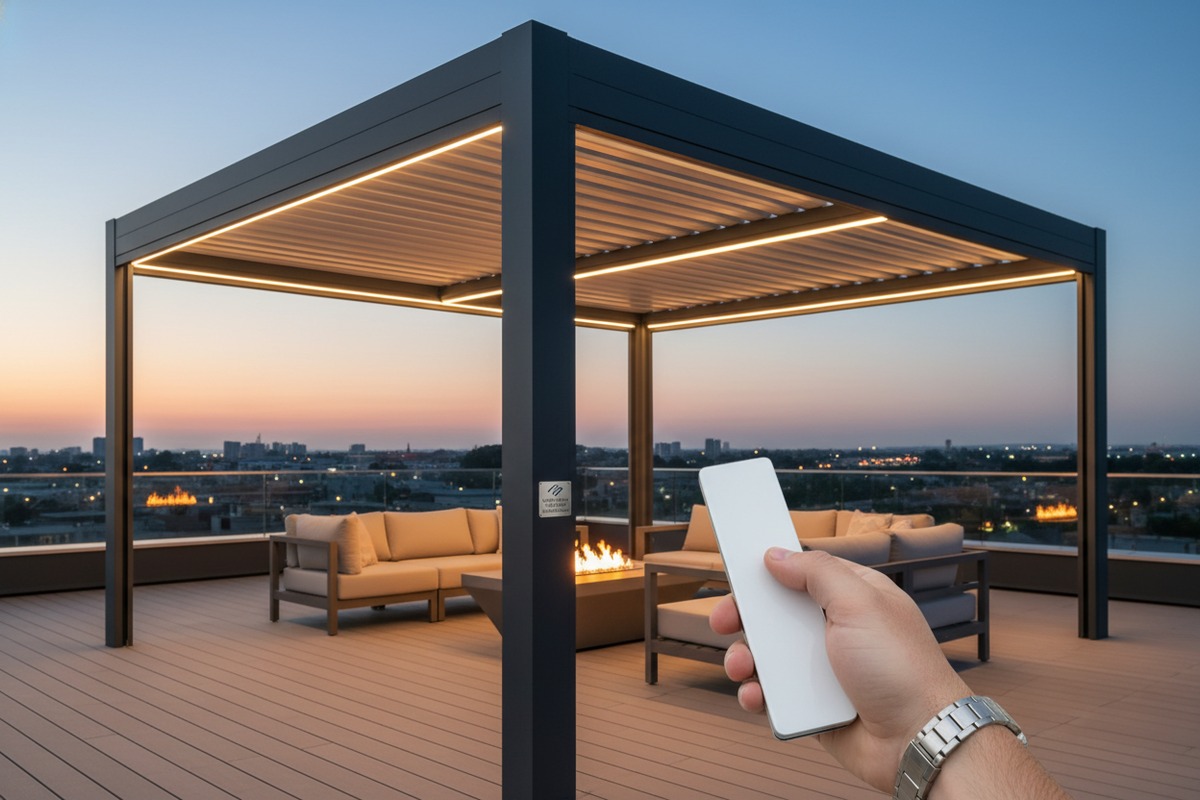
When a pergola includes motors, sensors, remote controls, or LED lighting, it stops being a simple construction product. It becomes a combination product that falls under multiple EU directives simultaneously. Here is a breakdown of what applies and why.
The Low Voltage Directive (LVD) covers all electrical equipment operating between 50 and 1,000 V AC or 75 and 1,500 V DC. Most pergola motors run on 230V AC, placing them squarely within this directive. The LVD requires testing to harmonized standards like EN 60335-1 (household appliances safety) and specific part 2 standards for motor-operated products.
The Electromagnetic Compatibility (EMC) Directive ensures the motor and its control system do not emit electromagnetic interference that disrupts other devices, and that they are immune to external interference. This matters because modern pergolas often sit near Wi-Fi routers, outdoor speakers, and smart home systems.
The Machinery Directive applies when the zip blind system has automated moving parts. A louvered roof that opens and closes at the press of a button is classified as machinery. This directive requires a risk assessment, safety instructions, and specific protections against entrapment or crushing.
IP ratings for outdoor motors
IP stands for Ingress Protection. The two-digit code tells you how well the motor is sealed against dust and water. For outdoor use in Europe, a minimum of IP44 is standard practice. IP55 or IP65 is better for coastal or high-rainfall environments.
| IP Rating | Dust Protection | Water Protection | Recommended Use |
|---|---|---|---|
| IP44 | Protected against objects > 1mm | Splash-proof from all angles | Sheltered outdoor |
| IP55 | Dust-protected (limited ingress) | Low-pressure water jets | Standard outdoor |
| IP65 | Dust-tight (no ingress) | Low-pressure water jets | Exposed / coastal |
| IP67 | Dust-tight | Temporary immersion | Special applications |
Motor brand and traceability
On our production lines, we use Somfy and Simu motors for European-bound zip blinds. These brands already hold the necessary CE declarations, which simplifies the compliance chain. If a Chinese factory uses an unbranded motor to cut costs, you inherit all the certification burden yourself. You must commission independent testing at a European laboratory, which can cost €5,000–€15,000 per motor model.
Ask your supplier these three questions: What brand of motor do you use? Can you provide the motor's own CE Declaration of Conformity? Does the motor carry an IP44 rating or higher? If the answer to any of these is unclear, do not proceed until you have documentation.
Smart features add complexity
Remote controls that use radio frequency signals must comply with the Radio Equipment Directive (2014/53/EU). LED lighting integrated into the pergola must meet EN 60598 luminaire safety standards. Rain sensors and wind sensors connected to automated louver systems may also fall under the EMC Directive. Each component needs its own compliance documentation, and the integrated system needs an overall assessment.
We handle this by maintaining a component-level certification library. Every motor, controller, sensor, and transformer we source has its own technical file. When we assemble the complete zip blind system, our compliance team verifies that all components work together without creating new safety risks. This integrated approach is what separates a reliable supplier from one that simply slaps a CE sticker on the box.
RoHS and WEEE considerations
The Restriction of Hazardous Substances (RoHS) Directive limits lead, mercury, cadmium, and other toxic materials in electrical components. All motors and circuit boards in your zip blinds must be RoHS-compliant. The Waste Electrical and Electronic Equipment (WEEE) Directive requires proper end-of-life disposal plans, though this typically falls on the brand selling to end consumers rather than the importer.
Conclusion
Getting certifications right protects your business, your customers, and your reputation. Work with suppliers who provide complete technical files, Notified Body certificates, and traceable component documentation from the start.
Footnotes
1. BSI Group page explaining EN 1090 requirements for structural steel and aluminum components. ↩︎
2. Replaced with the official publication of Directive 2014/30/EU (Electromagnetic Compatibility Directive) on EUR-Lex, an authoritative EU source. ↩︎
3. Official EU page explaining CE marking requirements and significance. ↩︎
4. Official EU Commission page detailing the Construction Products Regulation (CPR). ↩︎
5. Official European Commission database (NANDO) for finding Notified Bodies. ↩︎
6. Official European Commission Joint Research Centre page for Eurocode 9. ↩︎
7. Wikipedia provides a comprehensive overview of the ISO 9000 family, including ISO 9001. ↩︎
8. Official EU Commission page providing an overview of the REACH Regulation. ↩︎
9. Official website of Qualicoat, detailing quality standards for architectural aluminum finishes. ↩︎
10. Replaced with the official publication of Directive 2014/35/EU (Low Voltage Directive) on EUR-Lex, an authoritative EU source. ↩︎