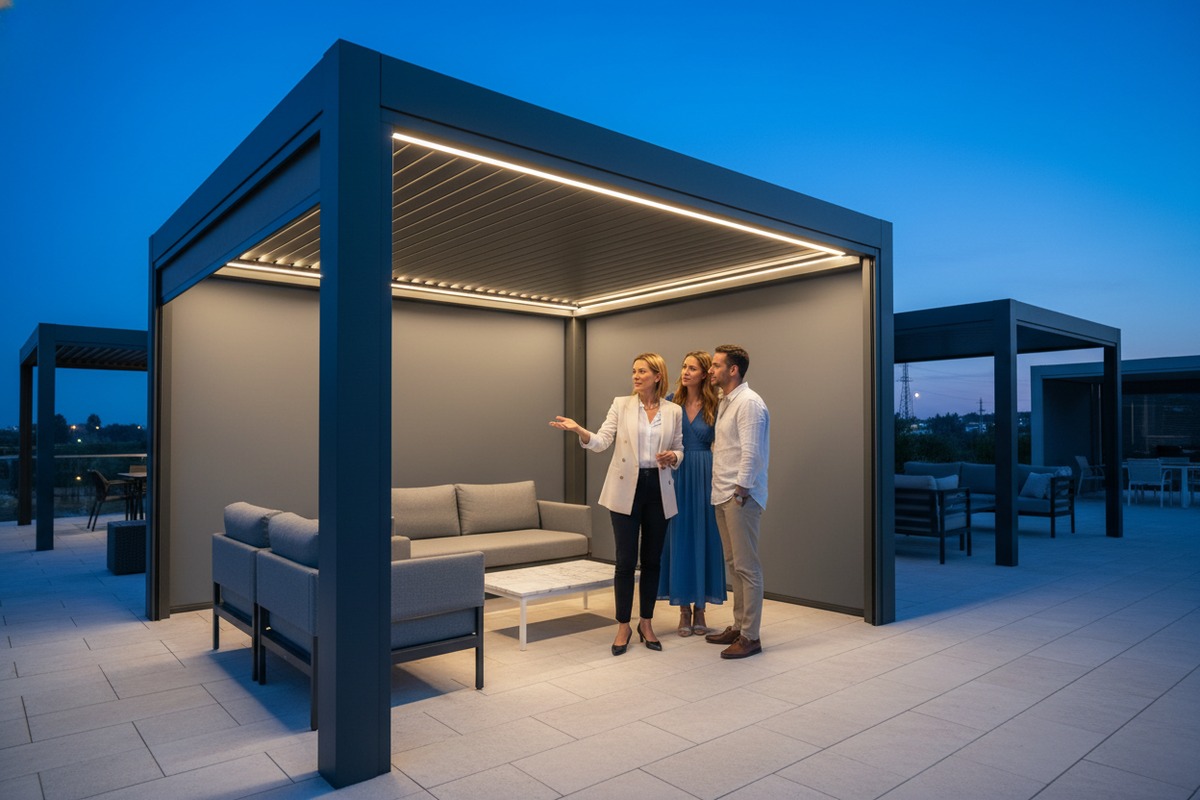
Every week on our production floor, we see the same pattern repeat itself. Dealers place orders for base pergola frames 1, ship them out, and then circle back weeks later asking about add-ons their customers now want. That gap between the initial sale and the follow-up request is pure profit left on the table.
Aluminum pergola accessories such as integrated lighting, zip blinds, motorized screens, and smart controls can boost dealer profit margins by 30% to 50% over base-frame sales alone. They increase average order value, reduce price competition, and turn a commodity product into a differentiated outdoor living solution.
In this article, I will walk through the specific accessories that move the needle on dealer profitability, explain how bundling and sourcing strategies work in practice, and share what we have learned from supplying dealers across Europe. If you sell pergolas and want higher margins per project, keep reading.
How can I use integrated zip blinds and LED lighting to increase my average project value?
When we first started pairing zip blinds with our pergola frames on the same production run, the difference in dealer reorder behavior was immediate. integrated zip blinds 2 Dealers who had been selling bare frames suddenly came back for accessory kits within weeks. The problem is simple: most dealers underestimate how much customers will pay for comfort and ambiance once they see it.
Integrated zip blinds and LED lighting can increase your average project value by 25% to 40%. Zip blinds add $500–$2,000 per side, while LED lighting packages add $200–$800 per unit. Bundling both into a single quote removes buyer hesitation and raises the ticket before installation even begins.
Why Zip Blinds Are a High-Impact Add-On
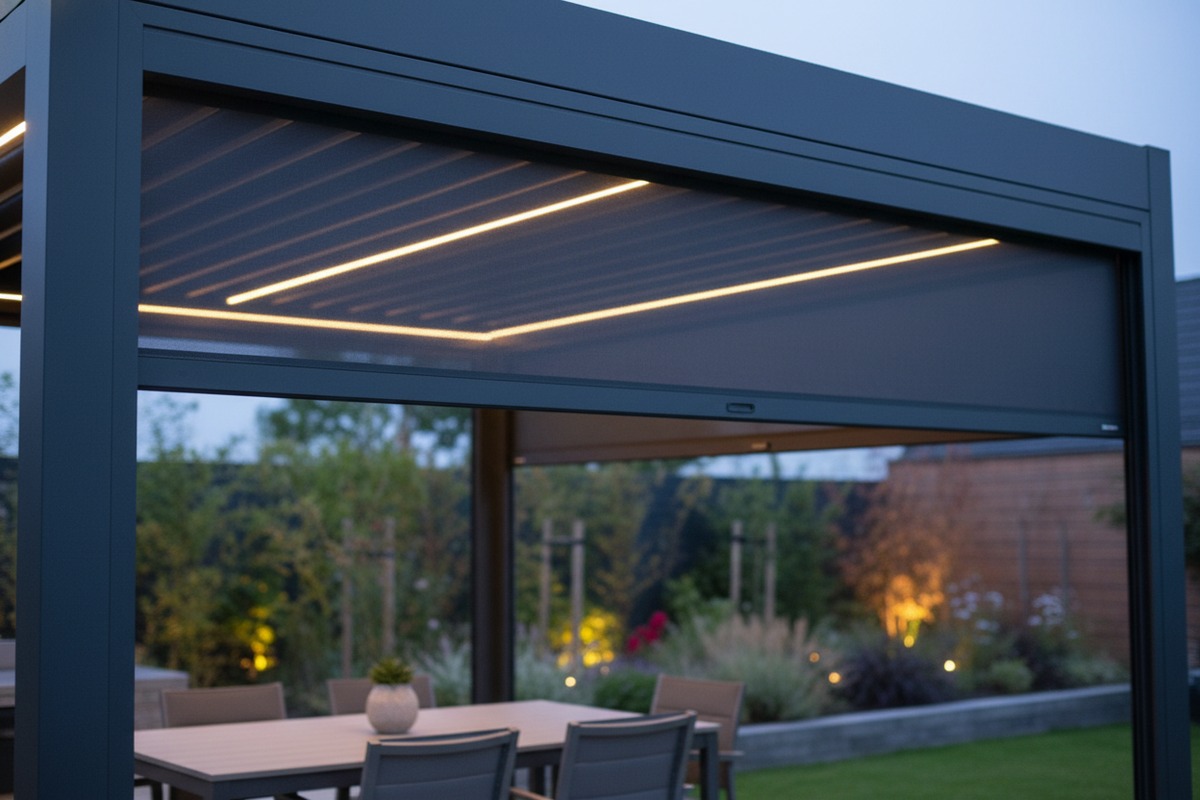
Zip blinds solve a real problem. Customers who invest in a pergola quickly realize they need wind protection, insect screening, or privacy. A zip blind system does all three. From our factory data, dealers who include zip blinds in their initial quote close at a higher rate than those who offer them as a separate follow-up. The reason is straightforward: customers see a complete solution, not a partial one.
Zip blinds also carry strong margins. The material cost for a quality European-grade fabric with aluminum guide rails is moderate. But the perceived value is high because the customer sees a finished, enclosed outdoor room. This perception gap is where dealer profit lives.
LED Lighting as the Easiest Upsell
LED lighting is the lowest-friction accessory in the pergola business. It costs relatively little, installs quickly when integrated into the frame during manufacturing, and creates an immediate visual impact. Customers respond to it emotionally. A pergola with warm lighting looks like a lifestyle upgrade. Without it, the same structure looks like a carport.
Here is how the economics break down for a typical dealer project:
| Accessory | Dealer Cost Range | Retail Price Range | Typical Margin |
|---|---|---|---|
| LED strip lighting (per unit) | $80–$250 | $200–$800 | 55%–70% |
| Zip blind (per side) | $200–$700 | $500–$2,000 | 50%–65% |
| Combined lighting + 2-side blinds | $480–$1,650 | $1,200–$4,800 | 55%–68% |
Bundling Strategy That Works
The most effective approach we see dealers use is a tiered quote 3. They present the base pergola, then a "comfort" package with lighting and two-side zip blinds, then a "premium" package with four-side blinds, dimmable LEDs, and a rain sensor. This anchors the customer to the middle or top option. It also prevents the awkward conversation where the customer says, "I'll think about accessories later." Later usually means never, or worse, they buy cheap aftermarket parts from someone else.
The key insight is this: accessories sold at the point of first purchase convert at three to five times the rate of accessories offered after installation. That is why we engineer our pergola frames with pre-routed channels for wiring and blind tracks. When the frame arrives ready for accessories, the dealer's installation crew can fit everything in a single visit.
Will high-quality European-certified motors help me avoid costly after-sales repairs and protect my reputation?
Our service team tracks every warranty claim that comes through our system. Over the past three years, the single biggest source of dealer complaints has been motor failure in louver and screen systems. In nearly every case, the root cause was the same: a non-certified motor that could not handle European voltage fluctuations or sustained outdoor use. The cost of a single motor replacement on an installed pergola can wipe out the profit from the entire project.
Yes. European-certified motors with CE and TÜV ratings dramatically reduce after-sales failures. They lower warranty claim rates by up to 60% compared to uncertified alternatives, protect your brand reputation with end customers, and eliminate the legal risks that come with non-compliant electrical components in regulated markets.
The True Cost of Motor Failure
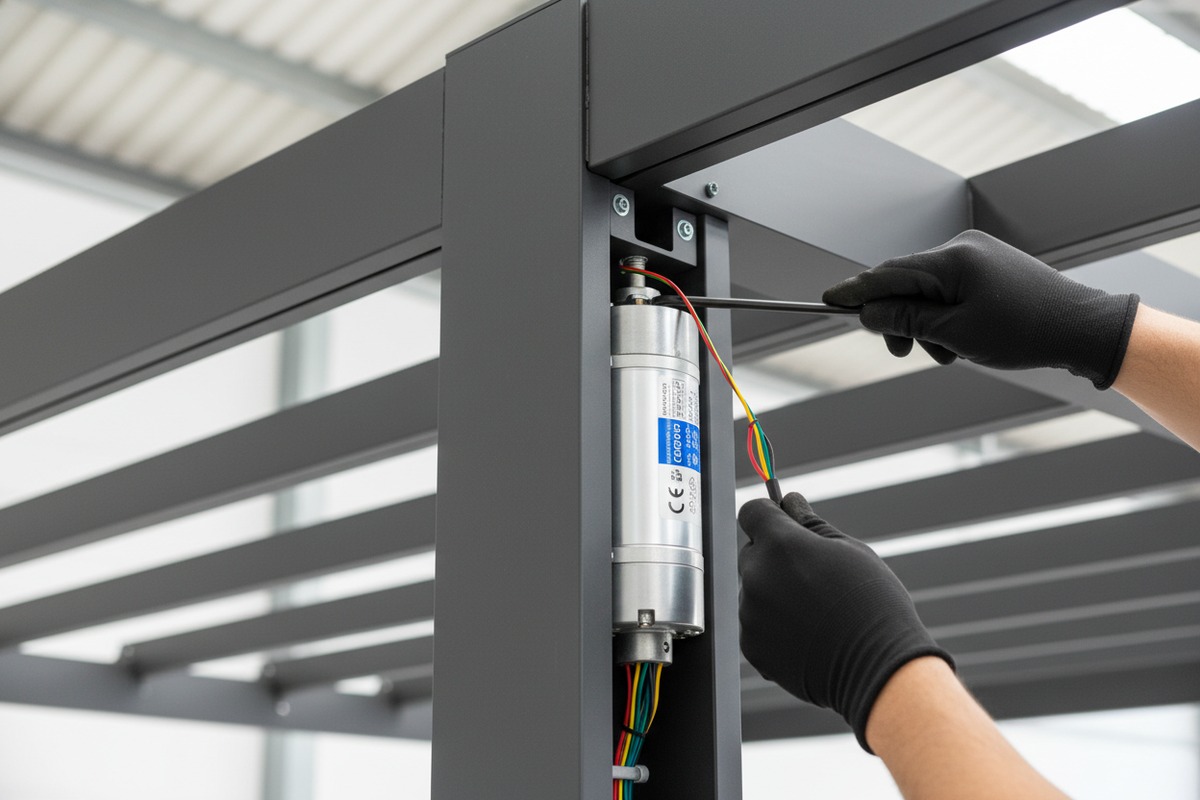
When a motor fails on a pergola that is already installed at a customer's home, the dealer does not just pay for a replacement motor. They pay for a technician visit, possible structural disassembly, shipping of replacement parts across borders, and the intangible cost of a frustrated customer leaving negative reviews. We have seen dealers lose referral chains over a single motor issue.
Certified motors from brands like Somfy or Simu cost more upfront. But the difference in reliability is not marginal. It is dramatic. A quality motor rated for 40,000+ cycles in outdoor conditions will outlast a budget motor rated for 10,000 cycles by years.
Certification Matters for Market Access
In Europe, selling a pergola with a non-CE-certified motor is not just risky. It can be illegal. If a motor causes a fire or injury and it lacks proper certification, the dealer and importer can face product liability claims 5. Our production line uses motors that carry CE, TÜV, and in some cases IP44 or IP55 ratings for weather resistance. CE and TÜV ratings 6 This is not optional for dealers selling into regulated markets.
| Motor Type | Certification | Cycle Rating | Typical Failure Rate (5 years) | Dealer Cost |
|---|---|---|---|---|
| Budget uncertified | None or self-declared | 8,000–12,000 | 15%–25% | $40–$80 |
| Mid-range CE-certified | CE | 20,000–30,000 | 5%–10% | $90–$150 |
| Premium European-certified | CE + TÜV + IP44 | 40,000–60,000 | 1%–3% | $150–$280 |
Reputation Is a Margin Multiplier
Dealers who avoid after-sales headaches keep their margins intact. But more importantly, they build a reputation that generates referrals. In our experience exporting to European markets, the dealers who grow fastest are not the ones with the cheapest price. They are the ones whose customers never have to call back with a problem. A premium motor is not an expense. It is an investment in the next ten sales you will make through word of mouth.
We always advise our dealer partners to specify the motor brand and certification level on their customer-facing quotes. It gives the customer confidence and gives the dealer a reason to justify a higher price point. When a customer sees "Somfy motor, CE + TÜV certified, 5-year warranty" on the quote, price resistance drops. The conversation shifts from cost to quality.
Can I leverage OEM customization for accessories to differentiate my brand from low-cost competitors?
The hardest conversation we have with new dealer partners usually happens in the first meeting. They show us a competitor's product listing with a rock-bottom price and ask how they can compete. Our answer is always the same: you cannot win on price against factory-direct sellers. But you can win on brand, and OEM customization 8 is how you build that brand.
OEM customization for accessories allows dealers to create exclusive, branded product lines that low-cost competitors cannot replicate. Custom colors, branded hardware, unique accessory configurations, and private-label packaging build perceived value, justify premium pricing, and establish long-term customer loyalty that generic products never achieve.
What OEM Customization Actually Looks Like
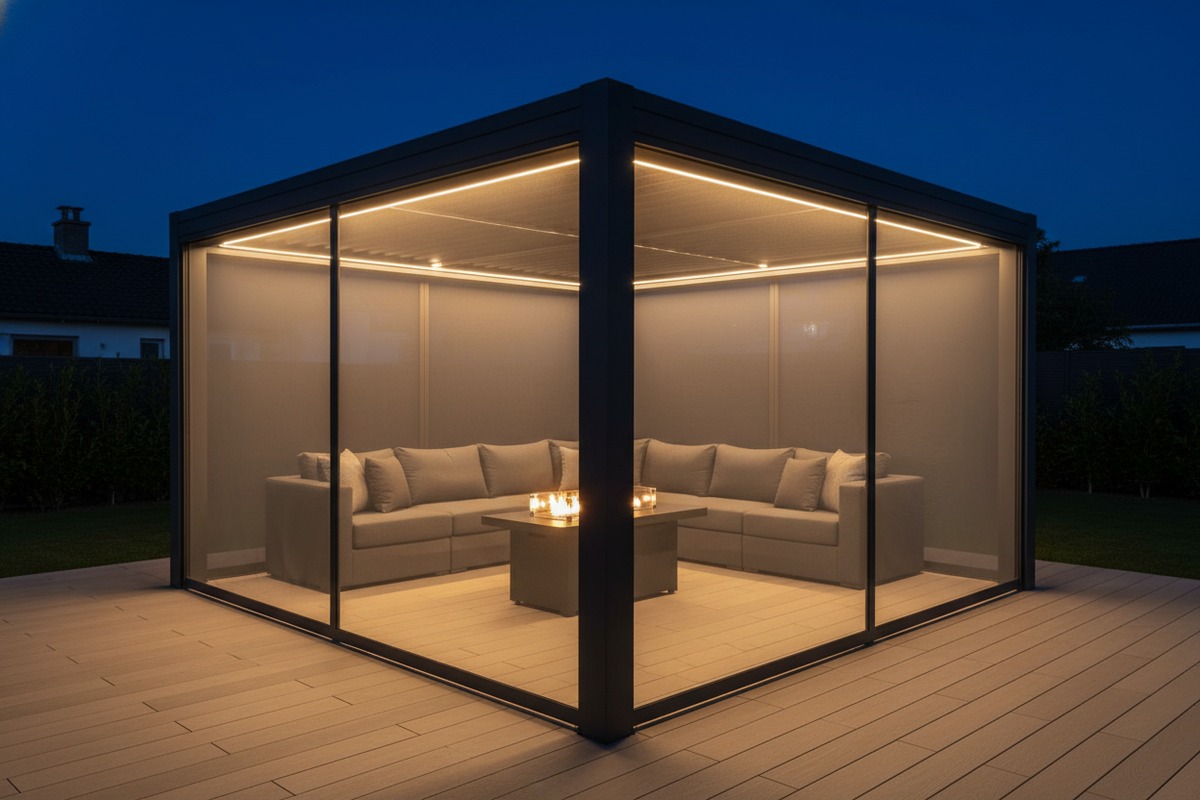
OEM customization is not just about putting your logo on a box. It means specifying exact RAL colors that match your brand or your customer's architecture. It means choosing a specific LED color temperature, a particular fabric weave for zip blinds, or a unique trim profile that no other dealer in your region carries. When we work with dealer partners on OEM projects, we start with the accessory details because that is where differentiation is most visible to the end customer.
A customer standing under a pergola does not usually notice the difference between a 2mm and 2.5mm wall thickness. But they absolutely notice when the lighting, the screens, the finish, and the hardware all have a cohesive look. That cohesion comes from OEM accessory customization.
The Competitive Moat
Low-cost competitors sell generic products. They compete on price because they have nothing else to offer. When you sell a branded accessory system, you remove the direct comparison. A customer cannot find your exact accessory configuration on Alibaba because it does not exist outside your supply agreement 9. This is a real competitive moat.
Here is how different levels of OEM customization affect dealer positioning:
| Customization Level | Examples | Investment | Competitive Protection |
|---|---|---|---|
| Basic branding | Logo on packaging, user manual | Faible | Minime |
| Color and finish matching | Custom RAL colors, anodizing, wood-grain finishes | Moderate | Moyen |
| Exclusive accessory design | Custom trim profiles, unique LED fixtures, proprietary blind cassettes | Higher | Strong |
| Full system integration | Pre-wired kits, smart controller with dealer-branded app | Highest | Very strong |
Practical Steps for Dealers
Our recommendation for dealers entering OEM customization is to start with two or three high-visibility accessories. Choose items your customers see and touch every day: lighting fixtures, blind cassettes, and remote controls. These are relatively low-cost to customize but have outsized impact on brand perception.
Next, work with your manufacturer to create a branded installation manual and packaging. This seems like a small detail, but it matters. When your installation crew opens a box with your brand on it, every component labeled and organized, the customer sees professionalism. That is worth money. It justifies a higher price and it earns referrals.
The minimum order quantities for OEM accessories are lower than most dealers expect. In our case, we can do custom RAL colors at volumes as low as 50 units. Branded packaging starts at similar quantities. Full custom accessory designs require more planning but are achievable for any dealer doing consistent monthly volume. The key is to start small and scale as your brand gains traction.
How does sourcing all-in-one accessory kits reduce my installation time and labor expenses on-site?
The most expensive hour in the pergola business is not the hour spent in the showroom. It is the hour spent on a job site when the installation crew realizes a bracket is missing, a wire harness is the wrong length, or the screen cassette does not fit the frame. We redesigned our accessory packaging system two years ago specifically to eliminate these problems. The results changed how our dealer partners think about installation economics.
All-in-one accessory kits reduce on-site installation time by 30% to 50% and cut labor expenses significantly. Pre-sorted hardware, pre-wired electrical components, and frame-matched accessories eliminate guesswork, reduce errors, and allow a two-person crew to complete a full accessory installation in a single visit instead of multiple trips.
The Hidden Cost of Piecemeal Sourcing
Many dealers still source accessories from multiple suppliers. They buy the frame from one factory, screens from another, lighting from a third, and hardware from a local distributor. Each component arrives separately, with different packaging, different instructions, and often different dimensional tolerances. On paper, piecemeal sourcing looks cheaper because the dealer picks the lowest price for each item. In practice, it creates chaos on the job site.
A single missing connector or mismatched mounting bracket can delay installation by half a day. That delay costs the dealer a technician's wages, a truck, fuel, and a frustrated customer. Over a season of 30 to 50 installations, these delays add up to thousands in lost profit.
How All-in-One Kits Solve This
When we ship an all-in-one accessory kit 10, every component is matched to the specific pergola frame the dealer ordered. The LED wiring is pre-cut to the correct length. The zip blind tracks are pre-drilled to match the frame's mounting holes. Every screw, bracket, and connector is labeled and sorted into numbered bags that correspond to steps in the installation manual. We also include a QR code that links to a step-by-step video in the dealer's preferred language.
This level of preparation means the crew on site spends their time installing, not problem-solving. The difference is measurable.
Installation Time Comparison
| Installation Scenario | Crew Size | Average Time | Estimated Labor Cost |
|---|---|---|---|
| Base pergola only, no accessories | 2 persons | 4–6 hours | $400–$600 |
| Pergola + accessories (piecemeal sourced) | 2–3 persons | 8–12 hours | $800–$1,400 |
| Pergola + accessories (all-in-one kit) | 2 persons | 5–7 hours | $500–$700 |
The numbers speak clearly. An all-in-one kit keeps the crew size small and the time on site short. The labor savings alone can add $300 to $700 in margin per project. Multiply that across a full season, and the impact on annual profitability is substantial.
Fewer Callbacks, Better Margins
Kits also reduce callbacks. When every component is tested together before it leaves the factory, compatibility issues disappear. Our quality control process checks each kit against the original order specifications. If a dealer orders a 4-meter by 3-meter pergola with two-side zip blinds and integrated LED lighting, the kit that ships has been verified to fit that exact configuration. There are no surprises on site.
Fewer callbacks mean fewer unpaid technician hours, fewer negative customer experiences, and more time available for the next installation. This is where the real margin protection happens. It is not glamorous, but reducing your callback rate from 15% to under 3% changes the economics of your entire operation.
We also offer dealers the option to receive pre-assembled sub-components. For example, the LED driver and wiring harness can arrive already mounted inside the frame's channel, ready to connect. The zip blind cassette can arrive pre-loaded with fabric and tested. These steps take time in the factory but save much more time in the field.
Conclusion
Accessories are the fastest path to higher dealer margins in a market where base pergola pricing is under constant pressure. Choose proven add-ons, bundle them smartly, source certified components, and invest in OEM differentiation. Your profit per project will grow without needing to sell more frames.
`
Notes de bas de page
1. Replaced HTTP 404 link with authoritative Wikipedia definition of a pergola. ︎
2. Explains the functionality and benefits of zip blinds for outdoor spaces like pergolas. ︎
3. Defines tiered pricing and its strategic benefits for businesses in sales. ︎
4. Discusses the advantages and applications of LED lighting in enhancing outdoor living areas. ︎
5. Provides information on product liability laws and consumer protection within the EU. ︎
6. Explains the meaning and significance of CE and TÜV certifications for product compliance. ︎
7. Highlights the importance of certified motors for safety and reliability in various applications. ︎
8. Discusses the concept and benefits of OEM customization for product differentiation and branding. ︎
9. Defines a supply agreement and outlines its key legal and commercial aspects. ︎
10. Highlights the efficiency and cost-saving advantages of using integrated product kits. ︎