

We have seen one missed bracket or one weak coating batch turn a smooth pergola order into site delays, claims, and expensive rework after arrival.
To request a third-party quality inspection, state it in your contract, send a detailed checklist, book the inspection when production is mostly finished and packed, and require a report covering dimensions, finish, accessories, function, packaging, and shipping documents before final payment and loading.
The process is simple when the standard, timing, and decision rules are clear before production ends.
How do I coordinate with my Chinese supplier to schedule a third-party inspection at their factory?
At our factory, unclear timing causes the most friction; inspectors arrive too early, cartons stay open, and suppliers blame scheduling when defects slip through third-party quality inspection 1.
Coordinate in writing at least a few business days ahead, confirm the inspection date when at least 80% of goods are finished and packed, share the checklist and carton plan, name one factory contact, and require the supplier to keep test samples, tools, records, and replacement parts ready.

The easiest way to schedule a third-party inspection in China is to treat it like part of the order, not like a last-minute favor proforma invoice 2. When we export pergolas and zip blinds to Europe, the smoothest projects are the ones where inspection terms already sit inside the purchase order 3, proforma invoice, or supply contract 4. That way, nobody acts surprised when the inspector contacts the factory.
Put the inspection rule into the order
Start with one simple sentence in the contract: shipment is released only after a passed third-party inspection report, or after defined corrective actions are completed wind load requirements 5. That sentence changes the whole discussion. It makes inspection a normal delivery step. It also reduces arguments about cost, access, and timing.
Then send the supplier an inspection brief before production finishes. Do not wait until the goods are already loaded into cartons. The brief should include the order number, model list, colors, sizes, accessories, motor brand, packaging method, quantity per carton, acceptance criteria 6, and the exact date window you want.
| Planning item | What you should confirm | Why it matters |
|---|---|---|
| Inspection stage | At least 80% completed and most units packed | The inspector can judge final quality and packaging together |
| Factory contact | One person in charge on site | Avoids delays when the inspector needs records or samples |
| Inspection scope | Product, accessories, labels, cartons, documents | Prevents gaps between visual checks and shipping readiness |
| Rework plan | Time allowed for correction and re-inspection | Keeps booking pressure from forcing a bad shipment out |
Choose the right production moment
In practice, the best timing is when most units are complete, counted, and packed, but before the container is sealed. If the inspector comes too early, the report may miss missing screws, wrong labels, or crushed corner protectors. If the inspector comes too late, the factory may push for shipment anyway because the truck or container is already booked.
I usually suggest a simple sequence. First, confirm production progress with dated photos or a live video. Second, ask the supplier to send the latest packing list. Third, let the inspection company book the visit directly with the factory. Fourth, tell the supplier which items must be fully accessible for spot checks, such as louvers, posts, beam profiles, motors, fabrics, hardware kits, and master cartons.
A good inspector loses time when drawings, color cards, motor files, or accessory lists are missing. A prepared inspector works faster and writes a better report.
| Document | Who provides it | What the inspector uses it for |
|---|---|---|
| Approved shop drawing | Buyer or supplier | Confirms dimensions, layout, and component match |
| BOM and hardware list | Fournisseur | Verifies complete accessory count |
| Material certificates | Fournisseur | Checks alloy, thickness claims, and traceability |
| Packing list | Fournisseur | Matches cartons, labels, and order quantities |
| Inspection checklist | Acheteur | Defines pass or fail standards clearly |
When this setup is done right, the factory does not feel attacked. It feels organized. That matters in China. Clear preparation usually gets better cooperation than emotional pressure.
What critical checkpoints should I include in my inspection brief to ensure my aluminum pergolas meet European standards?
We often see buyers focus on looks alone, then discover too late that alloy grade 7, coating thickness, or motor paperwork does not match Europe's market rules.
Your inspection brief should cover alloy grade, wall thickness, dimensions, fasteners, coating quality, color consistency, drainage, hardware count, CE-related electrical documents, motor operation, packaging, labels, and any agreed tests tied to EN standards, corrosion resistance, and project-specific wind load requirements.
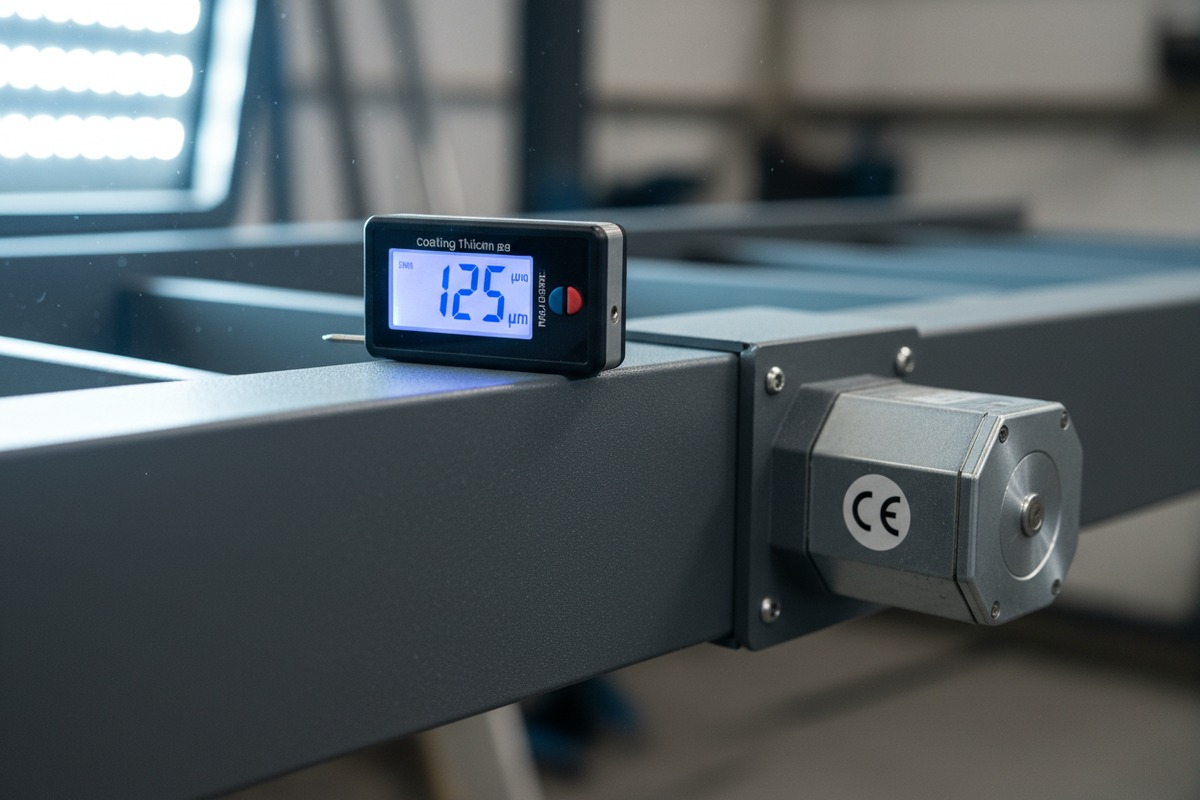
This is where many buyers either protect themselves well or leave too much open to guesswork. A third-party inspector can only judge what you define. If the brief says only "check quality," the report may be full of photos and still tell you very little. For aluminum pergolas shipped to Europe, I think the better approach is to divide the brief into structural checkpoints, finish checkpoints, functional checkpoints, and compliance checkpoints.
Start with the structure and material
For pergolas, the inspector should verify profile dimensions against approved drawings, check wall thickness at agreed locations, confirm the alloy grade from available certificates, and inspect cut quality, assembly fit, and drainage holes. If welding is part of the design, the report should also record weld appearance, clean-up quality, and any visible distortion.
One thing buyers often miss is the connection hardware. A strong beam means little if anchors, brackets, or stainless fasteners are wrong, mixed, or incomplete. We have seen site delays caused by one missing custom connector more often than by a broken main profile.
| Checkpoint | What the inspector should verify | Typical evidence |
|---|---|---|
| Aluminum profiles 8 | Size, wall thickness, section match | Caliper readings and photos |
| Alloy and raw material | Certificate review and heat or batch traceability where available | Material certificates |
| Fasteners and brackets | Correct grade, finish, and quantity | Accessory count and carton photos |
| Assembly accuracy | Hole positions, fit, alignment, drainage | Measurements and trial assembly notes |
Define finish and corrosion requirements clearly
Europe-bound outdoor products live in sun, rain, and sometimes salt air. So surface finish cannot be judged by color alone. Your brief should ask the inspector to check visible defects, gloss or texture consistency if relevant, edge coverage, and coating thickness 9 if promised. If you sell a powder-coated system, tie the acceptance to the standard or coating program you agreed with the supplier, such as EN or QUALICOAT-related requirements where applicable. If corrosion testing was promised, ask the inspector to review the test record or witness the sample identification tied to that record.
Cover motors, zip blinds, and documents
For motorized louvers or zip blinds, the brief should ask for live functional testing. That includes open-close cycles, response to remote control or switch, limit setting, abnormal noise, smooth fabric travel, and basic electrical label checks. For Europe, paperwork matters almost as much as the hardware. There is no single universal pergola standard across all projects, so your contract should name the required standards and documents. Depending on the product, that may include CE-related declarations 10 for motors and controls, EMC and low-voltage compliance documents, outdoor-use claims, and any project-specific wind load calculations.
| Compliance area | What to include in the brief | Why it matters |
|---|---|---|
| Structural performance | Design assumptions, wind class, span, anchoring basis | Prevents vague strength claims |
| Surface protection | Coating thickness, finish quality, corrosion test references | Reduces fading, peeling, and rust complaints |
| Electrical and motor files | Labels, declarations, manuals, motor brand match | Supports legal sale and installation in Europe |
| Packaging and labels | Carton marks, part codes, pallet condition | Prevents installation delays and warehouse confusion |
The most important idea is simple: do not ask the inspector to decide your standard for you. Write the standard first. Then ask the inspector to verify it.
How can I verify that my inspector is qualified to test the wind load and motor functionality of my zip blinds and pergolas?
Our team has learned that a famous inspection logo is not enough; pergolas and zip blinds need inspectors who understand structure, motors, and test methods.
Verify the inspector by checking company accreditation, the individual inspector's credentials, relevant project history, test equipment calibration, report samples, and their ability to witness or arrange structural and motor tests under the standards named in your purchase documents.

This question matters because "inspection" and "testing" are not always the same thing. A general product inspector may be good at counts, labels, and visual defects, but wind load verification is a deeper technical task. The same goes for motor checks. Pressing a remote button is not the same as confirming proper motor specification, safe wiring, and stable operation under load.
Check the company and the person
First, ask for the inspection company's accreditation status and scope. Then ask for the individual inspector's background. For pergolas, useful experience may include aluminum fabrication, outdoor structures, mechanical assemblies, and powered shading systems. If welding or non-destructive testing is part of your order, relevant certifications help. For motorized products, practical experience with outdoor blinds, tubular motors, limit setting, and control systems matters more than a generic inspector title.
| Qualification point | What to ask for | What it tells you |
|---|---|---|
| Company accreditation | Accreditation certificate and service scope | Whether the firm follows recognized quality procedures |
| Inspector resume | Years in outdoor structures or metal fabrication | Whether the person fits your product type |
| Similar project history | Sample reports for pergolas or zip blinds | Whether they know the common failure points |
| Tool calibration | Current calibration records for meters and gauges | Whether measurements can be trusted |
Understand what wind load verification really means
A factory inspector usually cannot "prove" real installed wind performance from a quick site visit alone. True wind load verification often depends on engineering calculations, profile properties, connection details, anchoring method, and installation conditions. So ask the inspector whether they will review structural calculations, verify profile dimensions against the calculation package, witness any factory load test if one exists, and confirm that the tested or calculated configuration matches your ordered model.
That point is critical. A supplier may show a wind test for a smaller pergola with different posts, then ship a larger unit under the same claim. We try to stop that problem by tying the report to exact dimensions, exact profile sections, and exact louver or screen configuration.
Verify motor functionality the practical way
For motors and zip blinds, ask the inspector to perform repeated cycles, check stopping positions, observe fabric tracking, record abnormal noise, confirm label data, and compare the actual motor brand and model with the order. If smart controls or sensors are included, those should be tested too. A strong report includes photos, short videos, and serial or label details.
| Test area | Minimum proof you should request | Red flag |
|---|---|---|
| Wind load claim | Calculation review, drawing match, or witnessed test record | Broad claim with no model-specific evidence |
| Motor operation | Open-close cycle test and control response | One quick demo only |
| Zip blind movement | Smooth travel, edge retention, no fabric skew | Jamming, uneven closing, or noise |
| Electrical identification | Label, voltage, IP claim if promised, document match | Unlabeled or mismatched components |
A qualified inspector does not need to know everything alone. In some projects, the right answer is a combined team: a general QC inspector for shipment readiness and a specialist or engineer for structural or electrical verification.
What steps should I take if the third-party inspection reveals missing components or packaging issues before shipping?
We have all seen the painful version of this problem: the container is almost booked, but one missing connector or crushed carton can stop installation weeks later.
If inspection finds missing parts or weak packaging, stop shipment, issue a written corrective action list, ask for photo evidence after rework, recheck critical cartons and accessory counts, update the packing list, and release the goods only after the revised report matches your acceptance criteria.

This is the moment when buyers either save the project or create a bigger problem by rushing. Missing components and bad packaging often look small at the factory. On site, they become expensive. One missing custom base plate, one wrong remote, or one carton without corner protection can delay installation, trigger labor claims, or damage your brand with contractors and dealers.
Classify the defect before you react
Not every finding needs the same response. I suggest splitting issues into critical, major, and minor. Critical issues stop shipment at once. These include missing custom hardware, wrong motor models, serious dimensional mismatch, broken key components, or packaging so weak that sea freight damage is likely. Major issues may allow rework and re-inspection. Minor issues may be accepted if they do not affect safety, installation, or appearance in normal viewing conditions.
| Issue type | Example | Normal action |
|---|---|---|
| Critical | Missing brackets, wrong motor voltage, wrong dimensions | Hold shipment and re-inspect |
| Major | Low accessory count, damaged cartons, poor labels | Correct, verify, and recheck |
| Minor | Small cosmetic issue in hidden area | Record and decide by tolerance |
Issue a corrective action list in writing
Do not rely on phone calls alone. Send a written corrective action list to the supplier and the inspection company. State the order number, inspection date, failed points, required correction, deadline, and proof needed. For packaging issues, ask for very concrete fixes: thicker corner protectors, extra foam, separate hardware bags, stronger tape, moisture barriers, pallet wrap, or drop-test style reinforcement if that was part of your agreement.
When we prepare export cartons for long sea transit, we pay special attention to two risks: scratch damage on powder-coated aluminum and missing hardware kits. That is why I think accessory recounts and carton opening checks are worth the extra time.
Recheck the fix, not just the promise
Suppliers sometimes answer too quickly with "already corrected." That is not enough. Ask for dated photos and video first. Then arrange a focused re-inspection, especially for the failed categories. The recheck does not always need the same full-scope visit, but it should verify the root problem. If the first report found missing bolts in sampled cartons, the second check should include broader accessory counts, not just one corrected carton.
| Rework control point | What you should demand | Why it protects you |
|---|---|---|
| Missing parts | New count sheet and opened-carton photos | Confirms the kit is truly complete |
| Packaging weakness | Photos of revised materials and packing method | Shows the fix is systematic, not cosmetic |
| Document mismatch | Updated packing list and carton labels | Prevents warehouse and customs errors |
| Final release | Revised inspection result tied to corrected goods | Stops shipment based on promises alone |
Tie shipment release to the revised report
The last step is commercial discipline. Do not release final payment, loading approval, or shipping documents until the corrected report is back and the findings meet your acceptance rules. That one rule prevents many repeat problems. A supplier is far more likely to solve missing components seriously when shipment approval is still in your hands.
Conclusion
A good inspection request is simple: define the standard, check the right stage, verify the right people, and do not ship until the report is clean.
Notes de bas de page
1. Replaced HTTP 404 Wikipedia link with a relevant Wikipedia section on inspection within the testing, inspection, and certification context. ︎
2. Explains the purpose and use of a proforma invoice. ︎
3. Replaced HTTP 403 Investopedia link with an authoritative Wikipedia page on purchase orders. ︎
4. Provides a legal definition and context for supply contracts. ︎
5. Provides information on designing structures to withstand wind forces. ︎
6. Defines the conditions that must be met for a product to be accepted. ︎
7. Details the different types and properties of aluminum alloys. ︎
8. Describes the manufacturing process and applications of aluminum profiles. ︎
9. Replaced HTTP 404 NIST link with another relevant NIST page that discusses coating thickness measurement. ︎
10. Explains the CE marking and the declaration of conformity for products in the EU. ︎