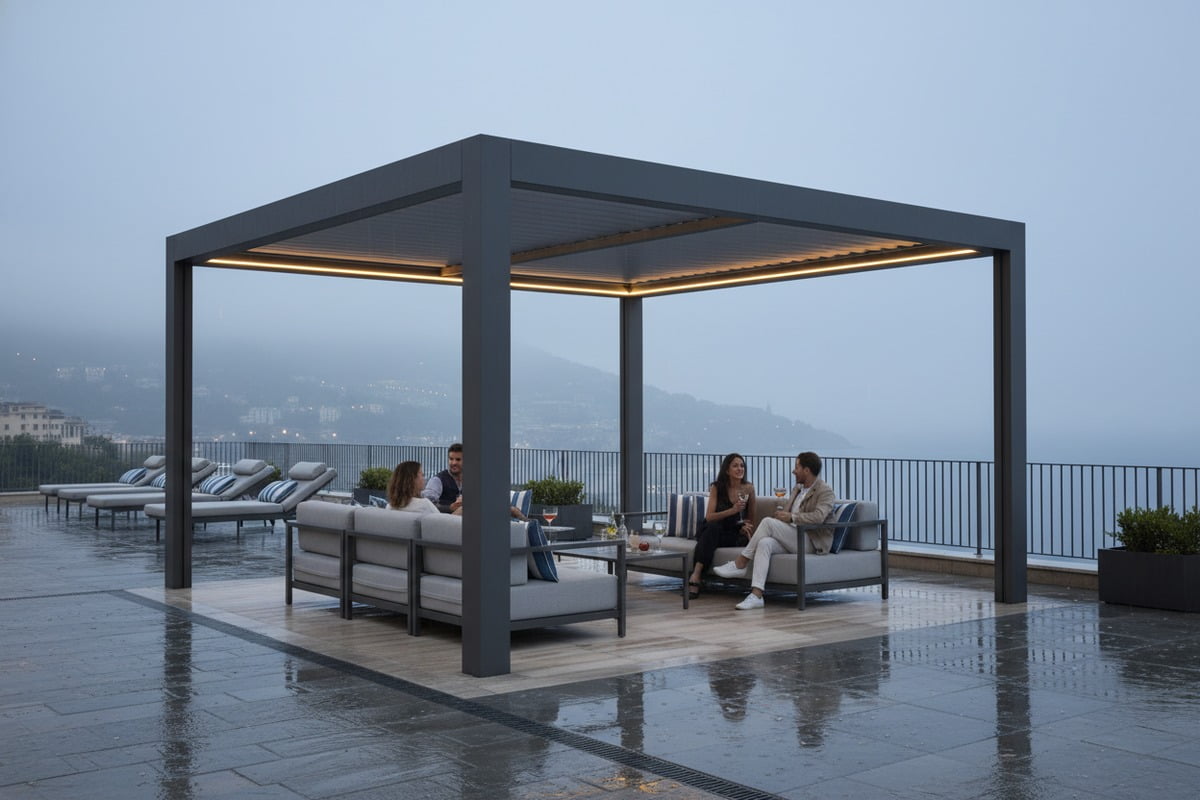
Every season, we see hospitality clients lose revenue simply because their outdoor spaces sit empty during rain, harsh sun, or unpredictable wind.
Hotels and restaurants choose aluminum pergolas because they transform underused patios and terraces into year-round, weather-protected revenue zones. Aluminum offers unmatched durability, low maintenance, modern aesthetics, and flexible customization, making it the ideal material for commercial outdoor hospitality environments.
In the sections below, we break down exactly how an aluminum pergola pays for itself, elevates your brand, fits your unique space, and meets the safety standards your commercial project demands return on investment 1. Whether you manage a boutique hotel or a busy urban restaurant, these answers come from real production experience and thousands of projects shipped to European hospitality operators.
How can I increase my outdoor seating capacity and ROI with an aluminum pergola?
We have shipped pergola systems to hotel groups across Italy, Spain, and France, and the single question that comes up first in every conversation is simple: will this make me more money outdoor seating capacity 2?
An aluminum pergola increases your outdoor seating capacity by sheltering previously unusable patio, terrace, or poolside areas from sun and rain. More covered seats mean more covers per service, higher table turnover, and the ability to host private events, all of which directly boost your return on investment.
More Seats Without Expanding Your Building
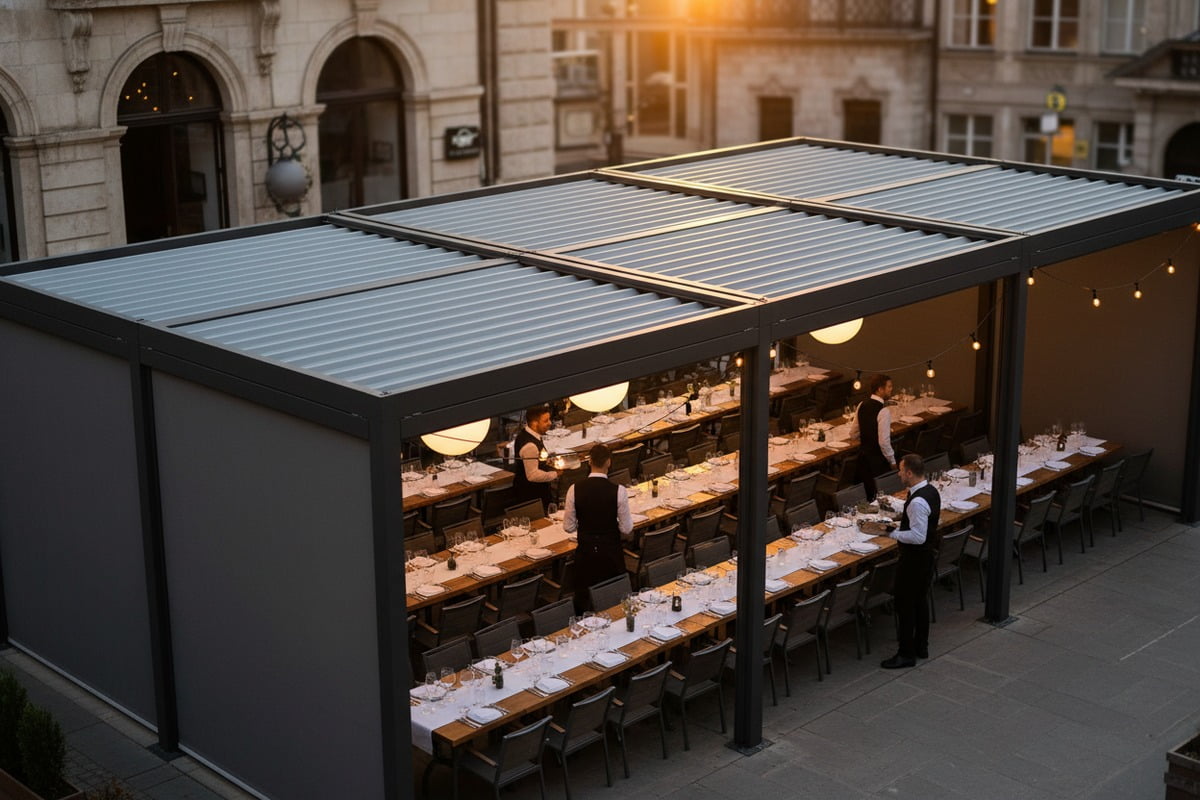
Adding indoor square footage to a hotel or restaurant is expensive powder-coated finishes 3. It involves construction permits, structural work, HVAC upgrades, and months of disruption. An aluminum pergola solves the same problem from the outside. It turns a bare terrace or courtyard into a fully serviceable dining or lounge area. We have seen restaurant clients add 30 to 60 additional covers simply by covering an existing patio with one of our louvered systems.
Revenue Per Square Foot
Hospitality operators think in terms of revenue per square foot 4. An uncovered patio generates zero revenue on a rainy Tuesday. A pergola-covered patio generates revenue almost every day. The math is straightforward: if your average spend per guest is €45 and you add 40 protected seats, even a modest 60% occupancy rate across lunch and dinner services adds significant daily income.
| Scenario | Uncovered Patio | Pergola-Covered Patio |
|---|---|---|
| Usable days per year (approx.) | 140–180 | 300–340 |
| Additional covers per service | Limited by weather | 30–60 stable seats |
| Revenue lost to weather cancellations | Haut | Very low |
| Private event hosting capability | Unreliable | Year-round bookable |
| Guest willingness to pay premium pricing | Faible | High (perceived quality) |
Supporting Premium Pricing and Events
A well-designed pergola space does not just add seats. It adds perceived value. Guests willingly pay more for an attractive alfresco dining experience 5 than for a cramped indoor table. Hotels can charge higher rates for rooms overlooking a beautifully structured terrace. Restaurants can book private brunches, wine dinners, and corporate events under a pergola that feels intentional and premium.
From our production floor, we often customize pergola dimensions specifically so a client can fit a certain number of round tables for wedding receptions or long banquet-style tables for group dining. That kind of precision directly impacts booking revenue.
Faster Payback Than You Expect
When we run the numbers with our European distributors, most hospitality pergola installations pay for themselves within 12 to 24 months. The combination of added seating, extended seasonal use, reduced weather cancellations, and premium pricing creates a compounding return that basic umbrellas or retractable awnings simply cannot match.
When our design team works with hotel architects in Europe, the conversation always goes beyond function. Hoteliers need outdoor structures that look like they belong, not like afterthoughts bolted onto a terrace.
Yes. A custom aluminum pergola maintains and elevates a premium hotel aesthetic by offering clean architectural lines, a wide range of powder-coated finishes, and integrated features like LED lighting and retractable screens. It creates a cohesive, designed outdoor experience that strengthens brand identity and guest satisfaction.
First Impressions Start Outside
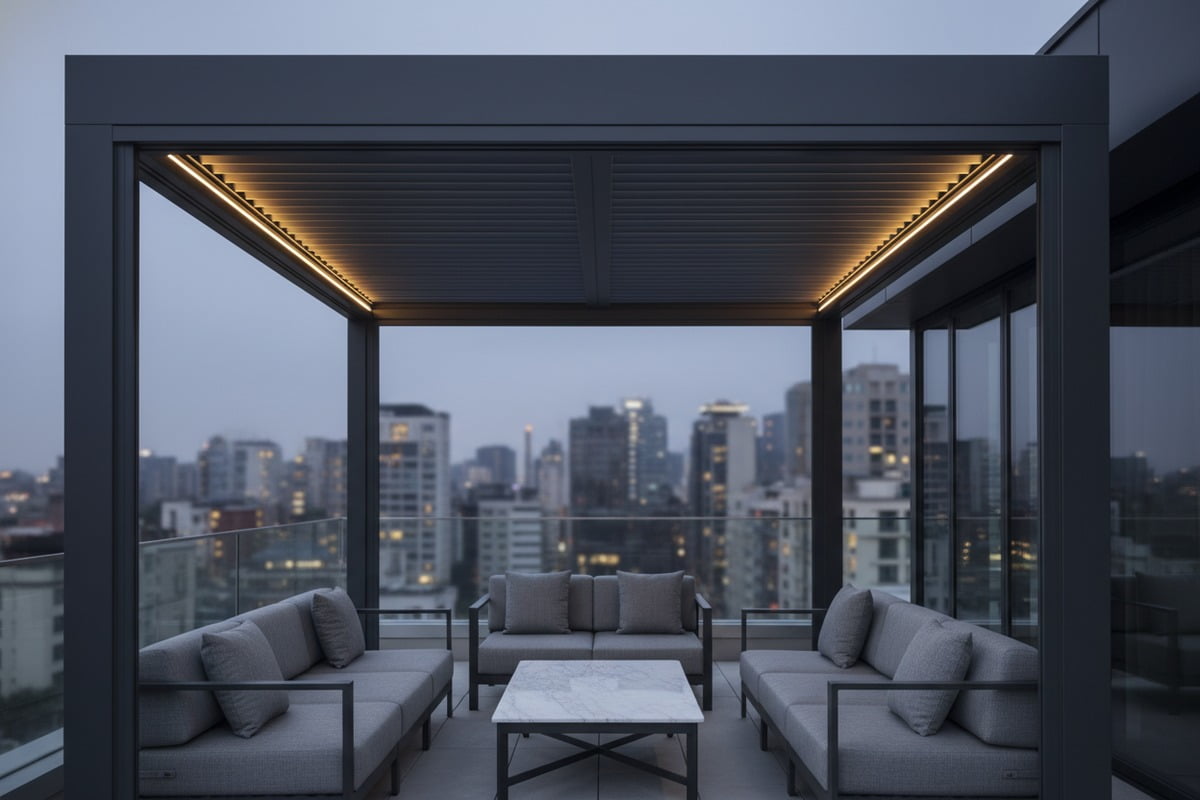
For most hotels, the outdoor area is the first thing guests see. It appears on booking platforms, in Google Maps photos, and across social media. A bare patio with mismatched umbrellas sends one message. A sleek, architecturally integrated pergola sends a completely different one. We have found that properties using our charcoal grey or bronze-finish pergolas report stronger online engagement and more guest-generated content on Instagram.
Architectural Cohesion
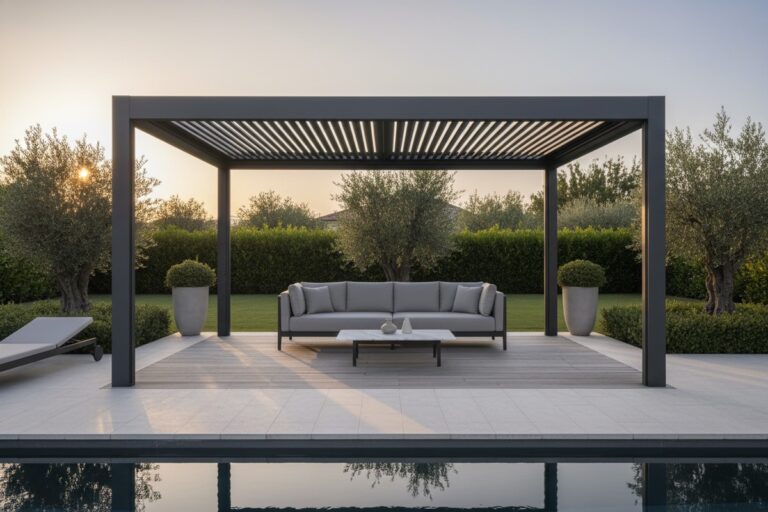
Aluminum is easier to manufacture into precise, modern forms than wood or steel. Our production lines extrude clean square-profile pillars and flat louvered roof panels that match contemporary hotel architecture. The matte powder-coated finish resists fading and maintains its appearance for years, even in coastal Mediterranean conditions. This means the pergola still looks premium in year five, not just on installation day.
Atmosphere and Ambience
A pergola is not just a roof. It is a framework for creating atmosphere. We integrate LED strip lighting 6 into the louver channels so the space transforms from a sun-shaded breakfast terrace in the morning to an ambient cocktail lounge at night. Add ceiling-mounted heaters, fans, or retractable zip screens, and the pergola becomes a fully controllable outdoor room.
| Feature | Impact on Guest Experience |
|---|---|
| Integrated LED lighting | Creates evening ambience; supports dinner and event service |
| Adjustable louvers | Lets guests enjoy dappled sunlight or full shade on demand |
| Retractable zip screens | Blocks wind and insects; adds privacy for VIP areas |
| Ceiling-mounted heaters | Extends comfortable outdoor use into cooler months |
| Built-in speakers | Supports background music for dining or poolside lounges |
| Powder-coated finish (RAL custom) | Matches hotel branding and architectural palette |
The Instagram Factor
In hospitality, visual appeal drives bookings. A well-designed pergola space becomes a destination within the property. Guests photograph it. They tag the hotel. They share stories. This organic marketing has real value. Several of our hotel clients in southern Europe have told us that their pergola terrace generates more social media impressions than any other area on the property.
Beyond Decoration: A Brand Asset
The strongest way to think about a custom pergola is as part of your brand infrastructure. It communicates quality, attention to detail, and investment in guest comfort. For boutique hotels competing against larger chains, this kind of visual differentiation matters. For resorts, a consistent pergola design across the pool deck, spa terrace, and restaurant patio creates a unified luxury identity.
Can I customize the dimensions and RAL colors to fit my restaurant's unique layout?
Our engineering team handles non-standard requests every week. Irregular rooftop footprints, narrow alleyway terraces, L-shaped patios — these are normal in European hospitality, and standard off-the-shelf pergolas almost never fit.
Absolutely. Aluminum pergolas can be fully customized in width, depth, height, and projection to match any restaurant layout. RAL color matching ensures the structure blends with your existing façade, furniture, and brand palette. This flexibility is one of the core reasons hospitality operators choose aluminum over wood or steel.
Why Standard Sizes Fail in Hospitality
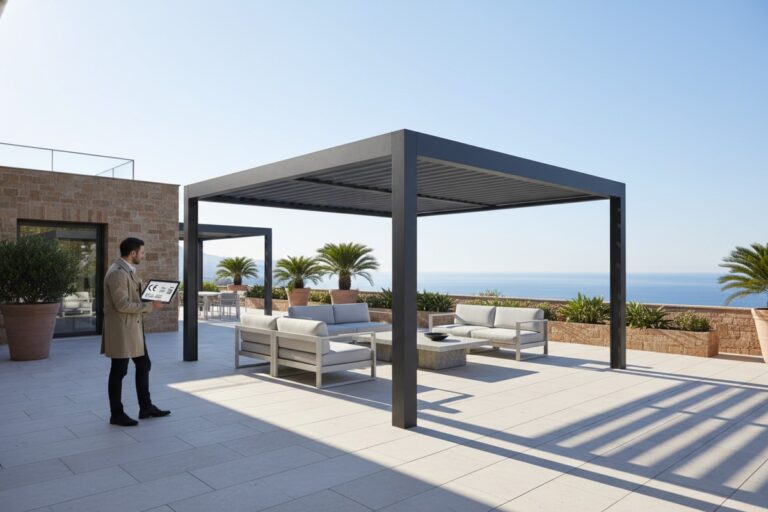
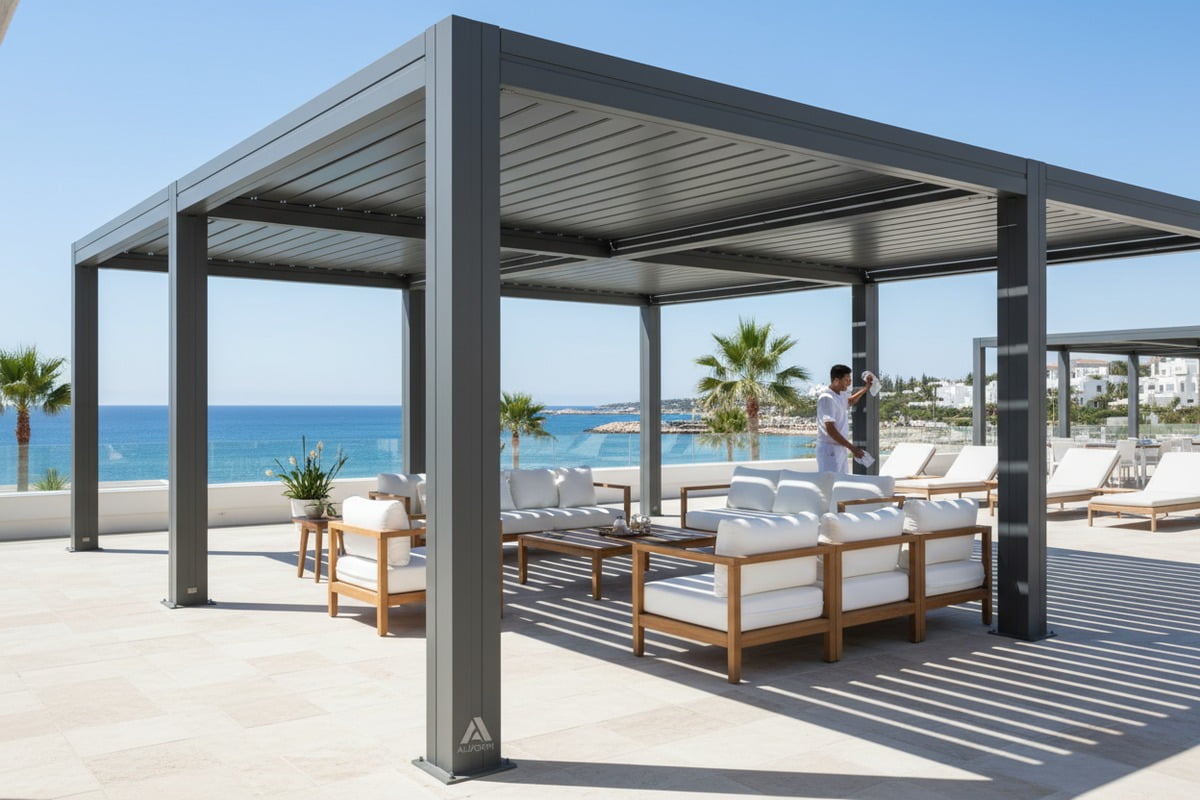
Restaurants and hotels rarely have perfectly rectangular outdoor areas. There are pillars, drainage slopes, doorways, HVAC units, and fire exits to work around. A standard 3m x 4m pergola might block a service corridor or leave awkward dead space. When we receive a project inquiry, our team starts with the site dimensions and works backward to design a structure that maximizes usable area.
How Customization Works in Practice
Our OEM/ODM process follows a clear workflow. The client sends site measurements and photos. Our engineers produce a 3D rendering within days. We confirm dimensions, color, louver orientation, motorization options, and any integrated accessories. Once approved, production typically takes around 30 days. This speed matters for hospitality clients who need to be ready before peak season.
RAL Color Matching
RAL is the European color standard used across architecture, furniture, and commercial interiors. RAL color standard 8 We can powder-coat any pergola frame to a specific RAL code. This means your pergola can match your restaurant's exterior walls, your hotel's signature color, or even a specific shade specified by your interior designer.
| Customization Option | What It Covers | Typical Hospitality Use Case |
|---|---|---|
| Width and depth | Any non-standard footprint | Irregular rooftop, narrow terrace, L-shaped patio |
| Height and clearance | Adjustable post height | Low-ceiling balconies, tall double-height atriums |
| RAL color | Full RAL spectrum | Brand color matching, façade coordination |
| Louver orientation | Perpendicular or parallel to building | Optimizing shade angle and rainwater drainage |
| Multi-module systems | Linked pergola units | Covering large pool decks or banquet terraces |
| Integrated accessories | Lighting, screens, heaters, guttering | Full outdoor room functionality |
Avoiding Costly Errors
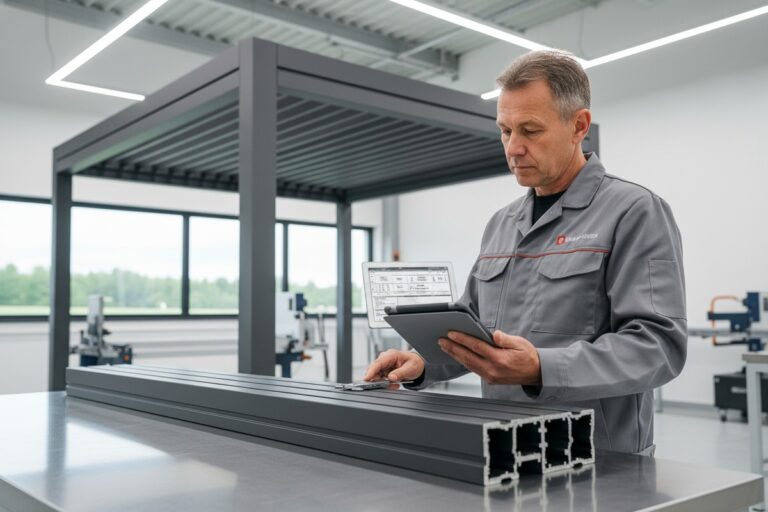
One pain point we hear from purchasing managers is that some suppliers struggle with non-standard orders. Drawings come back wrong. Color batches do not match. Screws or connectors are missing for custom dimensions. With 25 years of manufacturing experience and an annual capacity of 80,000 sets, our factory has refined this process specifically to avoid those errors. Every custom order ships with a detailed installation guide, clearly labeled components, and a parts checklist.
Multi-Module Configurations
For larger hospitality projects, a single pergola unit is often not enough. We frequently produce linked multi-module systems that cover extended terraces or wrap around building corners. These modules share structural pillars to minimize visual clutter and maximize open floor area beneath the canopy. The result is a seamless, expansive covered space that looks like one integrated structure.
How do I ensure the pergola meets the safety and wind load standards for my commercial project?
Before we release any pergola design for production, our structural engineers run load calculations based on the destination country's building codes. This is not optional for commercial hospitality projects — it is a legal and safety requirement.
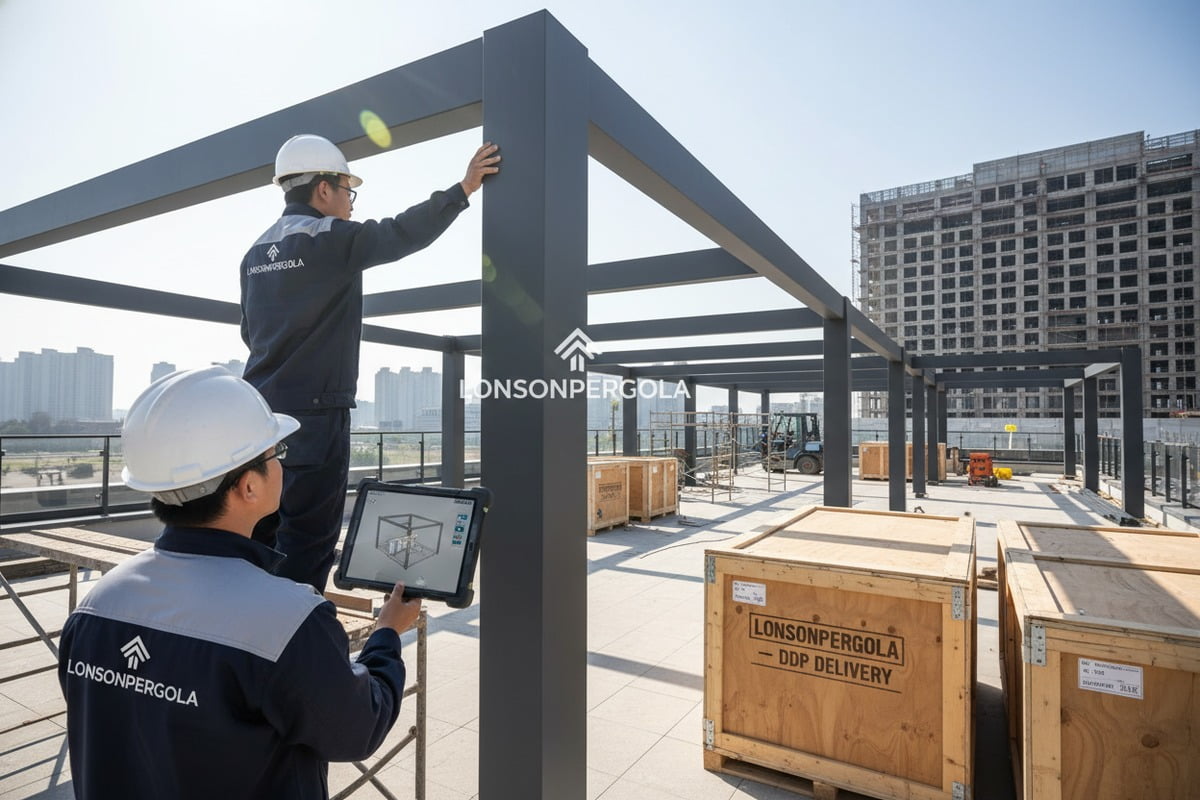
To ensure your pergola meets safety and wind load standards, work with a manufacturer that provides certified structural calculations, uses adequate aluminum wall thickness, and supplies CE-compliant motorized components. Always verify that the system is engineered for your specific regional wind, snow, and seismic requirements before installation.
Why Wind Load Matters for Hospitality
A pergola on a hotel rooftop or an elevated restaurant terrace faces significantly higher wind forces than a ground-level residential patio. Wind speeds increase with height and exposure. If the structure is not engineered for those conditions, it can deform, detach, or collapse. The liability risk for a hotel or restaurant is enormous — both in terms of guest safety and legal consequences.
Understanding Load Ratings
Commercial pergola installations in Europe must typically comply with Eurocode standards 9 for wind actions, snow loads, and structural resistance. The specific requirements vary by country and even by micro-location within a city. Our engineering team calculates the following for every commercial order:
- Wind load based on geographic zone, terrain category, and installation height
- Snow load based on altitude and regional climate data
- Dead load from the pergola's own weight plus any integrated accessories
- Live load from potential maintenance access or temporary attachments
Material Integrity: Wall Thickness Matters
One of the most common ways inferior suppliers cut costs is by reducing aluminum wall thickness. Thinner profiles weigh less and cost less, but they dramatically reduce structural strength. For hospitality projects, we use profiles with wall thicknesses specifically calculated for the project's load requirements. We never substitute thinner material to save cost because the risk is too high for commercial applications.
| Safety Consideration | What to Ask Your Supplier | Why It Matters |
|---|---|---|
| Wind load rating | Can you provide a certified wind load calculation for my location? | Prevents structural failure in storms |
| Aluminum wall thickness | What is the minimum wall thickness for the main posts and beams? | Thinner walls mean weaker structures |
| Motor and electronics certification | Are motors CE-certified for the European market? | Avoids legal liability and insurance issues |
| Drainage and water management | How does the system handle heavy rain? | Prevents water pooling, leaks, and guest discomfort |
| Anchoring and foundation | What foundation type is required? | Ensures stability on rooftops, decks, and raised terraces |
| Fire egress compliance | Does the pergola placement affect fire exit routes? | Required by building and safety codes |
CE Compliance for Motors and Electronics
Motorized louvered pergolas use electric motors to open and close the louver blades. In the European market, these motors must carry CE certification 10. Using uncertified motors is not just a quality risk — it is a legal one. If an accident occurs and the motor lacks proper certification, the property owner and installer may face serious liability. Every motorized system we ship to Europe includes CE-certified motors and control units, with documentation ready for inspection.
Permits and Local Regulations
Hospitality pergola installations often require permits. Zoning laws, historic district rules, ADA or accessibility requirements, and fire egress regulations all come into play. A pergola that blocks a fire exit or violates setback rules can be ordered removed after installation — a costly mistake. We always recommend that our clients involve a local architect or structural consultant early in the planning process to confirm compliance before the order is placed.
The Cost of Cutting Corners
We have heard too many stories from European distributors about competitors who ship structures with thin walls, uncertified motors, and no engineering documentation. The initial price is lower, but the risk is enormous. A pergola that fails during a storm at a busy hotel terrace is not a maintenance issue — it is a safety crisis. For commercial projects, the total cost of ownership must include the peace of mind that comes from proper engineering, certified components, and reliable after-sales support.
Conclusion
Aluminum pergolas are not decorative accessories for hotels and restaurants — they are strategic investments that generate revenue, protect guests, and strengthen your brand every day of the year.
Notes de bas de page
1. Replaced with a Wikipedia article providing a comprehensive definition of return on investment. ︎
2. Provides context on the concept and importance of outdoor dining. ︎
3. Replaced with a Wikipedia article explaining powder coating, its process, and benefits. ︎
4. Replaced with an article from the Corporate Finance Institute defining and explaining sales per square foot, which is synonymous with revenue per square foot. ︎
5. Explains the concept and appeal of dining outdoors. ︎
6. Provides general information about LED strip lights and their uses. ︎
7. Provides general information about pergolas, including material types. ︎
8. Official source for the European color matching system. ︎
9. Official portal for European standards for structural design. ︎
10. Official explanation of CE marking requirements in the EU. ︎