After producing over 80,000 pergola sets annually from our factory, one lesson keeps repeating itself: the motor and smart controls make or break the entire system EMC Directive (2014/30/EU) 1. A single unreliable component can turn a premium outdoor living space into a warranty nightmare for you and your end clients.
To evaluate motorized louver and smart control reliability, you should verify CE and IP-rated motor certifications, stress-test sensors and remote systems under real conditions, confirm wind and snow load ratings match your local climate, and demand comprehensive technical documentation with guaranteed after-sales response times from your supplier.
This guide walks you through each critical step. Whether you are a distributor sourcing from China, a contractor bidding on hospitality projects, or a retailer building a private-label line, these practical checks will protect your investment and your reputation.
How can I verify that the motors in my aluminum pergola meet CE standards and long-term durability requirements?
We have seen too many buyers receive pergola shipments only to discover the motors inside carry no real certification. The resulting legal exposure in the European market alone can cost more than the entire order.
To verify motor compliance, request the original CE declaration of conformity and test reports from an accredited lab, cross-check the motor's IP rating for outdoor use, confirm torque specifications against the louver weight, and insist on a minimum 5-year motor warranty backed by documented MTBF data.
Why CE Certification Matters More Than You Think
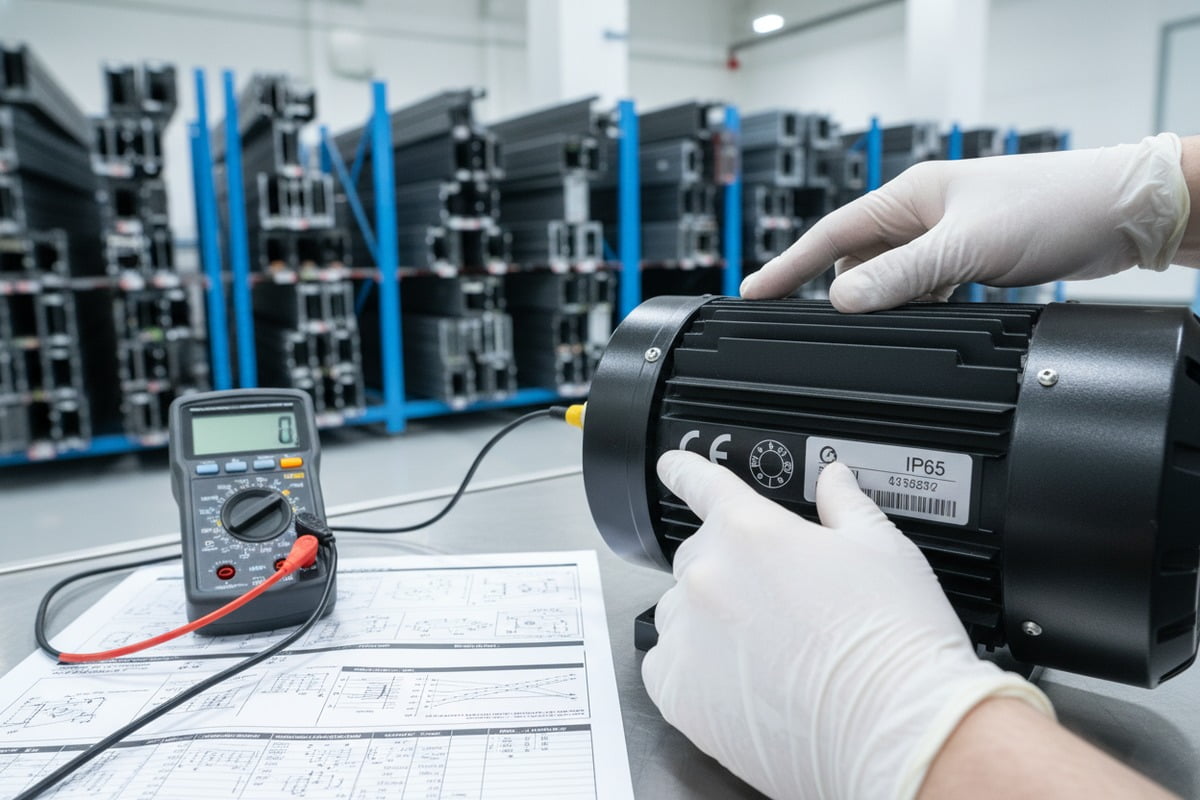
CE marking 2 is not a quality badge. It is a legal requirement for selling electromechanical products in the European Economic Area. A motor without genuine CE certification exposes you to customs seizure, fines, and product liability lawsuits. On our production line, every motor batch goes through a third-party lab before it enters assembly. We recommend you do not just trust the CE sticker on the motor housing. Ask your supplier for the full Declaration of Conformity document. It should reference specific directives like the Low Voltage Directive (2014/35/EU) 3 and the EMC Directive (2014/30/EU).
Key Motor Specifications to Check
Not all motors are equal. A motor rated for indoor blinds will fail outdoors within a season. Here are the specs you need to compare side by side:
| Specification | Minimum for Outdoor Pergola Use | Premium Benchmark |
|---|---|---|
| IP Rating 4 | IP44 (splash-proof) | IP65 (dust-tight, water jet proof) |
| Torque | 20 Nm | 40–50 Nm |
| Duty Cycle | S2 (short-time duty) | S1 (continuous duty) |
| Noise Level | < 55 dB | < 45 dB |
| Operating Temp Range | -10°C to +50°C | -20°C to +60°C |
| Warranty | 3 years | 5–10 years |
How to Spot Fake or Inadequate Certifications
Request the test report number and verify it directly with the issuing lab. Reputable labs like TÜV, SGS, and Intertek maintain online databases. If the supplier hesitates to provide this, that is a red flag. In our experience shipping to Italy, Germany, and France, customs authorities increasingly cross-reference CE documentation. A counterfeit certificate will not pass.
Long-Term Durability: Beyond the Spec Sheet
Ask for the motor's Mean Time Between Failures (MTBF) 5 data. A good outdoor pergola motor should exceed 20,000 cycles. Each cycle equals one full open-close rotation of the louvers. For a pergola used daily with rain sensor triggers, that translates to roughly 10–15 years of service. We test our motors to 25,000 cycles before approving them for installation.
Also check if the motor includes thermal overload protection 6. This feature shuts down the motor before it burns out from continuous operation or mechanical obstruction. Without it, a single jammed louver can destroy the motor permanently.
What steps should I take to test the reliability of smart sensors and remote control systems before placing a bulk order?
Every year our engineering team debugs returns from buyers who skipped pre-order testing. The most common complaint is not broken hardware. It is inconsistent sensor behavior and remote signal dropout.
Before placing a bulk order, request pre-production samples and test rain sensors with simulated water, wind sensors under forced airflow, remote controls at maximum range and through walls, and app connectivity across multiple phone models and Wi-Fi conditions over a minimum 30-day trial.
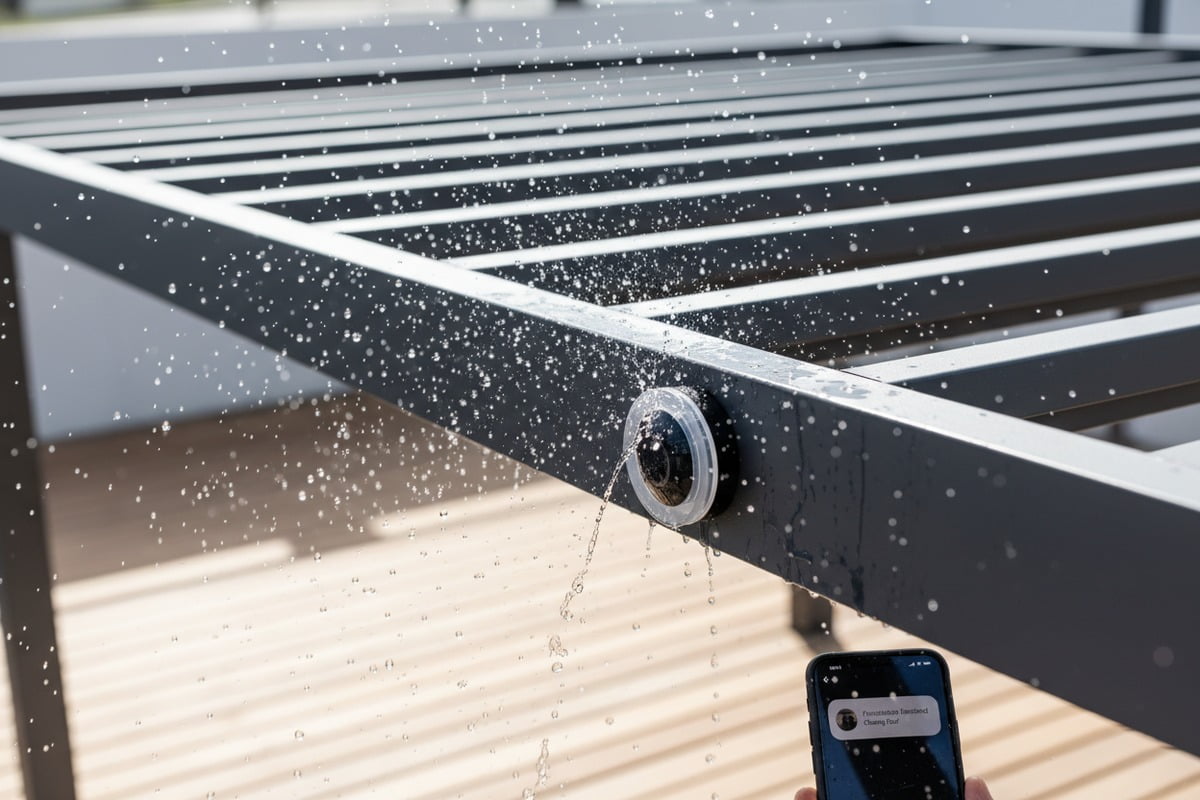
Build a Simple Testing Protocol
You do not need a laboratory to test smart controls. You need a structured process. Here is what we recommend to every distributor who sources from us:
Step 1: Rain Sensor Test. Mount the pergola sample outdoors or simulate rain with a spray bottle. The louvers should close within 3–5 seconds of water contact. Test at different intensities. A quality sensor responds to light drizzle, not just heavy rain.
Step 2: Wind Sensor Test. Use a portable fan or wait for a windy day. The wind sensor should trigger louver closure at a preset threshold, typically 30–40 km/h. Verify the threshold is adjustable.
Step 3: Remote Control Range. Walk away from the pergola with the remote. Test at 10 meters, 20 meters, and 30 meters. Then test through a glass door and a brick wall. RF-based remotes typically work better through obstacles than infrared.
Step 4: App Connectivity. Install the supplier's app on at least three different phones (iOS and Android). Connect via Wi-Fi and test over mobile data. Check for latency, dropped connections, and firmware update stability.
What to Look For in Smart Home Integration
If your clients use smart home ecosystems 7, interoperability is critical. Ask if the system supports Matter, Apple HomeKit, Google Home, or Amazon Alexa. Systems that rely on proprietary apps only will limit your market appeal.
| Feature | Basic System | Mid-Range System | Premium System |
|---|---|---|---|
| Remote Control | RF handheld only | RF + smartphone app | RF + app + voice assistant |
| Rain Sensor | Manual threshold | Auto-closing | Auto-closing + notification |
| Wind Sensor | None | Fixed threshold | Adjustable + data logging |
| Smart Home Integration | None | Wi-Fi app only | Matter / HomeKit / Alexa |
| LED Lighting Control | Separate switch | App dimming | Scene automation |
| Firmware Updates | None | Manual USB | Over-the-air (OTA) |
Cybersecurity: The Overlooked Risk
Smart pergola systems connect to Wi-Fi networks. If the control module lacks basic encryption, it becomes a potential entry point for hackers. This sounds extreme, but commercial hospitality projects take this seriously. Ask your supplier if the system uses WPA3 encryption 8, secure HTTPS for cloud communication, and password-protected admin access. At our facility, we recently upgraded all smart modules to support AES-256 encryption after feedback from a hotel chain client in Southern Europe.
The 30-Day Soak Test
Do not trust a five-minute demo. Run the sample for at least 30 days in real outdoor conditions. Log every sensor trigger, every remote command, and every app interaction. Look for patterns: does the rain sensor false-trigger from morning dew? Does the remote lose range when the temperature drops? This data gives you negotiating power and protects you from bulk defects.
How do I evaluate if the motorized louver mechanism can withstand the specific wind and snow loads of my local climate?
One of the most expensive mistakes we have witnessed is a contractor installing pergolas rated for Mediterranean climates in an Alpine region. The first heavy snowfall collapsed three units. Insurance did not cover it because the load ratings were inadequate.
Evaluate wind and snow load resilience by matching the pergola's tested structural ratings (in kN/m² or PSF) to your local building code requirements, requesting independent load test reports, verifying the aluminum wall thickness and alloy grade, and confirming that the motorized louver locks securely in the closed position under load.
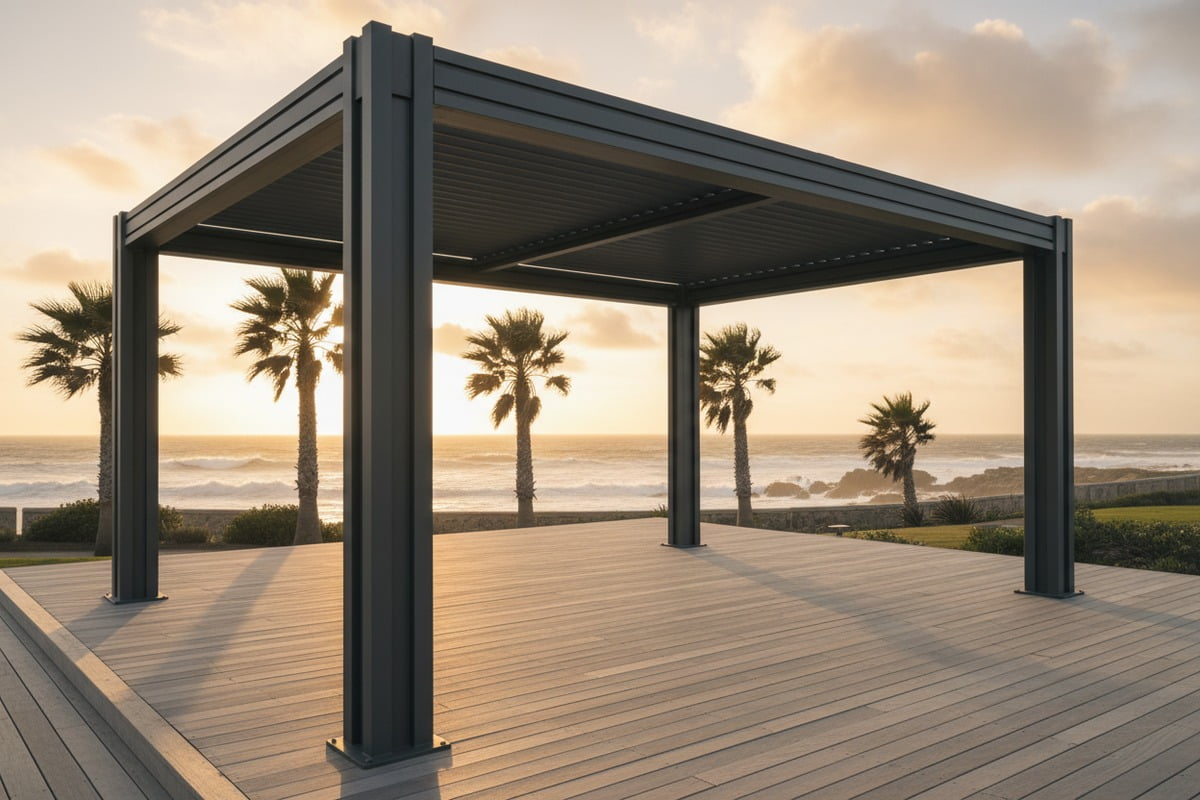
Understanding Load Ratings
Wind load and snow load are expressed differently depending on the region. In Europe, Eurocode EN 1991 9 governs structural design loads. In the US, ASCE 7 10 is the reference standard. Your supplier must provide load ratings that correspond to your local code. A generic "strong enough" claim is worthless.
When we design pergola frames, we use T6-tempered 6063 or 6061 aluminum alloy. The wall thickness of the main beams and posts directly determines load capacity. Here is how wall thickness relates to performance:
| Aluminum Profile Wall Thickness | Typical Wind Resistance | Typical Snow Load Capacity | Best Suited For |
|---|---|---|---|
| 1.2 mm | Up to 80 km/h | 0.3 kN/m² | Sheltered urban patios |
| 2.0 mm | Up to 110 km/h | 0.6 kN/m² | Standard residential use |
| 2.5 mm | Up to 130 km/h | 1.0 kN/m² | Coastal and exposed areas |
| 3.0 mm+ | Up to 150 km/h+ | 1.5 kN/m²+ | Alpine, hurricane-prone zones |
The Louver Lock: Your Critical Safety Feature
When louvers are closed flat, they form a solid roof surface. Wind creates uplift force on this surface. If the louver mechanism does not lock mechanically in the closed position, wind can rip the blades open and destroy the entire system. Ask your supplier to demonstrate the locking mechanism. A good design uses a positive mechanical lock, not just motor resistance. Our louver systems engage a steel pin lock at full closure, so even if power fails, the louvers stay sealed.
How to Request and Read Load Test Reports
Legitimate suppliers provide structural calculation reports or physical load test results. A structural calculation is done by a licensed engineer using finite element analysis (FEA) software. A physical test involves placing actual weight on the pergola and measuring deflection. Both are acceptable. What you want to see is:
- The test standard referenced (e.g., EN 1991-1-3 for snow, EN 1991-1-4 for wind)
- The maximum load before failure or permanent deformation
- The safety factor applied (typically 1.5x for permanent structures)
If your supplier cannot provide this documentation, they are guessing about their product's strength. That is a risk you should not accept.
Double-Layer Louver Designs
Some premium pergolas use a double-layer louver blade. This means each blade is hollow with internal ribs, similar to an airplane wing cross-section. This design dramatically increases rigidity without adding significant weight. When we introduced double-layer blades to our R&D lineup, the snow load capacity improved by roughly 40% compared to single-skin blades of the same external dimension.
For coastal projects, also confirm that all fasteners, pins, and internal brackets are stainless steel (grade 304 or 316). Aluminum does not rust, but if the hidden hardware is plain carbon steel, you will see corrosion streaks within two years.
What technical documentation and after-sales support should I demand from my supplier to ensure my smart pergola systems stay operational?
In twenty-five years of manufacturing, we have learned that the sale does not end at the shipping port. It begins there. The documentation and support behind a product determine whether your business relationship lasts one order or ten.
Demand complete technical documentation including CE certificates, structural load reports, wiring diagrams, multilingual installation manuals with 3D video guides, exploded parts diagrams, and a written after-sales agreement guaranteeing response times under 24 hours, spare parts availability for at least 7 years, and remote troubleshooting via video call.
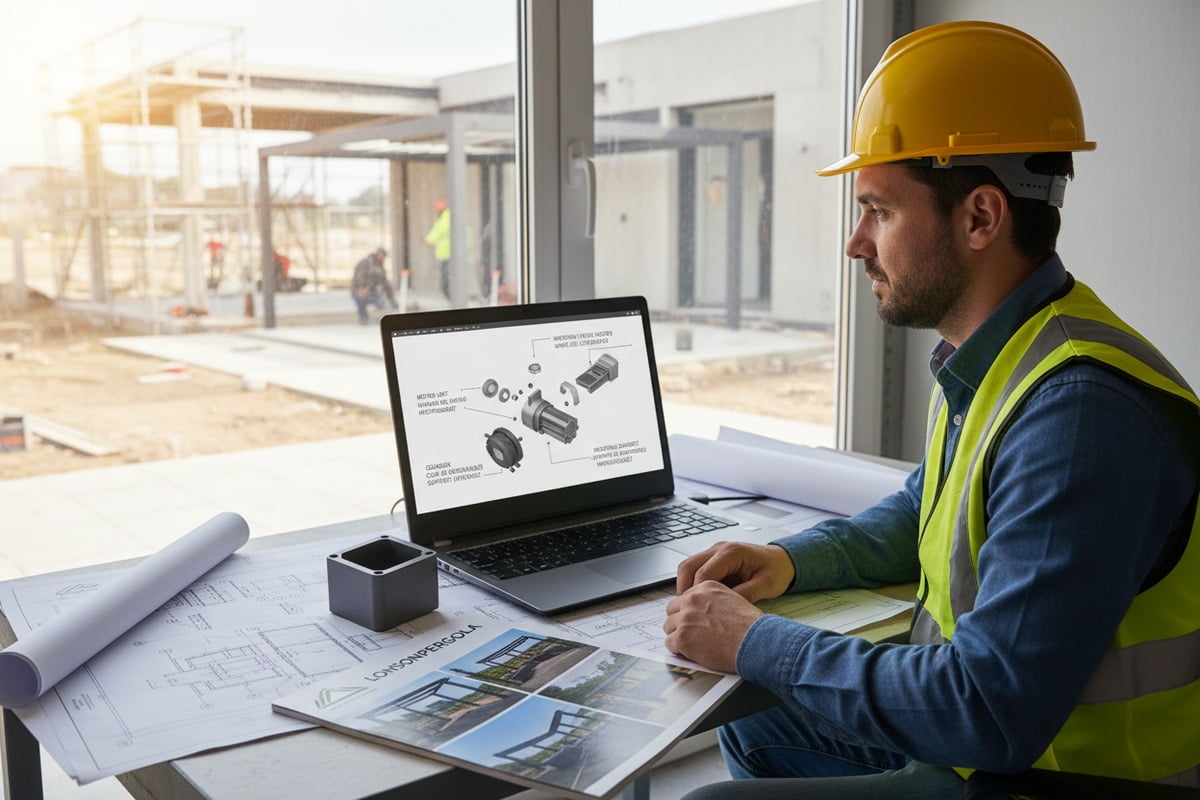
The Documentation Checklist
Before your first container ships, you should have every document listed below in hand. Not after problems arise. Before.
- CE Declaration of Conformity for motors, control boards, and LED lighting
- Structural calculation or load test report referencing local standards
- Wiring diagram for the entire electrical system, including sensor connections
- Installation manual with step-by-step illustrations in your local language
- 3D assembly video or animated guide accessible via QR code
- Exploded parts diagram with numbered components and part codes
- Troubleshooting guide covering the 10 most common issues and fixes
- Warranty terms clearly stating coverage periods for frame, motor, electronics, and finish
Why Spare Parts Availability Is Non-Negotiable
Imagine this scenario: your client's motor fails 18 months after installation. You contact the supplier. They tell you that motor model is discontinued and no replacement exists. Now you face re-engineering the entire motorized system at your cost. When we onboard a new distributor, we guarantee spare parts availability for a minimum of 7 years from the date of last purchase. We also maintain a dedicated spare parts inventory equal to 5% of each annual order volume. Ask your supplier to match this commitment in writing.
After-Sales Response Time Standards
Time zone differences between China and Europe create a natural communication gap. A good supplier mitigates this with structured protocols:
- Email response: within 12 hours
- Video call troubleshooting: available within 24 hours of request
- Spare parts shipment: within 48 hours of confirmed diagnosis
- Emergency replacement units: pre-positioned in a bonded warehouse in your region if volume justifies it
Predictive Maintenance and IoT Integration
The next generation of smart pergola systems includes embedded IoT sensors that monitor motor current draw, cycle count, and operating temperature. When the motor current increases beyond a threshold, it signals bearing wear or louver obstruction before a visible failure occurs. We are currently piloting this feature with select partners. It sends an automated alert to the installer's phone, allowing preventive service instead of emergency repair. This is where the industry is heading, and it is worth asking your supplier about their roadmap.
Energy Backup and Power Failure Plans
Power outages leave motorized louvers stuck in whatever position they held when power dropped. For hospitality projects, this is unacceptable. Ask whether the system includes a battery backup or manual override crank. Solar-powered trickle charging for the backup battery is also gaining traction. Our latest control box includes a 12V lithium battery that holds enough charge for approximately 15 full open-close cycles during a power outage, giving hotel staff time to secure the pergola before a storm.
Protecting Your Investment Over Time
Annual maintenance is simple but essential. Lubricate the louver pivot points with silicone spray. Clean the rain sensor lens. Check all wiring connections for corrosion. Install a surge protector on the main power feed to guard the control board against lightning-induced voltage spikes. These small steps extend system life by years. A supplier who provides a printed annual maintenance schedule shows they care about long-term performance, not just the initial sale.
Conclusion
Evaluating motorized louver and smart control reliability comes down to verifying certifications, testing under real conditions, matching load ratings to your climate, and securing robust documentation with responsive after-sales support. Do this before signing the purchase order, not after.
Footnotes
1. Provides the official text and scope of the Electromagnetic Compatibility Directive. ↩︎
2. Explains the legal requirements and significance of CE marking in the EU. ↩︎
3. Provides the official text and scope of the Low Voltage Directive. ↩︎
4. Defines the international standard for Ingress Protection (IP) codes. ↩︎
5. Explains the concept and calculation of Mean Time Between Failures. ↩︎
6. Describes the function and importance of thermal overload protection in motors. ↩︎
7. Introduces the concept of smart home ecosystems and their interoperability. ↩︎
8. Explains the WPA3 security standard for Wi-Fi networks. ↩︎
9. Provides information on Eurocode EN 1991 for actions on structures. ↩︎
10. Found the official ASCE page dedicated to ASCE 7 & SEI Standards, which provides an overview of the 'Minimum Design Loads and Associated Criteria for Buildings and Other Structures'. ↩︎