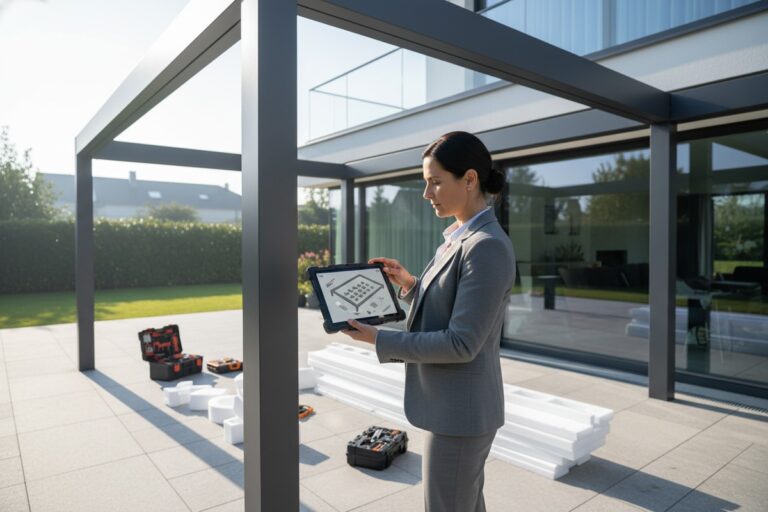
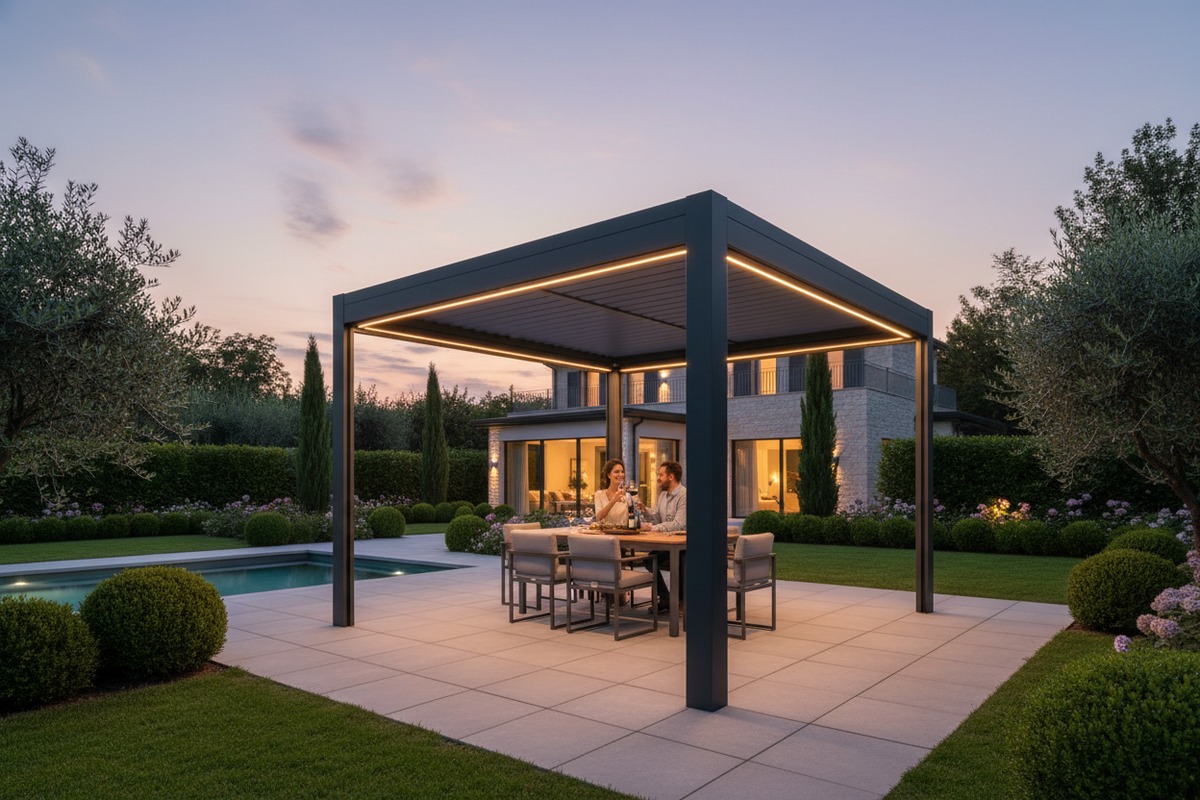
Every outdoor project we ship from our production line starts with one question: will the end user actually enjoy using this pergola every day?
You can enhance the user experience of motorized aluminum pergolas by focusing on intuitive smart controls, automated weather response, seamless installation, durable low-maintenance materials, and customizable ambiance features like dimmable LED lighting and integrated heating that transform a simple shade structure into a year-round outdoor living space.
This article breaks down the practical steps that matter most. From simplifying installation to choosing the right motors and finishes, each section gives you clear guidance you can apply to your next project. Let us walk through it together.
How can I simplify the installation process to ensure my clients have a frustration-free experience?
We have shipped over 80,000 pergola sets, and the number one complaint we hear from contractors is not about the product itself — it is about confusing assembly steps and missing parts.
You can simplify installation by demanding clear 3D instructional videos, pre-labeled components, complete hardware kits with spares, and factory-calibrated motors so your crew spends less time troubleshooting and more time finishing the job on schedule.
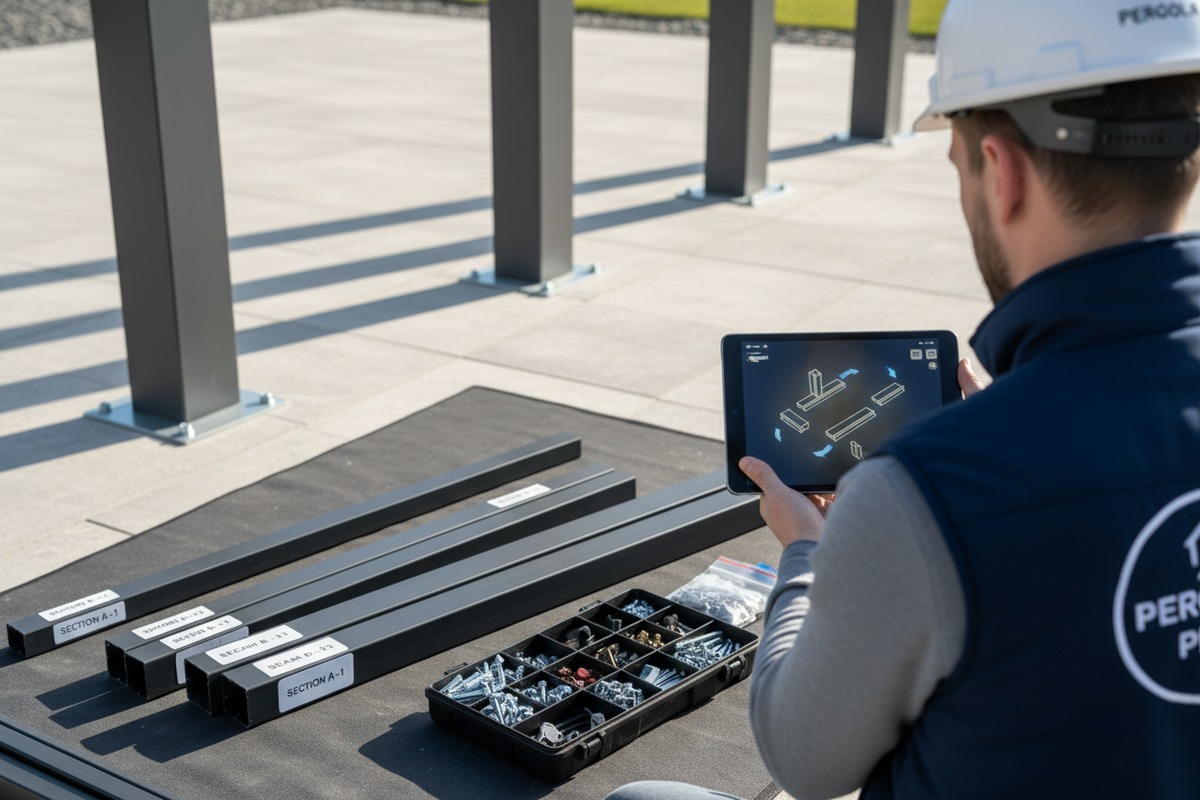
A frustration-free installation does not happen by accident. It is engineered into the product long before it leaves the factory. When our engineering team designs a new pergola model, we think about the installer's hands first. Every bolt hole, every wiring channel, every bracket position is mapped out to reduce guesswork on site.
Why Pre-Labeling and Kit Completeness Matter
Missing a single non-standard screw during an overseas installation can halt an entire project. Replacement parts shipped internationally take days or weeks. That delay costs money, damages your reputation, and frustrates the end client. Our approach is to pack every order with a detailed parts checklist, color-coded labels on each component bag, and a small surplus of critical fasteners.
The Role of Professional Calibration
Motor calibration 1 is another pain point. If the louvers do not open and close smoothly on the first power-up, the installer loses confidence and the client loses patience. Factory pre-calibration means the motor travel limits are set before shipping. The installer connects power, runs a quick test, and moves on.
| Installation Pain Point | Root Cause | Our Solution |
|---|---|---|
| Missing hardware on site | Poor packing quality control | 100% kit inspection + spare fastener pack |
| Confusing assembly sequence | Text-only manual in one language | 3D video guides + multilingual printed manual |
| Motor not responding after wiring | Uncalibrated travel limits | Factory pre-set motor calibration |
| Misaligned louver panels | Uneven base or frame | Adjustable leveling feet + laser alignment guide |
| Drainage leaks at joints | Incorrect sealant application | Pre-applied gaskets + clear sealant instructions |
Think About the Installer's Workflow
A good installation guide follows the order a real crew works. Foundation first, posts second, beams third, louvers fourth, wiring fifth, testing last. When the manual jumps around or assumes too much knowledge, errors multiply. We keep our guides linear and visual. Each step has a photo, a short sentence, and a parts callout. No jargon. No ambiguity.
Professional installation is especially important for motorized systems because electrical work, structural leveling, drainage slope, and smart-system configuration all need to be right the first time. A well-supported installer delivers a better experience to the end user, and that reflects on everyone in the supply chain 2.
What smart automation features should I include to make my motorized pergola more user-friendly?
When we first added rain sensors 3 to our pergola line five years ago, the feedback from European distributors was immediate — their clients stopped worrying about leaving outdoor furniture uncovered.
You should include integrated weather sensors for rain, wind, and sun, plus smartphone app control, voice assistant compatibility, one-touch presets, and scheduling features so the pergola responds automatically to changing conditions and reduces the need for constant manual input.
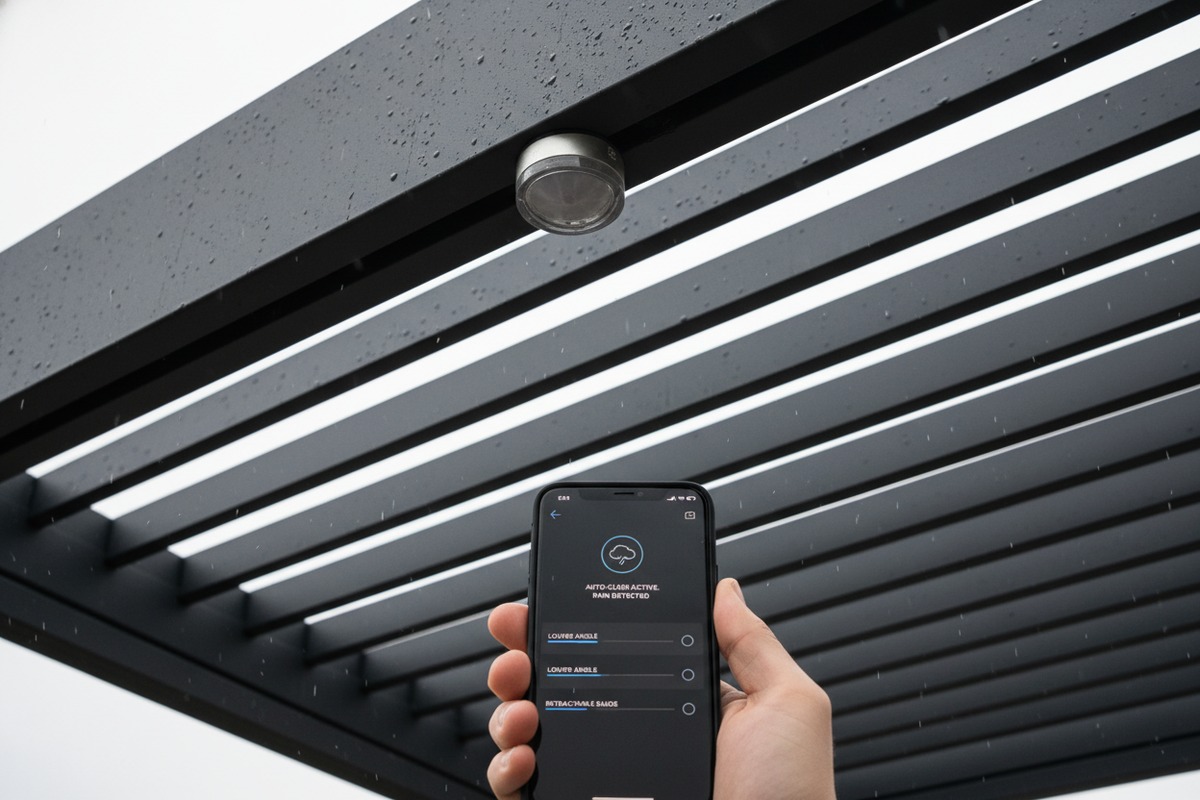
Smart automation is what separates a motorized pergola from a manual one in the eyes of the end user. The goal is simple: the pergola should think for itself most of the time. The user should only step in when they want something specific.
Weather Sensors Are the Foundation
Rain sensors are the most impactful automation feature. When rain starts, the louvers close automatically. When it stops, they reopen. This single feature protects furniture, cushions, and electronics underneath the pergola without anyone lifting a finger. Wind sensors 4 add another layer. If wind speed exceeds a safe threshold, the system can retract louvers or screens to prevent structural damage. Sun sensors adjust louver angles throughout the day to track shade needs.
Control Interfaces for Different Users
Not every end user is the same. A young family might prefer app control from their phone. An older homeowner might want a simple wall switch or a dedicated remote with large buttons. A hotel might need a centralized building management system 5. The best pergola systems offer multiple control paths so every user finds one that feels natural.
| Control Method | Il migliore per | Key Advantage |
|---|---|---|
| Smartphone app | Tech-savvy homeowners, remote monitoring | Full control from anywhere, scheduling, presets |
| Voice assistant (Alexa, Google) | Hands-free operation, families | No device needed, just speak |
| Dedicated remote control | Older users, simple preference | Tactile buttons, no phone required |
| Wall-mounted panel | Commercial settings, shared spaces | Fixed location, easy for staff and guests |
| Building management system | Hotels, resorts, large venues | Centralized control of multiple pergolas |
Presets, Scheduling, and Scene Control
One-touch presets let a user save their favorite louver angle, lighting level, and screen position as a single "scene." Press one button, and the pergola shifts to "evening dinner mode" with louvers half-open, lights dimmed warm, and side screens lowered. Scheduling lets the system change settings based on time of day. Open louvers at sunrise, close them during the hottest hours, reopen at sunset. These features make the pergola feel intuitive.
Predictive Automation and Learning
Some newer systems go further. They learn from user behavior and local weather patterns. If you always close the louvers at 2 PM on sunny days, the system starts doing it for you. This predictive layer is still emerging, but it is the direction the market is heading. Predictive Automation 6 Our R&D team is actively testing these capabilities for future product lines.
The key principle behind all smart features is reducing friction. Every tap, every decision, every worry you remove from the user's day makes the pergola feel less like a gadget and more like a natural extension of their home.
How do I choose the best customization options to meet my project's unique aesthetic needs?
Our factory handles hundreds of custom color requests each year, and one thing we have learned is that the details clients notice most are the ones you might overlook — the finish on a screw cap, the alignment of a drainage channel, the way a cable disappears into a post.
Choose customization options by matching RAL colors to the project's architectural palette, selecting clean aluminum profiles with concealed wiring and integrated drainage, and adding modular features like LED lighting, privacy screens, and heaters that align with the intended use and atmosphere of the space.
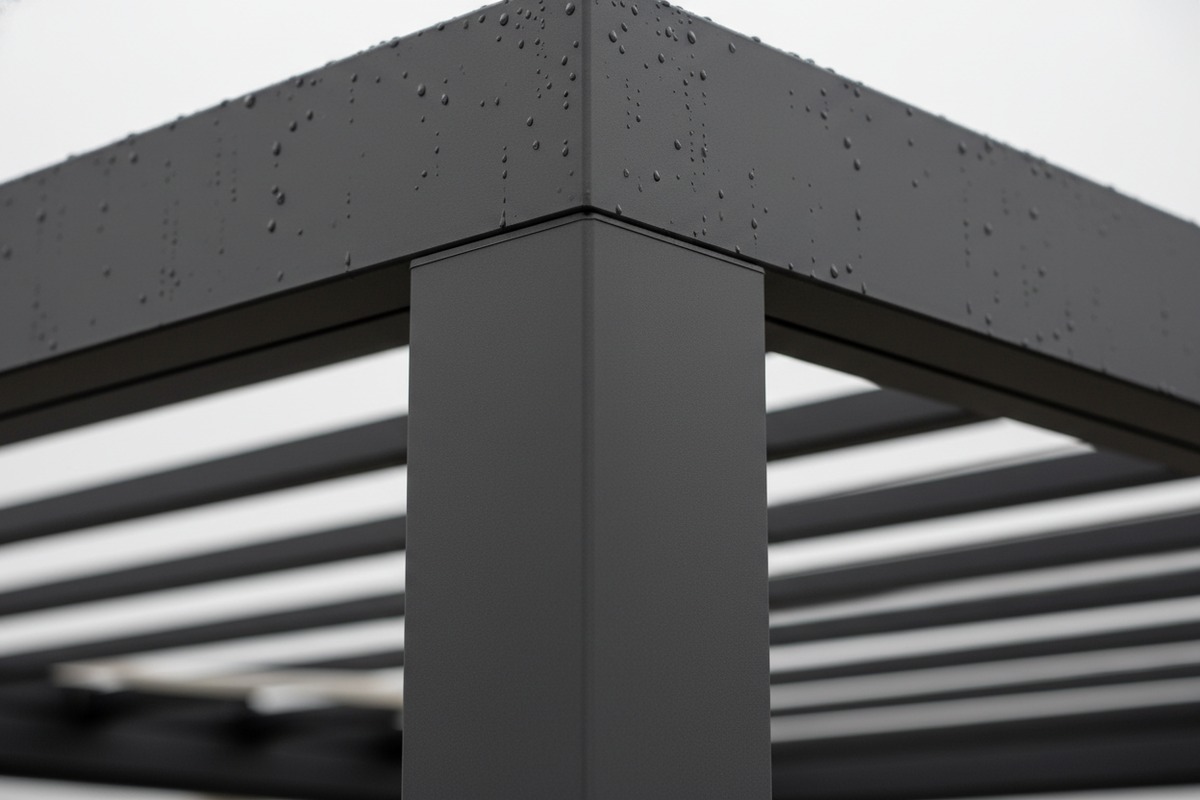
Aesthetics shape how users perceive quality. A pergola can have the best motor and the smartest sensors, but if it looks bolted-on or clashes with the surrounding architecture, the experience feels wrong. Good customization is about visual calm and intentional design.
Color and Finish Selection
Powder-coated aluminum 7 is the standard for premium pergolas. It resists corrosion, fading, and scratching. But color choice matters. A charcoal grey frame blends with modern architecture. A warm bronze works with Mediterranean styles. White or cream suits coastal homes. We offer any RAL color 8 on request, and we recommend clients order a physical sample panel before committing to a large order. Screens and monitors can shift color perception.
Concealed Engineering
The most satisfying pergolas hide their complexity. Wiring runs inside the posts, not along the surface. Drainage channels are integrated into the beam profile, not clipped on as an afterthought. Louver rotation is synchronized so all panels move at the same angle, at the same speed. These details are invisible when done right — and painfully obvious when done wrong.
| Customization Category | Options Available | Impact on User Experience |
|---|---|---|
| Frame color | Any RAL color, powder-coated | Matches architecture, long-term fade resistance |
| Louver style | Flat blade, curved blade, insulated | Controls light quality and thermal performance |
| Side enclosures | Zip blinds, glass panels, curtains | Privacy, wind protection, seasonal versatility |
| Lighting | Under-louver LED strips, spotlights, dimmable zones | Evening ambiance, functional task lighting |
| Heating and cooling | Infrared heaters, ceiling fans, misting systems | Extends usability into cooler or hotter months |
| Audio | Integrated Bluetooth speakers | Background music for entertaining |
| Drainage | Hidden gutters, internal downspouts | Clean appearance, protects patio and walkways |
Modular Add-Ons Extend the Experience
Think of a motorized pergola as a platform. The base structure provides shade and weather protection. Everything else — lighting, screens, heaters, fans, speakers — is a module you can add based on how the space will actually be used. A restaurant terrace needs heaters and wind screens. A poolside lounge needs misting and waterproof speakers. A private garden room needs dimmable lights and privacy curtains.
This modular approach also helps with budgeting. A client can start with the core pergola and add features over time. Our system is designed with pre-routed channels and connection points for future upgrades, so adding an LED strip or a zip blind later does not require tearing apart the structure.
The Emotional Side of Design
User experience is not only functional. It is emotional. When someone steps under a beautifully designed pergola with warm lighting and a gentle breeze, they feel something. That feeling — of comfort, of luxury, of being in a well-designed space — is the real product. The aluminum, the motors, and the sensors are just the means to get there. Keep that in mind when choosing options. Every decision should serve the atmosphere you want to create.
How can I ensure the motors and materials I select provide long-term reliability for my customers?
We test every motor batch on our production line before it ships. Still, the most common question from our European partners is not about features — it is about what happens three years after installation.
Ensure long-term reliability by selecting certified motors from established brands with proven duty cycles, using marine-grade or heavy-wall aluminum profiles that meet local wind and snow load standards, and partnering with suppliers who offer clear warranties, spare parts availability, and responsive technical support.
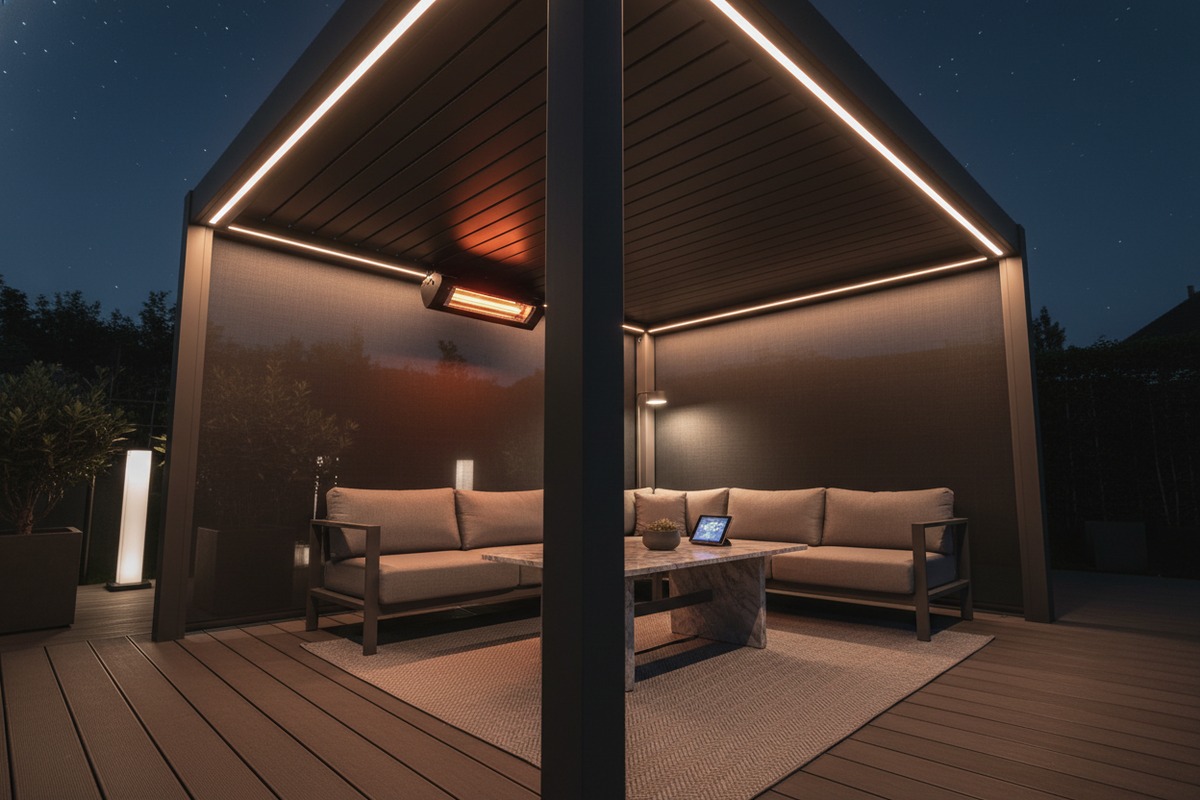
Reliability is the backbone of user experience. A pergola that works perfectly for six months and then develops motor noise, louver drift, or surface corrosion destroys trust. Long-term reliability requires careful choices at every level — materials, motors, electronics, and the supplier relationship itself.
Motor Quality and Certification
Not all motors are equal. For the European market, CE certification 9 is mandatory. Beyond compliance, look for motors with a rated duty cycle that matches real-world use. A pergola motor might cycle ten to twenty times per day in a commercial setting. Cheap motors rated for lighter duty will burn out early. Our standard offering uses motors rated for at least 30,000 cycles, with IP44 or higher ingress protection 10 for outdoor exposure.
Aluminum Profile Strength
Wall thickness matters. Thin-walled aluminum saves cost but compromises wind and snow load capacity. In northern European markets, pergolas must withstand significant snow loads. In coastal areas, wind resistance is critical. We use a minimum wall thickness that meets or exceeds EN 1991 structural loading standards for the target region. Cutting corners here does not just reduce lifespan — it creates a safety risk.
Surface and Weather Resistance
The aluminum frame itself does not corrode easily, but the coating protects against UV fading, salt air, and mechanical scratching. A quality powder coat process includes chemical pre-treatment, a primer layer, and a topcoat cured at the correct temperature. We test coated samples in a salt spray chamber for over 1,000 hours to verify performance. For zip blinds and fabric screens, UV resistance, flame retardancy, and colorfastness are equally important.
Electronics and Smart Components
Weather sensors, control boards, and wireless receivers are the most vulnerable components in a motorized system. They are exposed to heat, moisture, and power fluctuations. Use components rated for outdoor use with proper sealing. Ensure your supplier provides a clear wiring diagram and uses connectors that resist corrosion. A single poorly sealed junction box can take down an entire automation system.
Warranty and After-Sales Support
Reliability is also about what happens when something does go wrong. A five-year motor warranty is standard for quality systems. But warranty alone is not enough. Your supplier must be able to ship replacement parts quickly and provide remote troubleshooting support across time zones. We maintain dedicated stock of common spare parts and respond to technical queries within 24 hours because a stalled project costs everyone money.
| Reliability Factor | What to Look For | Red Flag |
|---|---|---|
| Motor certification | CE, UL, or equivalent for target market | No certification documents available |
| Motor duty cycle | 30,000+ cycles rated | No cycle rating disclosed |
| Aluminum wall thickness | Meets EN 1991 or local structural codes | Thickness below 2 mm for main beams |
| Powder coating quality | Salt spray test ≥ 1,000 hours | No test report, visible orange peel texture |
| Electronics enclosure | IP44 or higher rating | Unsealed junction boxes |
| Warranty coverage | 5 years motor, 10 years structure | Warranty excludes motors or electronics |
| Spare parts availability | In-stock, ships within 48 hours | No spare parts catalog, long lead times |
Build Relationships, Not Just Orders
Long-term reliability extends beyond the physical product. It includes the relationship between you and your supplier. A supplier who understands your market, anticipates your needs, and solves problems quickly is part of your quality assurance. With 25 years of manufacturing experience and a 30-day rapid delivery guarantee, our goal is to be that partner for every project.
Conclusione
The best motorized aluminum pergola is one that feels effortless — easy to install, intuitive to control, beautiful to look at, and reliable for years. Focus on these pillars, and you transform a shade structure into a genuine outdoor living experience.
Note a piè di pagina
1. Explains the process of adjusting a device to meet performance standards. ︎
2. Defines the coordination of a business' entire production flow. ︎
3. Describes devices that detect precipitation and trigger actions. ︎
4. Replaced HTTP 404 with a comprehensive Wikipedia page on anemometers, which are devices used to measure wind speed and direction. ︎
5. Defines a centralized system for controlling building infrastructure. ︎
6. Describes automation that uses data to anticipate and act on future events. ︎
7. Explains a durable finishing method for aluminum surfaces. ︎
8. Introduces a widely used European color matching system. ︎
9. Explains the mandatory European conformity mark for product safety. ︎
10. Defines a standard for protection against solids and liquids. ︎