
On our production floor, we watch first pergola orders stall when buyers lock too much cash and still worry about defects, delays, and missing parts.
To reduce risk on a first aluminum pergola trial order, negotiate a small deposit, tie later payments to production proof, third-party inspection, and shipment milestones, then trade future volume commitments for better credit terms on repeat orders.
The smartest payment plan does not just move money. It moves money only when real proof appears.
How can I structure my initial deposit to protect my capital during a first-time pergola order?
In our export projects 1, first deposits cause the most stress because money leaves early while aluminum profiles 2, hardware, and cartons are still unfinished.
A safer first deposit for a trial order is usually 20% to 30%, with the next payment released only after confirmed material purchase or finished frame production, not simply after a proforma invoice. This keeps your supplier funded without exposing your full working capital.

The first deposit is where many trial orders go wrong. I have seen buyers focus only on unit price, then accept a heavy upfront payment because the supplier says aluminum costs are volatile. That sounds reasonable on the surface. Raw material does move. Powder coating 3, motors, and packaging also need cash. But a first-time pergola order is not a trust-based relationship yet. It is a proof-based relationship.
Start with a purpose-based deposit
Your first deposit should fund a clear stage of work. It should not fund the whole project risk. For a trial order of modern charcoal powder-coated aluminum pergolas, the safest structure is one where each payment matches a visible output. I usually suggest that buyers ask what the deposit actually covers. If the supplier cannot answer clearly, the deposit is too vague.
| Order Situation | Suggested Deposit | Next Trigger | Why It Protects You |
|---|---|---|---|
| Standard size, standard color | 20% | Material purchase proof or cut profile photos | Lowers early cash exposure |
| Custom size or custom RAL color | 25% to 30% | Finished frame production proof | Recognizes extra factory commitment |
| Trial order below normal MOQ | 30% with capped balance stages | Mid-production evidence and inspection | Balances MOQ waiver with buyer safety |
A strong deposit clause should also say what counts as proof. Good examples include supplier invoices for aluminum profiles, warehouse receipts, cutting lists, production photos with date stamps, or a short video showing marked order numbers. Bad examples are general promises such as "production has started."
Separate price from terms
This is where many buyers lose money without noticing. When price and payment terms are negotiated together, some suppliers quietly add risk into the unit price. I have seen trial quotes rise after the buyer asks for lower deposits. Sometimes the increase is fair. Sometimes it is just hidden financing. A better method is simple. Lock the product specification and price first. Then discuss terms a few days later as a separate topic.
For a 50 to 200 unit trial order, a supplier may ask for a premium because the order is below the usual volume. That can be acceptable if the trade is clear. Paying a modest premium for a smaller deposit can still improve your cash position more than fighting for the lowest unit price and losing flexibility.
Put proof points in the contract
The deposit structure only works if the contract tells both sides what happens next. I prefer short, plain triggers. One clause might say that the second payment is due only after the supplier sends photos of labeled finished frames and matching packing lists. Another might say that no additional prepayment is required for unapproved design changes.
You should also cap deposit use. State that the deposit applies only to this purchase order 4 and cannot be shifted to other open balances. For first-time pergola orders, that small sentence matters. It stops accounting confusion if there is a claim later.
In real trade, the safest deposit is not the lowest one. It is the one tied to a specific factory action, supported by documents, and written so clearly that neither side needs to guess what happens next.
Can I link my final payment to a successful third-party quality inspection at the factory?
At our factory, final payment disputes usually start when quality standards stay verbal, samples are vague, and inspection timing is left open.
Yes. You can tie final payment to a successful third-party factory inspection, but the inspection checklist, pass rate, rework window, and who pays the inspector must be written before production starts. Otherwise the clause creates argument, not protection.
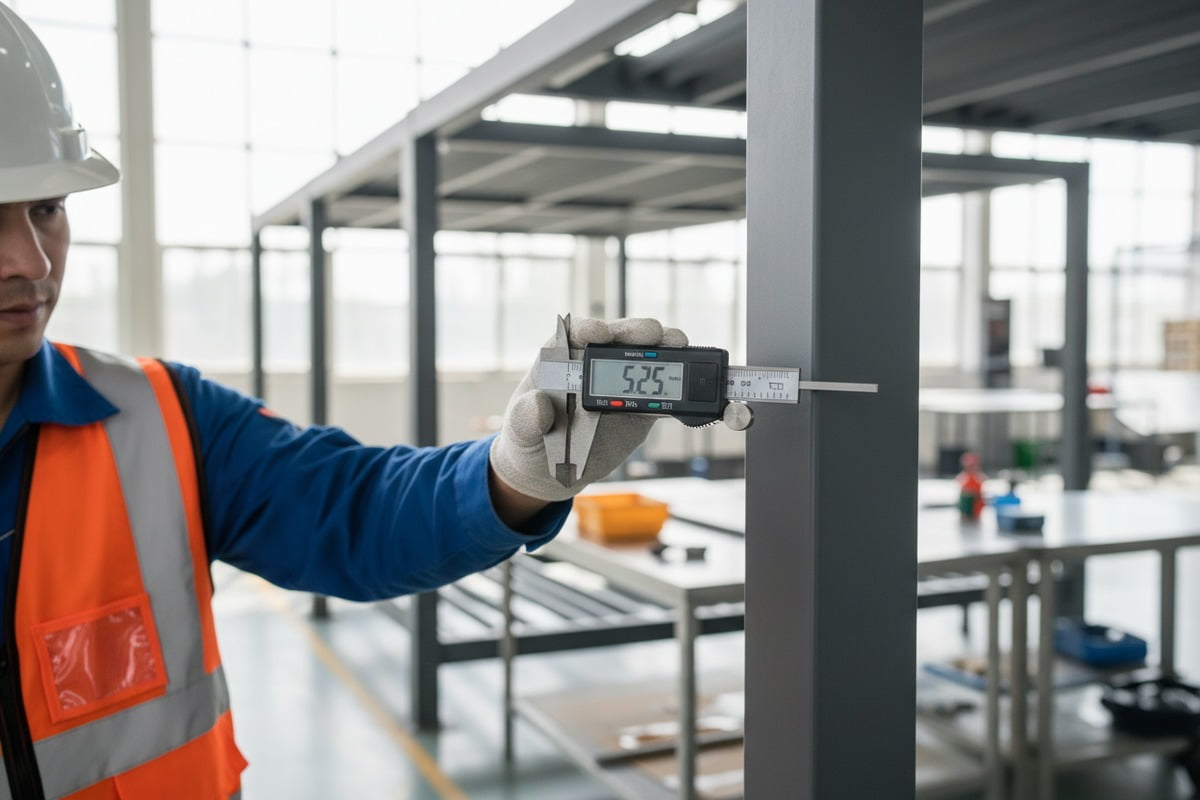
Yes, you can link final payment to inspection, and for a trial order I think you should. But the value is not in the words "ispezione da parte di terzi 5." The value is in how specific that inspection is. I have seen buyers write "balance after quality approval" and believe they are protected. They are not. That sentence is too loose. One person sees a minor scratch and says fail. Another says it is normal factory tolerance. Then both sides argue while the container booking gets closer.
Define pass or fail before production starts
A useful inspection clause starts with a checklist. For aluminum pergolas, that checklist should match the real failure points that damage your resale or installation schedule. In our orders to Europe, buyers care about profile thickness, powder coating consistency, hardware count, motor certification, dimensions, and packing protection. Those are measurable. "Good quality" is not.
| Inspection Item | What to Check | Pass Standard Example | Why It Matters |
|---|---|---|---|
| Aluminum profiles | Wall thickness and cut accuracy | Matches approved drawing and tolerance | Structural reliability |
| Surface finish | Color and coating consistency | Matches approved sample panel | Brand appearance |
| Hardware kit | Count and labeling | No missing connectors, screws, or brackets | Prevents site delays |
| Motor or electronics | Certification and operation | Approved model works and documents match | Compliance and safety |
| Packaging | Corner protection and carton marking | No exposed edges, clear SKU labels | Reduces freight damage |
The best time for a third-party inspector is after most goods are packed but before final loading. At that point, the inspector can verify product quality and packing quality together. That matters because many claims come from damaged finishes or missing parts, not from the frame itself.
Decide how much money depends on inspection
Linking one hundred percent of the balance to inspection sounds strong, but it can also create deadlock if the supplier worries about last-minute subjectivity. A more practical structure is to reserve the final 10% to 20% for inspection approval, while earlier payments cover production completion. Another option is balance after passed inspection and before original shipping documents are released. That keeps the supplier motivated and still protects the buyer.
I prefer holdback language that says what happens if the inspection fails. There should be a rework window, a second inspection date, and a rule for who pays the reinspection fee. Without that, even a good inspection clause can freeze the order.
Use evidence, not opinions
Ask the inspector to issue a report with photos, measurement notes, carton images, product labels, and a defect summary by severity. For a louvered pergola trial, a short operation video is also useful. It shows blade movement, drainage behavior, and motor response. Those details help later if there is a claim after arrival.
Third-party
Note a piè di pagina
1. Defines the role and responsibilities in managing international projects. ︎
2. Replaced with a working page on aluminum extrusion process basics from the Aluminum Extruders Council (AEC), an industry authority, consistent with the original domain. ︎
3. Provides a general overview of the powder coating process and its applications. ︎
4. Replaced with a definition of 'purchase order' from Wikipedia, an authoritative source. ︎
5. Explains the concept of independent quality assessment in manufacturing. ︎