
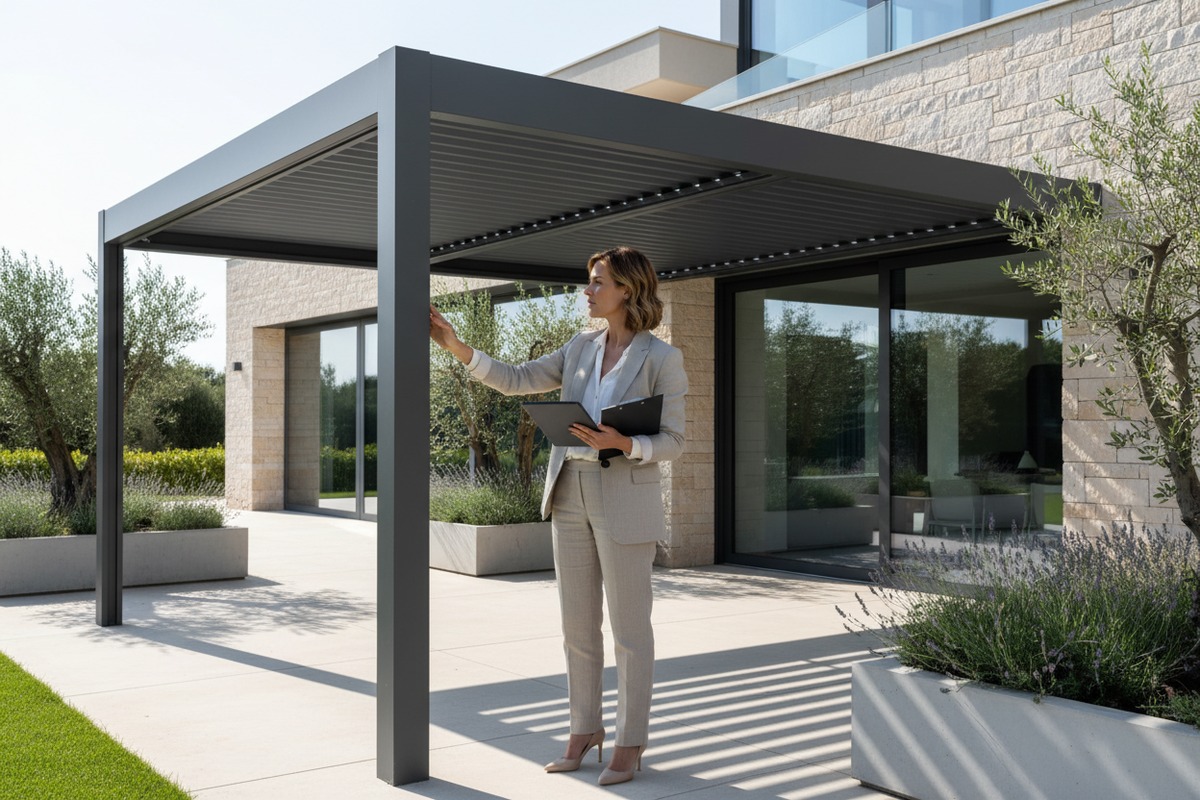
Choosing the wrong pergola supplier for Europe can cost you far more than money — it can cost you your reputation with contractors and end clients alike.
To evaluate an aluminum pergola supplier's export experience for Europe, verify their CE certifications, inspect packaging protocols for scratch-free transit, confirm RAL color customization capabilities, request delivery records to European wholesalers, and check multilingual documentation quality before committing to any order.
Over the past 25 years, our production team has shipped over 80,000 sets annually, and we have learned that European buyers need more than a good price CE certifications 1. They need proof. Below, we break down the exact criteria you should use to separate experienced exporters from risky newcomers.
How can I verify that my supplier's aluminum pergolas and motors meet mandatory CE and European safety standards?
Every year, we see European contractors reject shipments at customs because a supplier skipped proper certification RAL color customization capabilities 2. The financial and reputational damage is real and avoidable.
Request the supplier's CE Declaration of Conformity, EN 1090 structural certification, and motor-specific CE test reports. Cross-check these documents against EU databases and ask for third-party audit records to confirm compliance is genuine, not self-declared.
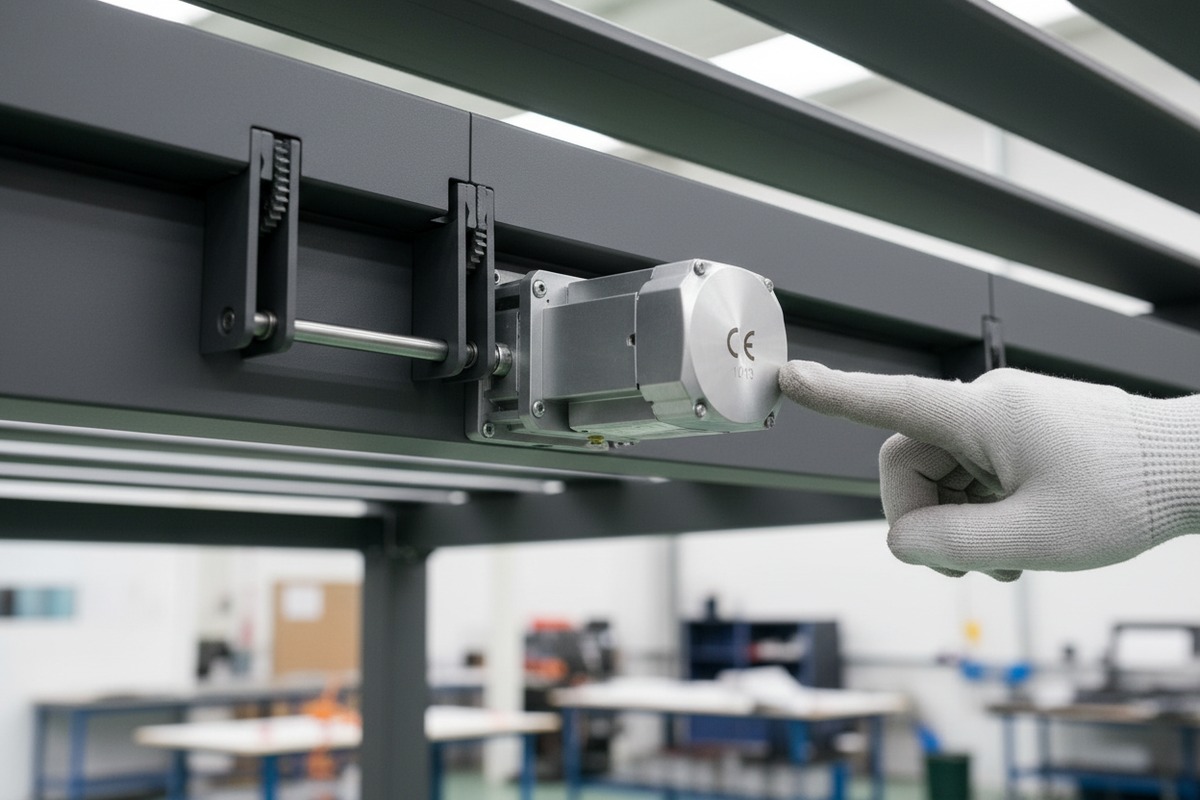
Why CE Marking Is Non-Negotiable
CE marking is not optional for aluminum pergolas sold in the EU CE Declaration of Conformity 3. It proves the product meets health, safety, and environmental standards under EU directives. Without it, your goods can be seized at the border. Worse, if an uncertified pergola fails during a storm and injures someone, you face legal liability.
When our engineering team designs a new pergola model, the first milestone is always CE compliance. We test structural load capacity, motor safety, and electrical components before anything goes into mass production.
Key Certifications to Request
Not all certifications carry the same weight. Here is a breakdown of the most important ones for European pergola imports:
| Certification | What It Covers | Why It Matters |
|---|---|---|
| CE Marking | Overall EU product conformity | Legal requirement for EU market entry |
| EN 1090 | Structural steel and aluminum components | Proves load-bearing capacity meets EU construction norms |
| REACH Compliance | Chemical substances in coatings/materials | Ensures no banned substances in powder coatings or finishes |
| ISO 9001:2015 | Quality management system | Shows consistent manufacturing processes |
| Motor CE (LVD + EMC) | Direttiva sulla bassa tensione 4 & Electromagnetic Compatibility | Mandatory for any motorized louver or zip blind system |
How to Spot Fake or Outdated Certificates
Some suppliers show expired certificates or certificates issued for a different product line. Always check:
- The certificate number matches the specific product model you are ordering.
- The issuing body is an accredited Notified Body listed in the EU NANDO database 5.
- The test reports reference actual lab testing, not just a desktop review.
- Motor certificates cover the exact motor brand and model included in your pergola.
Our motors undergo individual CE testing covering both the Low Voltage Directive and Electromagnetic Compatibility. We provide full test reports, not just the certificate cover page. If a supplier refuses to share test reports, that is a clear red flag.
CBAM: The New Compliance Layer
A partire dal 2026, il EU Carbon Border Adjustment Mechanism 6 will require importers to report embedded greenhouse gas emissions in aluminum products. Ask your supplier now whether they can provide emissions data per ton of aluminum used. Suppliers who prepare early will save you headaches later.
What packaging protocols should I look for to ensure my pergola profiles arrive in Europe without scratches or deformation?
One of the most common complaints we hear from new European clients is about their previous supplier's packaging. Scratched profiles, bent beams, and missing hardware — all caused by poor transit protection over 30+ days at sea.
Look for suppliers who use PE film wrapping on every profile, foam corner protectors, reinforced plywood crating, and secure pallet strapping. Each component should be labeled, barcoded, and packed in a logical installation sequence to prevent handling damage and on-site confusion.

The Real Cost of Damaged Goods
A single scratched main beam means you cannot install the pergola. In Europe, sourcing a replacement profile from China takes 4–6 weeks minimum. During that time, your contractor client misses deadlines, your end customer loses patience, and you absorb penalty costs. We learned this lesson early. That is why our packaging system was redesigned specifically for long-haul ocean freight.
Our Packaging Standard vs. Basic Export Packaging
| Packaging Element | Basic Export Standard | Lonsonpergola Standard |
|---|---|---|
| Profile wrapping | Single-layer plastic film | Double PE film + foam sleeve per profile |
| Corner protection | Cardboard corners | High-density foam + cardboard corner guards |
| Outer casing | Cardboard box | Reinforced plywood crate with steel strapping |
| Hardware packing | Loose in a bag | Individually labeled bags, grouped by installation step |
| Pallet base | Standard pallet | Fumigated wooden pallet with anti-slip mats |
| Labeling | Basic shipping label | QR-coded labels linking to installation guide per box |
Component Completeness Checks
Missing a single non-standard connector can halt an entire installation. Before sealing each crate, our quality control team runs a component checklist against the order's Bill of Materials. Every screw, bracket, motor cable, and drainage fitting is counted and documented. We photograph each packed crate and share the images with the buyer before shipment.
Ask These Questions Before You Order
- Does the supplier provide packing photos or videos before shipping?
- Is hardware packed separately or mixed with profiles?
- Are pallets fumigated and ISPM-15 compliant 8 for EU customs?
- Does the supplier offer insurance-backed transit damage claims?
- Can they provide a sample shipment so you can evaluate packaging quality firsthand?
If a supplier hesitates on any of these points, consider it a warning sign. European wholesalers and contractors have zero tolerance for packaging failures, and neither should you.
How do I assess a supplier's ability to handle my custom RAL color requests and provide professional multilingual installation guides?
When we first started exporting to Italy and France, we quickly realized that color accuracy and clear documentation were as important as structural quality. A pergola in the wrong shade of grey will be rejected on sight by a design-conscious European client.
Assess the supplier's RAL color capability by requesting powder-coated color samples with delta E values below 1.5, and verify multilingual installation guides by reviewing existing manuals in English, French, German, and Italian for clarity, 3D diagrams, and step-by-step accuracy.
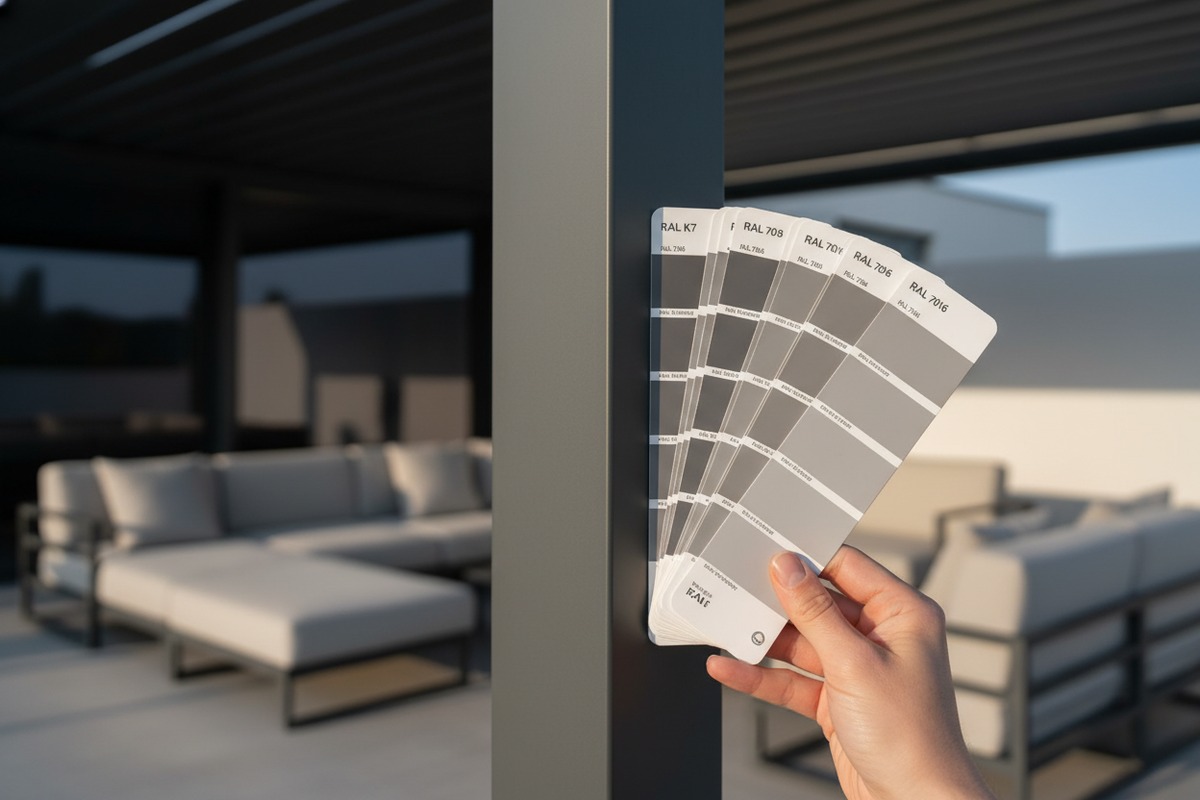
RAL Color Accuracy: More Than Just a Number
European architects and designers specify exact RAL colors. RAL 7016 (Anthracite Grey) is the most popular pergola color across Germany, the Netherlands, and Scandinavia. But "close enough" does not exist. A visible color difference between the main beam and the side post will trigger a complaint or return.
Our powder coating line uses Qualicoat-grade paints and measures every batch with a spectrophotometer. We target a delta E value 9 below 1.5, which means the color difference is invisible to the human eye. We also offer custom texture finishes — matte, semi-gloss, and wood-grain — because different European markets have different preferences.
Turnaround Time for Custom Colors
| Color Type | Typical Turnaround | What to Watch For |
|---|---|---|
| Standard RAL (e.g., 7016, 9005, 9016) | 3–5 days | Should be stocked; delays indicate poor inventory |
| Custom RAL (e.g., 7039, 6005) | 7–10 days | Supplier must source specific powder; ask for sample first |
| Special finishes (wood-grain, textured) | 10–15 days | Requires sublimation transfer process; verify sample quality |
| Color matching from physical sample | 12–18 days | Lab matching needed; request delta E test report |
Why Installation Guides Make or Break Your Reputation
A poorly translated installation manual causes errors. Errors cause callbacks. Callbacks cost money and trust. In our experience, European contractors expect:
- Clear 3D exploded-view diagrams, not just flat sketches.
- Step-by-step numbered instructions with torque specifications.
- Multilingual versions — at minimum English, French, German, and Italian.
- QR codes linking to installation videos.
- A separate wiring diagram for motorized models.
We employ native-speaking translators for our key European languages. Every manual is reviewed by an installation technician, not just a translator, to make sure the technical language is correct. If your supplier's manual reads like a machine translation, your installers will waste hours guessing.
How to Test This Before Ordering
Request a sample installation guide for one of the supplier's existing products. Read it as if you were an installer with no prior experience with that brand. If you cannot follow it easily, neither will your client's team.
Also ask: Does the supplier update guides when product designs change? Outdated manuals referencing old bracket types or discontinued motor models are a common and costly problem.
What evidence should I ask for to confirm the supplier has a proven track record of on-time delivery to European wholesalers and contractors?
Missed delivery windows during peak season are devastating for European distributors. We have seen competitors lose major accounts because a single late shipment caused a contractor to miss a project deadline and face penalty clauses.
Ask for documented shipping records showing container tracking numbers, port-of-arrival dates, and client references from at least three European countries. Verify claims through direct contact with existing buyers, Alibaba trade assurance records, or third-party logistics audit reports.
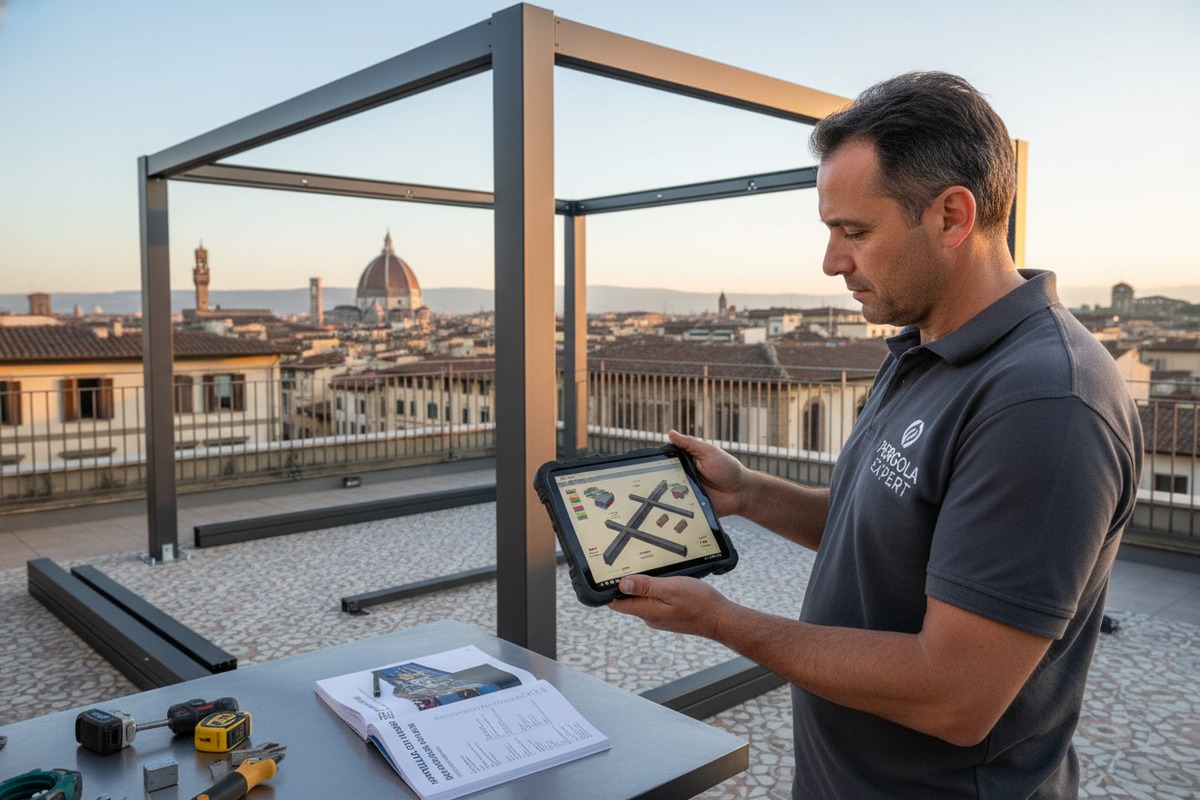
Why On-Time Delivery Is the Ultimate Trust Signal
Price and quality get you the first order. On-time delivery gets you the second, third, and tenth. European wholesalers plan their inventory months in advance. A contractor bidding on a hotel terrace project in Barcelona needs the pergolas on-site by a specific week — not "approximately" that month.
Our factory operates with a 30-day rapid delivery guarantee for standard products. We maintain stock of popular models and standard RAL-coated profiles so we can ship within days for repeat orders. But you should not take any supplier's word for this. You need evidence.
What Documents to Request
Here is a practical checklist of evidence you should collect:
- Bill of Lading copies from past European shipments (with sensitive client details redacted if needed).
- Container tracking screenshots showing actual arrival dates versus promised dates.
- Client reference list with contact details for at least 2–3 European buyers willing to confirm delivery performance.
- Alibaba Trade Assurance records if the supplier uses that platform — these show dispute history and on-time rates.
- Production capacity documentation proving the factory can handle your order volume without delays.
Red Flags That Signal Delivery Risk
Watch for these warning signs:
- The supplier cannot name specific European ports they have shipped to.
- They avoid giving you references from existing European clients.
- Lead time estimates are vague ("about 30 to 60 days").
- They have no contingency plan for peak-season surges or raw material shortages.
- They lack relationships with reliable freight forwarders experienced in EU customs clearance.
How Established Exporters Compare
Across the industry, export experience varies dramatically. Polish manufacturers like PAGEN and Nerli Gruppen have built strong reputations through decades of consistent delivery to Western and Northern Europe. Turkish suppliers offer competitive pricing but sometimes lack the logistical infrastructure for reliable scheduling. Premium Belgian and Italian brands like Renson and KE Outdoor Design command higher prices but deliver exceptional consistency.
Our approach sits in the mid-to-high-end segment: factory-direct pricing from China combined with the reliability systems that European buyers expect. We assign a dedicated export coordinator to each European account. That coordinator tracks production milestones, shares real-time updates, and flags potential delays before they become problems.
Verify, Then Trust
The best approach is to start with a trial order. Ship one container, track the entire process, and evaluate the experience from order confirmation to on-site unboxing. If the supplier performs well on the trial, scale up. If they miss deadlines or deliver damaged goods, you have your answer — and you have not risked a large order to get it.
A supplier with genuine European export experience will welcome a trial order. They know it is the fastest way to earn your long-term business.
Conclusione
Evaluating an aluminum pergola supplier for Europe comes down to proof — certifications, packaging evidence, color accuracy, documentation quality, and verified delivery records. Start with a trial order and let the results speak.
Note a piè di pagina
1. Official EU page explaining CE marking requirements and benefits. ︎
2. Official website for RAL colors, a widely used European color standard. ︎
3. Official EU guidance on the mandatory Declaration of Conformity for CE marked products. ︎
4. Official EU page detailing the Low Voltage Directive (LVD) for electrical equipment safety. ︎
5. Official European Commission database for Notified Bodies involved in conformity assessment. ︎
6. Official EU taxation and customs page explaining the CBAM's purpose and scope. ︎
7. TÜV SÜD provides authoritative information on EN 1090 certification for structural components. ︎
8. Official International Plant Protection Convention (IPPC) standard for wood packaging material. ︎
9. Explains the Delta E metric for quantifying color difference and accuracy. ︎