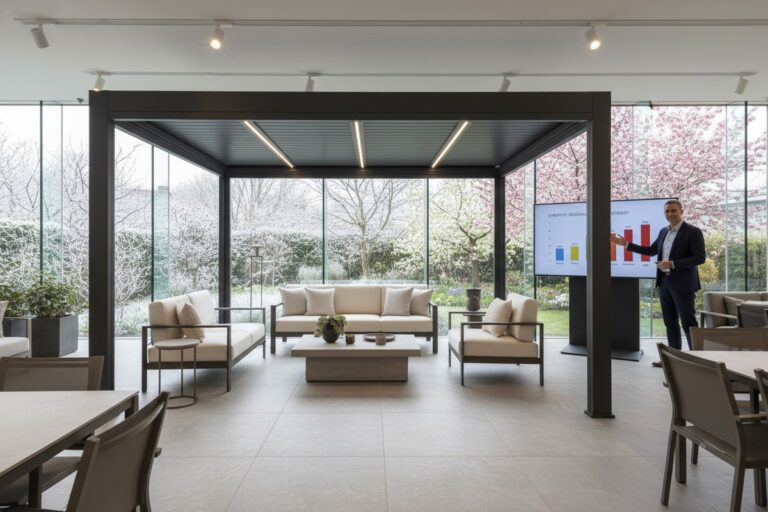

Every year, our quality team deals with buyers who discover too late that their pergolas fail European compliance checks EN 1991-1-3 for snow loads 1. The costs are brutal—detained shipments, refused installations, and damaged reputations. This problem is entirely preventable if you request the right EN standard testing before production begins.
To request European EN standard testing for aluminum pergolas, specify EN 13561 for bioclimatic systems and EN 1090 for structural components during your RFQ stage. Demand third-party test reports, CE documentation, and Declaration of Performance from accredited laboratories before approving mass production.
This guide breaks down each critical step. We will cover how to verify supplier certifications, which specific EN standards apply to wind and snow loads, how to arrange third-party testing for custom designs, and how to maintain consistent quality across bulk orders EN 1991-1-4 per le azioni del vento 2. Let's dig in.
How can I verify that my supplier's EN certification and test reports are actually authentic?
Our export team has seen forged CE certificates more often than we'd like to admit EN 1999 for aluminum design 3. Some suppliers photoshop logos, alter report numbers, or reference standards that don't even apply to pergolas. If you don't verify, you carry all the risk.
To verify EN certification authenticity, cross-check certificate numbers directly with the issuing notified body's online database. Request the original test report with the laboratory's contact details, then confirm it independently. Authentic reports always include a unique reference number, test date, and the notified body's accreditation number.

Why Fake Certificates Are So Common
The problem starts with how easy it is to copy a PDF. A supplier with one legitimate test report for a single product can modify it to cover dozens of untested models. Buyers who don't read the fine print never notice. The certificate might reference a different product size, a different alloy, or a completely different manufacturer.
Step-by-Step Verification Process
Here is a practical checklist you can follow:
- Ask for the full test report, not just the certificate summary. A real report is typically 20–50 pages long.
- Identify the notified body. Look for their four-digit identification number issued by the EU NANDO database 4.
- Search the NANDO database at the European Commission website. Confirm the notified body is authorized for the relevant standard (e.g., EN 13561 or EN 1090).
- Contact the notified body directly. Email them with the certificate number and ask them to confirm its validity.
- Compare product details. The tested product model, dimensions, and materials must match what you are ordering.
Red Flags in Supplier Documentation
| Red Flag | What It Means | What to Do |
|---|---|---|
| Certificate has no notified body number | Likely self-declared or fabricated | Request the four-digit NB number |
| Test report covers a "generic" product range | May not apply to your specific model | Ask for model-specific testing |
| Supplier refuses to share the full report | They may only have a summary or fake | Walk away or insist on disclosure |
| Certificate date is older than 5 years | Standards may have been revised since | Request updated testing |
| Lab name returns no results in NANDO | The lab may not be EU-accredited | Verify through official EU channels |
Use Third-Party Inspection Agencies
When our clients in Italy or Germany request verification, we encourage them to use agencies like TÜV, SGS, or Bureau Veritas 5. These agencies can perform a document audit at the supplier's facility. They compare the physical product against the specifications listed in the test report. This costs a few hundred euros but saves thousands in potential losses.
Factory Production Control Certificates
Beyond product test reports, EN 1090 requires a Factory Production Control (FPC) certificate 6. This proves the factory has a quality management system in place. It is issued by a notified body after an on-site audit. Ask your supplier for this certificate and verify it the same way you verify product reports. Without FPC, the CE marking under EN 1090 is invalid.
Which specific EN standards must I demand to ensure my pergolas meet European wind and snow load requirements?
When we design pergola profiles at our engineering center, the very first question is always about the target installation region. A pergola for coastal Portugal faces different forces than one installed in the Austrian Alps. The wrong standard choice leads to structural failure.
For European wind and snow load compliance, demand EN 13561 for bioclimatic and louvered pergola systems (covering wind resistance Classes 1–6) and reference Eurocodes EN 1991-1-3 for snow loads and EN 1991-1-4 for wind actions. Structural aluminum frames must comply with EN 1090-1 and EN 1999 for aluminum design.
EN 13561: The Core Standard for Bioclimatic Pergolas
EN 13561:2015 is the primary harmonized standard for external blinds, awnings, and related shade systems. EN 13561 for bioclimatic systems 7 It covers adjustable louvered pergolas directly. The standard defines performance classes for:
- Wind resistance (Classes 0 to 6)
- Water tightness
- Operating force and endurance
- Mechanical safety
Most mid-range European projects require at least wind Class 4. For exposed coastal or elevated locations, Class 5 or 6 is necessary.
EN 1090: Structural Execution Standard
EN 1090-1 covers CE marking for structural steel and aluminum components. EN 1090 for structural components 8 If your pergola is load-bearing or attached to a building, this standard applies. It requires:
- Initial Type Testing (ITT)
- Factory Production Control (FPC)
- An Execution Class (typically EXC2 for pergolas)
Our production line follows EXC2 requirements. This means we weld, cut, and assemble under documented procedures verified by external auditors.
Eurocodes: Calculating Actual Loads
The Eurocodes provide the engineering formulas for calculating real-world forces. Here are the most relevant ones:
| Eurocode | Covers | Why It Matters for Pergolas |
|---|---|---|
| EN 1990 | Basis of structural design | Sets safety factors and load combinations |
| EN 1991-1-3 | Snow loads | Defines snow load zones across Europe (0.5–4.0 kN/m²) |
| EN 1991-1-4 | Wind actions | Calculates wind pressure based on location, height, terrain |
| EN 1999 | Aluminum structural design | Specifies allowable stress, deflection, and connection design |
Wind Resistance Classes Explained
| Wind Class (EN 13561) | Approximate Wind Speed | Typical Application |
|---|---|---|
| Classe 1 | Up to 28 km/h | Sheltered gardens, mild climates |
| Classe 2 | Up to 38 km/h | Urban settings with some exposure |
| Class 3 | Up to 49 km/h | Standard residential use |
| Class 4 | Up to 63 km/h | Most European regions |
| Class 5 | Up to 79 km/h | Coastal or elevated areas |
| Class 6 | 100+ km/h | Extreme exposure zones |
Snow Load Considerations
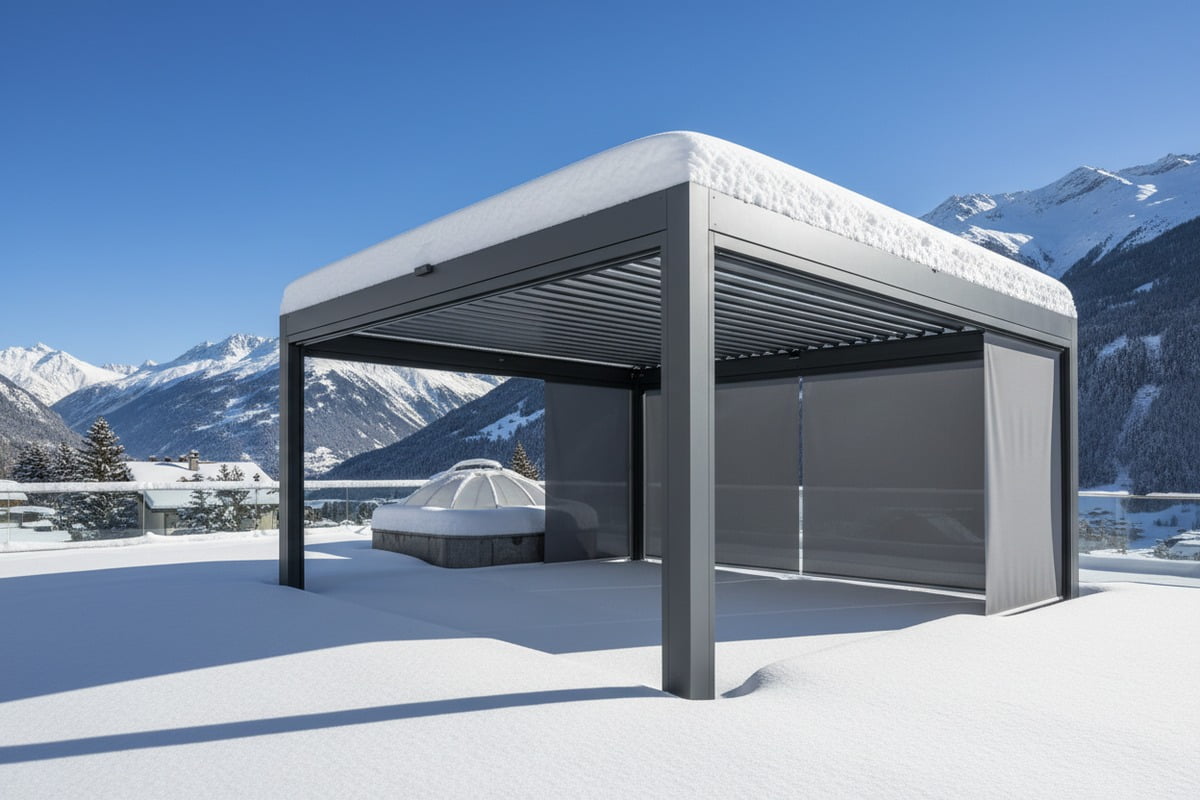
Snow loads vary dramatically. Northern Scandinavia can see ground snow loads exceeding 4.0 kN/m², while southern Spain may face near zero. When you source pergolas, specify the target snow zone. Our engineering team designs profiles with wall thicknesses from 3mm to 6mm and post sections up to 110x110mm specifically to handle heavy snow accumulation. A well-engineered 4x4m pergola can support up to 170 kg/m² of snow load.
How to Include These in Your RFQ
State clearly in your Request for Quotation:
- "Product must comply with EN 13561, wind resistance Class [X]."
- "Structural frame must comply with EN 1090-1, Execution Class EXC2."
- "Design calculations must follow EN 1991-1-3 for snow zone [X] and EN 1991-1-4 for wind zone [X]."
- "Supplier must provide Declaration of Performance 9 (DoP) with CE marking documentation."
This removes ambiguity and forces the supplier to either comply or decline honestly.
Can I request third-party EN testing for my custom private-label pergola designs?
We work with private-label clients across Europe who need their own branding on products that still meet full EN compliance. The question comes up constantly—can a custom design be tested even if it doesn't match a standard catalog product? The answer is yes, but the process requires planning.
Yes, you can request third-party EN testing for custom private-label pergola designs. Commission an accredited laboratory (notified body) to perform Initial Type Testing on your specific design. The test report and CE documentation will be issued under your brand, provided you act as the legal manufacturer or authorized representative.
Who Arranges the Testing?
There are two common scenarios:
-
The OEM factory arranges testing. The factory submits your custom design to a notified body. The test report references the factory's FPC system. Your private-label brand can appear on the Declaration of Performance if you are named as the manufacturer or importer.
-
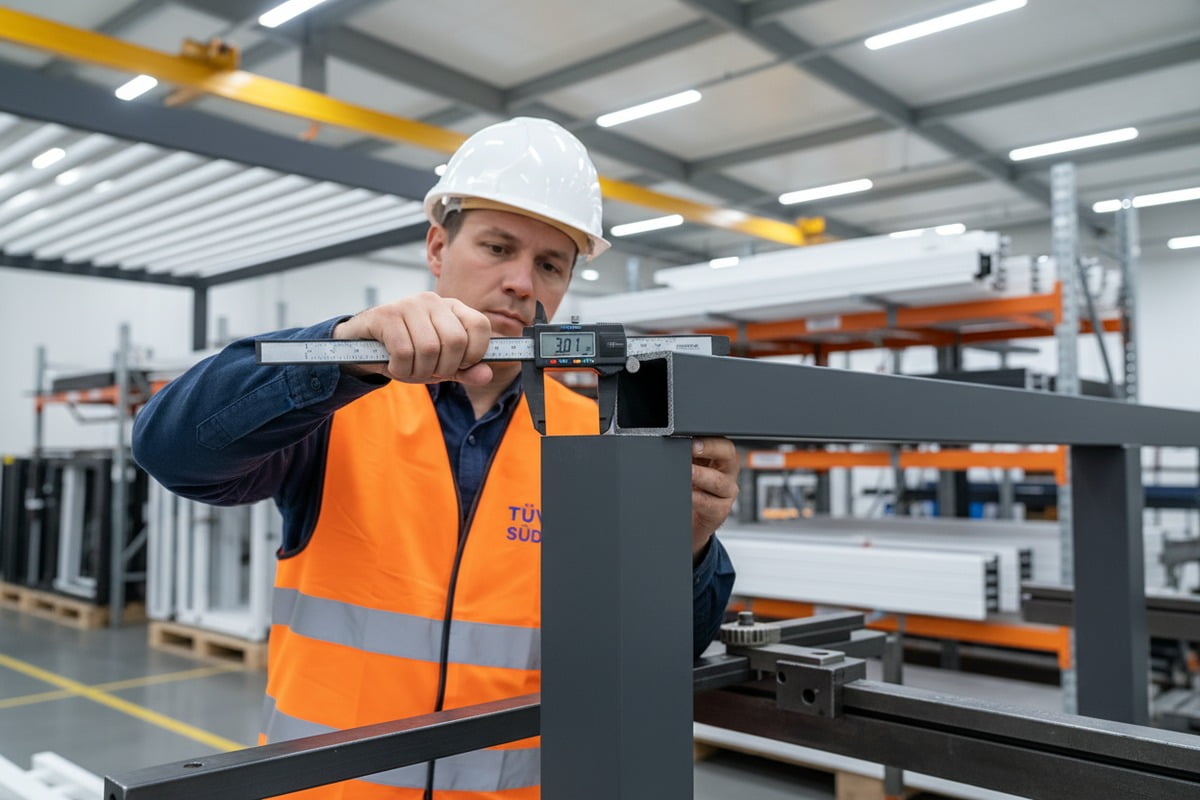
You arrange testing independently. You select an accredited lab (TÜV SÜD, Applus+, CSTB, etc.), ship samples directly, and own the test results outright. This gives you full control but costs more.
In our experience, the first option is more efficient. We coordinate with the notified body, prepare the technical file, and handle sample logistics. The buyer reviews and approves the final documentation.
What Gets Tested?
For a custom louvered pergola, the third-party lab will typically test:
- Wind resistance (per EN 13561): The pergola is mounted in a wind tunnel or pressure chamber. Louvers are tested in open and closed positions.
- Structural strength (per EN 1090 / EN 1999): Load tests simulate snow and dead loads on the roof and frame.
- Motor and electronics (per Low Voltage Directive and EMC Directive): If the pergola uses motorized louvers, the motor must carry its own CE marking.
- Corrosion and coating (per Qualicoat or GSB standards): Powder coating adhesion, UV stability, and salt spray resistance.
Cost and Timeline
Testing a single custom pergola configuration typically costs between €5,000 and €15,000, depending on complexity and the number of test parameters. The timeline from sample submission to final report issuance is usually 6 to 12 weeks.
This is a one-time cost per design. Once you have the test report, it covers all production units of that same design. If you change dimensions beyond certain tolerances, retesting may be required.
Digital Twin Simulations Before Physical Testing
A growing trend in 2025–2026 is using digital twin models to simulate pergola performance before committing to physical testing. Our engineering team uses finite element analysis (FEA) software to model wind pressure, snow accumulation, and thermal expansion on custom designs. This catches potential failures early, reduces the number of physical test iterations, and saves money. While digital simulations alone do not replace physical EN testing, they significantly de-risk the process.
Protecting Your Private-Label IP
When you commission testing through your supplier's factory, make sure your contract specifies:
- The test report and DoP are co-owned or exclusively yours.
- The supplier cannot use your private-label test report for other clients.
- Design drawings and tooling molds remain your intellectual property.
We always sign non-disclosure agreements with our private-label partners. This protects both sides.
How do I ensure the bulk production quality consistently matches the EN standards of the initial sample?
One of the hardest lessons in international sourcing is this: the sample is always perfect. The first container rarely matches. Our quality control department exists specifically because maintaining consistency across 10,000 units is a fundamentally different challenge than producing one flawless prototype.
To ensure bulk production matches EN standards, require your supplier to maintain a certified Factory Production Control (FPC) system under EN 1090. Implement pre-shipment inspections, demand material traceability certificates for every batch, and schedule periodic third-party factory audits throughout the production cycle.
Factory Production Control (FPC) Is Non-Negotiable
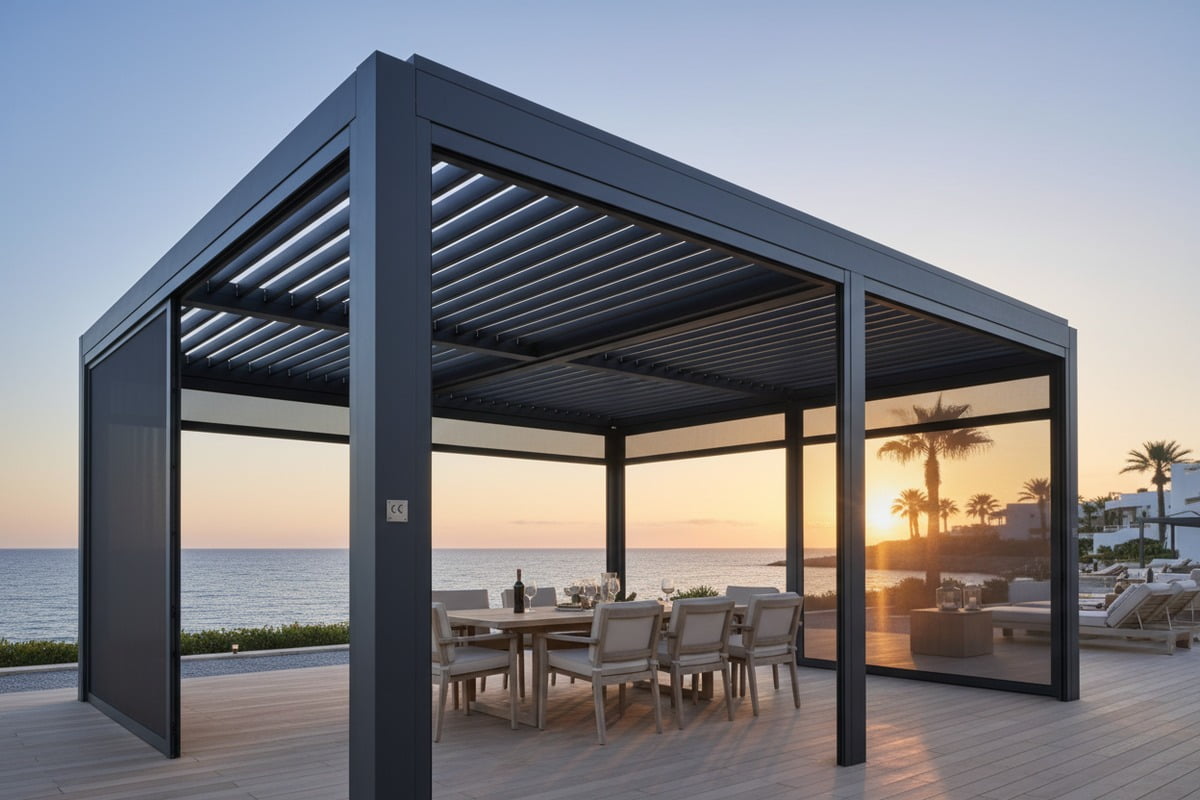
FPC is not optional under EN 1090. It is a documented system that governs every production step—from incoming raw material inspection to final packing. A notified body audits the factory annually. If the factory loses its FPC certificate, all CE markings issued under it become invalid.
When evaluating suppliers, ask these specific questions:
- Do you hold a current FPC certificate under EN 1090?
- When was your last notified body audit?
- Can I review your FPC manual and recent audit findings?
Material Traceability
Every aluminum extrusion profile in your pergola should be traceable to its source. This means the supplier must provide mill certificates (EN 10204 Type 3.1 10) for the aluminum alloy, confirming:
- Alloy grade (typically 6063-T5 or 6061-T6)
- Mechanical properties (tensile strength, yield strength, elongation)
- Chemical composition
- Heat treatment batch number
Without traceability, you have no way to confirm that the bulk order uses the same material grade as your approved sample.
Inspection Protocol for Bulk Orders
| Inspection Stage | What to Check | Who Does It |
|---|---|---|
| Pre-production | Raw material certificates, alloy grade, profile dimensions | Buyer's QC agent or supplier QC |
| During production | Weld quality, coating thickness (≥60 microns), louver alignment | Third-party inspector (SGS, TÜV, Bureau Veritas) |
| Pre-shipment | Full assembly test, motor function, dimensional spot-check (AQL 2.5) | Third-party inspector |
| Container loading | Packaging integrity, component count, labeling accuracy | Third-party inspector or buyer's agent |
Powder Coating Consistency
Surface finish is where many suppliers cut corners in bulk. The approved sample may feature premium powder coating with 80-micron thickness and full Qualicoat certification. The bulk run might drop to 40 microns with uncertified paint. Our factory uses Tiger Drylac powder coating on every batch, and we provide coating thickness test reports with each shipment. Insist on the same from your supplier.
Ongoing Supplier Audits
Don't rely on a single factory visit. Schedule audits every 6 to 12 months, or at minimum once per major order. The audit should cover:
- FPC system compliance
- Calibration records for testing equipment
- Weld inspection reports
- Staff training records
- Storage conditions for raw materials
What Happens When Quality Slips?
Build consequences into your purchase contract. Common clauses include:
- Replacement at supplier's cost for any unit failing EN performance standards.
- Penalty clauses for late delivery caused by rework.
- Right to withhold final payment (typically 10–20%) until third-party inspection confirms compliance.
We accept these terms because we trust our processes. A supplier who resists such clauses likely doesn't trust theirs.
Conclusione
Requesting EN standard testing is not a formality. It is your strongest tool to protect your brand, your customers, and your market access in Europe. Verify every certificate, specify the right standards, invest in third-party testing for custom designs, and never assume bulk quality matches your sample without proof. Start these conversations at the RFQ stage, not after production begins.
Note a piè di pagina
- Details of the Eurocode standard for determining snow loads on structures. ︎
- Official Eurocodes website detailing EN 1991-1-4 for wind actions on structures. ︎
- Official Eurocodes website detailing EN 1999 for the design of aluminum structures. ︎
- Official European Commission database for Notified Bodies. ︎
- Official website of TÜV SÜD, a leading inspection and certification agency. ︎
- TÜV SÜD's services for EN 1090 Factory Production Control certification. ︎
- Official standard details for external blinds and awnings, including pergolas. ︎
- Authoritative guide on EN 1090 for structural steel and aluminum components. ︎
- Authoritative page from the European Commission on the Construction Products Regulation, which includes the Declaration of Performance. ︎
- Explanation of EN 10204 Type 3.1 inspection certificates for metallic products. ︎