
Running a pergola production line for over 25 years, we have watched distributors struggle with one recurring problem: beautiful products sitting on websites that generate almost no quote requests.
The best content ideas for promoting aluminum pergolas on distributor websites include durability demonstrations, technical specification guides, OEM customization showcases, and real project case studies. Together, these content types move visitors from initial interest through comparison and into confident purchase decisions.
This article breaks down the exact content strategies that help distributor websites convert browsers into buyers electrical wiring guides 1. Each section targets a different stage of the sales funnel so you can build a content mix that educates, inspires, and qualifies leads. Let's walk through the most effective approaches.
How can I showcase the durability and wind-load capacity of my aluminum pergolas to build trust?
Most distributors we work with lose deals not because their pergolas lack strength, but because their websites never prove it. Buyers see claims like "heavy-duty" everywhere, and without evidence, those words mean nothing.
To showcase durability and wind-load capacity, publish third-party test reports, material thickness specifications, wind and snow load ratings with exact figures, and side-by-side comparison content that contrasts aluminum's corrosion resistance and structural strength against wood, vinyl, and steel alternatives.
Start with Numbers, Not Adjectives
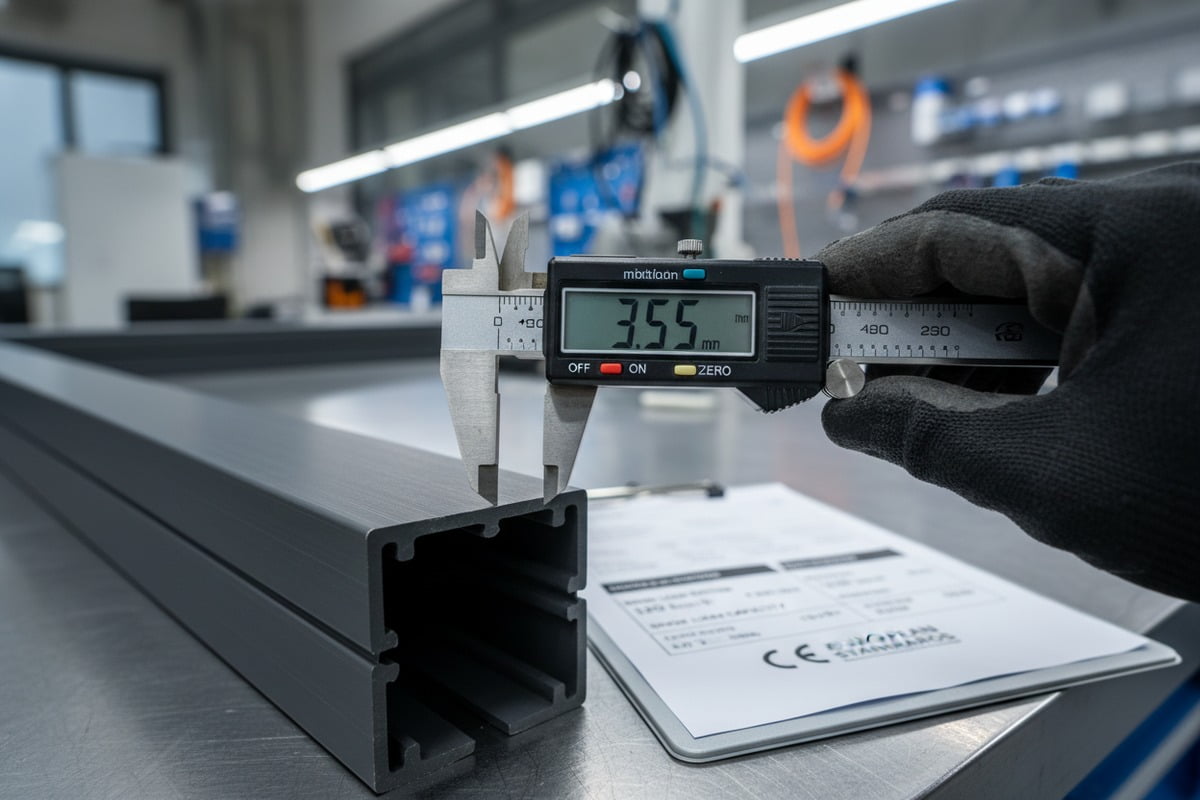
When our engineering team designs a pergola frame, every profile goes through load simulation before production begins. Distributors should translate that technical rigor into website content. Instead of saying "built to last," state the exact wind-load rating in km/h or mph, the snow-load capacity in kg/m², and the wall thickness of the aluminum extrusion in millimeters.
For example, many of our standard louvered pergola models are engineered to handle wind loads up to 120 km/h and snow loads up to 75 kg/m². Those numbers give a contractor or purchasing manager something concrete to compare against local building codes 2.
Material Comparison Tables Drive Decisions
One of the highest-converting content formats we see on distributor sites is a simple comparison table. Buyers researching pergola materials want to see aluminum stacked against wood, vinyl, and steel on the factors that matter most.
| Feature | Aluminum | Wood | Vinyl | Steel |
|---|---|---|---|---|
| Rust / Corrosion Resistance 3 | Excellent (powder-coated) | Poor (requires sealing) | Good | Moderate (can rust) |
| Maintenance Required | Mild soap wash yearly | Staining/sealing every 1–2 years | Periodic cleaning | Rust treatment needed |
| Typical Lifespan | 25+ years | 10–15 years | 15–20 years | 20+ years with upkeep |
| Wind-Load Suitability | High (engineered profiles) | Moderate | Low | High |
| Weight | Lightweight | Heavy | Light | Very heavy |
| Customization Flexibility | High (extrusion-based) | Moderate | Low | Moderate |
This kind of table does the selling for you. A homeowner scanning the page instantly sees why aluminum is the better long-term choice. A contractor comparing systems can justify the recommendation to their client.
Show the Proof, Not Just the Promise
Distributors should also consider publishing powder-coating test results. Our factory uses Qualicoat-standard coating processes 4, and we can provide salt spray test data, UV resistance reports, and adhesion test results. Posting these on your website—even as downloadable PDFs—creates a layer of trust that competitors without documentation simply cannot match.
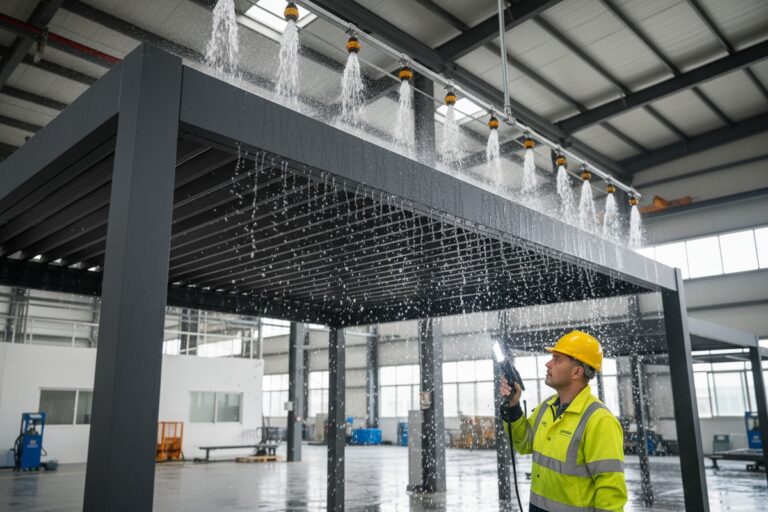
Another powerful tactic is video content showing structural stress tests. Even a short clip of a pergola frame under simulated wind or load pressure communicates more durability than a full page of text. We regularly share test footage with our distribution partners for exactly this purpose.
Climate-specific content also builds confidence. Buyers in coastal regions worry about salt corrosion. Buyers in northern climates worry about snow loads. Creating targeted landing pages or blog posts that address these concerns directly—"Will this pergola withstand Mediterranean coastal conditions?"—turns generic product pages into trust-building tools.
What technical specifications and installation guides should I include to reduce my customers' after-sales issues?
From our experience shipping over 80,000 sets annually to European markets, the single biggest source of after-sales complaints is not product defects. It is confusion during installation caused by incomplete documentation.
Include detailed dimension drawings, component checklists with part numbers, step-by-step installation manuals with 3D visuals, electrical wiring guides for motorized systems, anchoring specifications for different substrate types, and a pre-installation site-preparation checklist to dramatically reduce after-sales support requests.
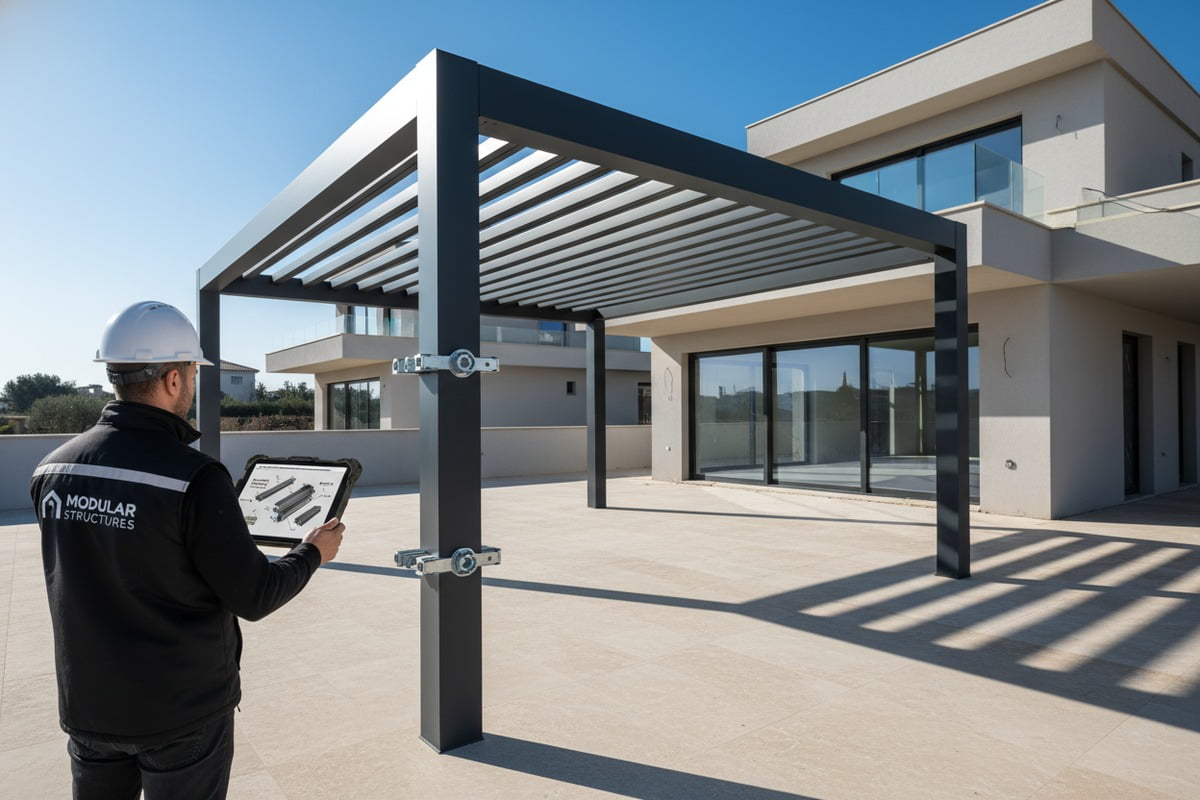
The Documentation Package That Prevents Returns
When a distributor's installer opens a pergola kit on-site and finds no clear guide, every minute of confusion costs money. Our team learned early that the installation manual is not an afterthought—it is part of the product. Here is what we recommend every distributor website includes as downloadable content:
| Document Type | Purpose | Format |
|---|---|---|
| Dimension & Layout Drawings | Verify fit before ordering | PDF / DWG |
| Component Checklist | Confirm all parts on delivery | PDF (printable) |
| Step-by-Step Install Manual | Guide installers through assembly | PDF with 3D renders |
| Electrical Wiring Diagram | Safe motor and sensor hookup | PDF / Video |
| Anchoring Specification Sheet | Match fasteners to substrate type | |
| Maintenance Schedule Card | Set owner expectations | PDF (single page) |
Making these documents available on the distributor website does two things. First, it reduces inbound support calls. Second, it signals professionalism to contractors evaluating your brand.
Electrical and Automation Guides Are Critical
Motorized louvered pergolas are our fastest-growing product category. But motorized systems introduce complexity that a simple shade structure does not have. Installers need to know wire gauge requirements, transformer placement, rain sensor wiring, remote control pairing, and integration with home automation systems 5.
We produce dedicated wiring diagrams for every motorized model. Distributors who publish these guides on their websites see fewer installation errors and fewer warranty claims. A short video walkthrough of the wiring process—even just three to five minutes—can cut electrical-related support tickets in half.
Site Preparation Content Qualifies Better Leads
One underused content idea is a "Before You Order" checklist. This page walks the buyer through site measurement, ground leveling, drainage considerations 6, permit requirements, and clearance dimensions. It helps homeowners understand what preparation is needed, and it helps contractors plan more accurately.
This type of content also filters out unqualified leads. A buyer who reads your site-prep guide and then submits a quote request is much further along in their decision process than someone who just clicked a generic "Contact Us" button.
Addressing the Missing-Parts Problem
One pain point we hear repeatedly from European distributors is the cost of a single missing fastener. When a non-standard screw is absent from a shipped kit, the installer cannot finish the job. Replacement parts shipped internationally can take weeks. That is why we now include QR-coded component bags and a scannable checklist in every shipment. Distributors can feature this process on their website as a trust signal—showing buyers that your supply chain accounts for the small details that cause big delays.
How do I promote my OEM customization and private-label options to attract high-end project contractors?
When we sit down with a new distribution partner, the conversation almost always shifts to one question: "Can you put our brand on it and adjust it to our project specs?" The answer is yes—but the real challenge is making that capability visible on the website before the conversation even starts.
Promote OEM customization by publishing a dedicated customization page showing available RAL colors, profile options, size ranges, logo placement, packaging branding, and lead times. Include a visual configurator or specification form and highlight past private-label projects to demonstrate your capability to high-end contractors.

Make the Customization Menu Visible
High-end contractors and design professionals will not send a quote request if they think you only sell standard catalog products. Our factory supports full OEM and ODM services 7—custom sizes, specific RAL colors 8, branded packaging, custom louver widths, integrated lighting channels, and even bespoke post profiles. But none of that matters if the distributor's website does not clearly display it.
A dedicated "Customization" or "OEM Services" page should list every variable the buyer can control. Here is a sample layout:
| Customization Parameter | Options Available | Typical Lead Time Impact |
|---|---|---|
| Frame Color | Any RAL color, wood-grain finishes | +3–5 days for non-stock colors |
| Pergola Size | Custom width, depth, height | No impact if within standard range |
| Louver Style | Fixed, motorized, retractable | Depends on motor sourcing |
| Logo / Branding | Laser-engraved or printed on frame | +1–2 days |
| Packaging | Private-label boxes, branded manuals | +3 days |
| Accessories | Integrated LED, rain sensors, side screens | Varies by component |
| Certifications | CE, specific local compliance | Pre-certified for EU markets |
Speak the Contractor's Language
Contractors and architects do not browse distributor websites the way homeowners do. They want spec sheets, CAD files 9, load calculation data, and clear answers about lead times. If your website offers downloadable DWG or STEP files, you immediately stand out from competitors who only show lifestyle photos.
Our engineering team can produce project-specific drawings within 48 hours for distribution partners. Promoting that turnaround time on the website tells contractors, "We take your project seriously and we move fast."
Show, Don't Just Tell
The most effective way to promote private-label capability is to show real examples. With client permission, publish case studies of branded pergola projects. Show the custom color, the branded packaging, the installation photo, and the final result. This visual proof is far more convincing than a bullet-point list of services.
We also recommend a short "How It Works" process section on the customization page: Step 1 – Share your requirements. Step 2 – Receive a technical drawing within 48 hours. Step 3 – Approve a sample or rendering. Step 4 – Production begins with a 30-day delivery guarantee. This simple flow reduces perceived risk for first-time OEM buyers.
Address the Fear of Long Lead Times
Contractors working on hotel renovations, restaurant terraces, or residential developments operate on tight schedules. A missed delivery date can trigger penalty clauses. Our production capacity of 80,000 sets per year and extensive stock of standard components allows us to offer a 30-day rapid delivery guarantee on most orders. Distributors should make this promise prominent on their websites—it directly addresses one of the biggest pain points in the B2B pergola market.
Which types of project case studies and visual content will best demonstrate my pergola's quality to local buyers?
Our sales data consistently shows one pattern: distributor websites with real project galleries generate three to five times more quote requests than those with only product catalog images. Local buyers—whether homeowners or commercial operators—want to see the pergola in a setting that looks like theirs.
The most effective visual content includes completed project case studies with before-and-after photos, lifestyle galleries organized by application (patio, poolside, rooftop, commercial), video walkthroughs of finished installations, and customer testimonial features that pair images with measurable outcomes like extended outdoor season or increased seating capacity.
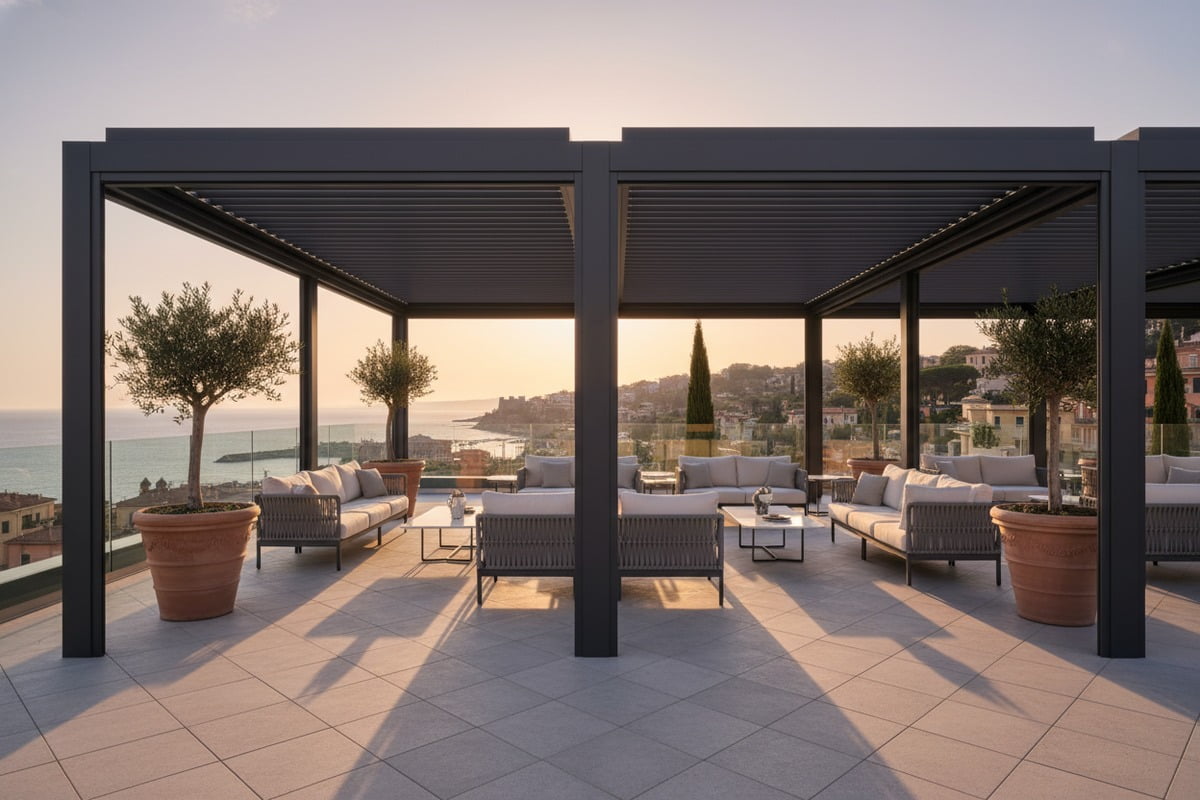
Organize Galleries by Use Case, Not by SKU
A common mistake on distributor websites is organizing the gallery by product model number. Buyers do not think in SKUs. They think in problems: "I need shade for my pool deck," "I want a covered outdoor dining area for my restaurant," or "I need a privacy screen for my rooftop terrace."
Structure your visual content around these real-world applications:
- Residential patio covers
- Poolside shade structures
- Rooftop and terrace installations
- Outdoor kitchen and dining areas
- Hotel and hospitality projects
- Commercial restaurant terraces
- Garden and landscape integrations
Each category page should include high-resolution photos from multiple angles, a short project description noting the pergola size and configuration, and—when possible—a note about the specific customization involved. Did the client choose a wood-grain finish? Was the louver motorized? Were integrated LED strips included? These details help the next buyer imagine their own project.
Before-and-After Content Is Underrated
We supply pergolas to distributors across Europe, and the transformation photos their installers send back are incredibly persuasive. A bare concrete patio becomes a luxury outdoor room. An empty rooftop becomes a shaded lounge. Before-and-after pairs tell a story that product shots alone cannot.
Distributors should actively collect installation photos from their contractor network and organize them into before-and-after sets. Even smartphone photos work—authenticity often outperforms polished studio shots when the goal is to build trust with local buyers.
Video Content Builds Confidence
A 60-second walkthrough of a finished pergola installation—showing the louvers opening and closing, the rain draining through integrated channels, the LED lights illuminating the space at dusk—communicates quality in a way that static images cannot. Our team regularly produces product demonstration videos that distribution partners can co-brand and embed on their websites.
Short-form video is especially effective for social media promotion. A time-lapse of a pergola installation from bare patio to finished outdoor room performs well on Instagram, Facebook, and YouTube Shorts. This content drives traffic back to the distributor website where deeper product pages and quote forms are waiting.
Testimonials with Specifics Beat Generic Praise
"Great product, love it!" is a weak testimonial. "We installed the 4x6m motorized louvered pergola on our restaurant terrace and added 24 outdoor seats that we can use year-round—even in rain" is a powerful one. Encourage your customers to share specific outcomes. How much usable space did the pergola add? How has it held up after one winter? What feedback have their own clients given?
Pair these testimonials with project photos and you create a content format that serves every audience: homeowners see lifestyle inspiration, contractors see proven systems, and commercial buyers see ROI evidence.
Privacy and Lifestyle Add-On Content
Today's pergola buyer does not just want shade. They want a semi-private, flexible outdoor living space. Content that shows add-ons—zip blinds 10 for wind protection, retractable screens for privacy, integrated heaters for cooler evenings, and climbing plant frames for a biophilic touch—extends the perceived value of the product and opens upsell opportunities for the distributor.
We manufacture zip blinds alongside our pergola lines, so distributors can show complete outdoor room solutions rather than just a standalone frame. This integrated approach is exactly what high-end project contractors and hospitality buyers are looking for.
Conclusion
Distributor websites win when their content answers real buyer questions at every stage—from first inspiration to final quote request. Build a content mix that proves durability, simplifies installation, showcases customization, and shows real projects in action.
Footnotes
1. Offers general information on safe electrical practices for outdoor installations. ↩︎
2. Provides context for building regulations and safety standards. ↩︎
3. Explains the material science behind corrosion prevention in metals. ↩︎
4. Explains the international standard for powder coating quality. ↩︎
5. Provides context on smart home technology integration. ↩︎
6. Replaced HTTP 404 link with an authoritative EPA page detailing stormwater management practices, which directly addresses drainage considerations. ↩︎
7. Defines Original Equipment Manufacturer and Original Design Manufacturer services. ↩︎
8. Explains the standardized color matching system used in industry. ↩︎
9. Replaced HTTP 403 link with an authoritative Wikipedia page providing a comprehensive overview of Computer-Aided Design (CAD). ↩︎
10. Explains the function and benefits of outdoor shading solutions. ↩︎