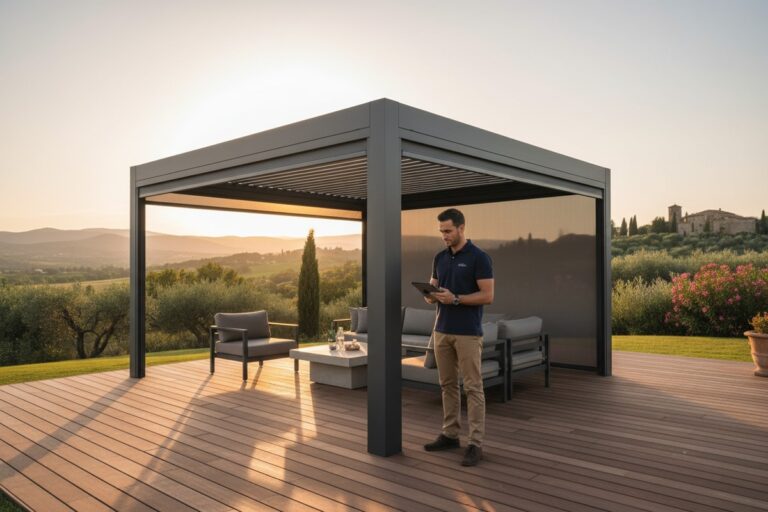

Every year, we see distributors lose thousands of dollars on pergola orders that looked great on paper but failed in the field aluminum pergola specs 1. Thin walls buckle under snow. Missing screws halt installations. Faded finishes trigger warranty claims within months EN 1991 (Eurocode) 2. These problems share one root cause: vague product specifications at the procurement stage.
Distributors define aluminum pergola specs and procurement needs by establishing clear benchmarks for wall thickness, alloy grade, wind and snow load ratings, finish systems, packaging standards, lead times, and after-sales terms. Each specification must match the target market's climate, building codes, and end-customer expectations to prevent costly field failures.
This guide breaks down exactly how experienced distributors lock in the right specs before signing a purchase order EMC Directive 3. We will walk through material customization, safety certifications, packaging checklists, and contract terms — step by step.
How can I customize aluminum wall thickness and RAL colors to match my local market demands?
One question we hear almost weekly from European buyers is: "Can you match this exact RAL color and increase the wall thickness for my coastal market?" The answer is always yes, but the details matter more than the promise Force majeure definitions 4.
To customize aluminum wall thickness and RAL colors, distributors should specify the exact alloy series (typically 6063-T5 or 6061-T6), define minimum wall thickness per component (posts, beams, louvers), and provide target RAL codes. Requesting powder-coated sample panels before bulk production ensures color accuracy and finish durability.
Why Wall Thickness Is the Foundation of Every Spec Sheet
Wall thickness is the single biggest driver of structural strength in an aluminum pergola. A post with 1.5 mm walls behaves very differently from one with 3.0 mm walls under wind pressure. When our engineering team designs extrusion dies for a new distributor, the first question is always about load requirements — not aesthetics.
Here is a practical reference table we share with buyers during the quoting stage:
| Composant | Budget Tier (mm) | Mid-Range Tier (mm) | Commercial Tier (mm) |
|---|---|---|---|
| Corner Posts (4" x 4") | 1.2 – 1.5 | 2.0 – 2.5 | 3.0 – 4.0 |
| Main Beams (2" x 6") | 1.0 – 1.2 | 1.5 – 2.0 | 2.5 – 3.0 |
| Louver Blades | 0.8 – 1.0 | 1.2 – 1.5 | 1.8 – 2.0 |
| Gutter Channels | 0.8 | 1.0 – 1.2 | 1.5 |
Distributors targeting Southern Europe with mild weather can often work with mid-range thicknesses. But if your market includes coastal or alpine regions — like parts of Italy, Norway, or the UK — pushing into commercial-tier thickness is safer for your brand reputation.
Choosing the Right Alloy Series
Most outdoor pergolas use 6063-T5 aluminum 5. It extrudes cleanly, accepts powder coating well, and offers good corrosion resistance. For higher structural demands, 6061-T6 provides better tensile strength but costs more per kilogram. Distributors should specify the alloy on their purchase order, not leave it to the supplier's discretion.
Getting RAL Colors Right
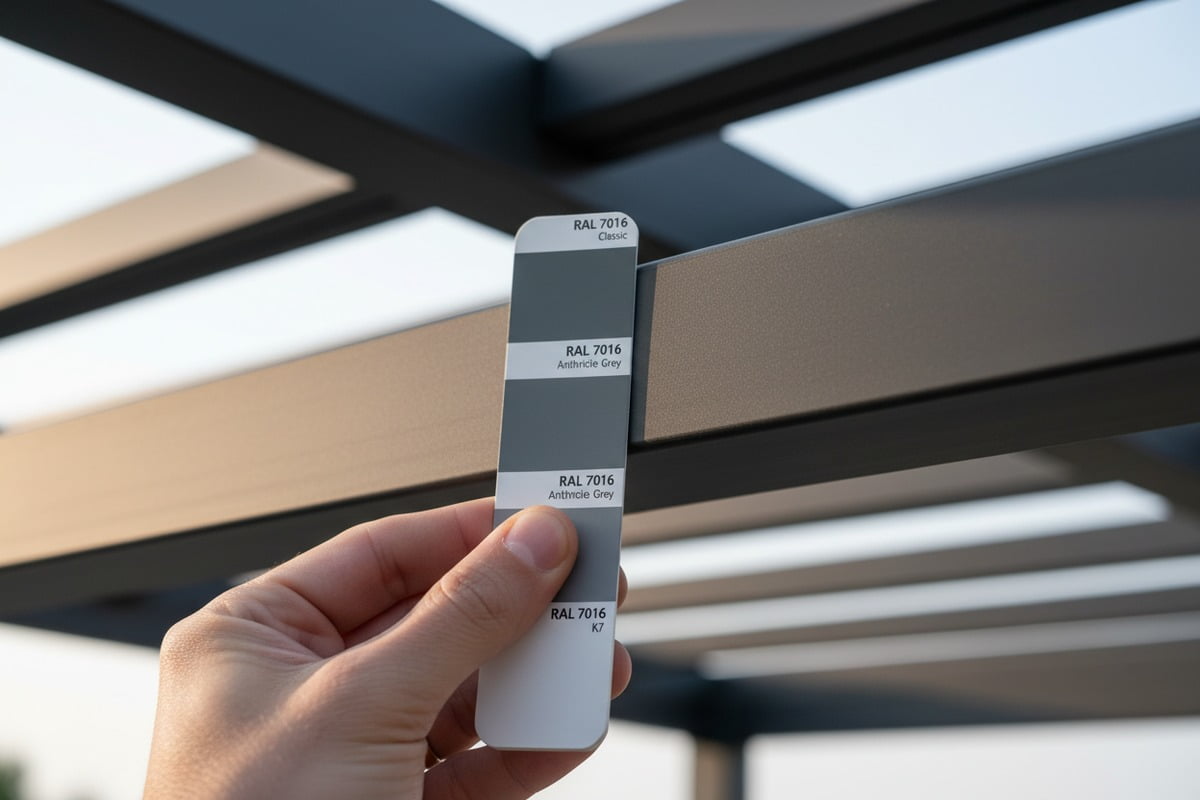
RAL color matching 6 sounds simple. It is not. Screen colors differ from physical samples. Powder coat batches vary slightly. Our production line uses spectrophotometer readings to verify color accuracy against physical RAL cards, but distributors should always request a coated sample panel — not just a digital swatch — before approving mass production.
Popular RAL choices in the European market include RAL 7016 (Anthracite Grey), RAL 9005 (Jet Black), RAL 9016 (Traffic White), and RAL 7035 (Light Grey). If your market demands a unique color, expect a small upcharge and 3–5 extra days for custom powder mixing.
Total Weight as a Quick Quality Check
Here is a tip from 25 years of exporting: ask your supplier for the total crated weight of a standard 3m x 4m unit. A mid-range louvered pergola should weigh between 230–400 kg. If it comes in under 120 kg, the walls are almost certainly too thin. Weight is the easiest objective metric you can verify at the port without specialized tools.
What wind load and snow capacity certifications should I require to ensure my product's safety?
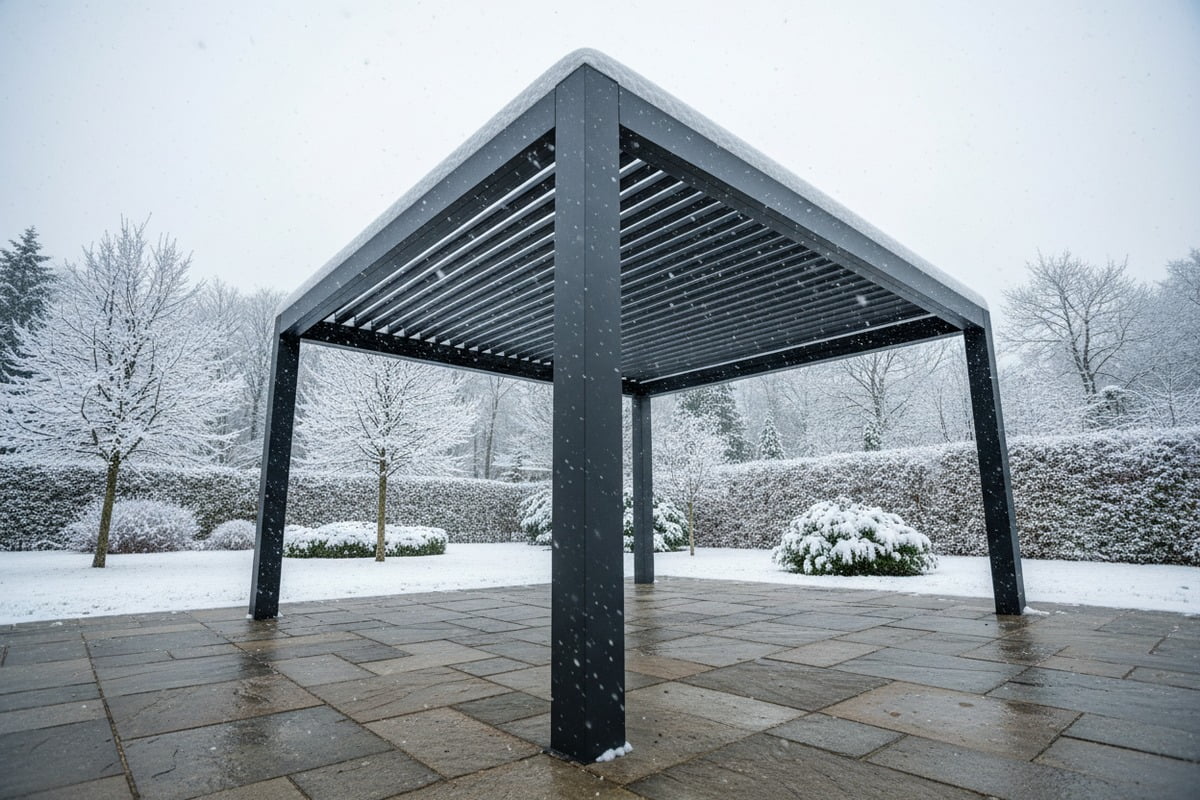
A distributor in Northern Italy once told us about a pergola that collapsed under 30 cm of wet snow. The supplier had claimed "high snow load capacity" but never provided a test report. That single incident cost the distributor three client relationships and a public liability claim.
Distributors should require EN 1991 (Eurocode) compliance for wind and snow loads, CE marking for the European market, and third-party structural test reports from accredited labs. Specify minimum wind resistance (e.g., 130 km/h) and snow load capacity (e.g., 75 kg/m²) based on your region's climate zone classification.
Understanding the Key Standards
European distributors need to work within the Eurocode framework. EN 1991-1-3 covers snow loads, and EN 1991-1-4 covers wind actions. These codes define load values based on geographic zones, altitude, and terrain exposure. Your supplier does not need to memorize these codes, but they must be able to engineer products that meet the values you specify.
Here is a simplified reference for common European climate zones:
| Region Example | Typical Wind Speed Requirement | Typical Snow Load Requirement |
|---|---|---|
| Southern Spain, Coastal Italy | 100 – 120 km/h | 30 – 50 kg/m² |
| Central France, Germany | 120 – 140 km/h | 60 – 100 kg/m² |
| Alpine Regions (Austria, Switzerland) | 130 – 160 km/h | 100 – 200+ kg/m² |
| Northern Scandinavia | 120 – 150 km/h | 150 – 250+ kg/m² |
What Certifications to Request
At minimum, request CE marking 7. This confirms the product meets EU safety, health, and environmental requirements. Beyond CE, ask for:
- Structural calculation reports signed by a licensed engineer, referencing your specific model and dimensions.
- Third-party test reports from an accredited lab (ISO 17025 accredited 8). These carry more weight than in-house tests.
- Motor and electronic certifications — if the pergola includes motorized louvers, the motor must carry its own CE marking and ideally TÜV or equivalent certification.
Why In-House Claims Are Not Enough
Some suppliers quote wind ratings of "200 km/h" with no supporting documentation. Our approach is different. We commission independent structural analyses for each major product series and provide distributors with downloadable PDF reports they can share with their own clients and local building authorities. If a supplier cannot produce a third-party report, treat their claims with caution.
Motor and Electronics Compliance
Motorized louvered pergolas include control boxes, rain sensors, and sometimes wind sensors. In Europe, these must comply with the Low Voltage Directive 9 (2014/35/EU) and the EMC Directive (2014/30/EU). We have seen cases where distributors imported pergolas with uncertified motors and faced customs seizures. Always verify motor brand, certification marks, and IP rating (IP65 minimum for outdoor use).
How do I specify packaging and hardware checklists to prevent shipping damage and missing parts?
Missing parts sound like a small problem until you have a contractor standing on a job site in Milan, holding an incomplete hardware bag, and calling you at 7 AM. We have spent years refining our packaging process precisely because we know the cost of getting it wrong.
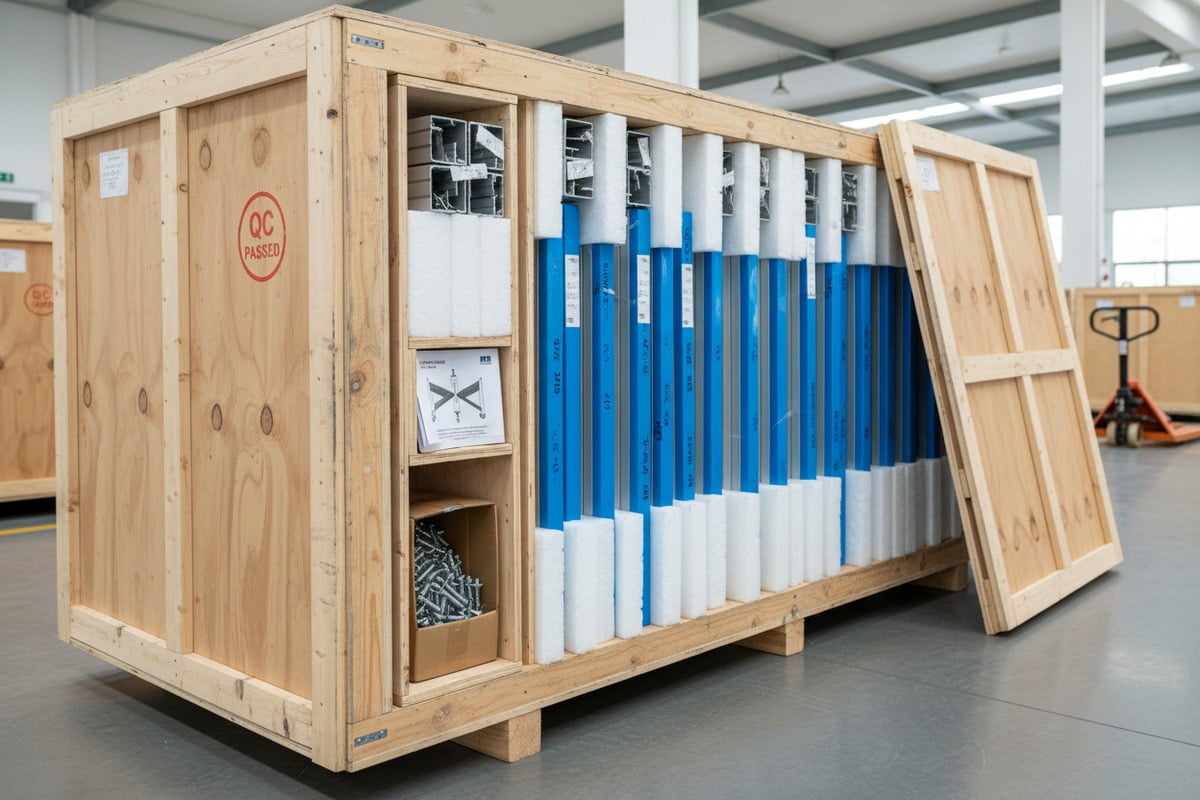
Distributors should specify foam-wrapped aluminum profiles, corner protectors on all extrusions, individually labeled hardware bags with photo checklists, and a master packing list per crate. Require the supplier to include a QR-code-linked digital inventory and to photograph each crate's contents before sealing for verification.
The Real Cost of Missing Parts
When a single M8 stainless steel bolt is missing from an overseas shipment, the replacement cost is not $0.50. It is the cost of express international courier fees, installation crew downtime, project delay penalties, and damaged trust. In our experience exporting to European markets, we estimate that a single missing-part complaint costs the distributor between €200 and €1,500 in hidden costs. That is why a robust checklist system pays for itself many times over.
How to Structure a Hardware Checklist
Every pergola kit should ship with a master packing list and individual hardware bags. Here is the checklist template we provide to our distribution partners:
| Checklist Item | Details to Verify | Packing Method |
|---|---|---|
| Main Posts | Quantity, length, alloy marking | Foam-sleeved, corner-protected, bundled |
| Beams & Cross Members | Quantity, profile dimensions | Separated by foam dividers in wooden crate |
| Louver Blades | Quantity, blade width, finish color | Stacked with interleaving foam sheets |
| Hardware Bag A – Structural | Bolts, nuts, washers (labeled by size) | Sealed zip bag with photo card |
| Hardware Bag B – Accessories | Motor brackets, sensor mounts, screws | Sealed zip bag with photo card |
| Motor & Control Box | Model number, voltage, CE mark | Bubble-wrapped, boxed separately |
| Rain Sensor & Wind Sensor | Model, cable length | Anti-static bag inside padded box |
| Drainage Components | Downpipes, connectors, seals | Bundled, labeled |
| Installation Manual | Language versions, QR code to video | Waterproof sleeve inside Bag A |
Packaging Standards That Prevent Damage
Aluminum extrusions scratch easily. A single deep scratch on a visible post surface means the piece is rejected. We use the following packaging hierarchy:
- Profile-level protection: Every extrusion gets a PE foam sleeve or protective film.
- Bundle-level protection: Groups of profiles are separated by corrugated cardboard or foam dividers.
- Crate-level protection: Wooden crates with internal bracing. For sea freight, moisture-absorbing desiccant packets go inside.
- Pallet-level protection: Steel banding and stretch wrap for container loading stability.
Digital Verification Systems
We now include a QR code on each crate that links to a photo gallery of the packing process and a digital inventory checklist. The distributor's receiving team scans the code, compares photos against actual contents, and flags any discrepancy within 48 hours. This simple system has reduced our missing-part claims by over 90% since we implemented it.
Distributors should insist on pre-shipment inspection photos as a standard contract term. It takes the supplier 15 minutes and saves both parties weeks of dispute resolution.
What lead time and after-sales support terms should I include in my procurement agreement?
Late deliveries during peak season are not just inconvenient — they can destroy a distributor's entire quarterly sales plan. We have seen partners lose major contracts because their previous supplier missed a shipping window by three weeks with no communication.
Distributors should contractually define production lead time (typically 25–35 days for standard orders), shipping method and transit time, penalty clauses for delays exceeding agreed timelines, a dedicated after-sales contact with guaranteed response time (under 24 hours), and clear terms for warranty replacement parts shipping at the supplier's cost.
Setting Realistic Lead Times
Lead time has two parts: production time and shipping time. Many disputes happen because these are not separated in the contract. Our standard commitment is 30 days from deposit receipt to container loading for standard models, with an additional 25–35 days for ocean freight to major European ports.
Custom orders — non-standard sizes, special RAL colors, or unique louver configurations — typically add 5–10 days to production. Distributors should build this buffer into their planning, especially for spring peak season when factory capacity is highest.
Key Contract Clauses to Include
A strong procurement agreement should cover these terms:
- Production milestone updates: Photos at key stages (extrusion, welding, powder coating, packing).
- Delay penalties: A percentage discount per week of delay beyond the agreed date, capped at a reasonable maximum.
- Force majeure definitions: Be specific. "Supply chain disruption" is too vague. Define exactly what qualifies.
- Quality inspection window: Typically 7–14 days after delivery for the distributor to report defects.
- Warranty period: Minimum 5 years on structural components, 2 years on motors and electronics.
- Replacement parts logistics: Specify who pays freight for warranty replacements and the maximum turnaround time.
After-Sales Response Standards
Time zone differences between China and Europe create a 6–8 hour communication gap. Our solution is a dedicated European-hours support line and a WhatsApp group for each active distributor. We commit to a 12-hour maximum initial response time for technical issues and 48 hours for a resolution plan.
Distributors should also request access to a digital spare parts catalog with part numbers, so they can order replacements directly without lengthy back-and-forth descriptions. This alone speeds up resolution by days.
Seasonal Demand Planning
Smart distributors place orders in November or December for spring delivery. This avoids the February–March rush when factories run at full capacity and lead times stretch. We offer early-bird pricing for orders confirmed before January, which gives distributors both cost savings and delivery certainty.
Building a rolling 12-month forecast with your supplier is another best practice. Even rough projections help the factory pre-purchase raw materials and reserve production slots. This collaborative approach transforms a transactional supplier relationship into a strategic partnership.
Minimum Order Quantities and Inventory Strategy
Most manufacturers require MOQs of 5–20 units per model. Distributors serving niche markets should negotiate lower MOQs for the first order with the understanding that volumes will grow. Stocking 2–3 standard sizes in popular colors (RAL 7016 and RAL 9005 cover about 70% of European demand) ensures fast fulfillment to end customers while minimizing inventory risk.
Conclusion
Defining clear product specs and procurement terms is the single most effective way distributors protect their margins, reputation, and customer relationships when sourcing aluminum pergolas from overseas suppliers.
Notes de bas de page
- Illustrates technical specifications and construction details for aluminum pergolas. ︎
- Official European Commission Joint Research Centre page detailing Eurocode 1 actions on structures. ︎
- Official European Commission page explaining the Electromagnetic Compatibility (EMC) Directive (2014/30/EU). ︎
- Replaced with a definition from the Legal Information Institute at Cornell Law School, an authoritative academic legal source. ︎
- Provides a comprehensive overview of the properties and applications of 6063 aluminum alloy. ︎
- Official source for the RAL color system, explaining its standards and applications. ︎
- Official European Commission page explaining the purpose and requirements of CE marking. ︎
- Replaced with a page from ANAB (ANSI National Accreditation Board), an authoritative accreditation body, explaining ISO/IEC 17025 accreditation. ︎
- Official European Commission page explaining the Low Voltage Directive (2014/35/EU). ︎