Every year, we see new buyers land on our production floor in Hainan overwhelmed by spec sheets full of alloy grades 1, torque ratings, and coating thickness numbers. The confusion is real. One wrong assumption about wall thickness or motor certification can mean a failed building inspection, a collapsed structure in a windstorm, or a container of pergolas that nobody can legally sell.
New procurement buyers can quickly master aluminum pergola technical parameters by focusing on four pillars: aluminum wall thickness and alloy grade for structural integrity, powder coating specs for weather resistance, motor and automation certifications for market compliance, and precise technical drawings for custom OEM orders.
This guide breaks down each pillar with real numbers, comparison tables, and practical checklists ASTM D3359 Class 5B 2. Whether you source for contractors in Italy or distributors across Northern Europe, the sections below will give you the confidence to evaluate any supplier's spec sheet in minutes. Let's start with the most critical parameter of all — wall thickness.
How do I evaluate aluminum wall thickness to ensure the pergola meets my local wind and snow load standards?
When our engineering team reviews a new market's building codes, wall thickness is always the first number on the whiteboard Low Voltage Directive (2014/35/EU) 3. wind and snow load standards 4 Get this wrong and everything else — the coating, the motor, the design — becomes irrelevant.
Evaluate aluminum wall thickness by comparing the supplier's extrusion profile (measured in mm or inches) against your local wind speed and snow load requirements. Premium pergolas use 2.5–3.0 mm walls in 6061-T6 or 6063-T6 alloy, handling wind loads up to 115 mph and heavy snow accumulation.
Why Wall Thickness Is the Single Biggest Quality Indicator
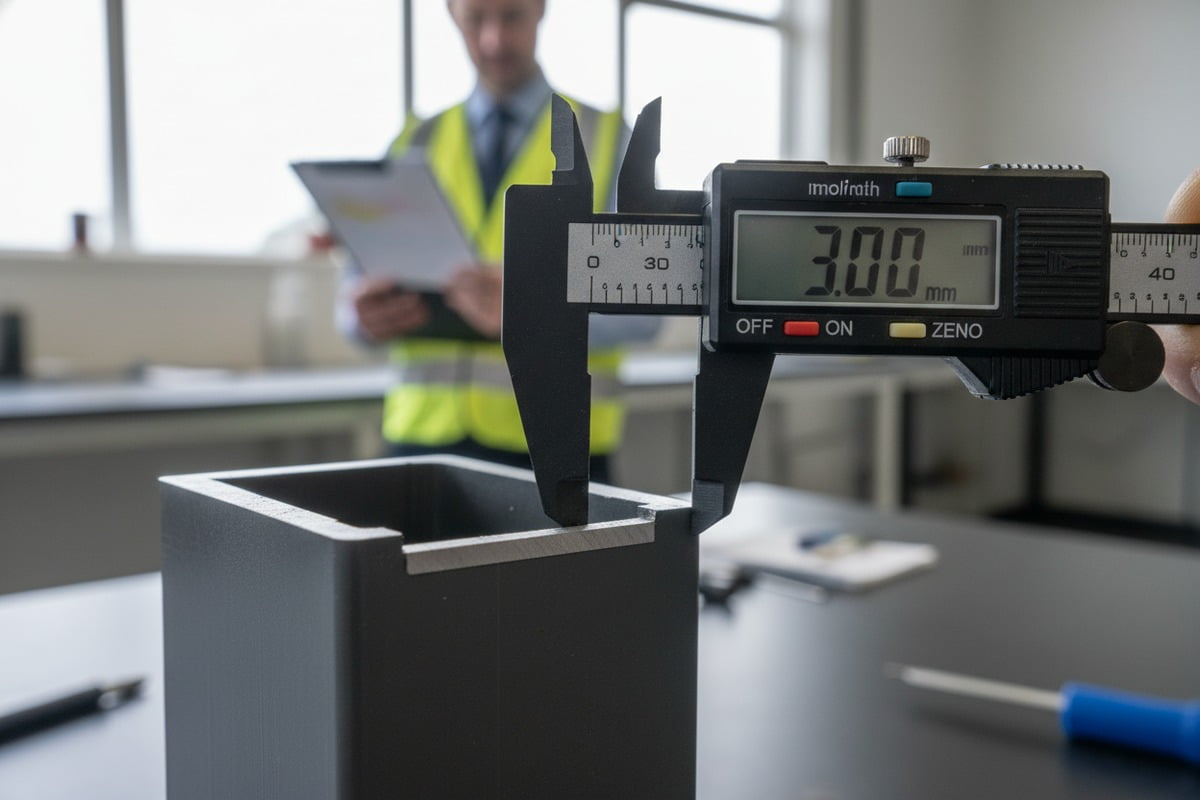
Wall thickness directly determines how much force a pergola can absorb before bending or collapsing. Big-box retail kits often use 0.048-inch (about 1.2 mm) walls. These work for light backyard shade in mild climates. But if your buyers operate in coastal regions, mountainous areas, or anywhere with code-mandated wind and snow ratings, you need 0.125-inch (about 3.0 mm) walls — roughly 160% thicker.
Our production line extrudes both 6061-T6 and 6063-T6 alloys. 6061-T6 or 6063-T6 alloy 5 The difference matters. 6061-T6 offers higher tensile strength 6 (around 310 MPa) and is better for load-bearing beams. 6063-T6 is easier to extrude into complex shapes and has excellent corrosion resistance, making it ideal for posts and decorative profiles. Most premium pergola frames combine both.
Post and Beam Dimensions
Post size sets the visual and structural foundation. Here is a quick reference:
| Composant | Standard Size | Premium Size | Max Span Without Center Support |
|---|---|---|---|
| Corner Posts | 110 x 110 mm | 120 x 120 mm or 4" x 4" | N/A |
| Main Beams | 2" x 2" | Up to 8" wide | 20 ft (6.1 m) |
| Column Height | 2.5 m | Up to 3.85 m | N/A |
| Base Plates | 150 x 150 mm | Stainless steel, 5 mm thick | N/A |
Matching Thickness to Local Codes
Every market has different requirements. In Southern Europe, wind loads around 90–100 km/h are common. In coastal Italy or southern France, you may need ratings for 130–150 km/h. Snow load matters in the Alps or Scandinavia, where roofs must handle 60+ kg/m².
Ask your supplier for a certified load calculation report — not just a thickness number. A 3.0 mm wall means nothing if the extrusion profile is poorly designed. We always provide FEA (Finite Element Analysis) reports for custom projects so buyers can present them to local building inspectors. Finite Element Analysis reports 7
Weight as a Proxy for Quality
A heavier pergola of the same footprint size usually means thicker extrusions. If a 3 m x 4 m pergola weighs under 80 kg, question the wall thickness. Our equivalent units typically weigh 120–160 kg depending on the roof system. Weight alone is not proof of quality, but it is a fast red flag detector during trade show comparisons.
The Real Cost of Thin Walls
Thin-gauge aluminum saves money upfront — sometimes 40–50% less per unit. But the total cost of failure is enormous. A single structural failure on a hotel terrace can generate liability claims, brand damage, and lost contracts. For buyers targeting mid-to-high-end markets, the premium wall thickness pays for itself in the first project.
What specific powder coating parameters should I check to guarantee long-term UV resistance and color stability?
Our quality control lab tests every batch of coated profiles under accelerated UV exposure before shipping. We do this because coating failure is the number one source of warranty claims in outdoor aluminum products — and the hardest problem to fix after installation.
Check for powder coating thickness (60–120 microns), adhesion rating (ASTM D3359 Class 5B), salt spray resistance (minimum 1,000 hours), and UV stability certification (such as Qualicoat Class 2 or AAMA 2604). These parameters ensure the finish resists fading, chalking, and corrosion for 15+ years.
Understanding Coating Thickness
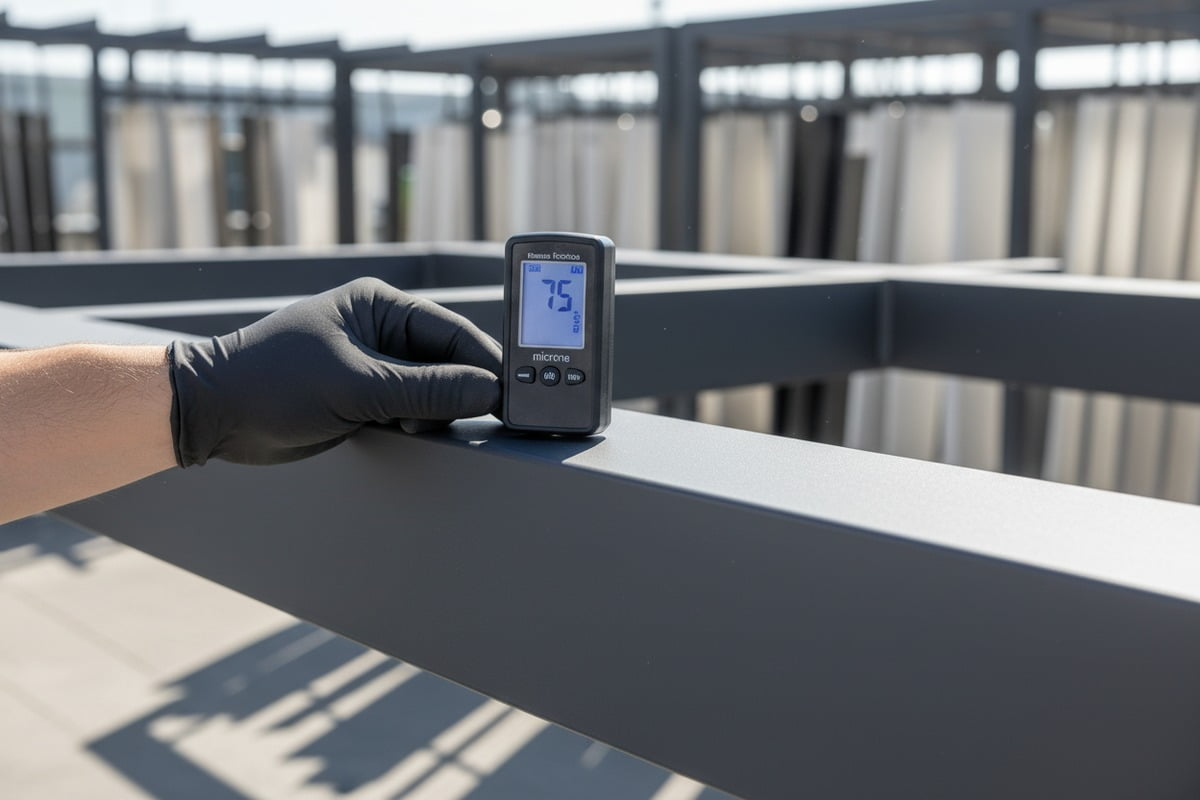
Powder coating is not paint. It is a dry polymer powder electrostatically applied and cured at 180–200°C. The resulting film thickness determines protection level. A single coat at 60–80 microns works for mild climates. powder coating thickness 8 For coastal, tropical, or high-UV environments, we recommend 80–120 microns or a two-coat system with a primer layer.
Measure coating thickness with a calibrated gauge at multiple points on the profile. Cheap suppliers spray unevenly — corners and inside channels often get half the thickness of flat surfaces.
Key Coating Standards to Demand
| Standard | What It Tests | Minimum Requirement |
|---|---|---|
| Qualicoat Class 1 | General outdoor durability | 1 year Florida exposure, ΔE < 5 |
| Qualicoat Class 2 9 | Enhanced UV and weather resistance | 3 years Florida exposure, ΔE < 5 |
| AAMA 2604 | High-performance exterior coatings | 5 years Florida exposure, chalking ≤ 8 |
| ASTM B117 (Salt Spray) | Corrosion resistance | 1,000+ hours without blistering |
| ASTM D3359 | Adhesion cross-cut test | Class 5B (no peeling) |
RAL Color Consistency Across Batches
If you order 500 pergolas across three production runs, each batch must match the same RAL color within a ΔE value of 1.0 or less. This is tighter than many suppliers promise. At our facility, we use spectrophotometer readings on every batch and provide color reports with shipments. Ask for these reports. If a supplier cannot provide them, they are not controlling their color process.
PVDF vs. Standard Polyester Coatings
Standard polyester powder coating handles most European climates well. But for projects near the sea, in desert regions, or at high altitude with intense UV, PVDF (polyvinylidene fluoride) coatings offer superior resistance. PVDF coatings cost 30–50% more but can maintain color stability for 20+ years. The trade-off is worth discussing with your end clients.
Pre-Treatment Is Half the Battle
The best powder coat will peel if applied over poorly prepared aluminum. Demand a multi-stage pre-treatment process: alkaline degreasing, acid etching, chromate-free conversion coating, and deionized water rinse. This creates a micro-rough surface for the powder to bond to. Skip any step and adhesion drops dramatically — especially in humid climates.
One common mistake we see: buyers focus entirely on the top-coat color and gloss level but never ask about pre-treatment. Always request the pre-treatment process documentation. It is the invisible foundation of every visible finish.
How can I confirm that the motor and automated systems have the necessary certifications for my market?
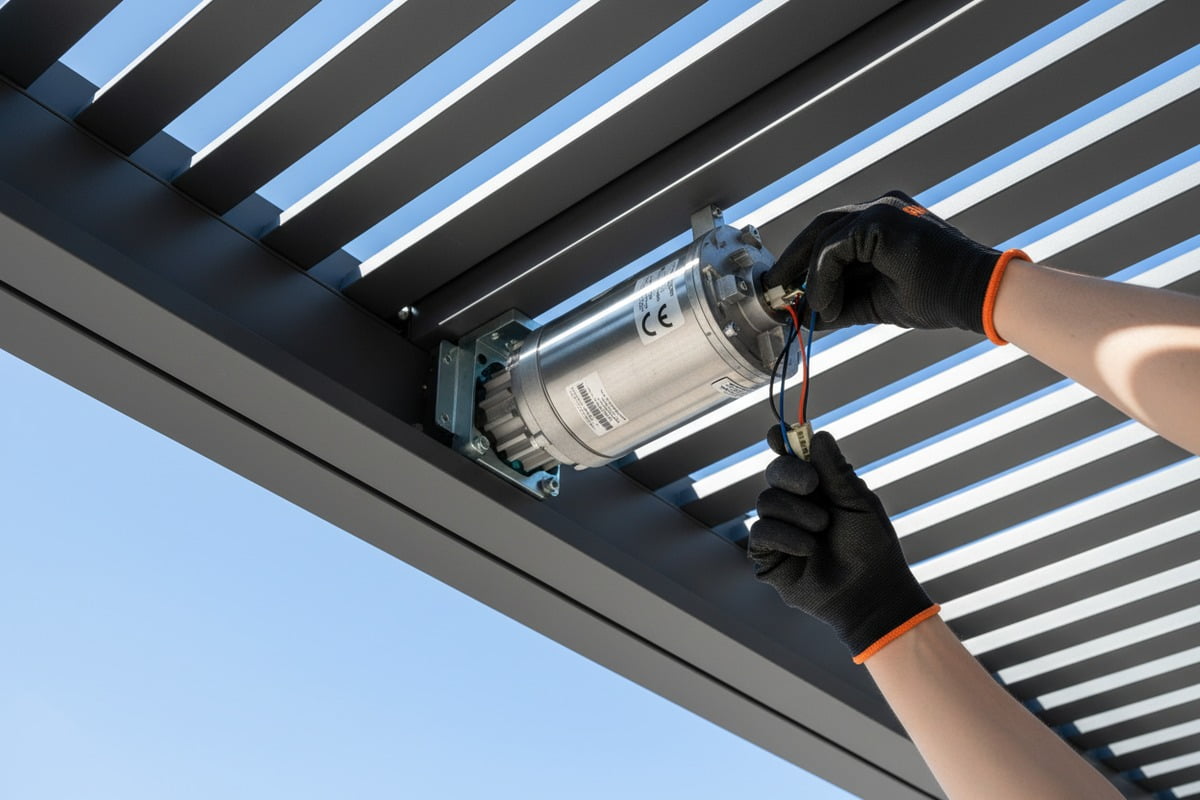
During a recent shipment to a distributor in Northern Italy, we caught a last-minute issue: the motor's CE declaration referenced an outdated directive. That single document error would have blocked customs clearance and delayed an entire hotel renovation project by three weeks.
Confirm motor certifications by requesting copies of CE declarations of conformity (for EU markets), verifying IP44 or IP54 ingress protection ratings, checking for compliance with the Low Voltage Directive (2014/35/EU) and EMC Directive (2014/30/EU), and ensuring the motor brand (e.g., Somfy) provides local warranty and spare parts support.
The Certification Landscape for European Markets
If you import motorized pergolas into the EU, every electrical component must carry CE marking. CE declarations of conformity 10 But CE is not a single test — it is a declaration that the product meets all applicable EU directives. For pergola motors, the two critical directives are:
- Low Voltage Directive (LVD) 2014/35/EU — covers electrical safety for equipment operating between 50 and 1000V AC.
- EMC Directive 2014/30/EU — ensures the motor does not emit excessive electromagnetic interference and can tolerate interference from other devices.
Ask for the full Declaration of Conformity document, not just a CE sticker on the motor housing. The declaration must name the specific directives, the manufacturer, and the product model. A generic or undated declaration is a compliance risk.
Motor Specifications That Matter
| Parameter | Standard Range | Premium Range | Why It Matters |
|---|---|---|---|
| Input Current | 0.7 – 1.0 A | 0.5 – 0.8 A (more efficient) | Lower current reduces electrical load on circuits |
| IP Rating | IP44 | IP54 or IP65 | Higher rating = better dust and water protection |
| Torque | 10 – 15 Nm | 18 – 20 Nm | Higher torque handles heavier louvers and wind resistance |
| Speed | 24 – 26 rpm | 14 – 18 rpm (quieter) | Slower speeds reduce noise and wear |
| Operating Temp | 0°C to +40°C | -20°C to +50°C | Wider range suits Nordic and Mediterranean markets |
| Duty Cycle | S2 (intermittent) | S2 – 4 min on, 6 min rest | Prevents overheating during repeated use |
Somfy and Alternatives
Somfy is the industry benchmark for pergola motorization. Their RTS (Radio Technology Somfy) motors integrate with the TaHoma smart home system, weather sensors, and app controls. Specifying Somfy motors gives your buyers instant credibility in the European market because installers already know the system, spare parts are available locally, and warranty claims have a clear process.
However, Somfy is not the only option. Some buyers prefer cost-effective alternatives from brands like Becker, Elero, or Chinese manufacturers with CE-certified motors. The risk with lesser-known brands is spare parts availability and local service support. If a motor fails on a hotel terrace in Milan, can the owner get a replacement within 48 hours? That question should drive your motor brand decision.
Smart Sensors and Automation
Modern bioclimatic pergolas auto-adjust louvers based on weather conditions. A rain sensor closes the louvers. A wind sensor opens them to reduce uplift force. A sun sensor tilts them for optimal shade. These sensors must also carry CE marking and IP65 ratings (they are exposed to direct weather).
When evaluating a supplier's automation package, request:
- Sensor brand and model numbers
- IP rating for each sensor
- CE declaration for each sensor
- Integration protocol (RTS, Zigbee, Z-Wave)
- Maximum number of sensors per controller
Our standard packages include Somfy Eolis wind sensors and Sunis sun sensors, pre-wired into the pergola frame. This reduces installation time on site and eliminates wiring errors.
A Quick Compliance Checklist
Before placing an order for motorized pergolas, verify these items:
- CE Declaration of Conformity for each motor model
- CE Declaration for each sensor
- IP rating certificates (test reports, not just claims)
- RoHS compliance for all electronic components
- Wiring diagrams matching the destination country's electrical codes
- User manual in the destination market's language
Missing any one of these can cause customs delays, inspection failures, or legal liability for the importer.
Which technical drawing details are essential for me to provide when requesting a custom OEM size or configuration?
Handling over 200 custom OEM projects a year at our Hainan facility has taught us one hard lesson: incomplete drawings cause more delays and cost overruns than any other single factor in the entire procurement cycle.
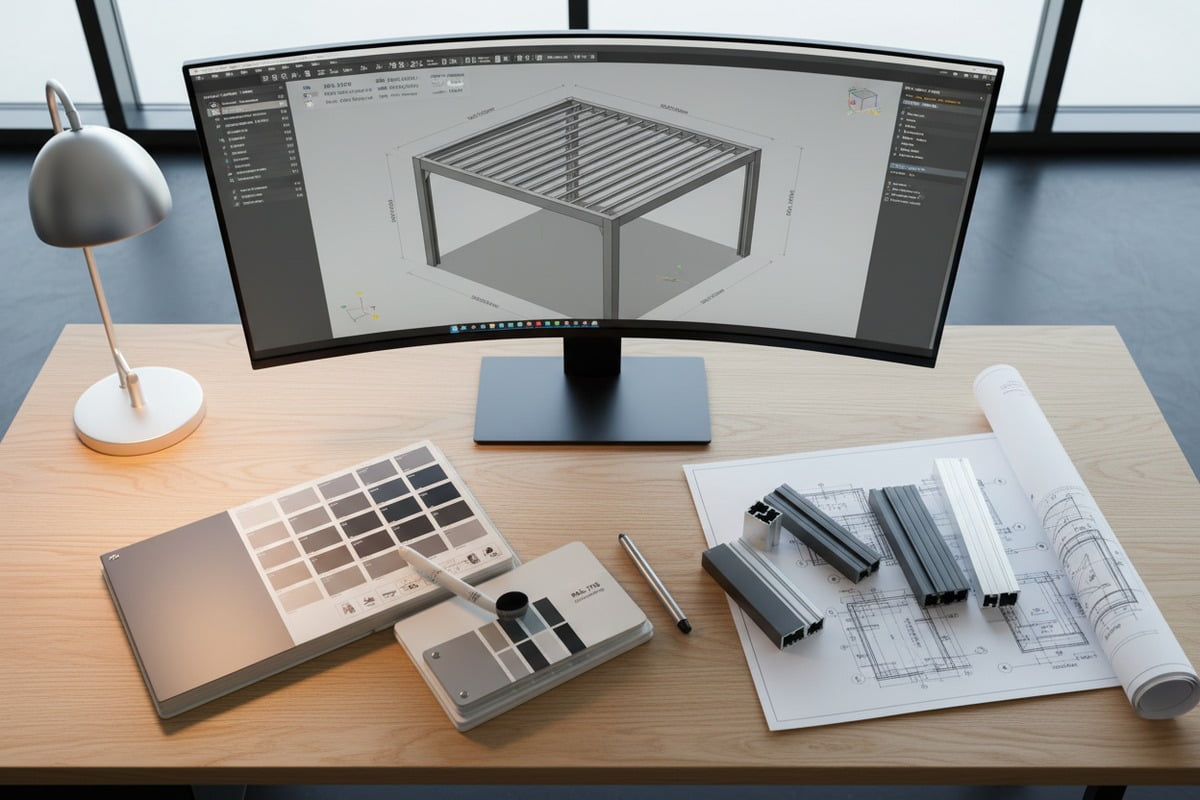
When requesting a custom OEM pergola, provide dimensioned plan and elevation drawings (in mm), specify the alloy grade, wall thickness, RAL color code, mounting type (freestanding or wall-mounted), electrical layout for motors, local wind/snow load requirements, and any regulatory constraints like fire ratings or seismic codes.
The Minimum Drawing Package
You do not need to be a structural engineer to request a custom pergola. But you do need to provide enough information for the engineering team to produce accurate shop drawings. Here is the minimum:
Plan view — a top-down drawing showing overall width and projection, post locations, and any obstructions (walls, columns, drainage pipes).
Elevation view — a side drawing showing height at each post, roof slope direction, and clearance under beams.
Site photos — at least four photos showing the installation area from different angles, including the mounting surface (concrete, wall, steel frame).
Critical Dimensions to Specify
Many buyers send rough sketches with only the overall width and depth. That is not enough. Here are the dimensions that actually drive production:
- Overall width and projection (in mm, not rounded to the nearest foot)
- Post height at each corner (terrain may not be level)
- Distance from wall to first post (for wall-mounted units)
- Louver orientation (parallel or perpendicular to the wall)
- Gutter and downspout exit positions
- Electrical conduit entry point
What Happens When Details Are Missing
Missing details force assumptions. Assumptions lead to errors. Errors lead to returns, rework, and project delays. On our production line, an incomplete drawing adds 5–10 business days to the engineering review cycle because our team must send clarification requests and wait for responses across time zones.
One common pitfall: buyers specify external dimensions but forget to account for post-base plate footprint. A 120 x 120 mm post with a 150 x 150 mm base plate needs 150 mm of clear footing surface, not 120 mm. This seems minor, but when the pergola arrives on site and the base plate overhangs a step edge or conflicts with an existing drain, the installer is stuck.
Regulatory and Environmental Information to Include
Beyond dimensions, include:
- Local wind speed requirement (in km/h or mph, with reference to the specific code)
- Snow load requirement (in kg/m² or psf)
- Fire rating (non-combustible requirement for fire zones)
- Seismic zone classification (if applicable)
- Desired RAL color (exact RAL number, not "dark grey")
- Motor brand preference and control system (Somfy RTS, wall switch, app, sensors)
A Drawing Submission Template
To make this easier for our buyers, we provide a standard intake form. Here is a simplified version:
| Item | Your Input | Notes |
|---|---|---|
| Overall Width (mm) | ___ | Measured at the widest point |
| Overall Projection (mm) | ___ | From wall face to outer post edge |
| Post Height – Left (mm) | ___ | From finished floor to beam underside |
| Post Height – Right (mm) | ___ | From finished floor to beam underside |
| Mounting Type | Freestanding / Wall-mounted | Wall-mounted requires structural wall |
| Roof Type | Fixed louver / Adjustable louver / Polycarbonate | Specify louver angle range if adjustable |
| RAL Color Code | RAL ___ | Provide exact number |
| Motor Brand | Somfy / Other: ___ | Specify model if known |
| Wind Load (km/h) | ___ | Per local building code |
| Snow Load (kg/m²) | ___ | Per local building code |
| Electrical Supply | 220V / 110V / Other | Confirm voltage and frequency |
| Number of Units | ___ | For batch pricing |
Filling in this form before contacting any supplier — not just us — will cut your quotation turnaround time in half and dramatically reduce the risk of production errors.
Modular Configurations and Expansion
Many projects require multiple pergola modules joined together to cover large terraces or pool decks. If your project involves multi-module layouts, provide an overall site plan showing how modules connect. Key details include shared post locations, gutter drainage routing between modules, and whether each module has an independent motor or a synchronized system.
Our maximum single-module size is approximately 8000 x 4500 mm. Beyond that, we engineer multi-module configurations with shared structural posts that maintain a clean, seamless appearance. Knowing the total coverage area upfront allows us to optimize the modular split for structural performance and shipping efficiency.
Conclusion
Mastering aluminum pergola technical parameters comes down to four areas: wall thickness, coating quality, motor certifications, and drawing accuracy. Focus on these, verify with data, and your procurement decisions will be sound.
Notes de bas de page
- Provides a comprehensive guide to different aluminum alloy grades and their properties. ︎
- Replaced with the official ASTM International standard page for D3359, which is the most authoritative source for this test method. ︎
- Details the scope and essential safety requirements of the EU Low Voltage Directive. ︎
- Explains how wind and snow loads affect building design and references relevant codes. ︎
- Compares the properties, uses, and differences between 6061 and 6063 aluminum alloys. ︎
- Defines tensile strength and explains how it varies across different aluminum alloys. ︎
- Explains what Finite Element Analysis (FEA) is and its application in engineering design. ︎
- Provides a comprehensive guide to powder coating thickness, standards, and importance for durability. ︎
- Explains Qualicoat Class 2 certification for enhanced UV and weather resistance in coatings. ︎
- Defines the EU Declaration of Conformity and its legal importance for products in the EU market. ︎