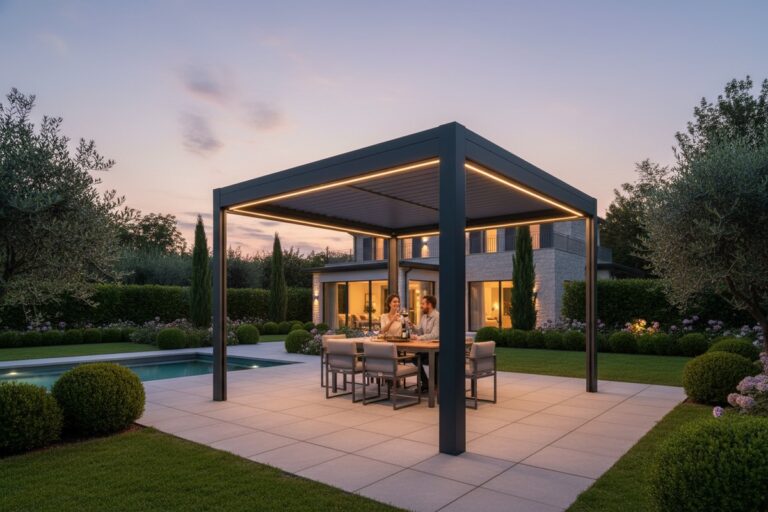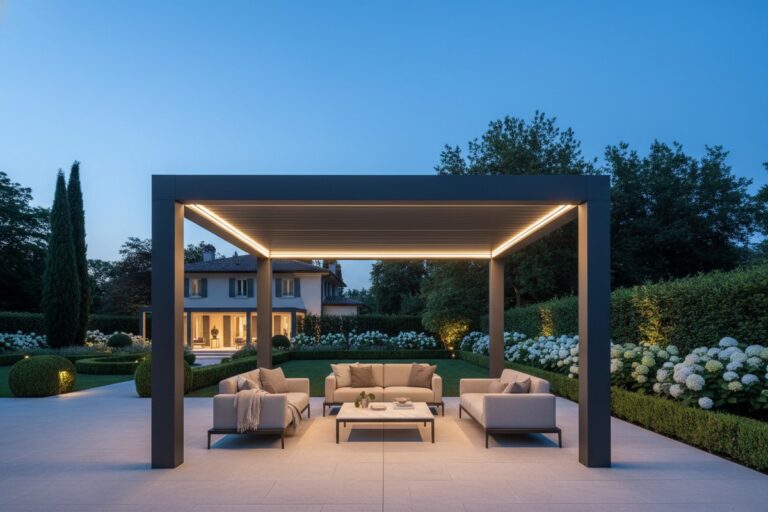
On our production line, we see the same risk often: nice samples, weak drainage, and expensive leaks after the first heavy storm.
To evaluate waterproof ratings and drainage systems, ignore absolute marketing claims and verify engineering evidence: roof slope, sealed joints, internal gutters, downspout size, rainfall test data, alloy grade, and maintenance access. A reliable pergola should show where water enters, moves, exits, and how that path performs in wind-driven rain.
That is where smart bulk buyers separate brochures from real performance.
How can I verify the actual waterproof rating of an aluminum pergola before placing a bulk order?
In our export work, buyers get burned when glossy waterproof claims collapse under the first audit or the first storm.
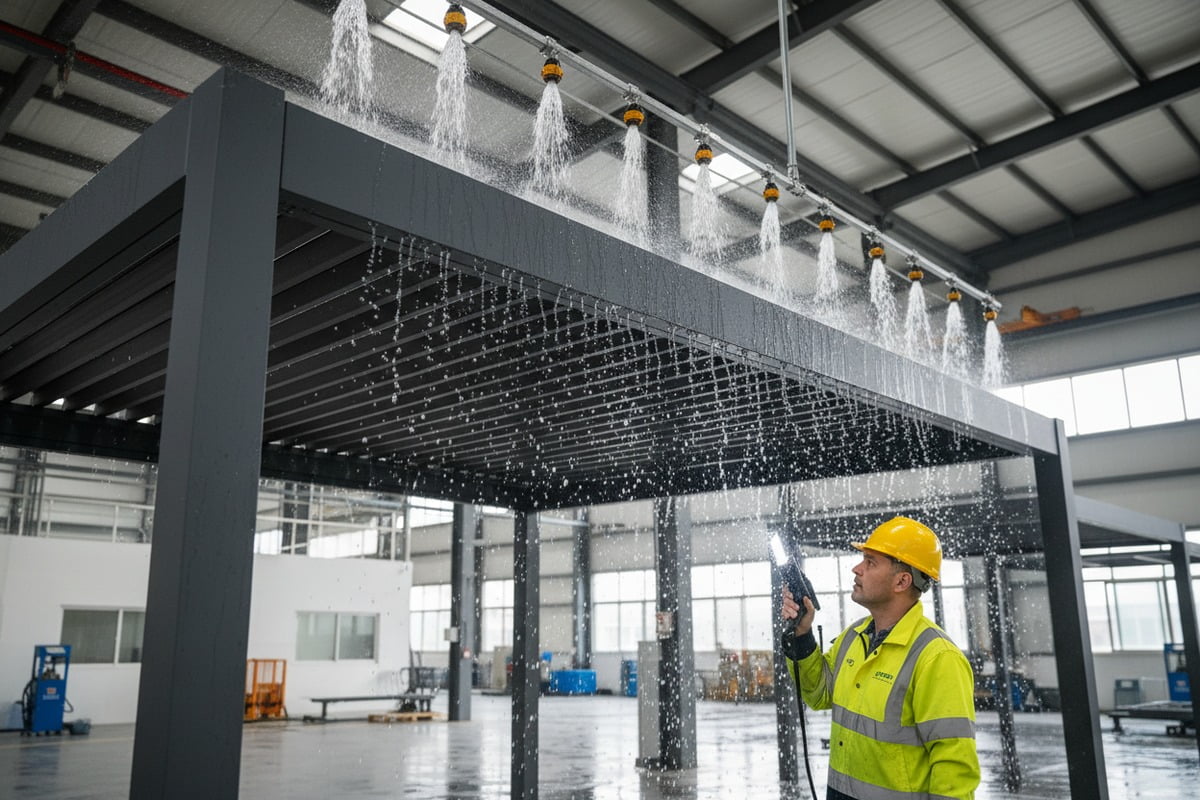
Verify a pergola's waterproof performance by asking for test conditions, rainfall intensity, wind angle, leakage criteria, and assembly drawings. Real proof comes from third-party reports, sample inspections, and videos showing water flow through closed louvers, beams, posts, and outlets under controlled heavy-rain testing.

When I review supplier files, I separate marketing language from engineering language waterproof ratings 1. Words like "fully waterproof" mean little by themselves. Numbers, drawings, and test limits matter more. Pergolas are not sealed boxes, so standard IP ratings 2 that suit electronics do not tell the full story here drainage systems 3. If a supplier throws out IP67 or IP68 for a complete pergola, I slow down and ask how that claim was tested. In many cases, it is just copied marketing.
Ask for test conditions, not slogans
A serious supplier should define the rain event. Ask for rainfall intensity 4 in mm per hour or inches per hour. Ask whether the test included wind-driven rain. Ask how long the test ran. Ask where water was allowed and where it was not allowed third-party reports 5. A useful claim sounds like this: the roof was tested at a defined rain rate, with louvers fully closed, for a defined time, with no interior dripping at the seating zone. That is far more credible than a broad waterproof label corrosion-resistant coating 6.
I also ask whether the tested sample was a full assembled unit or only loose parts. Small component tests still matter, but full assembly testing tells you more about real leakage at joints, corners, and outlet transitions.
Request evidence you can audit
Before any bulk order, I want four things: a section drawing, a water-path explanation, a test video, and a sample review. The drawing should show slope, gasket positions, trough depth, post drainage route, and outlet diameter. The video should show rain on top and the dry area below. The sample should let you inspect louver overlap, gasket compression, and end-cap sealing by hand.
| What to request | Strong answer | Red flag |
|---|---|---|
| Rain test report | Shows rain rate, duration, wind angle, and pass criteria | Only says "waterproof tested" |
| Assembly drawing | Shows roof slope, channel path, outlets, seals | No drainage section detail |
| Test video | Shows top, underside, corners, and discharge points | Only beauty shots after rain |
| Material spec | Lists alloy grade, wall thickness, gasket type | Uses vague terms like "premium aluminum" |
| Pilot sample | Same structure as mass production batch | Sample differs from production plan |
Inspect the sample like a water map
I tell buyers to follow every drop. Where does water land first? How does it move across the roof? Where does it collect? How does it leave the beam? How does it leave the post? If a supplier cannot answer each step clearly, the design is not ready for bulk purchase.
I also check structural rating because waterproof performance depends on frame stability. A frame that twists in wind opens micro gaps at seals and corners. Many budget systems sit in the lower wind range and may look fine in calm weather, but movement under load can change drainage behavior fast. Better engineered systems usually combine stronger joints, thicker profiles, and more stable sealing surfaces.
For a container order, I would not jump from brochure to production. I would ask for a pre-shipment water test on one assembled mass-production unit. That one step catches many hidden problems before they become warranty claims in your market.
What internal drainage design features should I look for to ensure zero leakage during heavy rain?
When our engineers review failed projects, most leaks do not start on the roof panel; they start at joints, troughs, and blocked exits.
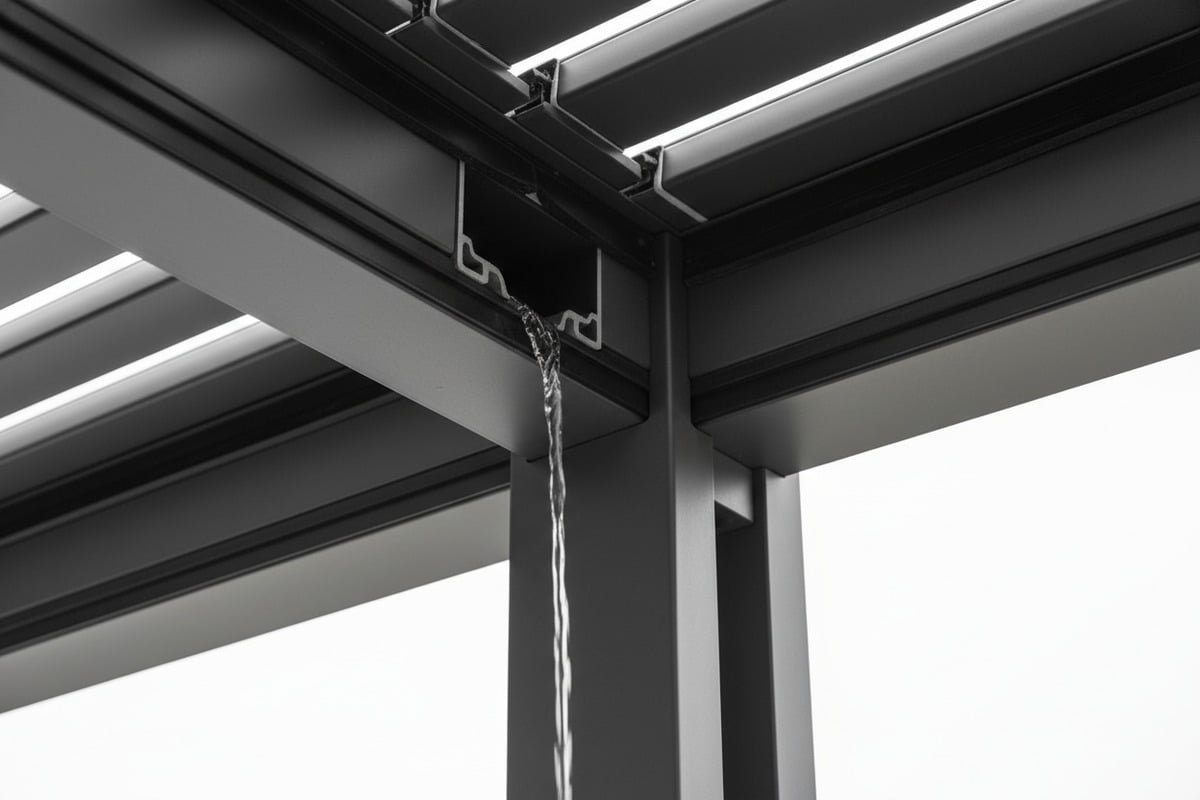
For heavy rain, look for a complete internal drainage path: sloped roof surfaces, overlapping louvers or sealed panels, perimeter troughs, internal beam channels, post-downspouts, compression gaskets, sealed end caps, and overflow control. The best designs move water fast and keep it away from connection points.
The first thing I say here is simple: no outdoor pergola is magic. A claim of zero leakage only makes sense under defined conditions. Still, some designs handle heavy rain far better than others, and the difference is usually visible once you trace the water path.
Follow every drop from roof to ground
A good drainage design starts with roof geometry. Even roofs that look flat need pitch. On louvered pergolas, the closed blades should overlap tightly and push water into side collection channels instead of letting it sit on the blade edges. On solid-roof models, the panel slope and edge sealing become even more important because standing water creates pressure at joints.
After the roof surface, water should enter a perimeter trough or beam channel. From there, it should move into vertical downspouts inside the posts. Hidden drainage looks clean, but clean looks are not enough. The channel must be deep enough, smooth enough, and direct enough to carry peak rain without backing up into the roof cavity.
Watch the common leak points
In practice, the weak points are usually beam corners, louver end caps, motor penetrations, post-to-beam joints, and any place where sealant replaces precise fit. I trust compression gaskets 7 more than messy silicone alone. Silicone has a role, but it should support a good mechanical design, not rescue a bad one.
We also pay close attention to weep holes 8 and emergency overflow paths. Many buyers ignore them because they are small. They are not small in function. If water enters a cavity during wind-driven rain, it needs a controlled way out. Without that exit, it pools, then drips from the least predictable point.
| Feature to inspect | Why it matters in heavy rain | Warning sign |
|---|---|---|
| Roof slope | Prevents pooling and speeds runoff | Roof looks flat and supplier cannot state the pitch |
| Louver overlap or panel seal | Stops water from slipping through seams | Visible gap when roof is fully closed |
| Perimeter trough depth | Holds surge flow before discharge | Shallow channels on large spans |
| Internal beam drainage | Moves water away from visible edges | Water path relies on open exterior dripping |
| Post downspout size | Controls vertical discharge volume | Small outlet for a wide roof area |
| End caps and corner seals | Blocks corner leaks under pressure | Sealant only, no formed gasket or tight cap |
| Weep holes or overflow route | Protects against trapped water | No secondary discharge strategy |
Match the drainage design to the roof type
Motorized louver systems need even more care because moving parts create more seal lines and more tolerance stacking. I do not reject motorized models for that reason, but I do inspect them harder. I want to see blade alignment, hinge quality, gasket fit, and how the motor side handles water during long storms.
A strong drainage design answers one question with confidence: where does every drop go when the roof is closed and the rain turns heavy? If the answer is detailed, visual, and testable, you are looking at a serious system.
How do I evaluate if the gutter system is durable enough to prevent clogging and maintenance issues?
At our plant, clogged gutters worry buyers less than silent damage, yet blocked channels cause many service calls after windy, leaf-heavy seasons.
A durable pergola gutter system should combine enough width, enough slope, corrosion-resistant coating, secure end caps, accessible clean-out points, and outlet sizes matched to roof area. Ask how debris leaves the channel, how often cleaning is needed, and what parts can be opened without disassembly.
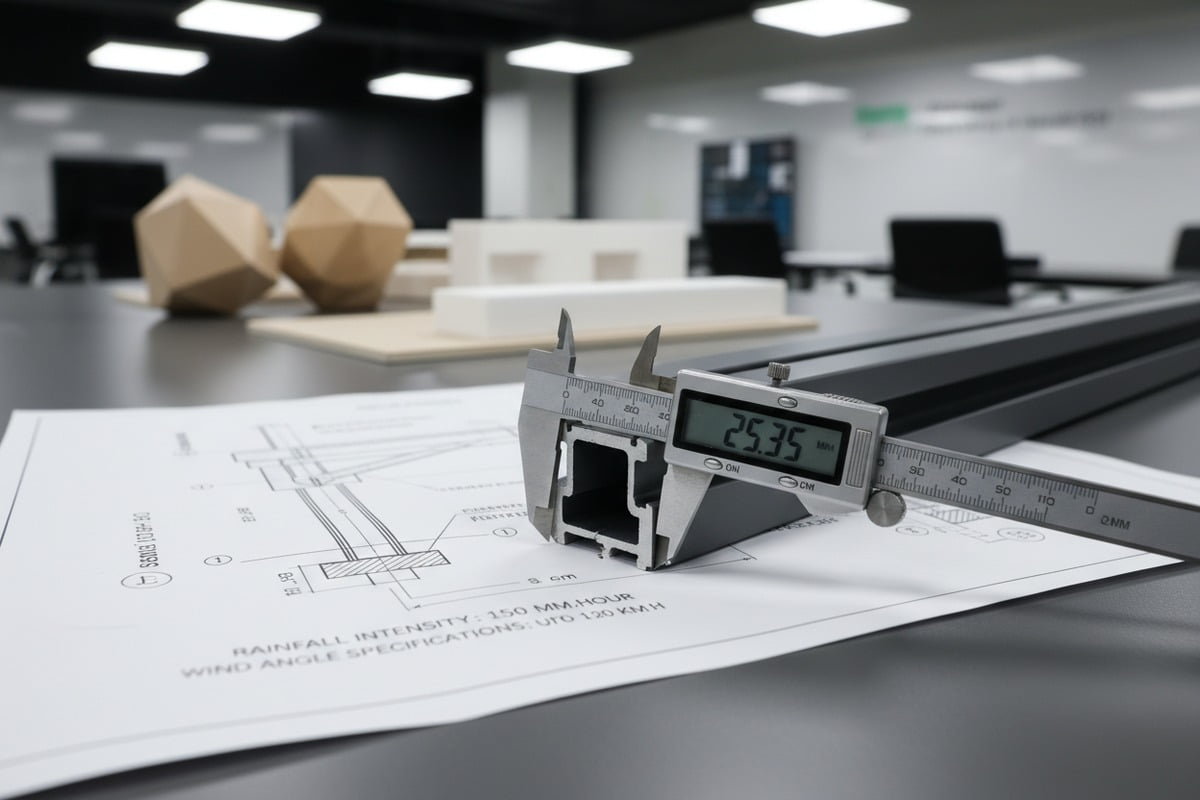
A gutter can look neat in a brochure and still be a maintenance trap. I have seen slim hidden gutters that please architects on day one and frustrate installers six months later because no one can reach the blockage point. Durability is not just about the metal lasting. It is also about the channel staying functional in real use.
Check the shape before the coating
I start with geometry. A gutter that is too narrow or too shallow will clog faster and overflow sooner. A gutter with abrupt corners tends to catch leaf clusters and dirt. A smoother channel with enough width lets debris move farther before it settles. Slope matters too. Even a strong coating cannot save a channel that lets muddy water sit still after every rain.
Then I check how the gutter connects to the outlet. That transition should not choke the flow. If the outlet is much smaller than the channel feeding it, debris will build at that point first. The problem becomes worse on larger pergolas or under trees.
Look for service access
The next question is simple: how do you clean it? If the answer is "remove several structural parts," I treat that as a design weakness. Good systems give you access from the top cover, side cap, or a dedicated clean-out point. Some use guards or screens, but those only help when they are easy to remove and clean. Overly fine mesh can create its own blockage layer.
| Gutter detail | What a durable design looks like | What causes trouble later |
|---|---|---|
| Channel size | Sized for roof area and local storm peaks | Decorative narrow channel |
| Internal slope | Water keeps moving after rain | Flat runs with standing water |
| Outlet transition | Smooth and open | Sharp reduction at outlet neck |
| Access point | Removable cap or clean-out opening | No access without disassembly |
| End cap sealing | Mechanical fit plus seal support | Sealant-only patchwork |
| Finish and material | Powder-coated, corrosion-resistant aluminum | Thin coating or unknown alloy |
| Debris control | Removable guard with cleaning access | Fixed fine mesh that traps dirt |
Ask for the maintenance schedule before you buy
A trustworthy supplier should tell you how often the system should be checked in normal conditions and in tree-heavy environments. I also ask whether spare end caps, guards, and outlet parts are available years later. That matters for distributors and project buyers because hidden drainage parts are hard to replace with generic hardware.
In our own reviews, I also inspect the post interior. Water that leaves the beam still needs a clean path down the post. If the post cavity has sharp fastener intrusions or poor alignment, debris can snag there and create a blockage you cannot see from outside.
A durable gutter is one that survives weather and stays easy to maintain. Both parts matter equally.
Can I customize the drainage capacity to meet the specific rainfall requirements of my local market?
In projects for Europe and coastal markets, we rarely use one drainage setup for every buyer because rainfall patterns change the whole design.
Yes, drainage capacity can be customized when the supplier calculates local rainfall intensity, roof catchment area, outlet count, channel size, roof slope, and overflow margin. The right target is not a vague waterproof claim but defined performance under your market's peak rain and wind conditions.
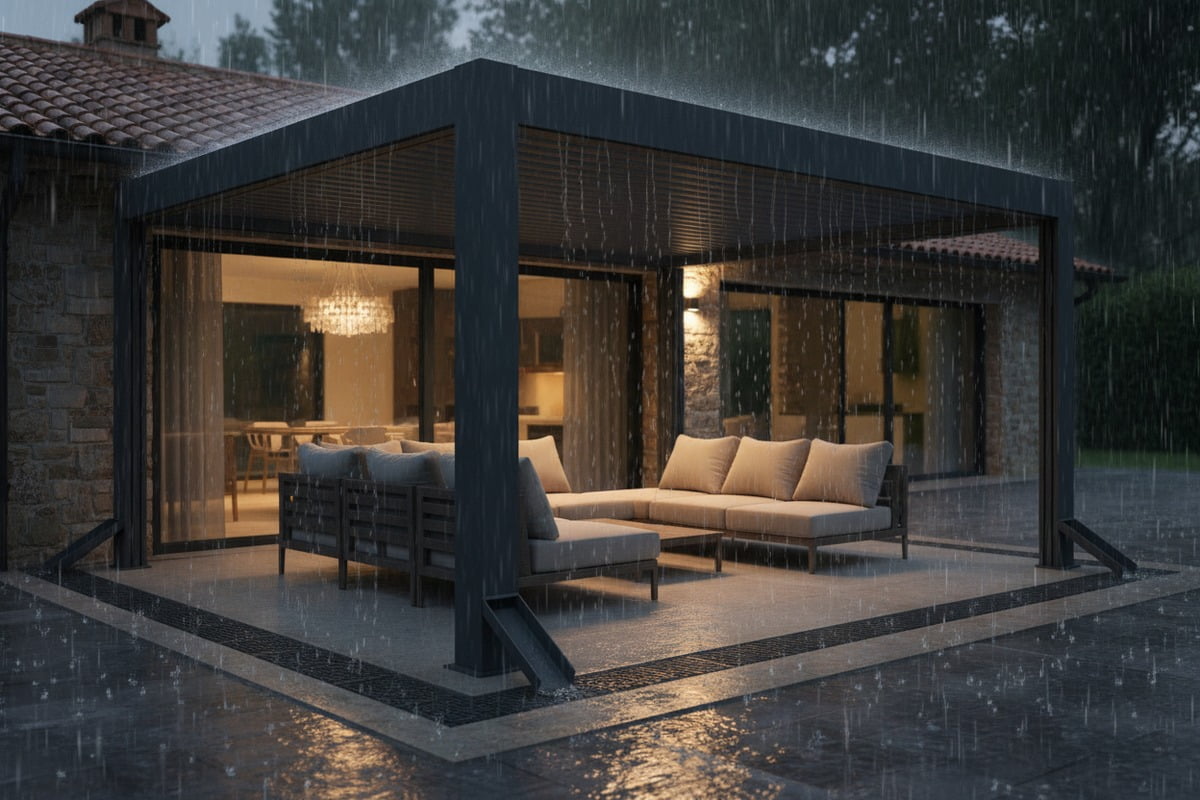
Yes, and serious suppliers should offer that option. In OEM and ODM work, drainage capacity is one of the first things I would adapt for a local market. The same pergola roof that performs well in a mild inland region may struggle in a coastal city with cloudbursts, wind-driven rain, and salt exposure.
Start with local rainfall, not a universal catalog spec
The basic idea is simple. More roof area and stronger rain create more flow. That flow must be carried by the roof channels, then the beam gutters, then the post downspouts. If one part is undersized, the whole chain fails. So the supplier should ask for your local peak rainfall intensity, not just annual rainfall. Short, intense storms are usually the real design challenge.
I also look at wind direction, nearby trees, snow load, and the chance of debris washing into the system. A market with moderate rain but heavy pine needles may need a different drainage guard strategy than a market with clean roofs and sudden summer downpours.
What can actually be customized
Several parts can be changed without redesigning the whole pergola family. We can increase channel depth, widen outlets, add more downspouts, increase roof pitch, enlarge post cavities, improve overflow slots, or reinforce seals at pressure points. On some projects, buyers also ask for rainwater harvesting connections 9 or modular drainage that can handle future pergola extensions.
| Local condition | Useful drainage customization |
|---|---|
| High peak rainfall | Larger beam channels and bigger post outlets |
| Wind-driven coastal rain | Better corner sealing and stronger joint compression |
| Large roof spans | More outlet points and deeper perimeter troughs |
| Snow and freeze cycles | Stronger structure, clean discharge path, less standing water |
| Tree-heavy sites | Better maintenance access and removable debris guards |
| Future extensions | Modular drainage routing and extra capacity margin |
Ask for a design basis in writing
For bulk buying, I would ask the supplier to state the assumed rainfall intensity, roof area, outlet count, and safety margin in writing. That document protects both sides. It keeps the discussion technical and avoids vague promises later. If a supplier says customization is available but cannot show the revised drawings, outlet dimensions, or testing plan, then the customization is not yet real.
This is also where installation matters. A custom drainage design still fails if the installer changes the level, skips seal steps, or blocks the post exits during concrete work. That is why I like suppliers who provide installation details, exploded drawings, and pre-shipment part checks for customized units.
The best result is not the biggest gutter. It is the right drainage balance for your climate, roof size, and service expectations.
Conclusione
Good pergola waterproofing is not magic. It is visible engineering, honest testing, and drainage sized for the worst rain your customers actually get.
Note a piè di pagina
1. Explains how waterproof ratings are determined and what they mean. ︎
2. Official IEC source explaining IP ratings for electrical equipment enclosures. ︎
3. Provides an overview of different types of drainage systems and their importance. ︎
4. Defines rainfall intensity and its significance in hydrological studies. ︎
5. Highlights the importance of independent third-party testing for product credibility and quality assurance. ︎
6. Discusses various types of coatings for aluminum alloys to enhance corrosion resistance. ︎
7. Explains what gasket compression is and its role in creating a tight seal. ︎
8. Comprehensive Wikipedia entry on weep holes in architectural and construction contexts. ︎
9. Outlines the environmental and economic benefits of rainwater harvesting. ︎
10. Explains the concept of a catchment area in rainwater harvesting systems. ︎