Every year, our sales team fields hundreds of inquiries from European buyers who all ask the same thing: why should we choose your aluminium pergolas over the competition?
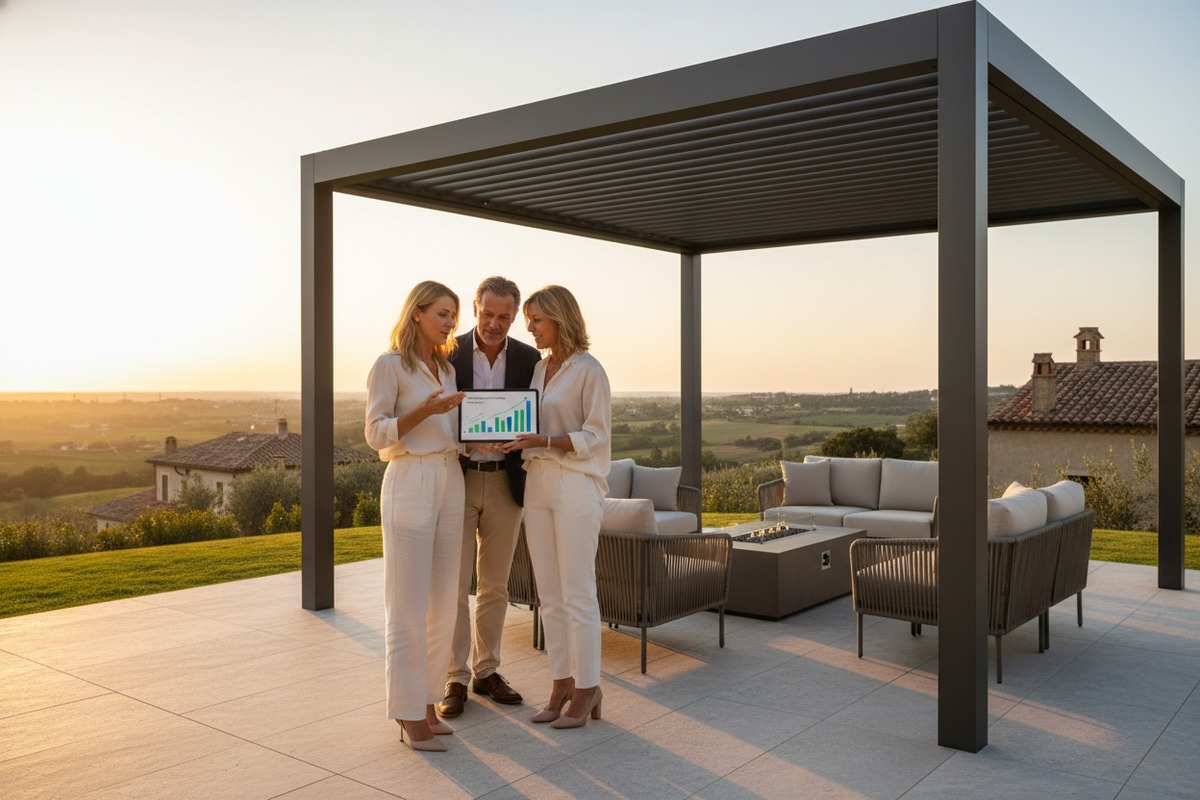
The most effective marketing angles for selling aluminium pergolas in Europe combine lifestyle aspiration with practical proof. Emphasize weather durability, low maintenance, modern design integration, sustainability through longevity, and premium outdoor living transformation. European buyers respond best when emotional appeal meets concrete performance data and climate-specific relevance.
The European outdoor living market is not one market CE marking documentation 1. It is dozens of micro-markets shaped by climate, culture, architecture, and buyer type. What convinces a hotel chain in coastal Spain differs from what motivates a landscaping firm in northern Germany motorized louvered roof systems 2. This article breaks down the angles that actually move the needle, drawn from 25 years of manufacturing and exporting pergolas to European partners. Let us walk through what works, and why.
How can I prove my aluminum pergolas meet European wind and snow load standards to build buyer trust?
When our engineering team reviews European project specs, wind and snow load requirements sit at the top of every conversation. Buyers who skip this step risk structural failures and legal exposure.
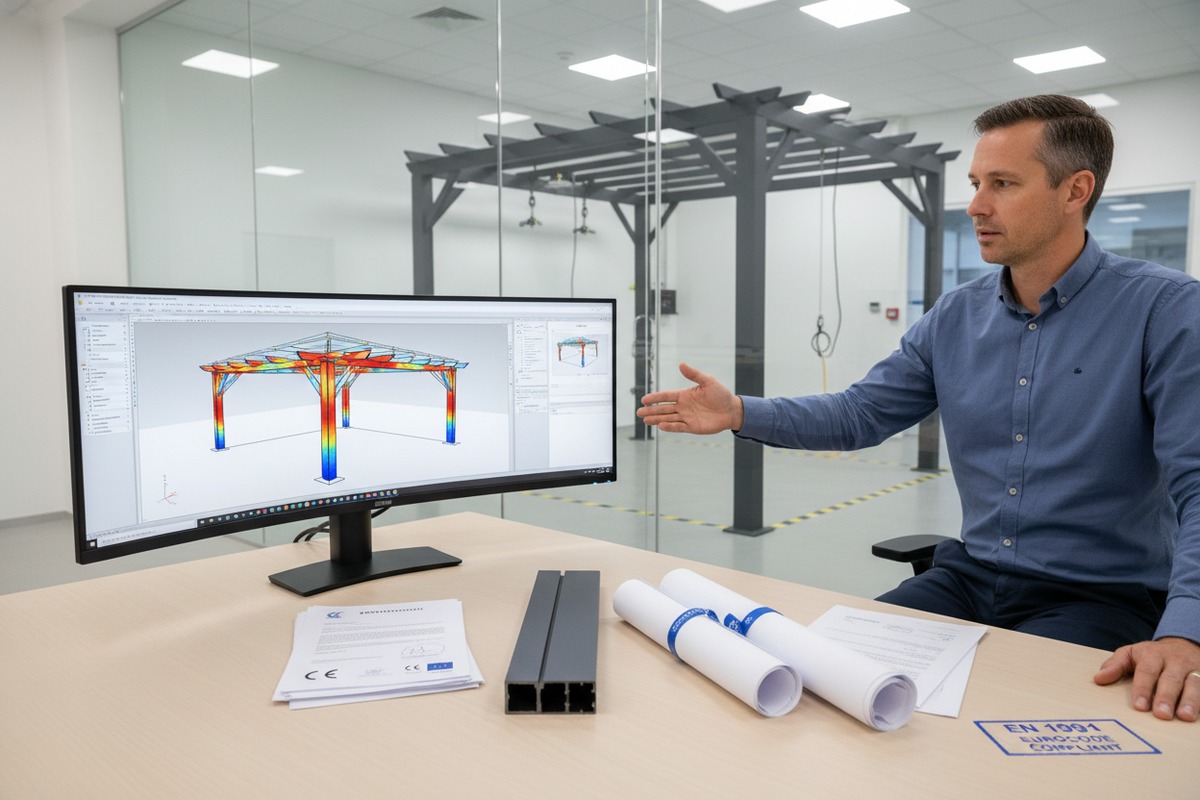
To prove your aluminium pergolas meet European wind and snow load standards, provide independently verified structural calculations per Eurocode EN 1991, share CE marking documentation, and supply test reports showing rated wind class and snow load capacity. Third-party lab certifications and engineer-stamped drawings build the strongest buyer confidence.
Why European Buyers Demand Load Certification
European construction standards are not optional. They are legal requirements. When a contractor installs a pergola on a hotel terrace in the Alps, that structure must handle heavy snow accumulation. When a resort in southern France builds a poolside lounge, the pergola must resist Mistral winds. Buyers know this. They will not risk their reputation or their client's safety on an uncertified product.
At our factory, we run finite element analysis (FEA) 3 on every new pergola design before it goes into production. This is not just for marketing. It is because we have seen what happens when manufacturers cut corners on wall thickness. A pergola rated for 50 kg/m² snow load that actually fails at 30 kg/m² is a lawsuit waiting to happen.
Key Standards and What They Mean
| Standard | Was wird abgedeckt? | Warum es wichtig ist |
|---|---|---|
| EN 1991-1-3 | Snow loads on structures | Defines minimum snow load capacity by region and altitude |
| EN 1991-1-4 | Wind actions on structures | Sets wind pressure requirements based on terrain and geography |
| CE Marking (CPR 305/2011) | Construction product regulation | Legal requirement for structural products sold in the EU |
| EN 1090 | Execution of steel and aluminium structures | Certifies fabrication quality and welding standards |
How to Present This to Buyers
Do not just tell buyers your pergola is strong. Show them. Our approach includes sending a technical data sheet with every quotation. This sheet lists the aluminium alloy grade (typically 6063-T5 or 6061-T6 4), the wall thickness of each profile, the rated wind class, and the maximum snow load per square meter. We also include the name and certification number of the third-party testing lab.
For high-value projects, we provide engineer-stamped structural calculations customized to the installation site. This costs extra, but it removes the buyer's biggest fear: that the product will fail under local conditions.
Common Mistakes That Destroy Trust
Some manufacturers claim high load ratings without proof. Others use thinner aluminium walls to cut costs and then overstate the structural capacity. European buyers, especially contractors and purchasing managers, have been burned by this before. They will ask for proof. If you cannot provide it, they will move to a supplier who can.
One practical tip: include a short video showing a load test on your pergola. We filmed a snow simulation test in our facility and shared it with our European distributors. The response was immediate. Three new orders came in within two weeks, directly referencing that video.
What OEM customization options should I highlight to attract high-end European landscaping firms?
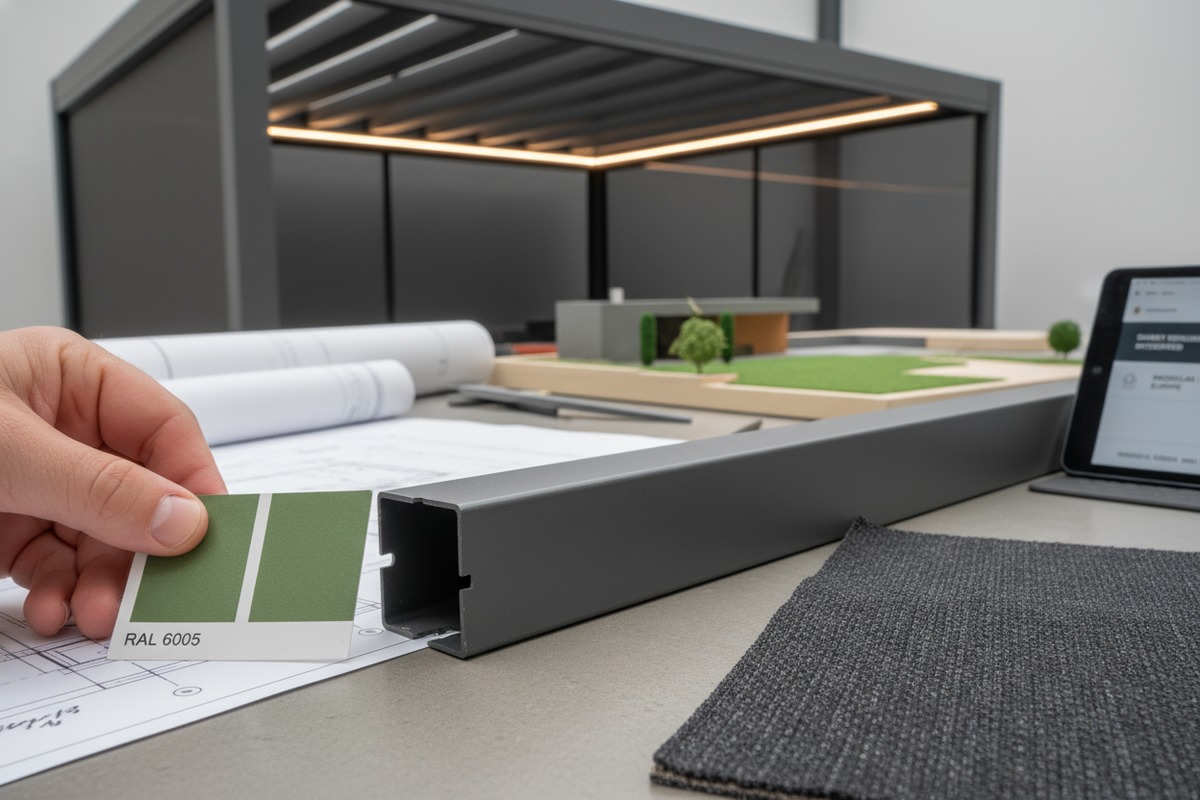
Our design team spends more time on custom RAL color matching 6 and non-standard dimensions than on any other single task. High-end European firms do not buy off-the-shelf. They buy solutions.
To attract high-end European landscaping firms, highlight custom RAL color matching, non-standard sizing, integrated lighting and heating options, motorized louvered roof systems, side screen compatibility, and private-label branding. These firms need a manufacturing partner who can deliver bespoke specifications within tight project timelines.
What High-End Firms Actually Ask For
When Olivia, a purchasing manager in Italy, sends us a project brief, it rarely matches a standard product. She needs a pergola that fits a specific terrace dimension, matches a RAL color chosen by the architect, and includes integrated LED strips in a precise color temperature. She also needs the packaging labeled with her company's brand, not ours. This is OEM reality.
High-end landscaping firms serve architects, developers, and luxury homeowners. These end clients expect perfection. A pergola that is 50mm too wide or finished in the wrong shade of grey is a rejection. That is why our production line is set up for rapid customization, not just mass production.
Customization Options That Win Contracts
| Customization Category | Specific Options | Buyer Benefit |
|---|---|---|
| Color | Any RAL color, anodized finishes, wood-grain texture coating | Perfect match with project architecture |
| Dimensions | Custom width, depth, height, and column spacing | Fits non-standard terraces and rooftops |
| Roof System | Fixed louvers, motorized adjustable louvers, retractable fabric | Climate control and aesthetic choice |
| Accessories | Integrated LED lighting, infrared heaters, Zip screens, glass walls | Full outdoor room functionality |
| Branding | Private-label packaging, custom manuals, branded hardware | Reseller and distributor brand identity |
| Electronics | CE-certified motors, rain sensors, wind sensors, smart-home integration | Compliance and premium user experience |
Speed Matters as Much as Flexibility
Our 30-day rapid delivery guarantee exists because we learned a hard lesson early on. A landscaping firm in Germany once placed a custom order with a 45-day lead time. We delivered on day 46. They lost a penalty clause on their construction contract. We lost that client for two years.
Now, we keep stock of the most commonly requested aluminium profiles and powder-coat finishes. When a custom order comes in, we are not starting from raw material. We are assembling from a library of pre-qualified components. This cuts weeks off the process.
The Drawing Approval Process
High-end firms expect professional 3D renderings before production starts. We provide CAD drawings within 48 hours of receiving the project brief. The client reviews, marks up changes, and we revise. Only after written approval do we begin fabrication. This process prevents the most expensive mistake in OEM: producing the wrong thing.
We also supply multilingual installation manuals and 3D instructional videos with every shipment. A landscaping firm in France should not need to call China to figure out how to mount a beam. The documentation must be clear enough for a local installer to work independently.
How do I reassure my B2B clients that my packaging will prevent damage during sea freight to Europe?
We once received a claim from a distributor in the Netherlands. Eighteen pergola sets arrived with scratched profiles and bent connectors. The total replacement cost was higher than the original order margin. That day changed how we package everything.
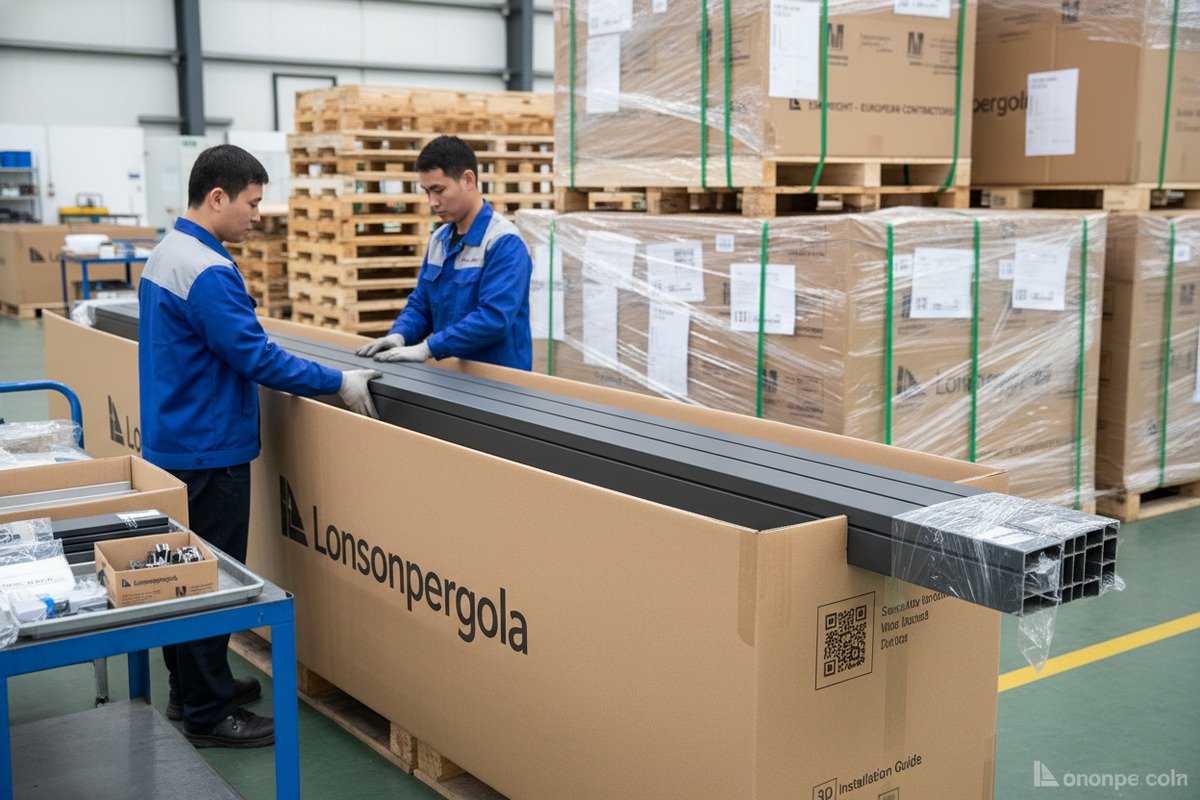
To reassure B2B clients about packaging, use reinforced export-grade wooden crates, wrap each aluminium profile individually in EPE foam and protective film, secure components with internal bracing, include a detailed packing list with photos, and offer pre-shipment inspection by a third-party agency. Document everything before the container doors close.
Why Packaging Is a Deal-Breaker
Aluminium profiles are lightweight but easy to dent, scratch, and deform. A 40-foot container crossing the ocean for 30 days encounters vibration, humidity, temperature swings, and rough handling at ports. If profiles shift inside the container, they collide and damage each other. If screws and small hardware are packed loosely, they go missing. And when damaged goods arrive in Europe, the cost is not just the replacement. It is the project delay, the client complaint, and the trust that evaporates.
Our packaging team follows a strict protocol developed after years of trial, error, and client feedback.
Our Packaging Protocol
| Packaging Element | Methode | Zweck |
|---|---|---|
| Individual profile wrapping | EPE foam 7 + PE protective film | Prevents surface scratches and dents |
| Internal bracing | Custom foam inserts and cardboard dividers | Stops movement inside the crate |
| Outer crate | Fumigation-treated plywood crate | Meets ISPM 15 import requirements, provides structural protection |
| Hardware-Bausatz | Sealed, labeled bags inside a separate box | Prevents loss, simplifies installation |
| Packing list | Itemized list with photos, placed inside and outside the crate | Enables quick inventory check on arrival |
| Beladen von Containern | Airbags and straps between crates | Prevents shifting during transit |
Pre-Shipment Inspection
We encourage every B2B client to arrange a third-party inspection before shipment. Companies like SGS, Bureau Veritas, or TÜV can inspect the goods at our warehouse, verify quantities, check for damage, and confirm packaging quality. We open the crates for the inspector, then reseal and photograph them before loading.
For clients who cannot send an inspector, we provide a full photo and video record of the packing and loading process. Every crate is photographed open (showing the contents) and closed (showing the labeling). The container is photographed during loading and after the doors are sealed. This documentation has resolved disputes before they even start.
The Hidden Cost of Missing Parts
A single missing connector or non-standard bolt can halt an installation. In Europe, sourcing a replacement locally is often impossible because OEM hardware is not stocked at local shops. The client has to wait for an air freight shipment from China, which costs time and money far beyond the part's value.
That is why we count and double-count every hardware kit. We also include a small percentage of spare parts, typically 5% extra screws, brackets, and connectors, in every shipment. This small gesture costs us very little but saves our clients enormous headaches.
Fußnoten
1. Explains the legal requirement and process for CE marking of construction products in the EU. ︎
2. Describes the functionality and benefits of adjustable louvered pergola roofs. ︎
3. Offers a detailed explanation of the engineering method used for structural analysis. ︎
4. Provides technical details about common aluminum alloys used in construction. ︎
5. Provides official information on European structural design standards for wind and snow loads. ︎
6. Provides information about the standardized color system widely used in Europe. ︎
7. Authoritative overview of EPE foam properties and uses from Wikipedia. ︎